
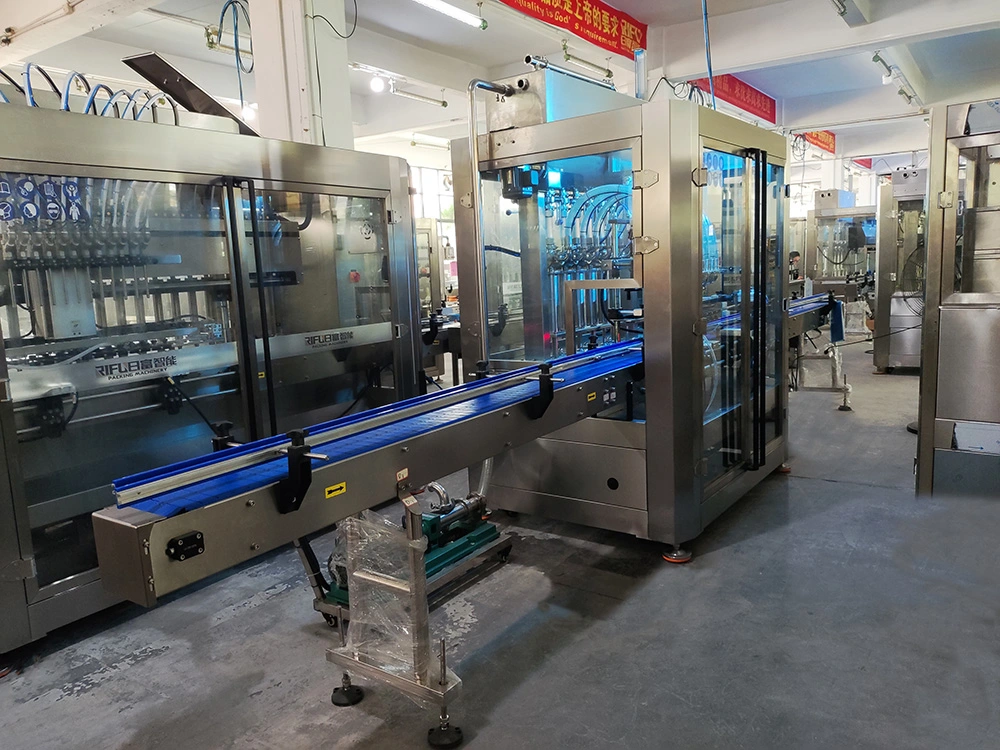
The Future of Condiment Filling Machines
The condiment filling machine industry is constantly evolving, driven by advancements in technology, changing consumer preferences, and increasing demands for efficiency and sustainability. As we look to the future, several key trends and innovations are poised to reshape the way condiments are filled and packaged. At JNDwater, we're committed to staying at the forefront of these developments, providing our customers with cutting-edge solutions that meet the challenges of tomorrow.
Automation and Robotics
Automation is already a significant factor in the condiment filling industry, but its role will only continue to grow in the future. Expect to see more fully automated systems that integrate seamlessly with other production processes. Robotics will play an increasingly important role, handling tasks such as container loading, filling, capping, and labeling with greater speed and precision. This will lead to:
- Increased Efficiency:Automated systems can operate continuously with minimal human intervention, significantly increasing production throughput.
- Reduced Labor Costs:Automation reduces the need for manual labor, lowering wage expenses and freeing up employees for other tasks.
- Improved Accuracy:Robotic systems can perform filling and packaging tasks with greater accuracy and consistency than humans, minimizing waste and improving product quality.
- 安全性の向上:Automation can reduce the risk of workplace accidents by automating hazardous tasks.
Artificial Intelligence (AI) and Machine Learning
AI and machine learning are poised to revolutionize the condiment filling industry by enabling intelligent automation, predictive maintenance, and data-driven optimization. Here are some potential applications:
- Predictive Maintenance:AI algorithms can analyze machine data to predict potential failures and schedule maintenance proactively, minimizing downtime.
- Automated Quality Control:AI-powered vision systems can inspect filled containers for defects, such as incorrect fill levels, damaged labels, or foreign objects, ensuring product quality.
- Process Optimization:Machine learning algorithms can analyze production data to identify bottlenecks and optimize filling parameters, such as speed, pressure, and temperature, to maximize efficiency.
- Adaptive Filling:AI can adjust filling parameters in real-time based on changes in product viscosity or container size, ensuring consistent fill levels and minimizing waste.
Sustainable Design and Green Technology
Sustainability is becoming increasingly important to consumers and manufacturers alike. The future of condiment filling machines will be shaped by a focus on sustainable design and green technology. This includes:
- Energy Efficiency:Designing machines that consume less energy and utilize energy-efficient components.
- Waste Reduction:Implementing features that minimize product waste, such as precise filling systems and automated weight checks.
- Recyclable Materials:Using recyclable materials in machine construction and packaging.
- Reduced Water Consumption:Minimizing water usage in cleaning and sanitization processes.
- Biodegradable Packaging:Utilizing biodegradable and compostable packaging materials.
Hygienic Design and Food Safety
Food safety is always a top priority in the condiment filling industry. Future machines will incorporate even more advanced hygienic designs to minimize the risk of contamination. This includes:
- Easy-to-Clean Surfaces:Designing machines with smooth, easily accessible surfaces that can be quickly and thoroughly cleaned.
- Automated Cleaning Systems:Implementing automated cleaning and sanitization systems that reduce the need for manual cleaning and minimize the risk of human error.
- Sealed Components:Using sealed components to prevent the ingress of contaminants.
- Real-Time Monitoring:Implementing sensors that monitor temperature, humidity, and other environmental factors to ensure optimal food safety conditions.
Flexibility and Versatility
In today's rapidly changing market, manufacturers need machines that can handle a wide range of products and container sizes. Future condiment filling machines will be designed for maximum flexibility and versatility. This includes:
- Quick Changeover:Designing machines that can be quickly and easily changed over between different products and container sizes.
- Modular Design:Utilizing a modular design that allows manufacturers to easily add or remove components to meet their specific needs.
- Multi-Functional Machines:Developing machines that can perform multiple tasks, such as filling, capping, and labeling, in a single integrated system.
The Role of JNDwater in the Future
At JNDwater, we are committed to investing in research and development to stay at the forefront of these emerging trends and technologies. We are working to develop condiment filling machines that are more efficient, sustainable, hygienic, and versatile than ever before. Our goal is to provide our customers with the solutions they need to succeed in the ever-changing condiment market.
By embracing these innovations, the condiment filling machine industry can look forward to a future of increased efficiency, improved product quality, and enhanced sustainability. JNDwater is committed to being a leader in this transformation, providing our customers with the cutting-edge solutions they need to thrive.