In the beverage industry, the market is changing rapidly and product lines need to be flexibly adjusted. Many beverage manufacturers are facing a practical problem: can a single filling line be used to produce both purified water and fruit juice? This can save equipment investment and quickly respond to market demand.
The answer is: yes, but with conditions. This requires your filling line to have a specific compatibility design. As Jndwater, which serves 125 countries worldwide and has rich experience in whole line integration, this article will provide you with a detailed analysis of the technical points, equipment configuration schemes, and precautions for water and juice mixing production.
Differences in production processes
| comparative dimension | Purified water | juice |
| Product Features | Low viscosity, no impurities, pH neutral | Containing pulp/fiber, high viscosity, pH acidic (2.5-4.5) |
| Filling temperature | Normal temperature (20-25 ℃) or low temperature | Hot filling (85-92 ℃) or sterile cold filling (4-10 ℃) |
| Sterilization method | Ozone sterilization or ultraviolet radiation | UHT ultra-high temperature instantaneous sterilization |
| Hygiene requirements | General hygiene level | High hygiene level, anti oxidation requirements |
| principle | Normal pressure/pressure filling | Hot filling or aseptic filling |
| material | 304 stainless steel | 316L stainless steel is required, which is resistant to acid and corrosion |
These differences determine that a truly compatible filling line for water and juice must have the ability to adapt to multiple working conditions.
Key equipment configuration
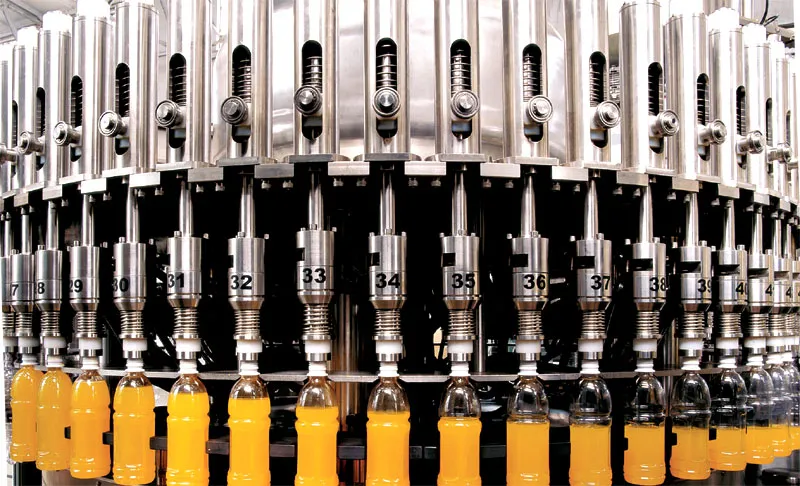
- Compatibility of filling machines
By replacing a small number of components, it can be used for filling pure water and mineral water
| System Requirements | Instructions |
| Compatibility of filling valve | Juice filling requires the use of single chamber plunger fixed volume filling technology (suitable for fruit pulp), and pure water can be filled using atmospheric pressure filling valves |
| Material Upgrade | The parts in contact with juice should be made of 316L stainless steel, which is resistant to acid corrosion; Pure water available 304 |
| Temperature tolerance | Hot filling of fruit juice requires that the filling valve and material inlet and outlet pipelines have no sanitary dead corners and can withstand high temperatures of 95 ℃ |
| CIP cleaning interface | A complete CIP self-cleaning system must be equipped to ensure thorough cleaning and no cross contamination when switching products |
- Material reflux system
Juice filling requires a complete material reflux system. When the filling temperature does not meet the process requirements, the material will automatically reflux and re sterilize. At the same time, it can achieve independent gas return during reflux, without contact with the material, reducing secondary pollution and oxidation of the material.
Pure water does not require a complex reflux system, but can share pipelines. - Temperature control system
Accurate temperature control is required for hot filling of fruit juice:
- Automatic filling temperature detection
- Material high temperature alarm
Low temperature shutdown and automatic reflux
Pure water filling does not require heating, therefore the equipment needs to have temperature control switching function.
- Bottle mouth flushing device
For hot filling of fruit juice, a RO water flushing device should be installed at the bottle mouth before sealing to ensure that there is no mold on the bottle mouth. This function is optional when filling pure water. - Screw cap system
Adopting a magnetic torque screw cap head, the screw cap torque is infinitely adjustable and has the function of constant torque rotary sealing plastic cap. This is crucial for switching between products of different bottle and cap types.
Compatibility scheme comparison
| Solution Type | core configuration | advantage | limitation |
| Basic compatibility type | Same filling machine, replace a small number of parts+CIP cleaning | Low investment, flexible switching | The production change time is relatively long (requiring cleaning), making it impossible to produce simultaneously |
| Dual pipeline design | The filling machine is shared, but the material pipeline is set up separately, and the quick switching valve group is used | Short switching time and low risk of cross contamination | Slightly higher investment, complex pipeline |
| Independent filling station | Two filling stations are set up on the same production line, one for water and the other for juice | Quick switching and even simultaneous production | Equipment length increases, with the highest investment |
| Pre processing shared+filling separation | Separate water treatment and juice pretreatment, and share the packaging equipment for the later stage | The most thorough compatibility solution | High investment and large land occupation |
Production change process and cleaning requirements
When switching from producing purified water to juice (or vice versa), the following process must be strictly followed:
- Evacuate
- Drain residual products from pipelines and filling machines
- CIP cleaning (key steps)
Alkali washing: 1% -3% NaOH solution, circulated at 70-85 ℃ to remove organic dirt
- Intermediate rinsing: Rinse with clean water until neutral
- Acid washing: 0.5% -1.5% HNO 3, cycled at 60-70 ℃ to remove inorganic dirt and scale
- Final rinsing: Rinse with pure water until no residue is left
- Sterilization (before juice production)
Hot water disinfection or steam disinfection to ensure sterility - Parameter switching
Retrieve the preset production formula (filling temperature, filling volume, capping torque, etc.) - Trial production verification
Small batch trial production, testing microbial indicators and product quality
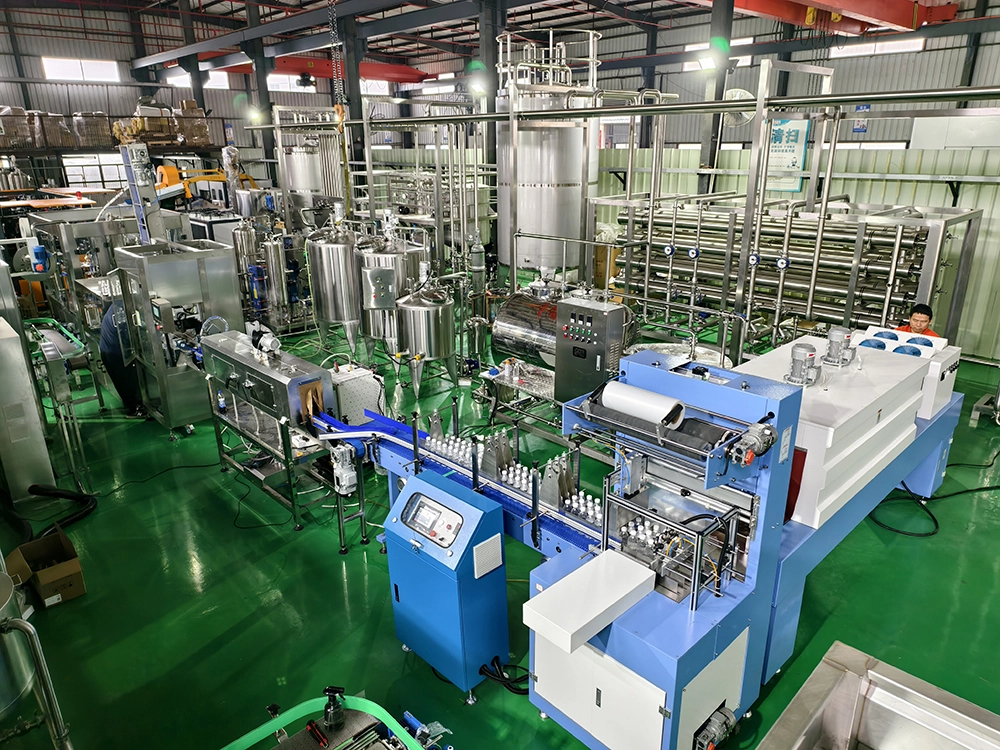
Jndwater compatible bottle filling line solution
Core configuration highlights:
- ✅ The filling valve is made of 316L stainless steel, which is acid and high temperature resistant
- ✅ Equipped with a comprehensive CIP cleaning system and designed with no dead corners
- ✅ The PLC control system stores multiple sets of formulas and allows for one click parameter switching
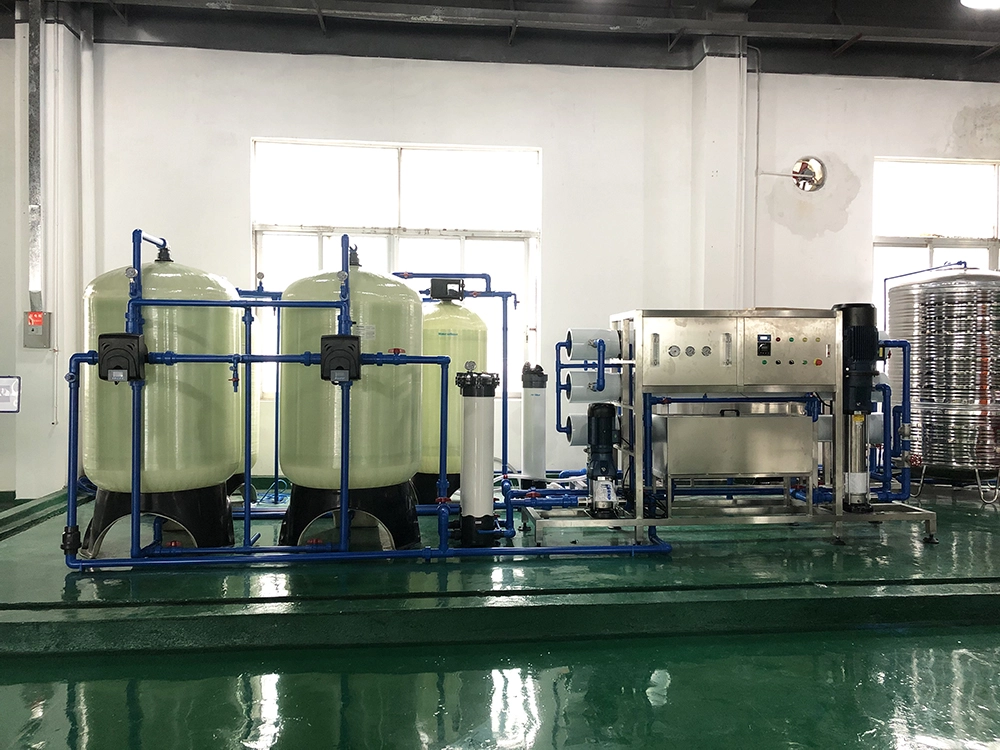
- ✅ Connected to the entire line of ro water treatment system, bottle blowing machine, and bottle labeling machine water filling machine
- ✅ Optional nitrogen oxidation prevention device (for juice)
Jndwater’s core recommendation:
- Compatibility should be considered during the design phase: planning the cleaning system, pipeline layout, and material selection in advance
- CIP system is the key to success or failure: without thorough cleaning, product safety cannot be guaranteed
- Reserve upgrade space: Even if only one product is currently being produced, compatible interfaces can be reserved during design
The mixed production of water and juice is completely feasible, and the key lies in whether the equipment has modular design, corrosion-resistant materials, precise temperature control, and a complete CIP cleaning system. Jndwater can provide you with a full process service from solution design to equipment delivery, helping you achieve flexible production of two products with one line of investment.