Products List
Juice Filling Machine
Why a Juice Filling Machine Shapes Product Safety and Profit
A small mismatch between juice viscosity and filling technology can turn a promising beverage project into a daily fight with leakage, unstable fill levels, short shelf life, and expensive downtime. For a juice brand, the filler is not just another machine on the factory floor. It controls the moment when the product leaves the processing system and enters the package that customers will touch, open, smell, and drink.
That is why buyers rarely search for a juice filling machine out of curiosity. Most are comparing production capacity, bottle compatibility, hygiene design, automation level, supplier experience, and long-term operating cost before they request a quotation. A startup may need a compact automatic juice filling machine that can handle PET bottles without wasting factory space. A larger producer may need a complete juice filling line that links water treatment, beverage preparation, bottle rinsing, filling, capping, labeling, packing, and palletizing into one smooth workflow.
Need a juice filling line layout for your bottle size, formula, and target capacity? Contact J&D Water for a customized solution before you lock in your factory plan.
What a Juice Filling Machine Does
A juice filling machine fills fruit juice, juice drinks, tea drinks, and similar non-carbonated beverages into bottles or containers with controlled volume, hygienic product contact, and stable production speed. Depending on the product formula, the machine may work with normal-temperature filling, hot filling, piston filling, aseptic filling, rinsing, capping, inspection, labeling, and downstream packaging equipment.
The simple definition hides a hard engineering truth. Juice behaves differently from water. It may contain sugar, fruit pulp, acids, natural color, flavor compounds, or heat-sensitive nutrients. Some juices flow smoothly like clear apple juice. Others move slowly because they contain pulp or higher solids. Some need thermal processing and hot filling. Others need stricter sterile handling to protect shelf life and taste.
Because of these differences, the best juice bottling machine is not always the fastest one on paper. The right choice depends on the product, the bottle, the filling temperature, the hygiene target, the expected shelf life, and how much room the factory has for expansion. A reliable supplier should ask about these details before recommending a juice filling line.
How Juice Characteristics Affect Filling Technology
When a buyer says “juice,” the word can mean many things. A clear juice drink with low viscosity needs a different filling approach from mango nectar, orange juice with pulp, or a concentrated syrup-based beverage. If the machine ignores those differences, the production team pays for it through inconsistent volume, foam, dripping nozzles, stuck pulp, messy bottle necks, or excessive cleaning time.
Viscosity comes first. Low-viscosity juice can usually move through pipelines and nozzles with less resistance. Higher-viscosity juice needs more controlled movement, especially when accuracy matters. Pulp content comes next. Suspended fruit particles can settle, block narrow passages, or create uneven filling if the system does not handle them properly. Filling temperature also matters because hot juice affects bottle strength, cap sealing, cooling layout, and operator safety.
The best juice filling machine is the one that protects the product first, then helps the factory produce faster without creating hidden waste.
This is where a complete engineering review pays off. J&D Water uses CAD-assisted design, precision processing, food-grade stainless steel construction, and endurance testing to support stable production. Before delivery, equipment must run continuously for more than 80 hours to help confirm reliability under production-like conditions.
Main Types of Juice Filling Machines
Most buyers compare machine types before choosing a supplier. The names may sound similar, but each type solves a different production problem. The goal is not to choose the most advanced option by default. The goal is to choose the filling method that fits your product and your business plan.
Gravity Juice Filling Machine
A gravity juice filling machine suits low-viscosity, non-carbonated juice drinks with stable fluidity. It works well when the product flows easily and the bottle format stays consistent. For clear juice drinks or diluted fruit beverages, gravity filling can offer a practical balance of efficiency and simplicity.
The main risk appears when the product changes. If the juice contains pulp, becomes thicker, or foams easily, gravity filling may struggle to maintain clean, consistent filling. Buyers should check product fluidity, bottle shape, foam behavior, and target speed before choosing this option.
Piston Juice Filling Machine
A piston juice filling machine suits thicker juice, pulp juice, concentrated juice, and products that need stronger volume control. Instead of relying only on free-flow movement, it uses a measured filling action that can handle more demanding product textures.
Factories often consider piston filling when they produce mango juice, fruit nectar, pulp-containing orange juice, or similar products. The key checks include pulp size, viscosity range, nozzle design, cleaning access, and whether the machine can prevent product residue from building up in contact areas.
Hot Fill Juice Bottling Machine
A hot fill juice bottling machine suits many juice beverages that go through thermal processing before filling. In this system, the product, bottle, cap, filling temperature, sealing process, and cooling section must work together. If one part falls out of balance, the factory may see bottle deformation, cap leakage, unstable shelf life, or flavor damage.
Hot filling is not simply “filling while hot.” It requires temperature control, bottle material compatibility, hygienic filling, secure capping, and controlled cooling. A good supplier should review bottle weight, neck finish, cap type, label plan, and line speed before confirming the configuration.
Aseptic Juice Filling Machine
An aseptic juice filling machine suits products that need sterile filling conditions and longer shelf-life goals. J&D Water describes its aseptic filling technology as a system that maintains a sterile environment to extend product shelf life while preserving taste and nutritional value.
This approach attracts juice producers that sell through wider distribution channels or want higher hygiene control for sensitive beverages. It also demands stronger discipline. The factory must plan sterile zones, cleaning procedures, operator training, packaging sterilization, and maintenance routines with care.
| Machine Type | Suitable Juice Type | Main Advantage | Buyer Should Check |
|---|---|---|---|
| Gravity Filling | Clear juice and low-viscosity juice drinks | Simple, stable filling for free-flowing products | Foaming, bottle consistency, product fluidity, filling speed |
| Piston Filling | Pulp juice, thicker juice, concentrates | Better control for viscous or particle-containing products | Pulp size, viscosity, nozzle design, cleaning access |
| Hot Filling | Thermally processed juice drinks | Supports product stability when matched with proper bottles | Temperature control, bottle material, cap sealing, cooling |
| Aseptic Filling | Sensitive juice and premium beverages | Higher hygiene control for longer shelf-life goals | Sterile design, packaging treatment, CIP, operator training |
What a Complete Juice Filling Line Includes
A complete juice filling line is more than a filler. It is a coordinated production system that may include water treatment, beverage preparation, bottle blowing or bottle feeding, rinsing, filling, capping, inspection, labeling, coding, packing, and palletizing. When these sections work together, the factory runs with fewer pauses and less manual handling.
Water treatment often sits at the beginning of the process. For blended juice drinks, tea drinks, and functional beverages, water quality affects product consistency, taste, and processing stability. J&D Water supplies reverse osmosis and ultrafiltration systems, with water treatment solutions described as achieving purification rates of up to 99.9% depending on configuration and application.
After preparation, the line moves bottles into rinsing, filling, and capping. Integrated systems can reduce transfer points and simplify production flow. J&D Water provides 3-in-1 and Combiblock systems that combine bottle blowing, rinsing, filling, and capping into one automated process. This type of integration can help factories save space, reduce manual contact, and improve line coordination.
Downstream equipment matters just as much. A beautiful fill level does not help if labels wrinkle, cartons collapse, or finished products stack poorly. An automatic labeling machine, coding system, bottle packing machine, and palletizer can help the factory move from “we can fill bottles” to “we can ship finished goods consistently.”
For related equipment planning, buyers can connect the automatic juice filling machine with a water treatment system, bottle blowing machine, labeling machine, packing machine, and palletizer to build a complete juice bottling line.
How to Choose a Juice Bottling Machine for Your Factory
Start With the Formula, Not the Machine
The smartest buying process starts with the product. Before comparing price, list the juice type, viscosity, pulp content, sugar level, acidity, filling temperature, expected shelf life, and cleaning requirements. A supplier cannot recommend the right juice bottling machine if the formula remains vague.
This step also protects future flexibility. A factory that fills only clear juice today may add pulp juice next year. A machine chosen only for today’s simplest SKU may limit tomorrow’s product plan. Tell the supplier which products you run now and which products you may launch later.
Match the Container to the Brand and the Line
Container choice affects more than appearance. PET bottles support light weight and high-speed distribution. Glass bottles offer a premium feel but need different handling. Cans, pouches, and 5-gallon barrels each create their own equipment requirements. J&D Water machinery supports PET bottles, glass bottles, cans, 5-gallon barrels, and pouches, giving buyers room to match packaging with market positioning and logistics needs.
When you discuss containers, include bottle volume, neck finish, cap type, bottle stability, label area, carton style, and pallet pattern. These details influence the filler, capper, conveyor, labeler, packer, and palletizer.
Calculate Capacity With Real Production Conditions
Capacity should come from a real production plan, not a guess. Start with the daily output target, bottle size, number of shifts, expected downtime, cleaning time, and future expansion. Then work backward to the required bottles per hour.
J&D Water notes that certain filling lines can reach up to 36,000 bottles per hour. That does not mean every project needs that speed. A small juice brand may benefit more from a stable, easy-to-clean automatic line than from a line that exceeds its current sales capacity. A large beverage plant, on the other hand, may need high-speed equipment from the start to protect labor efficiency and distribution commitments.
Check Hygiene Before You Check Price
Juice residue can be stubborn. Sugar, pulp, and acids can cling to contact surfaces, collect in dead corners, and make cleaning harder. For this reason, hygiene design should sit near the top of the buying checklist.
J&D Water machines use food-grade stainless steel such as 304 or 316L to support GMP, FDA, and international hygiene standards. The company also applies 6S management in production and uses digital processing centers, CNC bending, CNC laser cutting, laser welding, and CAD-assisted design to support manufacturing precision.
Review Automation Level and Factory Space Together
Semi-automatic equipment can suit small batches, test production, or limited budgets. A fully automatic juice filling line can reduce manual handling and improve consistency. A turnkey juice production line can help buyers coordinate multiple machines, utilities, layout, installation, and after-sales support through one supplier.
Before choosing, review factory space, drainage, power supply, compressed air, water treatment, steam or heating needs, bottle storage, packaging material flow, operator movement, maintenance access, and finished goods storage. The best layout lets people work safely and lets products move forward without unnecessary crossing, lifting, or waiting.
Hygiene, Cleaning, and CIP Planning
Cleaning time is production time in disguise. Every hour spent fighting residue, opening hard-to-reach parts, or flushing poorly designed pipelines is an hour the line cannot sell product. For juice manufacturers, cleaning design can separate a profitable line from a frustrating one.
A strong hygiene plan starts with contact materials, smooth surfaces, suitable seals, controlled pipelines, and easy-access parts. It also considers CIP planning, especially for factories that run multiple flavors or products with pulp. If the cleaning process cannot remove sugar film, pulp fiber, or product deposits, the factory faces higher contamination risk and more frequent stoppages.
Operators also need practical routines. The machine should not depend on heroic effort from a few experienced workers. Clear cleaning paths, accessible valves, stable recipes, and reliable spare parts help the factory protect quality day after day.
Send your juice formula, bottle size, and target capacity to J&D Water to receive a suitable filling and cleaning configuration for your production plan.
ROI and Total Cost of Ownership
The cheapest juice filling machine can become expensive if it wastes product, stops often, fills inaccurately, requires excessive labor, or leaves the buyer without support. A serious comparison should include purchase price, output, fill accuracy, product loss, labor savings, maintenance, energy use, spare parts, cleaning time, downtime, and after-sales response.
A practical ROI estimate can start with this simple logic: Annual Savings Estimate = Reduced Product Waste + Labor Savings + Higher Output Value - Added Operating Cost. The formula is not a substitute for a detailed project calculation, but it helps buyers see beyond the invoice price.
For example, a machine that reduces dripping and rejects may save product every shift. A better capping system may reduce leakage complaints. A more stable line may help the plant accept larger orders without hiring extra workers. A supplier with faster technical support may reduce downtime when the factory needs help most.
J&D Water supports this long-term view through dedicated after-sales service and a 7x24 customer service policy. For international buyers, this matters because a production line does not end when the equipment leaves the workshop. It must run, adapt, and recover quickly when real factory conditions test it.
Why Buyers Work With J&D Water
Project Experience Across Beverage Categories
J&D Water serves food and beverage factories, water bottling plants, juice producers, tea drink manufacturers, energy drink brands, alcoholic beverage producers, dairy and liquid food factories, condiment producers, and other industrial users. This wide application base helps the company understand how different liquids, containers, and production environments affect equipment choices.
Turnkey Capability for Growing Factories
Many buyers do not want to coordinate separate suppliers for water treatment, filling, labeling, packing, and palletizing. J&D Water operates as a manufacturer, supplier, and distributor that provides turnkey projects, OEM, and ODM services. This model can reduce coordination risk for buyers planning a new juice bottling plant or upgrading an existing beverage line.
Precision Manufacturing and Quality Control
The company uses digital processing centers, CNC bending machines, CNC laser cutting, laser welding technology, and CAD-assisted design. These manufacturing details matter because filling equipment must align mechanical movement, product contact surfaces, bottle handling, and electrical control into one stable system.
Flexible Packaging Compatibility
J&D Water’s equipment supports PET bottles, glass bottles, cans, 5-gallon barrels, and pouches. That flexibility helps both startup brands and industrial-scale factories plan packaging around market demand instead of forcing the product into one narrow container format.
Juice Filling Machine FAQ
What is a juice filling machine?
A juice filling machine fills juice and juice drinks into bottles or containers with controlled volume, hygienic product contact, and stable production speed. It may work as a standalone filler or as part of a complete juice filling line with rinsing, capping, labeling, packing, and palletizing.
How does a juice bottling machine work?
A juice bottling machine usually feeds empty bottles into the line, rinses or prepares them, fills juice to the required volume, caps the bottles, and sends them to downstream labeling and packing. The exact process depends on the product formula, bottle type, and filling technology.
Which filling machine is suitable for pulp juice?
Pulp juice often needs a piston filling machine or another configuration designed for higher viscosity and suspended particles. Buyers should confirm pulp size, viscosity, nozzle design, cleaning access, and whether the system can prevent uneven filling or blockage.
What is the difference between hot filling and aseptic filling?
Hot filling uses controlled filling temperature and compatible containers to support product stability after thermal processing. Aseptic filling focuses on sterile filling conditions and stricter hygiene control, often for products that need longer shelf-life goals or more sensitive quality protection.
How much does a juice filling line cost?
The cost depends on capacity, filling technology, bottle type, automation level, water treatment, labeling, packing, palletizing, factory layout, and hygiene requirements. A supplier needs these details before giving a meaningful quotation.
Can one juice filling line handle different bottle sizes?
Many juice filling lines can support multiple bottle sizes, but changeover speed and compatibility depend on the machine design, bottle shape, cap type, labeling method, and conveyor setup. Buyers should share all planned bottle formats during project planning.
Can J&D Water provide a turnkey juice production line?
Yes. J&D Water provides turnkey projects and can integrate equipment such as water treatment, bottle blowing, rinsing, filling, capping, labeling, packing, and palletizing for beverage production lines, including juice lines.
Your Next Step Before Requesting a Quote
The right juice filling machine should match the product formula, bottle type, hygiene requirement, output target, factory layout, and future expansion plan. A reliable juice filling line does not merely fill bottles faster. It helps the factory protect flavor, reduce waste, control labor, clean more efficiently, and scale with fewer surprises.
If you are planning a new juice bottling plant or upgrading an existing production line, prepare five details before contacting a supplier: juice type, viscosity or pulp content, bottle size and material, required bottles per hour, and available factory layout. Then send these details to J&D Water to receive a customized juice filling machine proposal that fits your production reality.
The Juice Filling/Bottling Machine by Jndwater is engineered to deliver efficient, hygienic, and high-precision juice packaging for modern beverage production. Utilizing advanced flow control and plunger-filling technologies, this machine ensures consistent filling volumes—from concentrated juices and pulpy drinks to hot-filled beverages—with minimal error. The fully enclosed filling environment safeguards against contamination, while smart control systems enable one-click operation and real-time fault alarms for streamlined performance.
Boasting a production rate of 6,000–8,000 bottles per hour and handling containers ranging from 100 ml to 2,000 ml—including both glass and plastic bottles—this versatile system adapts to a wide range of packaging needs. Key features include automatic cleaning of filling pipes, energy-efficient operation, and robust compatibility with diverse bottle types.
Ideal for beverage manufacturers handling fruit juices, fruit jams, pulp beverages, and other liquid food products, Jndwater’s Juice Filling Machine elevates productivity and product quality. Whether you require standard models or customized solutions, this machine offers reliable, safe, and innovative filling capabilities suited for the demands of modern production lines.
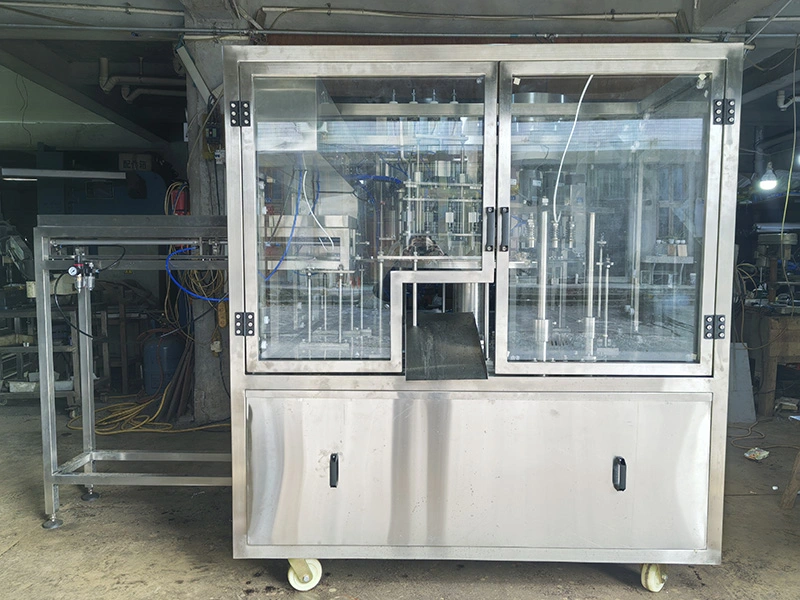
JNDWATER fully automatic stand-up pouch filling & capping machine for juice sachet. 4000 bags/h, 4 filling + 4 capping heads, 100-300ml pouches. Get a quote.
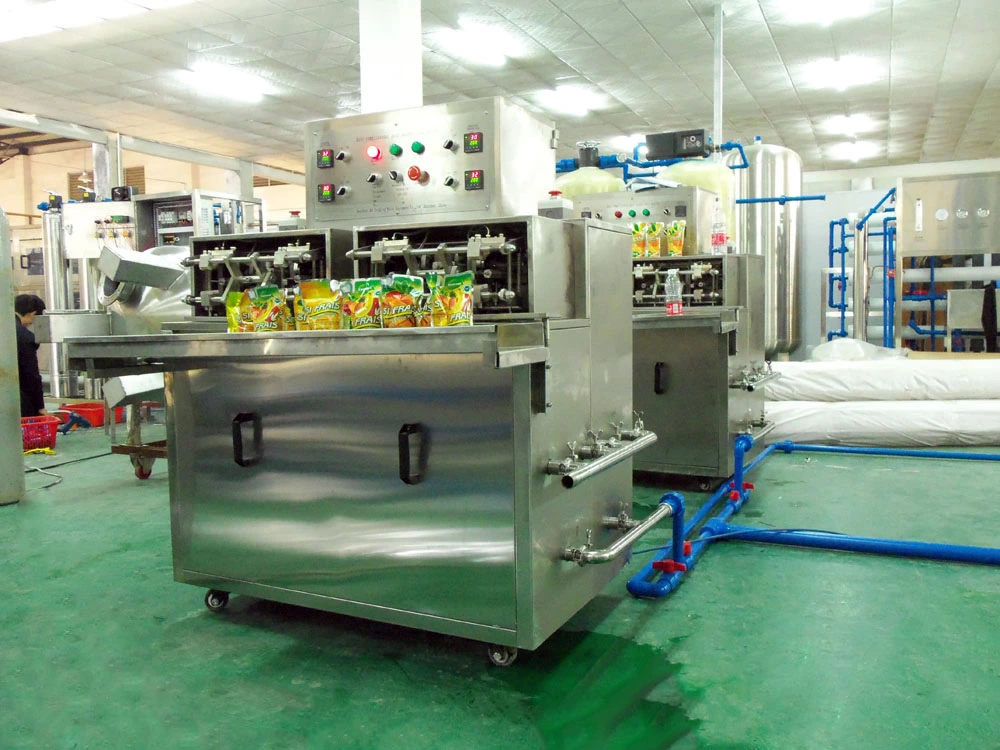
The Jndwater Juice Pouch Packing Filling Machine is a kind of machine specially designed for water bag, liquid bag and other packaging. It can efficiently complete a series of operations such as bag making, metering, filling, sealing, cutting, counting and batch number printing, and is widely used in the packaging production of pure water, juice, beverages and other liquids.
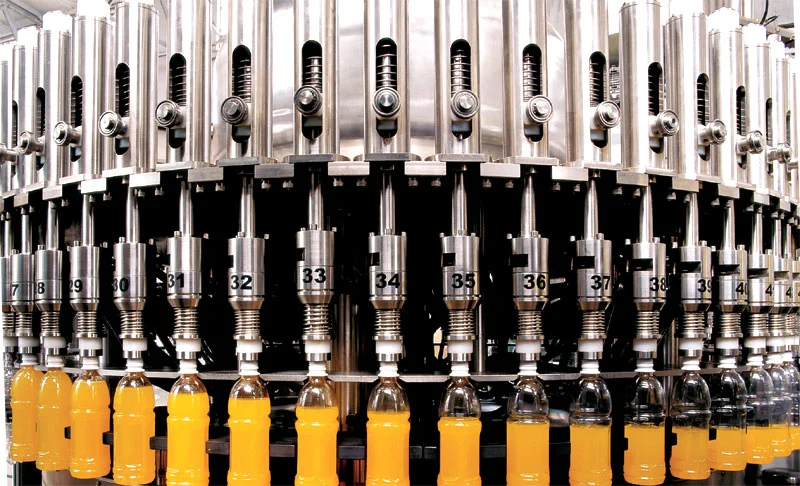
Jndwater fruit juice packing machine can accurately and efficiently fill juice into bottles or cans. Whether it is pure juice or mixed juice, it can achieve high-quality filling to meet the market demand for juice products.
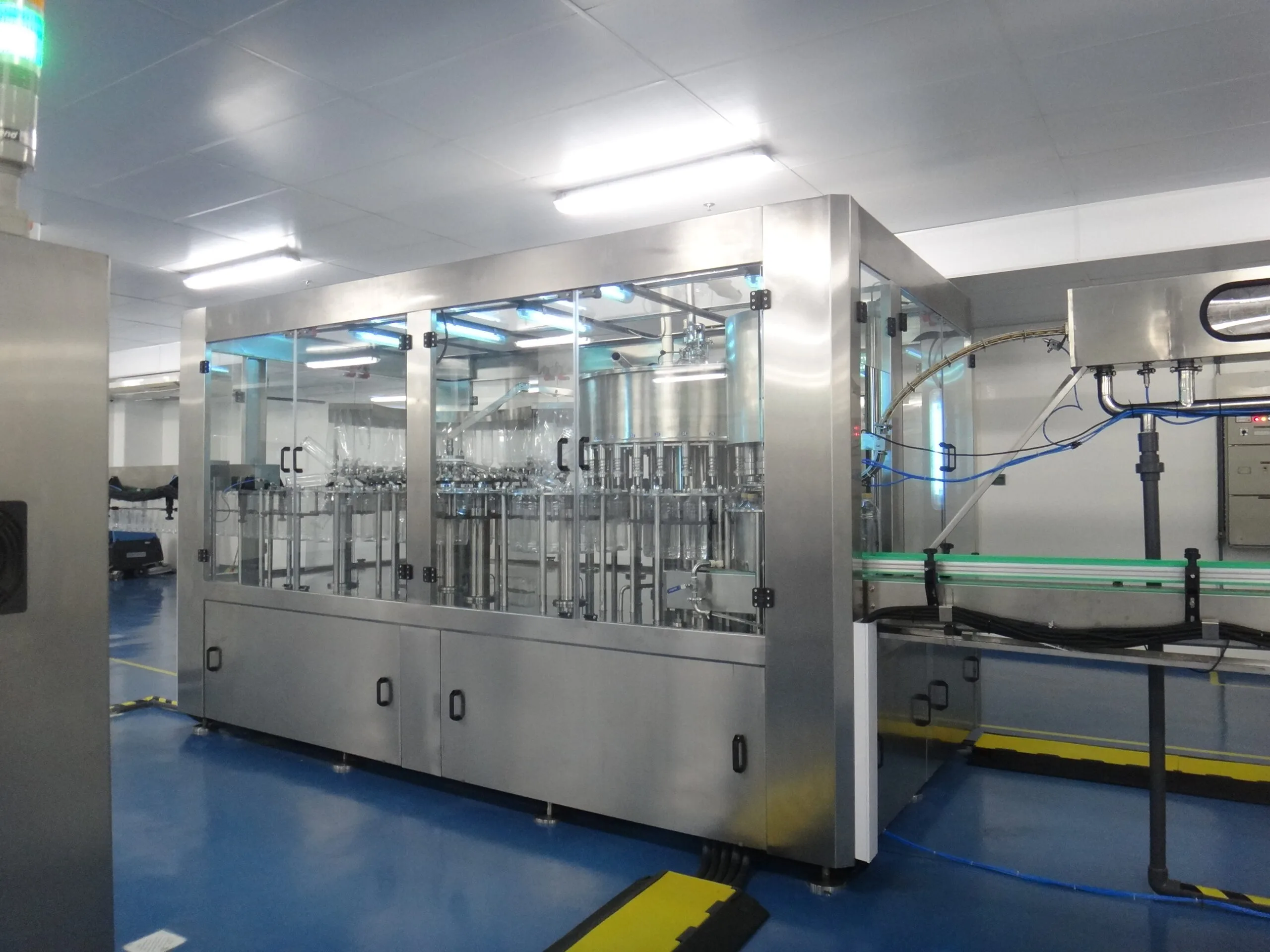
The Jndwater fruit juice bottling machine is designed for efficient and precise filling of fruit juice beverages. It uses advanced technology to ensure accurate and safe filling of every bottle, meeting the production needs of various sizes.
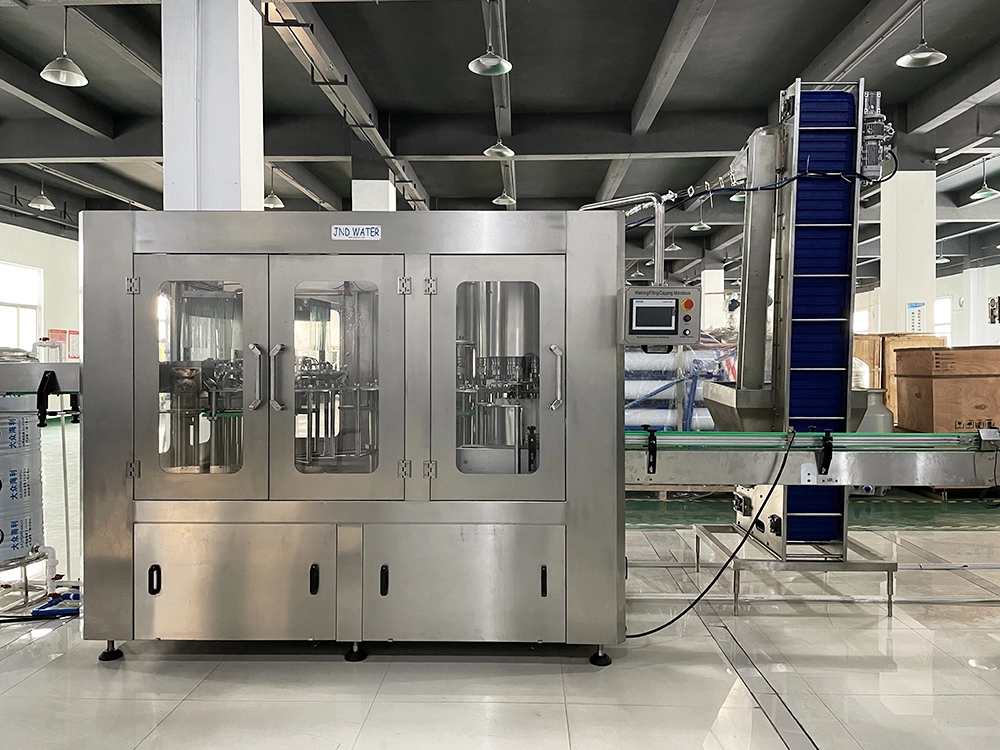
This Jndwater fruit Juice Filling Machine adopts plunger filling technology and is specially designed for juice beverage production. Through the dynamic pressure compensation system and anti-oxidation filling process,juice filling Machine can achieve high-precision filling of 200-2000ml full-specification juice, pulp beverage, and concentrated juice. It complies with NSF and ISO 22000 international standards and is suitable for large-scale production of complex media such as particle juice and NFC juice.
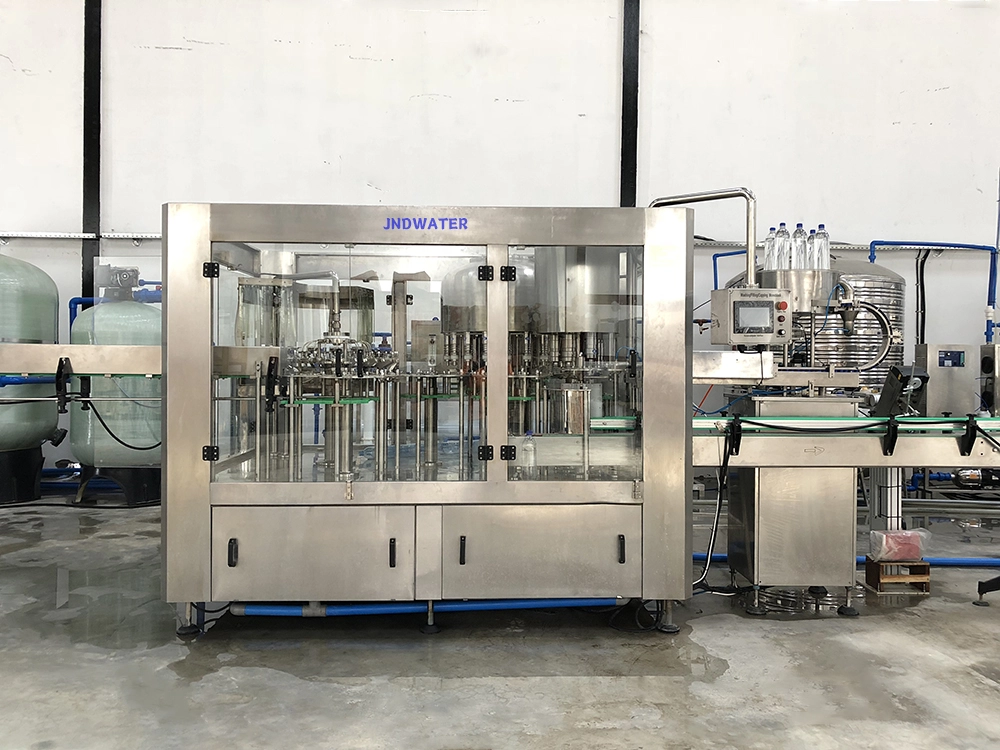
This juice bottling machine is an advanced, automated liquid packaging system designed for high-capacity production. It utilizes a sophisticated 3-in-1 model that integrates rinsing, filling, and capping into a single streamlined process. Engineered for versatility, it supports both hot filling (for juices and teas) and isobaric filling for carbonated beverages. With production capacities reaching up to 36,000 bottles per hour, this equipment provides a robust solution for food and beverage factories worldwide.
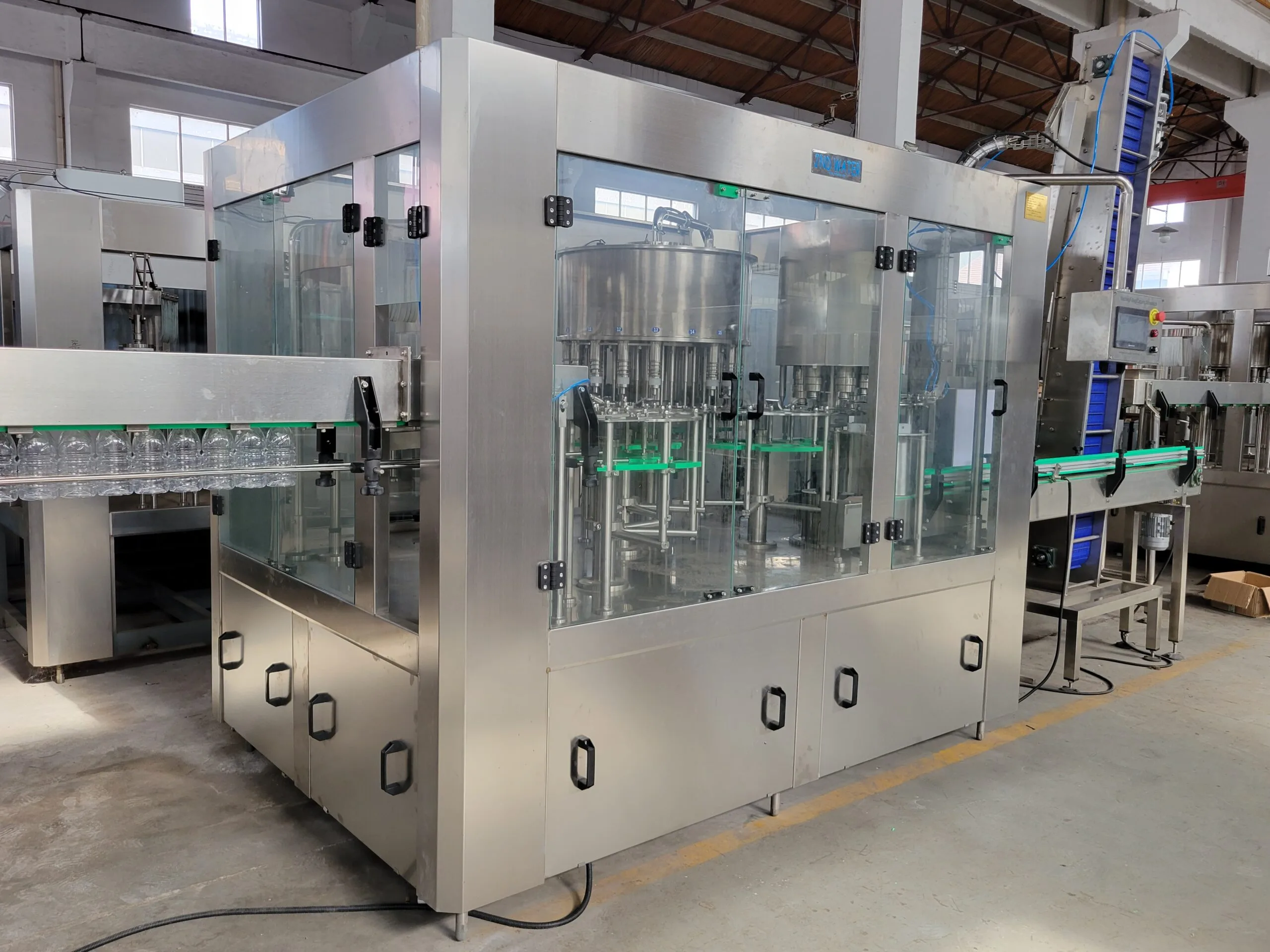
Jndwater series fruit juice packaging machine are designed for carbonated/non-carbonated liquids (carbonated beverages, juices, teas, functional drinks, etc.). fruit juice packing machine support full automation of the rinsing-filling-capping process, and are suitable for PET bottles, glass bottles (150ml-5L) and customized containers. The single machine capacity covers 6000-24000 bottles/hour.
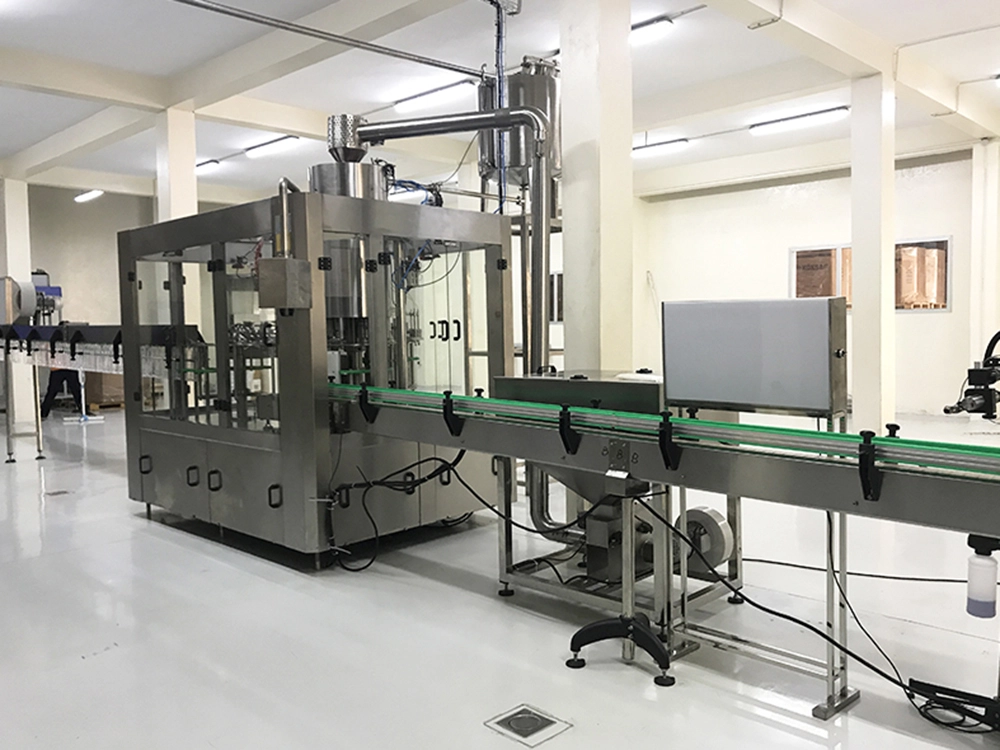
The Jndwater juice bottle filling machine is mainly used to accurately fill juice into various packaging bottle types. It is widely used in the filling of liquids such as juice, tea drinks, functional drinks, etc. small juice filling machine is suitable for filling PET bottles, glass bottles, and cans of various capacities and shapes.
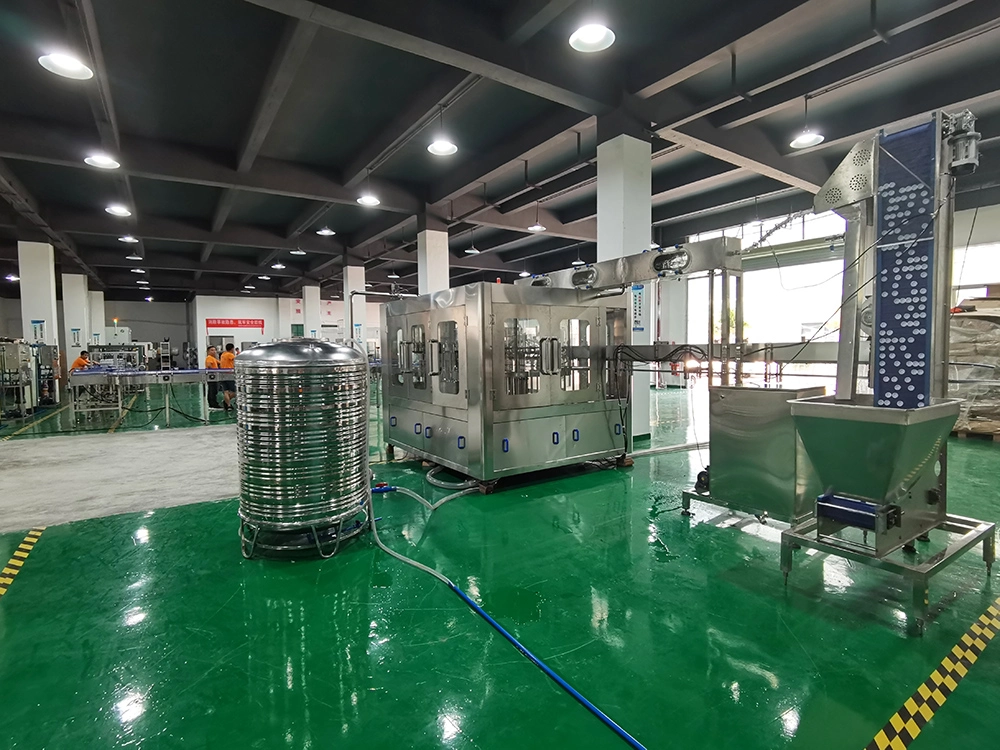
Jndwater juice filling machine can accurately and efficiently fill juice into bottles or cans. Whether it is pure juice or mixed juice, it can achieve high-quality filling to meet the market demand for juice products.