Table of Contents
- Why machine selection affects output, waste, labor, and investment risk
- What a water filling machine does in a bottled water production line
- How to match manual, semi-automatic, automatic, and complete line systems to production scale
- How rinsing, filling, capping, labeling, packing, and palletizing work together
- Key buying factors: capacity, bottle size, hygiene design, filling accuracy, automation, components, layout, and after-sales support
- How J&D Water supports bottled water factories with turnkey engineering, quality control, and global service
- The next step: turn bottle size, output target, and factory layout into a practical machine configuration
Buying the Wrong Machine Costs More Than You Think
A water filling machine can look efficient on a quotation sheet and still drain profit every day through unstable output, slow bottle changeovers, poor cap sealing, wasted water, and avoidable labor. Many buyers focus first on bottles per hour, but real factory performance depends on a wider system: water treatment stability, bottle supply, rinsing hygiene, filling accuracy, capping torque, labeling quality, packing speed, installation planning, and service response when production stops.
That is why choosing a water bottling machine , drinking water filling machine should feel less like buying a single piece of equipment and more like planning a production line that must run under pressure. A startup brand may need a compact automatic filling machine that protects cash flow. A growing bottled water plant may need a 3-in-1 rinsing filling capping machine to stabilize commercial output. A large manufacturer may need a complete bottled water production line with bottle blowing, treatment, filling, labeling, packing, and palletizing working as one flow.
J&D Water builds complete beverage equipment sets for bottled water, juice, tea, energy drinking, carbonated drinking, alcoholic beverages, and other liquid products. Founded in 2008 in Shenzhen, Guangdong, China, the company supports turnkey projects, OEM and ODM services, and global beverage factory projects across 125+ countries and regions. Its company profile notes ISO9001 quality management certification, CE-certified products, food-grade stainless steel construction, more than 80 hours of pre-delivery continuous operation testing, and dedicated 7x24 customer service.
Share your bottle size, target capacity, water source, cap type, and factory layout to receive a recommended water filling machine configuration for your plant.
What Is a Water Filling Machine?
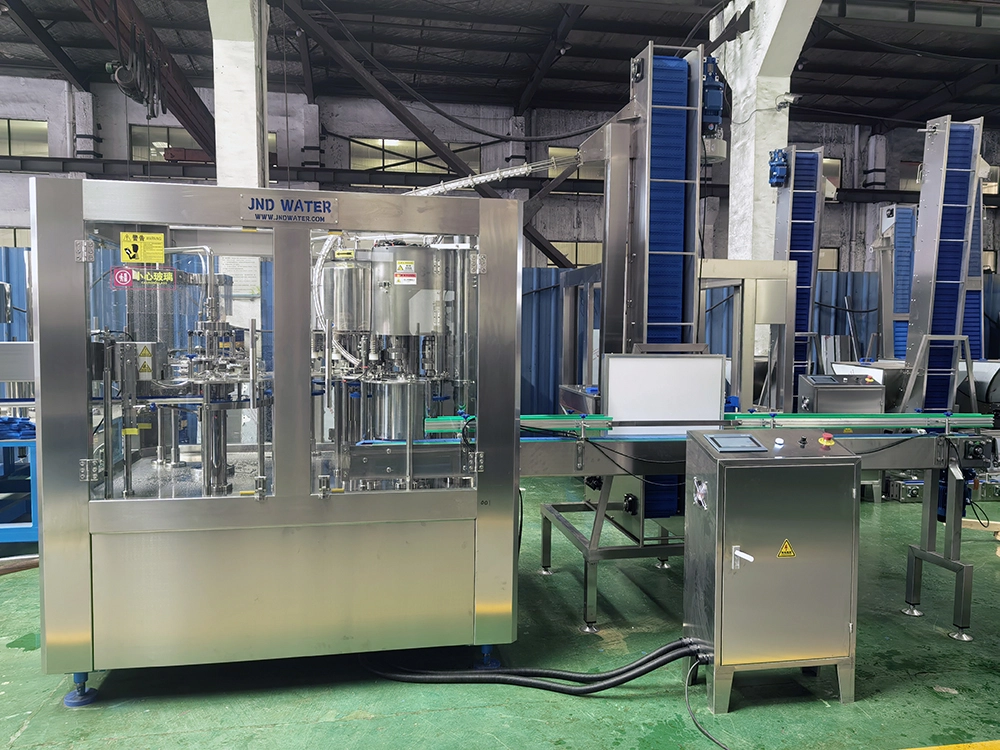
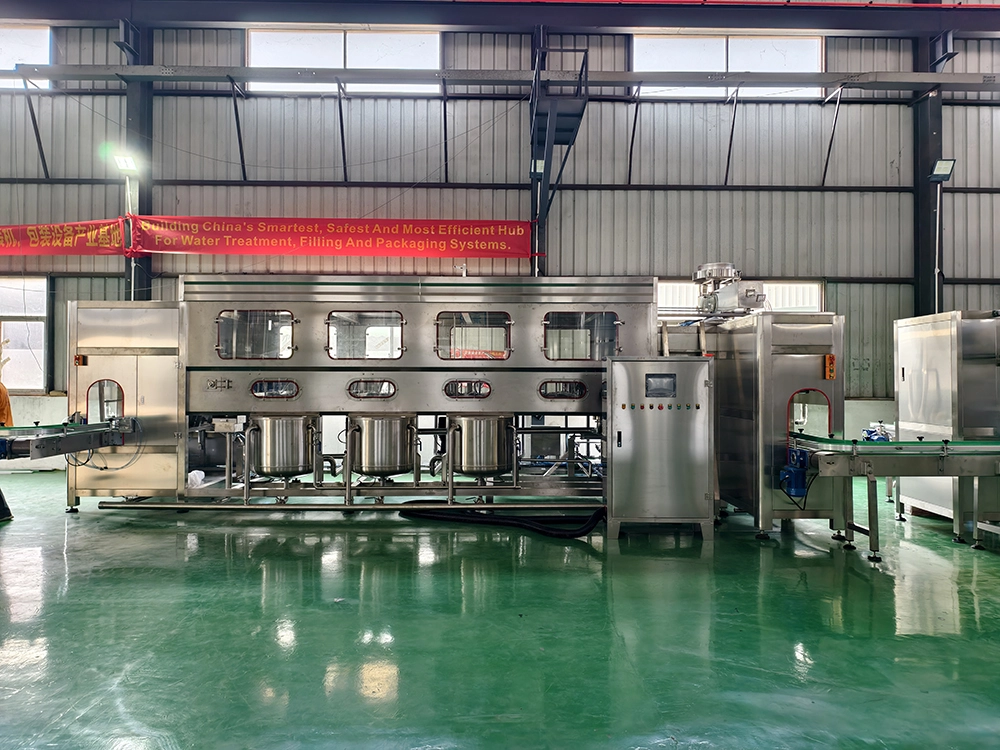
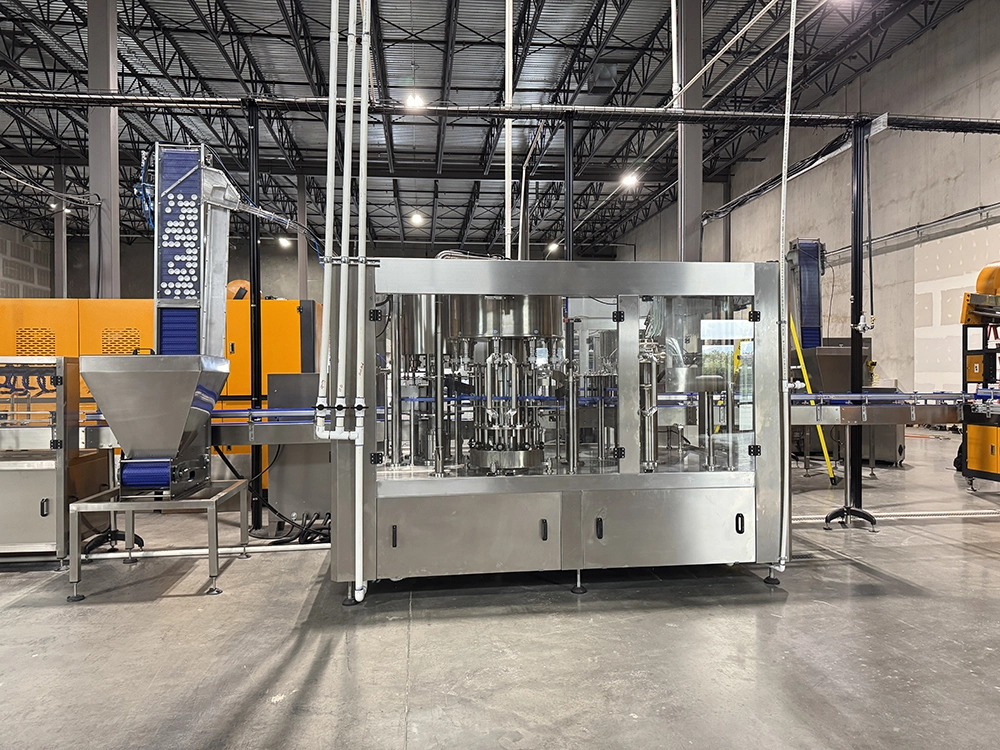
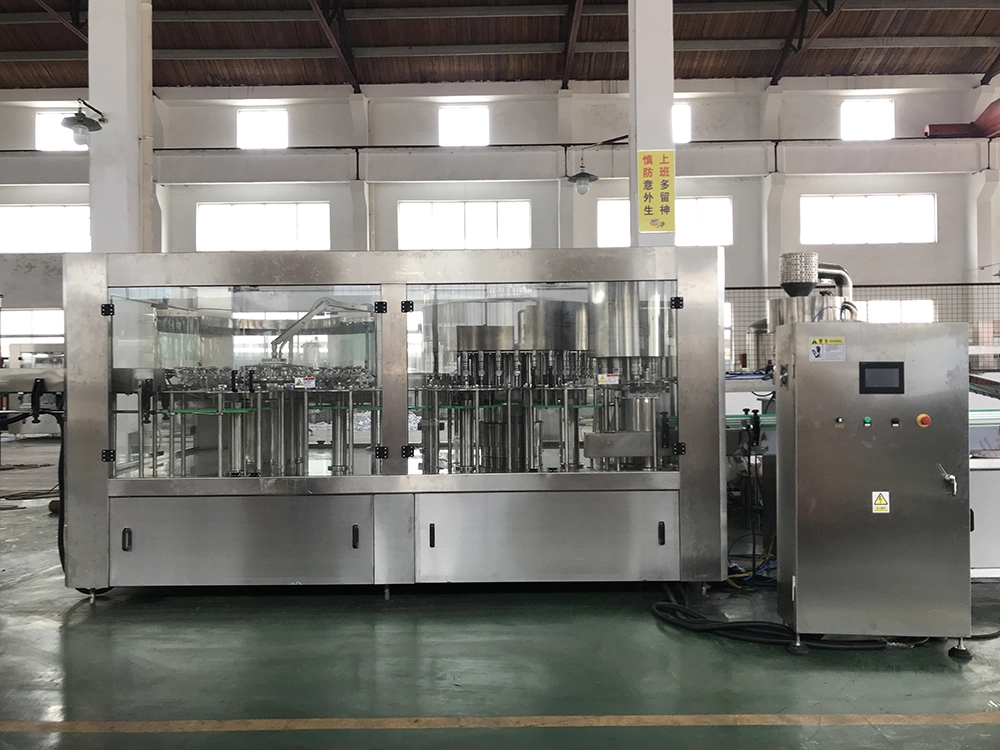
A water filling machine is industrial equipment that rinses containers, fills purified water or mineral water into bottles, and seals them with caps. In modern bottled water plants, automatic water filling machines often use a 3-in-1 monoblock design that combines rinsing, filling, and capping in one continuous process. This design helps factories improve hygiene, reduce manual handling, increase filling accuracy, and keep output more stable during long production shifts.
In practical terms, the machine sits at the heart of the bottled water production line. Water treatment prepares safe, stable water quality before filling. Bottle blowing or bottle feeding supplies containers. The filling machine controls the key moment when treated water enters the bottle. Capping protects the product after filling. Labeling and packing then turn finished bottles into sellable goods for warehouses, retailers, distributors, or export markets.
Best-Fit Match for Fast Decisions
- For startups: semi-automatic or compact automatic water filling machines help test a local market with lower initial investment.
- For growing factories: fully automatic 3-in-1 rinsing, filling, and capping machines improve output stability and reduce repetitive labor.
- For industrial plants: high-speed bottled water production lines can integrate bottle blowing, water treatment, labeling, packing, and palletizing.
- For procurement teams: the key buying factors include capacity, bottle size, hygiene design, automation level, component quality, installation support, and long-term operating cost.
Water Filling Machine Types Should Match Your Real Production Scale
The best machine is not always the fastest machine. It is the machine that fits your current order volume, future growth plan, container format, operator skill level, factory space, and available utilities. A line that outruns your bottle supply, water treatment system, or packing section will still create bottlenecks. A line that starts too small can force another major investment too soon.
Manual and Semi-Automatic Water Filling Machines
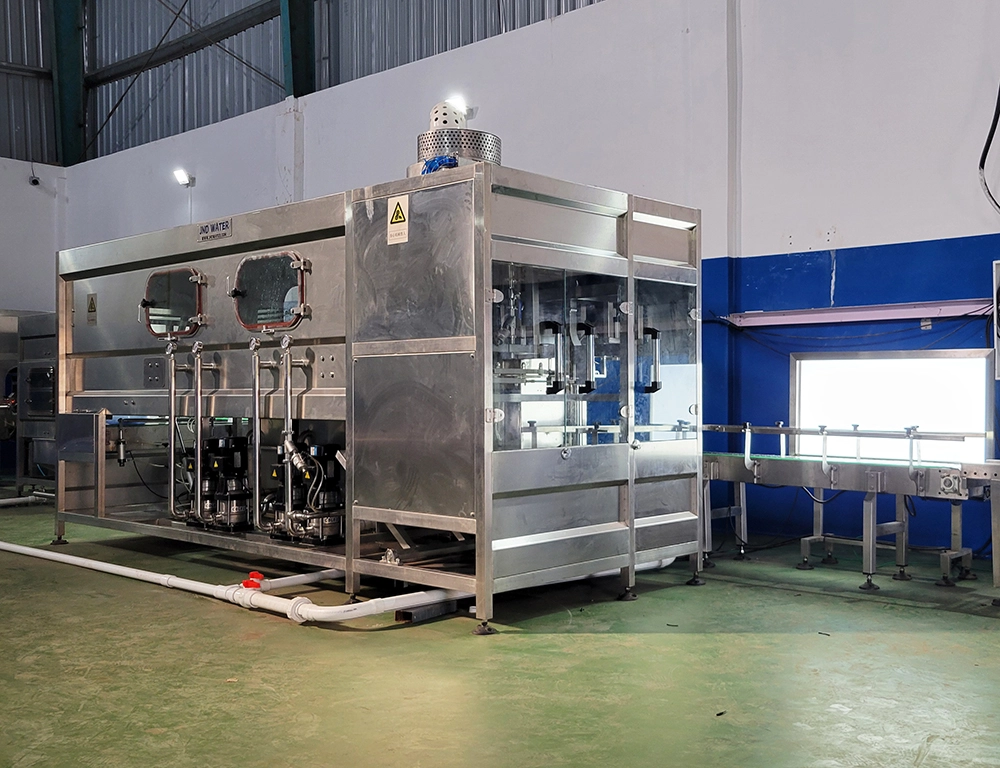
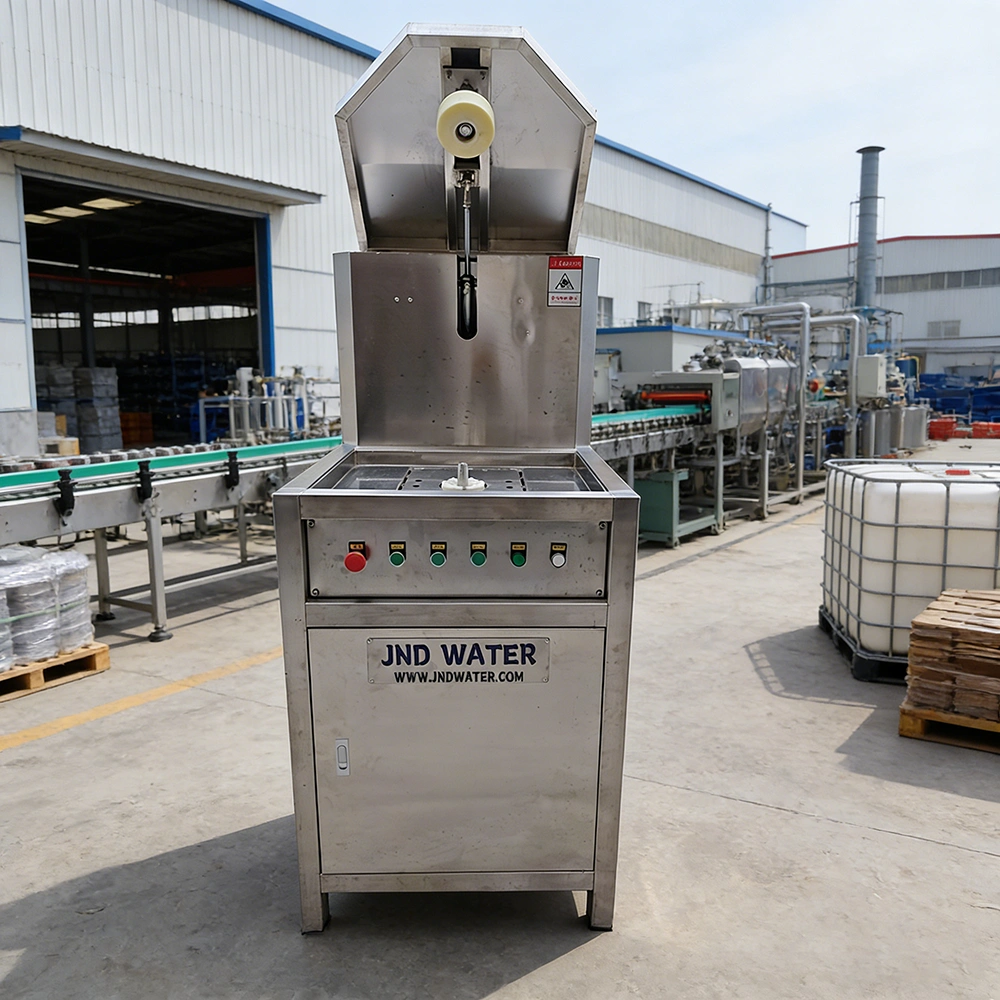
Manual and semi-automatic water filling machines suit small-batch production, startup testing, local water brands, pilot plants, or factories that want to enter the bottled water market with controlled investment. These systems usually require more operator involvement in bottle loading, filling control, cap placement, or finished bottle handling. Their main advantage is lower upfront cost. Their main limitation is labor dependency.
For a small producer, that trade-off can make sense. You may want to validate demand before building a fully automatic line. You may also produce for a limited local distribution radius where output speed does not drive the entire business model. But as orders grow, labor cost, inconsistent bottle handling, filling variation, and slower shift output become harder to ignore.
Automatic 3-in-1 Water Filling Machines
An automatic 3-in-1 water filling machine integrates bottle rinsing, water filling, and cap sealing into one compact monoblock. For many bottled water factories, this becomes the practical center of commercial production. Bottles move through the system with less human contact. Rinsing prepares the container before filling. Filling valves control water level or volume. The capping unit seals each bottle before it leaves the machine.
This structure helps factories reduce handling steps and improve hygiene control. It also lowers the labor cost per bottle because operators supervise the line instead of touching every container. For brands that sell through supermarkets, distributors, hotels, offices, schools, or regional retail channels, a stable automatic line often delivers a better balance between investment, capacity, and daily operating efficiency.
J&D Water provides integrated 3-in-1 systems and Combiblock solutions that can combine bottle blowing, rinsing, filling, and capping into an automated production process. This matters because the bottle supply stage and filling stage must match each other. If bottle blowing runs too slowly, the filler waits. If filling runs ahead of packing, finished bottles pile up. A coordinated system reduces those friction points before they become daily production headaches.
Complete Bottled Water Production Lines
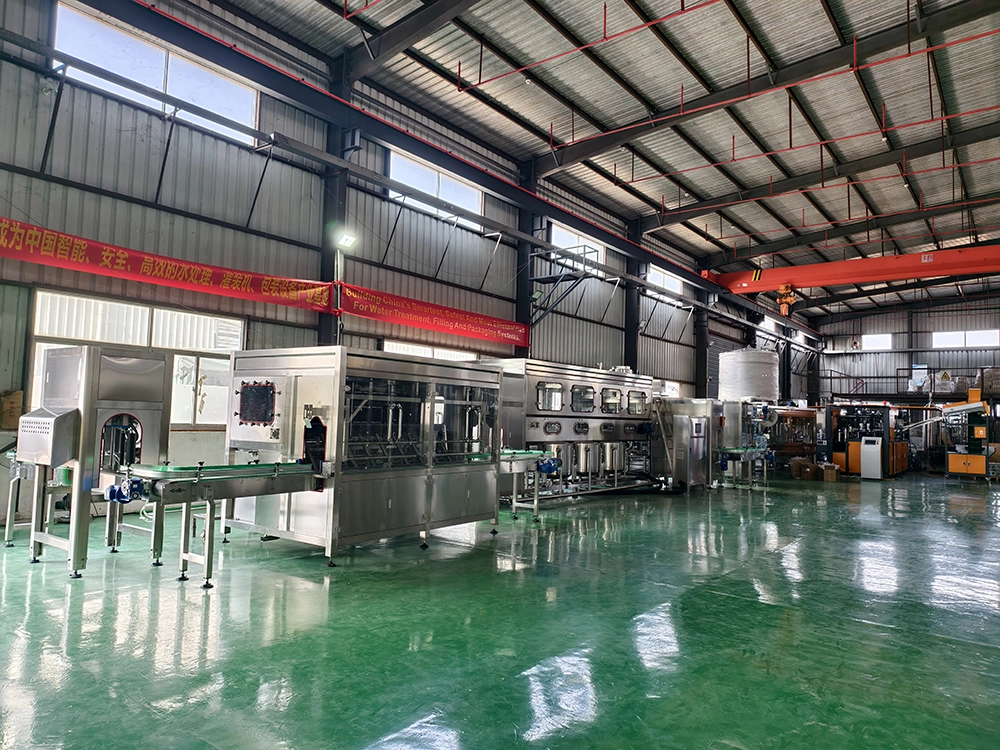
A complete bottled water production line connects the major systems that a commercial factory needs: water treatment, bottle blowing, air conveyor, rinsing filling capping machine, cap feeding, labeling, date coding, shrink wrapping or carton packing, conveying, palletizing, and sometimes film wrapping for finished pallets. Each section must match the others in speed, layout, utility demand, and maintenance access.
This approach suits medium and large-scale factories that want end-to-end automation rather than separate machines from different suppliers. It also helps international buyers who need a clearer project scope, from raw water treatment to packaged finished product. For a more complete system view, see the complete bottled water production line page and compare how each section supports final output.
Comparing Semi-Automatic, Automatic, and Complete Line Options
| Machine Type | Best For | Main Advantage | Main Limitation | Recommended Buyer |
|---|---|---|---|---|
| Semi-Automatic Water Filling Machine | Small batches and startup testing | Lower initial investment | Higher labor involvement | New water brands and local producers |
| Automatic 3-in-1 Water Filling Machine | Stable commercial production | Integrated rinsing, filling, and capping | Requires better factory preparation | Growing bottled water plants |
| Complete Bottled Water Production Line | Medium to large-scale factories | End-to-end automation | Higher planning requirements | Industrial water and beverage manufacturers |
How a Water Filling Machine Works Inside the Line
A bottled water line looks simple from the outside because the final product is clear water in a sealed bottle. Inside the factory, however, the process depends on timing and discipline. Water must meet the required quality. Bottles must arrive clean and undamaged. Caps must seal correctly. Labels must align. Packing must keep pace. When one section drifts, the whole line feels it.
Step-by-Step Production Flow
- Water treatment: Raw water passes through suitable purification processes such as filtration, reverse osmosis, ultrafiltration, UV sterilization, or other treatment methods depending on the water source and product requirements.
- Bottle preparation: PET bottles, glass bottles, large containers, or other supported packaging formats enter the production flow through bottle blowing or bottle feeding.
- Rinsing: The machine cleans bottles before filling to reduce contamination risk and prepare the container for safe product contact.
- Filling: Treated water enters each bottle through controlled filling valves, with the system managing liquid level, volume consistency, and operating rhythm.
- Capping: Caps are sorted, supplied, placed, and tightened to protect the product during transport, storage, and sale.
- Labeling and packing: Finished bottles receive labels, date codes, shrink film, carton packaging, or palletizing support depending on the plant’s distribution model.
Process diagram: Water Treatment → Bottle Rinsing → Filling → Capping → Labeling → Packing → Palletizing.
This flow also explains why a buyer should not evaluate the filler alone. A fast filler with poor cap feeding will stop. A good filler with weak water treatment will not protect product quality. A clean machine with a cramped layout can make maintenance slow. The safest purchase decision considers the whole production chain.
Key Buying Factors for a Reliable Water Filling Machine
Procurement teams often compare price first because quotations are easy to line up in a spreadsheet. Yet the machine that looks cheaper can become expensive after installation if it wastes water, requires too many operators, stops often, or fails to support future bottle formats. A reliable selection process starts with the factory reality, not the catalog headline.
Production Capacity and Bottle Size
Capacity should start with demand, not ambition. Estimate your daily sales target, number of shifts, bottle volume, seasonal peaks, and expected growth over the next three to five years. A 500 ml bottled water line serving a regional retail network needs a different configuration from a 1.5 L family-size bottle line or a 5-gallon barrel project.
Buyers often ask for the highest possible bottles per hour, but bottle size changes the real output equation. Smaller bottles may run faster but require more caps, labels, packing materials, and warehouse handling. Larger bottles reduce unit count but need stronger conveying, suitable filling control, and reliable cap sealing. Your supplier should help calculate the practical line speed after considering bottle shape, water treatment flow, packing method, and operator workflow.
J&D Water’s company profile states that certain filling line configurations can reach high-speed capacities of up to 36,000 bottles per hour. For buyers, that number matters most when the surrounding systems can support it. Water treatment, bottle supply, cap feeding, label application, shrink wrapping, conveyors, and palletizing must all work at compatible speeds.
Hygiene Design and Contact Materials
Water has no strong color or flavor to hide production mistakes. If contamination enters the process, the brand pays for it through complaints, returns, regulatory pressure, or lost trust. Hygiene design should therefore sit near the top of the buying checklist.
Look for food-grade stainless steel contact parts, sanitary pipelines, cleanable surfaces, reliable bottle rinsing, and machine layouts that allow operators to inspect and maintain key areas. J&D Water’s company profile notes machine construction using food-grade stainless steel such as 304 or 316L for food and beverage applications, with hygienic design intended to comply with GMP, FDA, and international hygiene standards.
In bottled water production, the cleanest profit is the profit you do not lose to unstable hygiene, rejected bottles, or avoidable downtime.
Filling Accuracy and Waste Control
Overfilling looks harmless until the finance team multiplies the loss by thousands of bottles per hour. Underfilling creates a different problem: customers notice, distributors complain, and your brand looks careless. A good water filling machine should maintain consistent filling levels across long operating periods, not only during a short factory demonstration.
Stable filling depends on valve quality, tank design, control logic, bottle positioning, and the machine’s ability to handle real production conditions. It also depends on proper installation. Uneven floors, poor air supply, unstable bottle quality, or weak upstream treatment can all affect line performance. This is why pre-sales engineering and layout review matter before the machine ships.
Automation Level and Labor Cost
Automation does not simply replace people. It changes what people do. In a manual process, operators touch bottles, caps, cartons, and finished packs constantly. In an automatic process, operators monitor performance, reload materials, check quality, handle adjustments, and respond to alarms. The work becomes less repetitive and more supervisory.
The right automation level depends on labor cost, training level, production target, and factory management style. A small local brand may accept more manual work to protect startup capital. A factory that runs multiple shifts should calculate labor cost per bottle, not only machine price. Automated conveying, rinsing, filling, capping, labeling, packing, and palletizing can reduce human handling while improving repeatability.
Machine Structure, Components, and Build Quality
Two machines can share the same capacity on paper but perform very differently after six months. Build quality appears in the details: frame rigidity, welding quality, machining accuracy, electrical layout, guard design, filling valve stability, capping head reliability, and ease of cleaning. Small weaknesses create repeated stoppages. Repeated stoppages become missed shipments.
J&D Water’s company background highlights digital processing centers, CNC bending machines, CNC laser cutting, laser welding, and CAD-assisted design. These manufacturing practices support part accuracy and machine consistency. The company also states that production follows 6S management and that equipment runs continuously for more than 80 hours before delivery to check stability in production-like conditions.
Water Treatment Compatibility
A water filling machine cannot fix poor water treatment. If the upstream system fails to deliver stable purified water or mineral water at the required flow rate, the filler becomes the place where earlier problems become visible. Buyers should match the treatment system to raw water quality, product type, local standards, storage design, and filling speed.
Common treatment sections may include pre-filtration, activated carbon, precision filtration, reverse osmosis, ultrafiltration, UV sterilization, ozone treatment, or mineral adjustment, depending on the water source and product positioning. J&D Water’s company profile notes reverse osmosis and ultrafiltration systems with purification rates up to 99.9% for removing impurities while potentially retaining beneficial minerals, depending on the selected process.
Factory Layout and Utility Planning
A strong layout lets operators move safely, clean easily, reload materials quickly, and maintain the line without dismantling half the workshop. A weak layout turns every adjustment into a delay. Before ordering, prepare your floor plan, ceiling height, drainage, power supply, compressed air conditions, raw water supply, bottle storage area, cap and label storage, finished goods flow, and warehouse connection.
International buyers should also consider container loading, shipping route, installation sequence, customs requirements, spare parts planning, and local operator training. A turnkey supplier can help connect these details into one project plan instead of leaving the buyer to solve mismatched interfaces after delivery.
After-Sales Support and Spare Parts
Every production line needs service. The question is how quickly the supplier can respond, diagnose, and support the plant when output is at risk. Buyers should ask about installation guidance, commissioning support, operator training, spare parts lists, electrical documentation, maintenance schedules, and remote troubleshooting.
J&D Water maintains a dedicated after-sales service team and states a 7x24 customer service policy. For a bottled water plant, that support can matter as much as the machine itself. When a line stops during peak season, fast technical communication protects orders, distributor relationships, and cash flow.
Total Cost of Ownership Beats the Lowest Quotation
A low purchase price feels attractive before production starts. After startup, the real cost includes power, water loss, compressed air, operators, rejected bottles, spare parts, maintenance time, downtime, packaging waste, installation delay, and future expansion limits. A cheaper machine that loses ten minutes every hour can cost more than a stronger system that runs steadily.
To compare quotations fairly, ask each supplier for the same information: rated capacity, applicable bottle sizes, bottle changeover method, main material, contact material, electrical configuration, cap type, filling method, utility demand, machine dimensions, installation support, warranty terms, spare parts package, testing process, and delivery scope. This turns a price comparison into an operating comparison.
Also ask what the quotation excludes. Some offers look lower because they omit conveyors, water treatment, cap elevators, bottle air conveyors, labelers, shrink wrappers, compressors, installation, training, or spare parts. Those items do not disappear. They return later as extra cost or project delay.
Why Turnkey Capability Matters for International Buyers
Many factories do not struggle because one machine is bad. They struggle because different machines do not work smoothly together. The bottle blower sends bottles at one rhythm. The filler expects another. The labeler needs more spacing. The packing machine becomes the bottleneck. Operators solve the mismatch by stopping, waiting, and restarting the line.
A turnkey approach reduces that risk by designing the production flow as a connected system. J&D Water operates as a manufacturer, supplier, and distributor of complete beverage equipment sets, covering production lines for bottled water and other beverages. Its supported containers include PET bottles, glass bottles, cans, 5-gallon barrels, and pouches, giving buyers more flexibility when planning different product formats.
For international buyers, turnkey support also helps communication. Instead of coordinating separate suppliers for treatment, filling, labeling, packing, and palletizing, the project can follow one technical plan. This can simplify layout decisions, reduce interface disputes, and make commissioning more predictable.
Common Mistakes Buyers Should Avoid
One common mistake is buying for today only. If your market grows, you may outgrow the machine before it has paid back the investment. Leave room for future capacity, additional bottle sizes, or end-of-line automation where possible.
Another mistake is ignoring bottle quality. Lightweight PET bottles can deform if the line does not handle them properly. Unstable bottle dimensions can affect filling, capping, labeling, and packing. Share real bottle samples with your supplier early, especially if you plan to use custom bottle shapes.
A third mistake is treating installation as a final detail. Installation quality affects alignment, utilities, operator training, and long-term maintenance. Discuss layout, floor conditions, drainage, power, compressed air, and spare parts before shipment, not after the machines arrive.
The last mistake is choosing a supplier only by machine photos. Photos show surface appearance. They do not show engineering discipline, pre-delivery testing, documentation quality, service response, or whether the supplier understands your production target. Ask for a configuration that explains the logic behind each machine, not just a list of equipment names.
Where Bottled Water Production Lines Are Heading
Water filling equipment continues to move toward higher automation, cleaner designs, smarter controls, and better integration from bottle making to palletizing. Factories want more stable output with fewer manual touchpoints. They also want faster bottle changeovers, lower waste, easier cleaning, and clearer production data.
For buyers, this does not mean every factory needs the most advanced system on day one. It means the line should not block your next step. A practical machine configuration should serve current orders while leaving a path for better automation, more packaging formats, or higher output when the market justifies it.
Your Next Step: Turn Requirements Into a Practical Configuration
Before requesting a quotation, collect the details that shape the right water filling machine: raw water quality, finished product type, bottle material, bottle volume, cap type, target bottles per hour, working shifts, factory layout, power supply, compressed air supply, labeling style, packing method, budget range, and future expansion plan.
Then ask for a configuration that connects those details into a complete production flow. The right supplier should explain why each machine belongs in the line, how the capacity matches, what utilities the plant needs, how operators will run it, and how after-sales support will work after installation.
If you are planning a bottled water plant, upgrading an existing line, or comparing water filling machine suppliers, send J&D Water your bottle size, target capacity, water source, cap style, and workshop layout. A clear configuration now can prevent expensive corrections after the equipment reaches your factory.