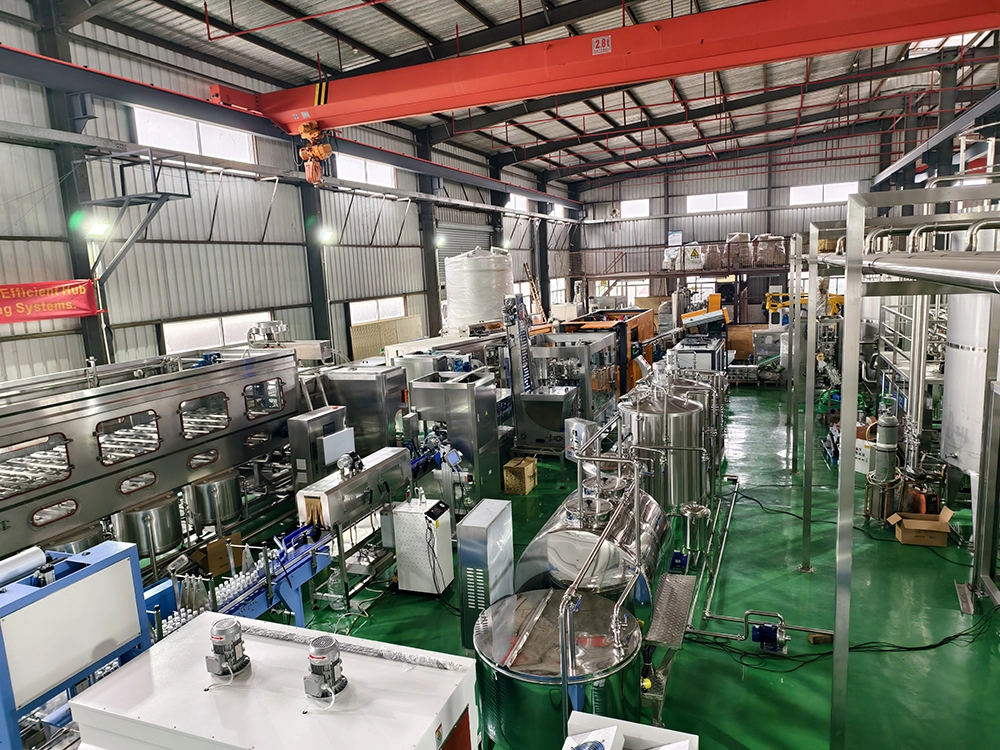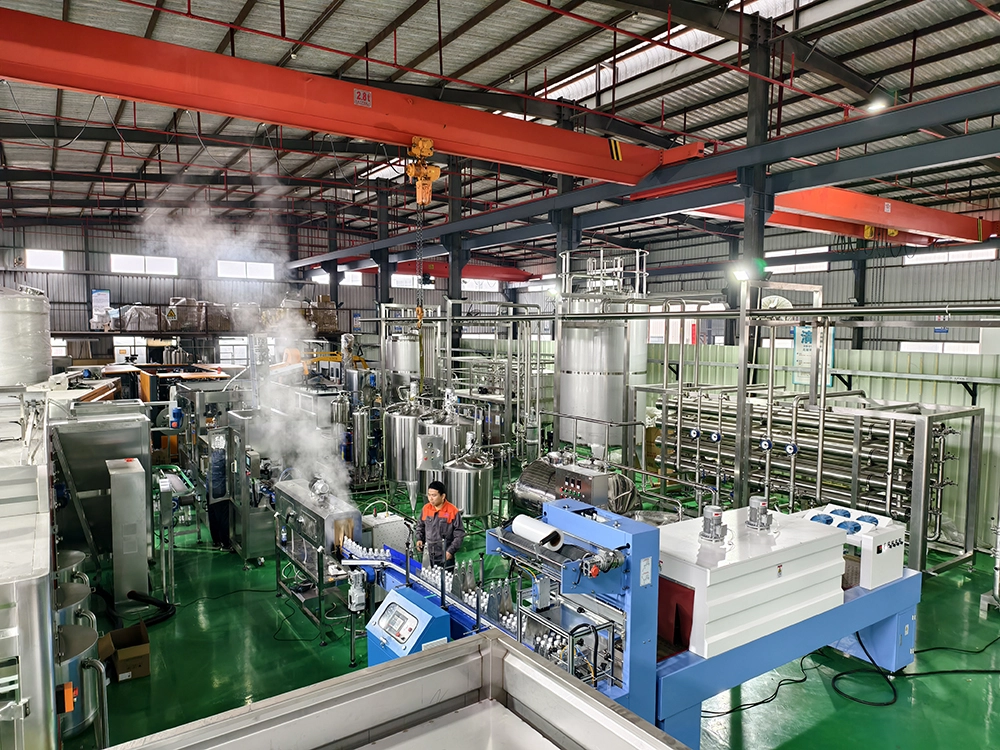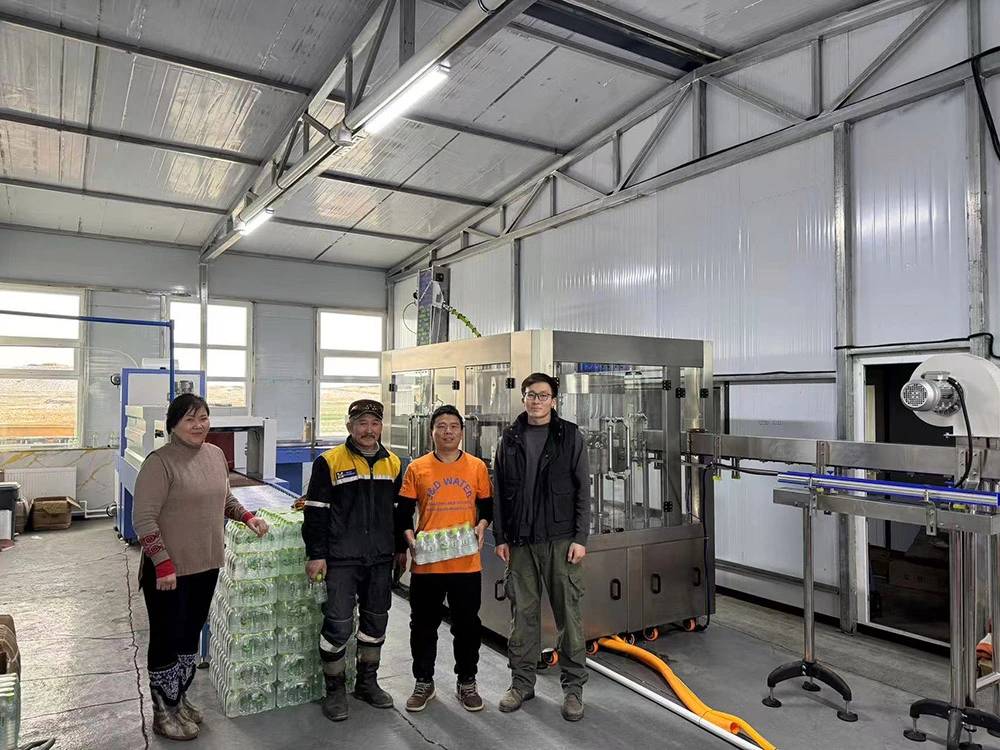
The production of carbonated beverages is a complex system engineering project that integrates water treatment, gas mixing, precision filling, and efficient packaging. Starting with the creation of a bottle of sparkling water, Jndwater will provide you with a complete analysis of the entire carbonated beverage bottling line process and the core equipment configuration for each stage.
I. Core Challenges in Carbonated Beverage Production
Before delving into the process, it’s essential to understand the technical challenges of carbonated beverage production:
- Precise CO₂ Content Control: The carbonation level in each bottle must be consistently maintained within a set value; significant deviations will affect the taste.
- Foam Control: CO₂ generates foam during bottling, affecting liquid level accuracy and sealing quality.
- Oxygen Content Control: Dissolved oxygen in water reacts with beverage components, impacting flavor and shelf life.
- Aseptic Maintenance: The mixture of syrup, water, and CO₂ is prone to microbial growth, requiring strict hygiene control.
II. Carbonated Beverage Bottling Line Process and Equipment
Configuration A complete carbonated beverage bottling line typically consists of the following seven core systems.
Flowchart Overview
Water source → Water treatment system → Deoxygenation unit → CO₂ mixing → Syrup → Syrup treatment → Proportional mixing → Preform → Blow molding machine → Bottle washing machine → Isobaric filling machine → Capping machine → Labeling machine → Packaging machine → Palletizing machine
Phase 1: Water Treatment System

Water constitutes 85%-95% of carbonated beverage components, and its quality directly affects the final product’s taste.
The process involves removing impurities from the water, adjusting mineral content, and eliminating microorganisms.
Key Equipment:
- Multi-media Filter: Removes suspended solids and colloids from the water.
- Activated Carbon Filter: Adsorbs residual chlorine, organic matter, and odors.
- Softener: Reduces water hardness, preventing scaling in subsequent equipment.
- Precision Filter (5μm/1μm): Intercepts fine particles, protecting the reverse osmosis membrane.
- RO Reverse Osmosis System: Produces pure water, removing 90%-99% of dissolved salts.
- UV Sterilizer/Ozone Generator: Final disinfection, ensuring microbial safety.
JNDWATER Solution: Our water treatment system can provide single-stage/double-stage reverse osmosis configurations based on the source water’s TDS value and customer needs, and integrates online water quality monitoring instruments to provide real-time feedback on key parameters such as conductivity and pH value.
Stage Two: Deoxygenation and Cooling
This is a crucial step unique to carbonated beverage production. Dissolved oxygen in water will:
- React with beverage components through oxidation, leading to flavor degradation
- Occupy the dissolution space of CO₂, affecting carbonation efficiency
The goal is to reduce dissolved oxygen in the water to below 0.1 ppm and cool the water to 2-4°C.
Key Equipment:
- Vacuum Deoxygenation Tower: Utilizes a vacuum environment to remove dissolved oxygen from the water.
- Plate Heat Exchanger: Cools the water to the low temperature required for carbonation.
The deoxygenated water must be transported in a closed pipeline to prevent re-exposure to air.
Phase 3: Syrup Processing and Mixing
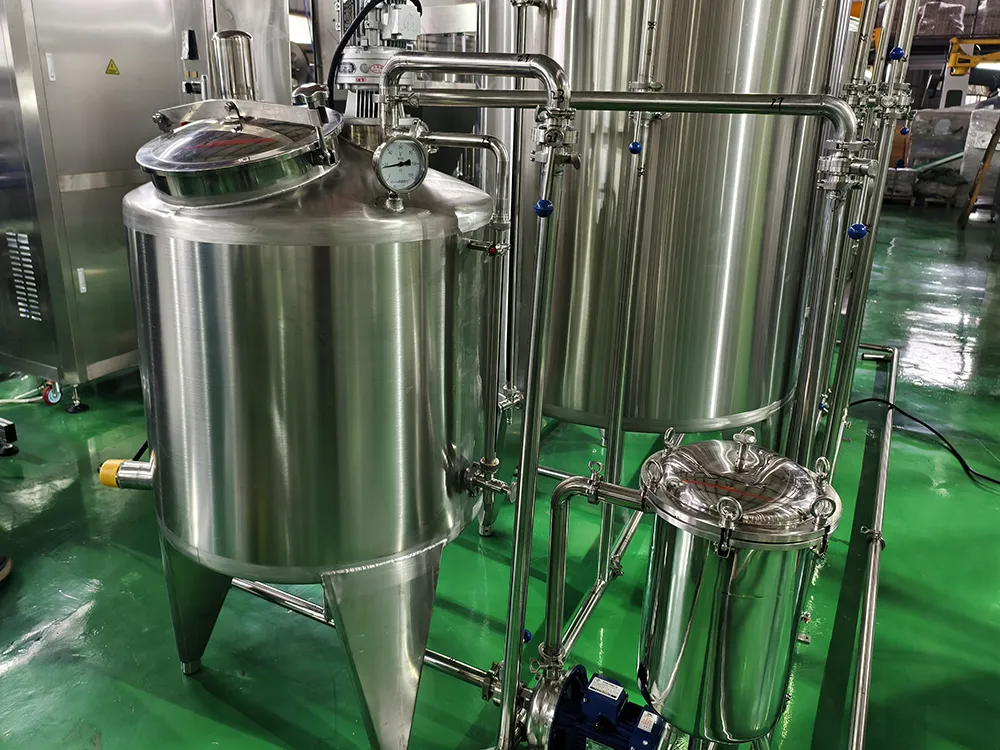
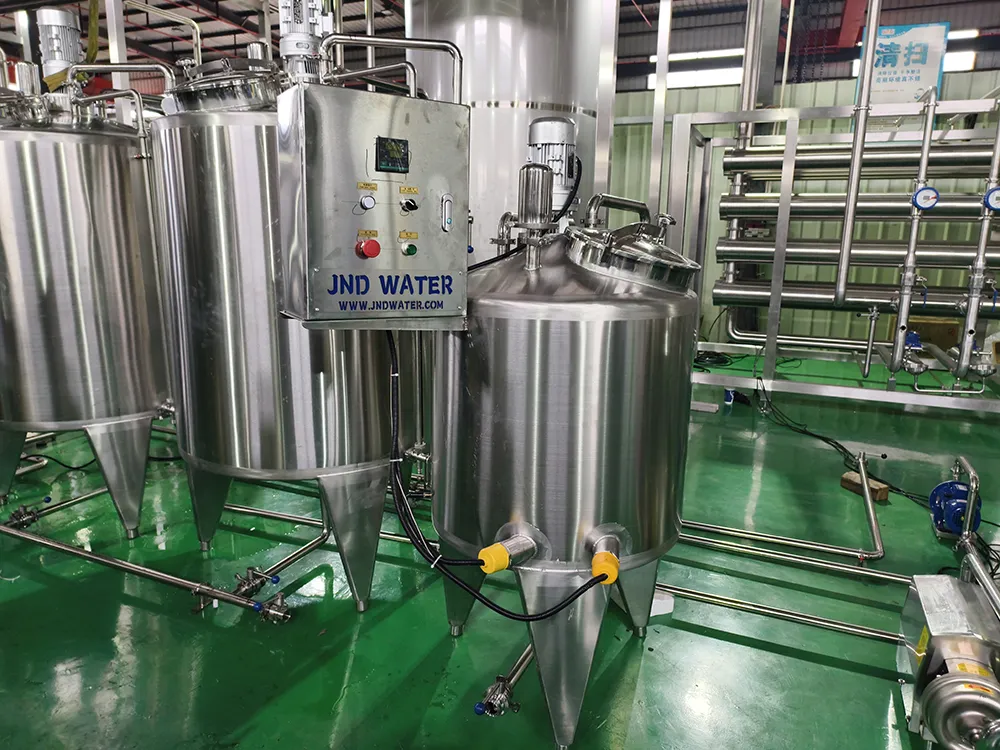
The core flavor of carbonated beverages comes from the syrup, which requires precise proportioning and mixing with carbonated water.
Key Equipment:
- Syrup Mixing Tank: Equipped with a stirrer for dissolving powdered sugar or mixing concentrate.
- Plate Sterilizer: Performs ultra-high temperature (UHT) sterilization on the syrup, then cools it for later use.
- Proportioning Mixer: Precisely mixes the syrup and carbonated water at a set ratio (e.g., 1:5).
- Online Saccharimeter: Monitors the saccharimeter content of the mixture in real time and provides feedback for adjusting the proportions.
JNDWATER Solution: Our online proportioning system uses a mass flow meter for control, achieving a mixing accuracy of ±0.1°Brix, ensuring consistent flavor in every bottle of beverage.
Stage Four: Carbon Dioxide Mixing
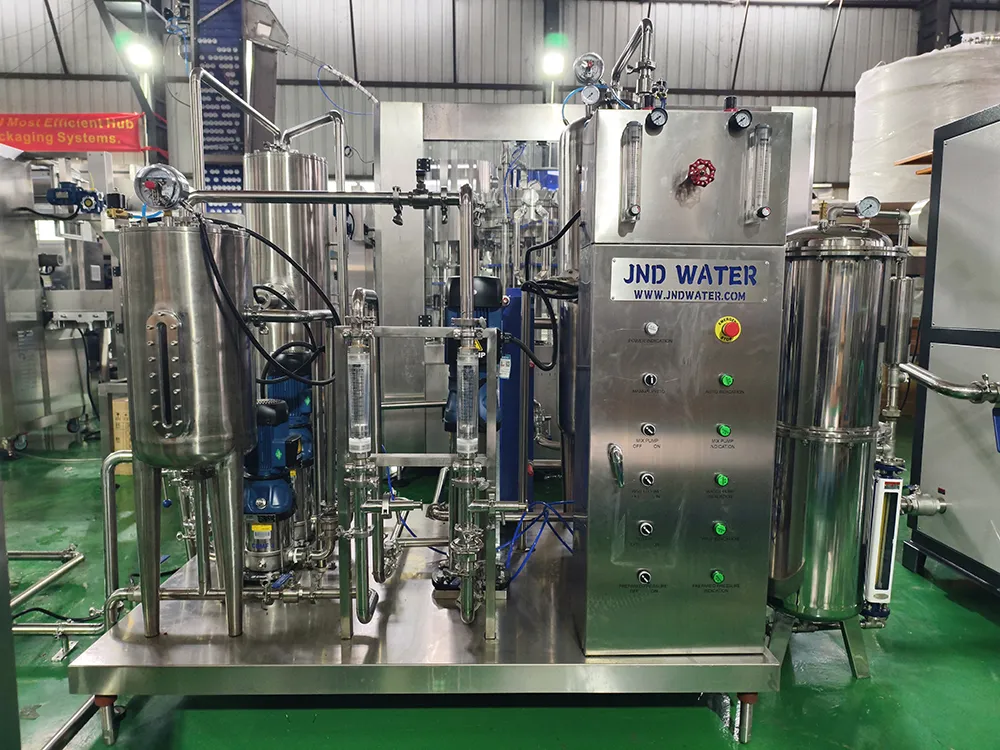
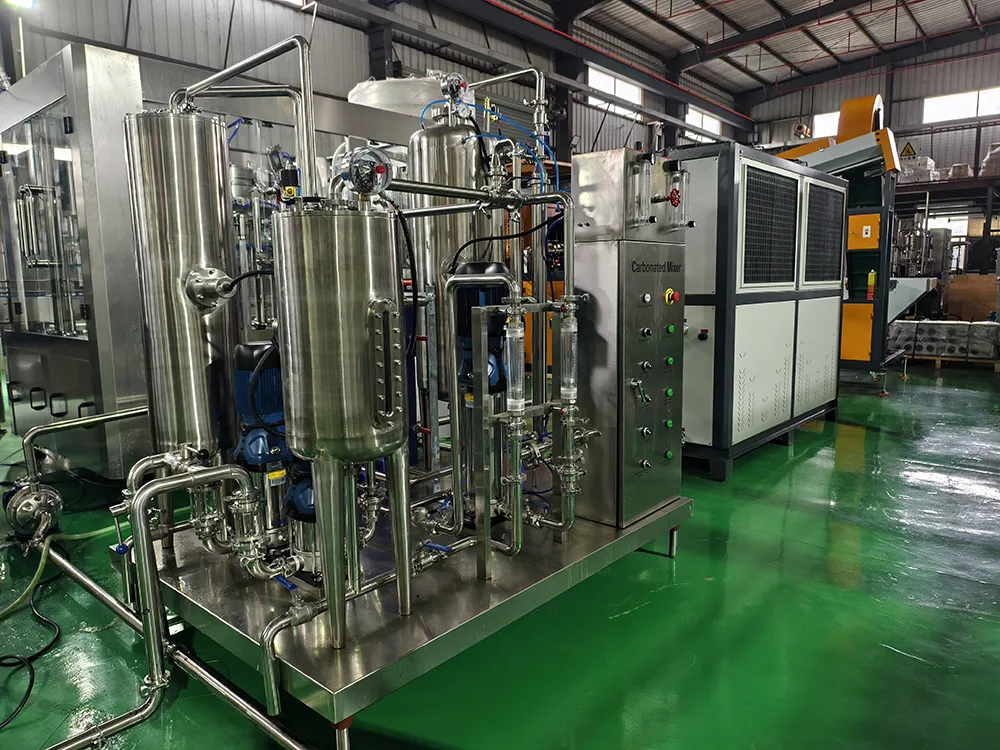
This is the core technological step in carbonated beverage production, directly determining the product’s carbonation content and taste. Under low temperature and high pressure conditions, food-grade CO₂ is uniformly dissolved in water.
Key Equipment:
- CO₂ Mixer: Ensures full contact and dissolution of CO₂ with water at 2-4℃ and 0.3-0.5MPa pressure.
- Venturi Jet: Efficiently mixes gas and liquid, improving CO₂ dissolution efficiency.
- Online CO₂ Analyzer: Monitors CO₂ content in water in real time and adjusts the intake air volume accordingly.
CO₂ solubility decreases with increasing temperature; therefore, maintaining a low temperature is crucial. JNDWATER’s carbon dioxide mixing system employs multi-stage carbonization technology, achieving precise control of CO₂ content within ±0.1 vol.
Phase 5: Blow Molding and Washing
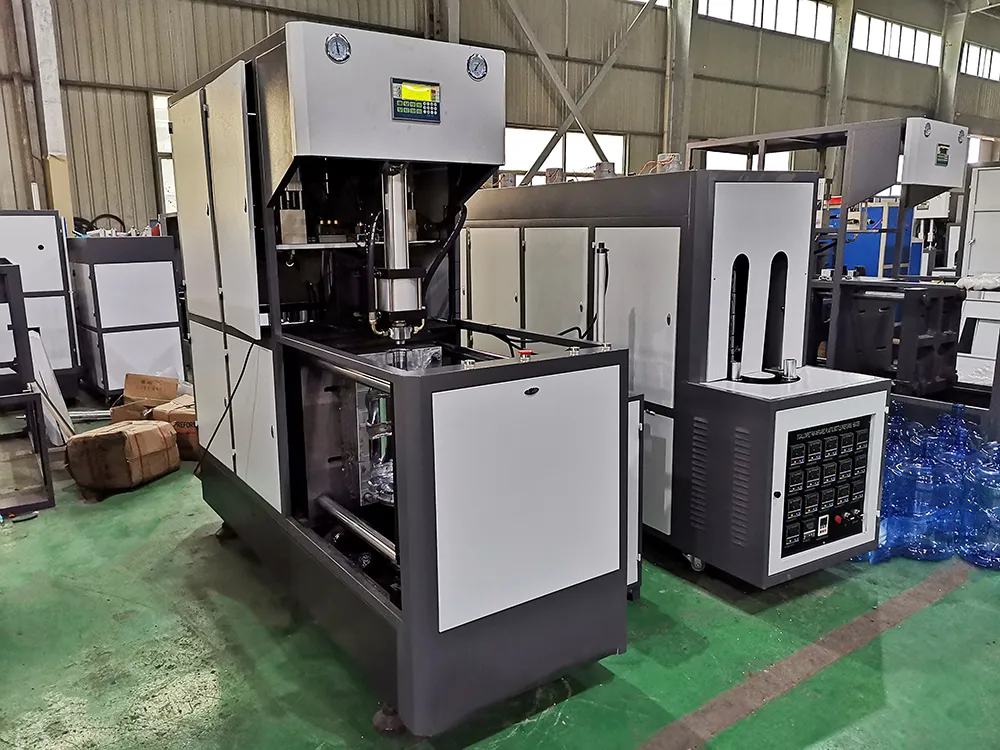
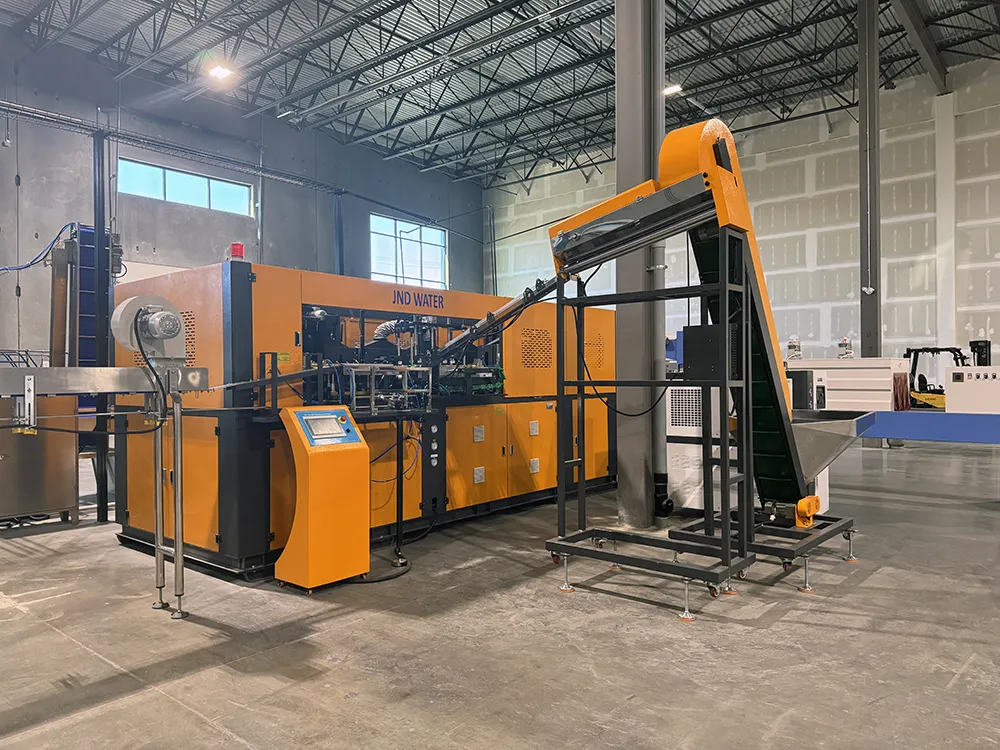
PET bottles are common containers for carbonated beverages and must possess sufficient pressure resistance.
Key Equipment:
- Fully Automatic Blow Molding Machine: Heats, stretches, and blow-fries the preform into bottles.
- Washing Machine: Cleans and disinfects the bottles internally, typically using disinfectant rinsing followed by sterile water rinsing.
- Pneumatic Conveyor System: Smoothly transports the cleaned bottles to the filling machine.
Technical Highlights: Carbonated beverage bottles require higher crystallinity and pressure resistance. JNDWATER’s blow molding machines are specifically designed for carbonated bottles, optimizing the stretching ratio and cooling process.
Phase 6: Isobaric Filling and Capping
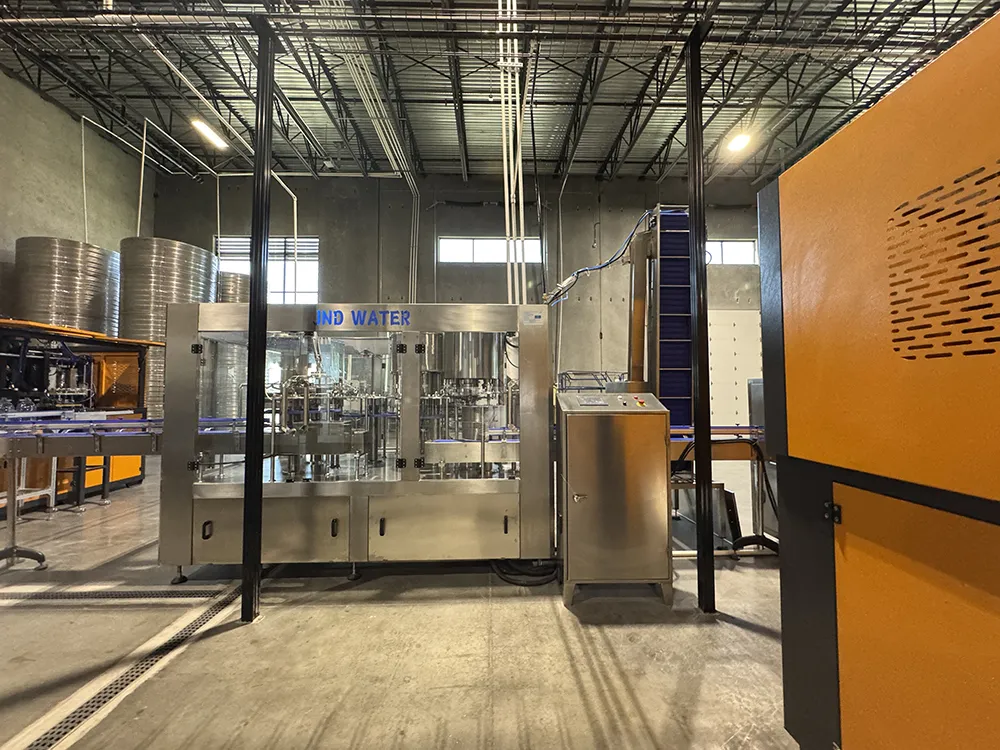
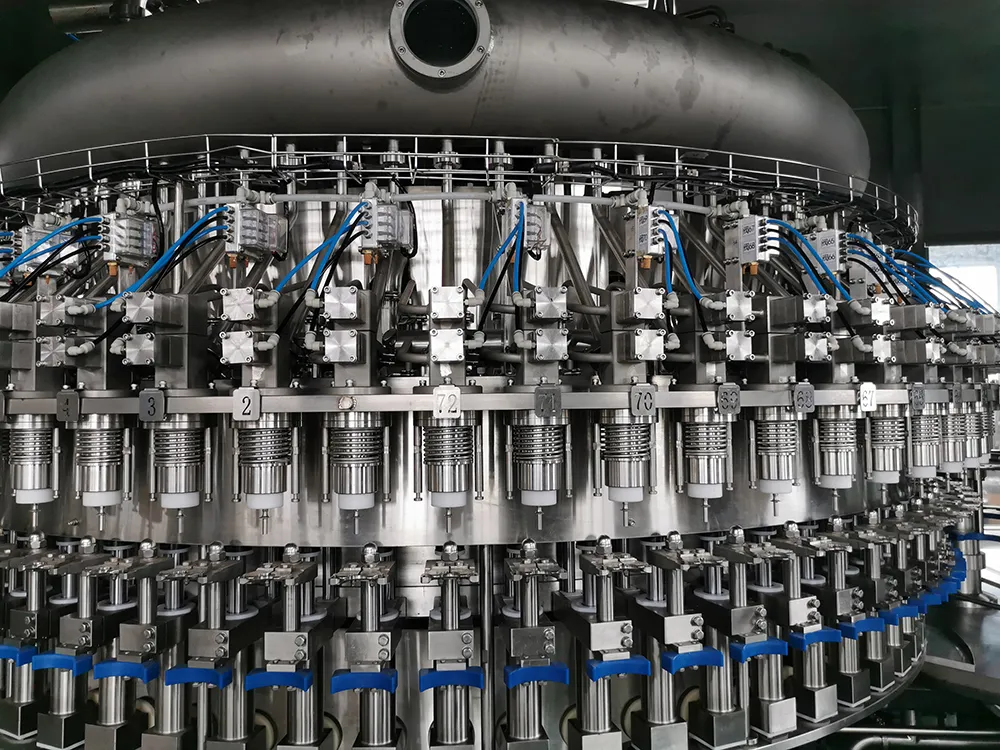
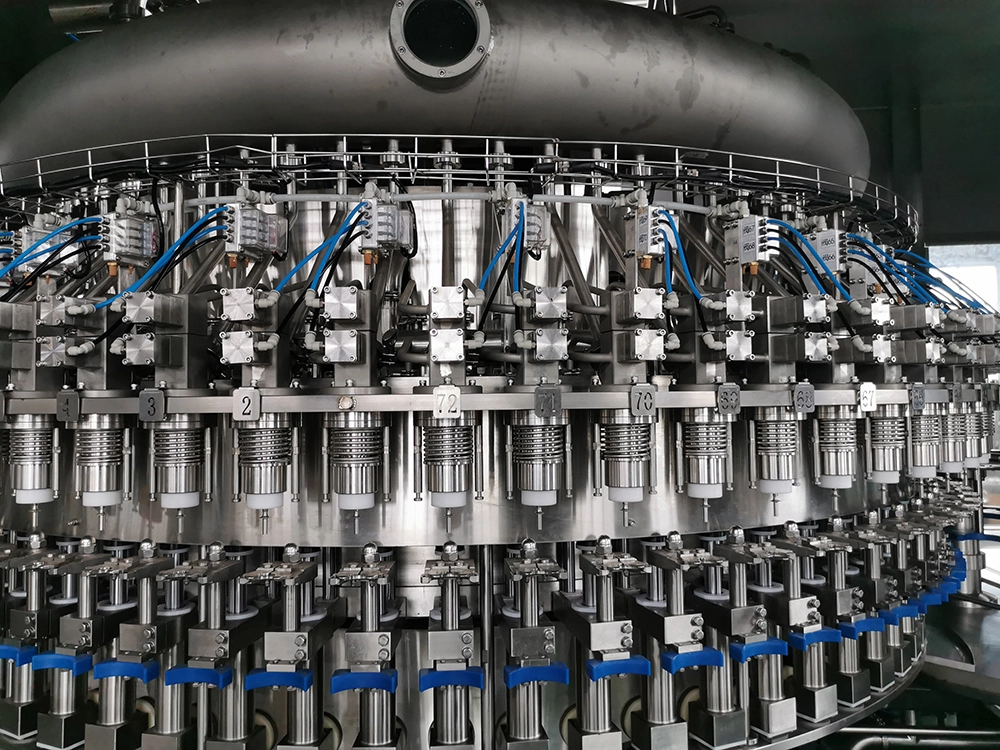
Carbohydrate filling must be carried out under isobaric conditions to prevent CO₂ escape and foam generation.
Core Task: While maintaining the pressure inside the bottle equal to the pressure in the storage tank, fill the bottle with the beverage and immediately cap it.
Key Equipment:
- Isobaric Filling Machine:
- Capping Machine: Immediately caps under pressure to prevent CO₂ leakage.
- CIP Cleaning System: Regularly performs thorough cleaning of the filling machine’s interior.
Our isobaric filling machine uses a short-tube filling valve structure, resulting in fast filling speed and precise liquid level control; each filling valve is independently adjustable to adapt to different bottle types. The capping machine is equipped with a torque monitoring system to ensure reliable sealing of each bottle.
Phase 7: Labeling and Packaging
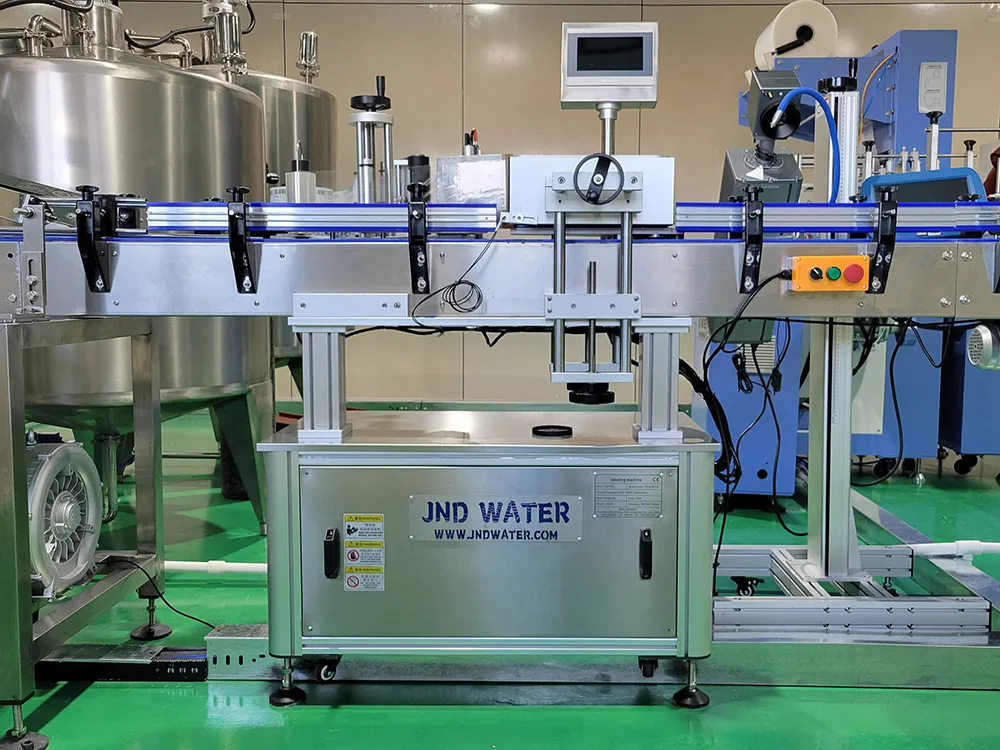
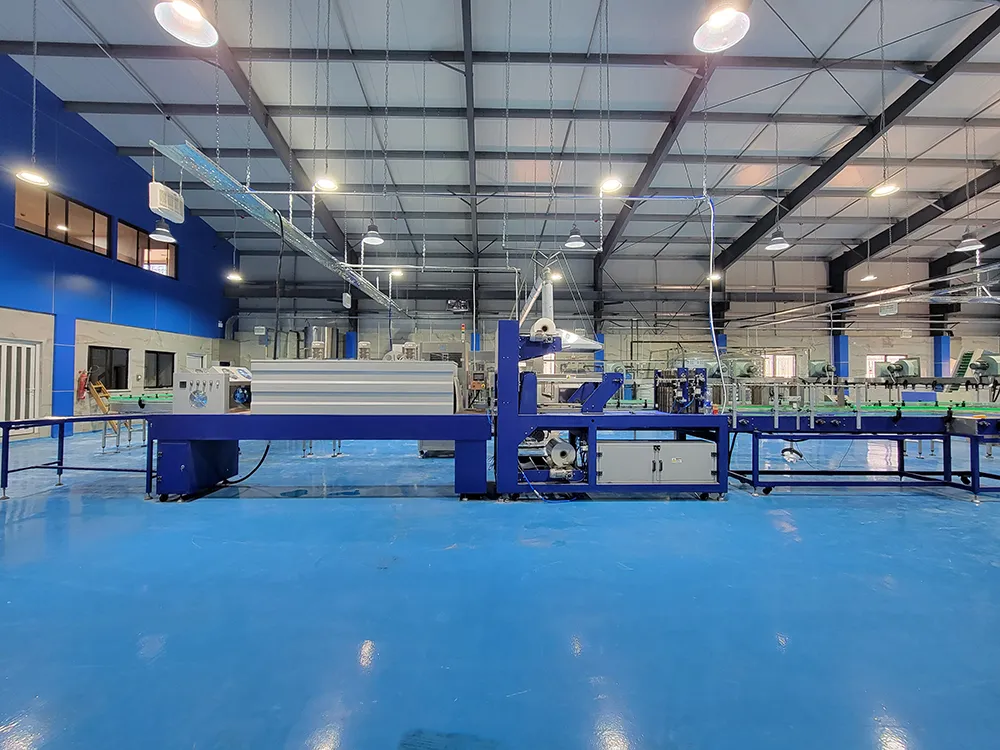
Key Equipment:
- Labeling Machines: Selected based on label type:
◦ Self-adhesive labeling machine: Flexible, quick changeover, suitable for multi-variety production
◦ Hot melt adhesive labeling machine: Low cost, suitable for large-scale single-product production
◦ Shrink sleeve labeling machine: Suitable for fully enclosed labels, aesthetically pleasing and anti-counterfeiting - Packaging Machines:
◦ Heat shrink film packaging machine: Wraps, heat-seals, and shrinks multiple bottles of products
◦ Carton packaging machine: Automatically opens, packs, and seals cartons
JNDWATER’s labeling machines use a servo drive system with a labeling accuracy of ±0.5mm; packaging machines are available in intermittent or continuous models to suit production capacity requirements.
Phase 9: Palletizing and Warehousing
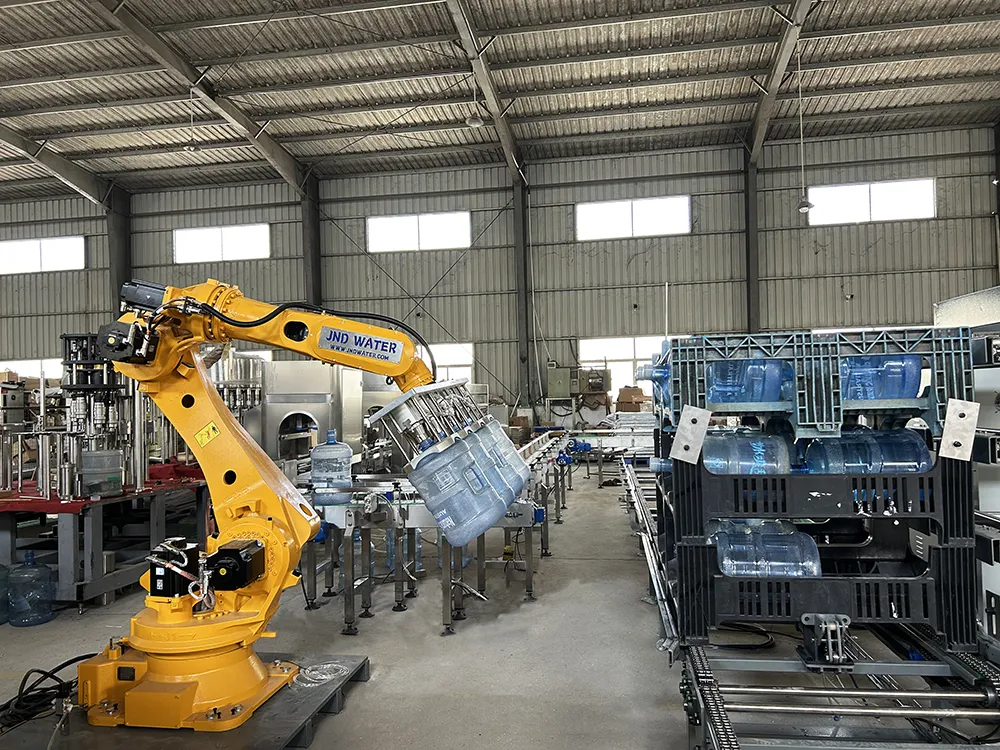
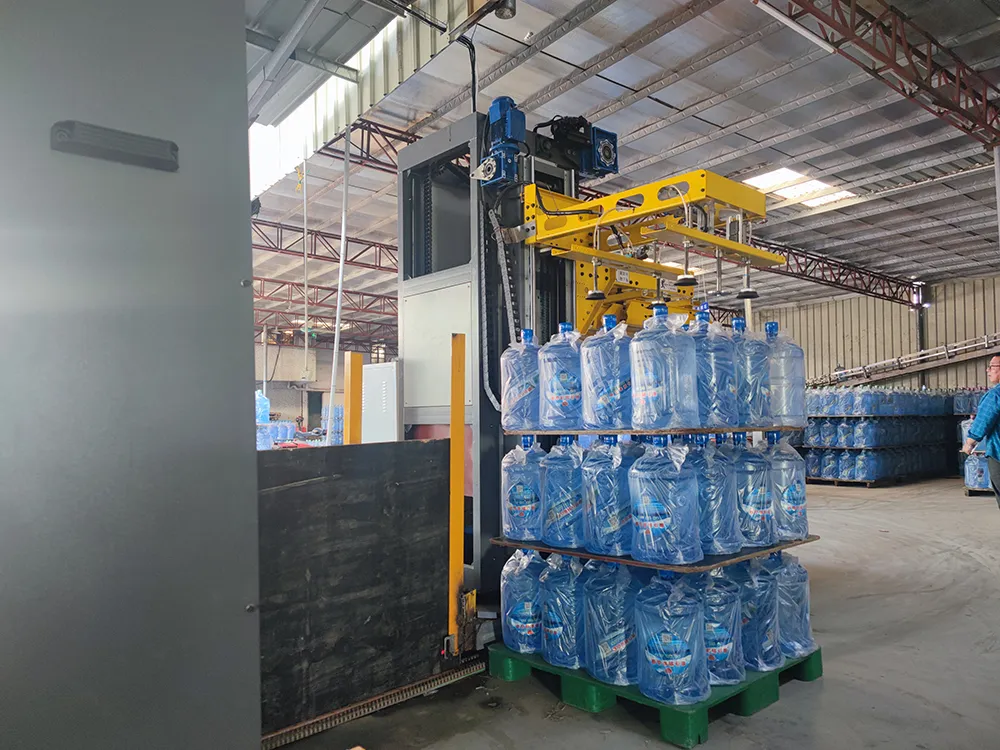
Key Equipment:
- Robotic Palletizer: Articulated robots grasp cartons or film wraps and stack them according to a set layer pattern.
- High/Low Palletizer: Designed for high-speed lines, with a simple structure and high speed.
- Pallet Conveying System: Automatically conveys empty pallets and delivers full pallets.
- Stretch Wrapper: Wraps stretch film around full pallets to secure the goods.
JNDWATER palletizers can seamlessly interface with packaging machines, support various packaging forms (cartons, film wraps, turnover boxes), and are equipped with an automatic pallet feeding system.
A successful carbonated beverage bottling line is a perfect combination of water treatment technology, gas mixing processes, precision filling control, and efficient packaging systems. The choices made at each stage directly impact the quality, cost, and market competitiveness of the final product.
With over a decade of industry experience and more than 9,000 equipment delivery cases worldwide, JNDWATER can provide customized solutions from single machines to complete plant projects. Whether you’re planning to build a small craft soda line or a large-scale international carbonated beverage factory, we can help you achieve your production goals with our professional technology and reliable service.
For more information on carbonated beverage bottling line configuration details or to obtain customized solutions, please feel free to contact the JNDWATER team.
- Syrup Mixing Tank: Equipped with a stirrer for dissolving powdered sugar or mixing concentrate.
- Plate Sterilizer: Performs ultra-high temperature (UHT) sterilization on the syrup, then cools it for later use.
- Proportioning Mixer: Precisely mixes the syrup and carbonated water at a set ratio (e.g., 1:5).
- Online Saccharimeter: Monitors the saccharimeter content of the mixture in real time and provides feedback for adjusting the proportions.
JNDWATER Solution: Our online proportioning system uses a mass flow meter for control, achieving a mixing accuracy of ±0.1°Brix, ensuring consistent flavor in every bottle of beverage.