In beverage factories, after products complete final labeling and packaging on the bottling line, the key task of the palletizing machine is to efficiently and stably stack them neatly onto pallets. Choosing the right palletizing machine is crucial for improving overall efficiency and reducing labor costs. JNDWATER, as a supplier of complete beverage production line solutions, provides a detailed analysis of the characteristics of several mainstream palletizing machines to help you make an informed decision.
Why Palletizing is a Helper for Efficiency Improvement
In the era of manual palletizing, the end of the production line often became a bottleneck: high labor intensity, unstable efficiency, risk of workplace injuries, and difficulty in keeping up with the pace of high-speed bottling lines. A suitable fully automatic palletizing machine can completely change this situation. It frees workers from repetitive labor, enabling continuous, precise, and high-speed operation 24 hours a day, directly increasing the output of the entire production line, ensuring uniform stacking quality, and reducing damage during transportation. It is not only an equipment upgrade, but also a key step towards intelligent and lean production management.
Detailed Explanation of Five Mainstream Palletizing Machine Solutions
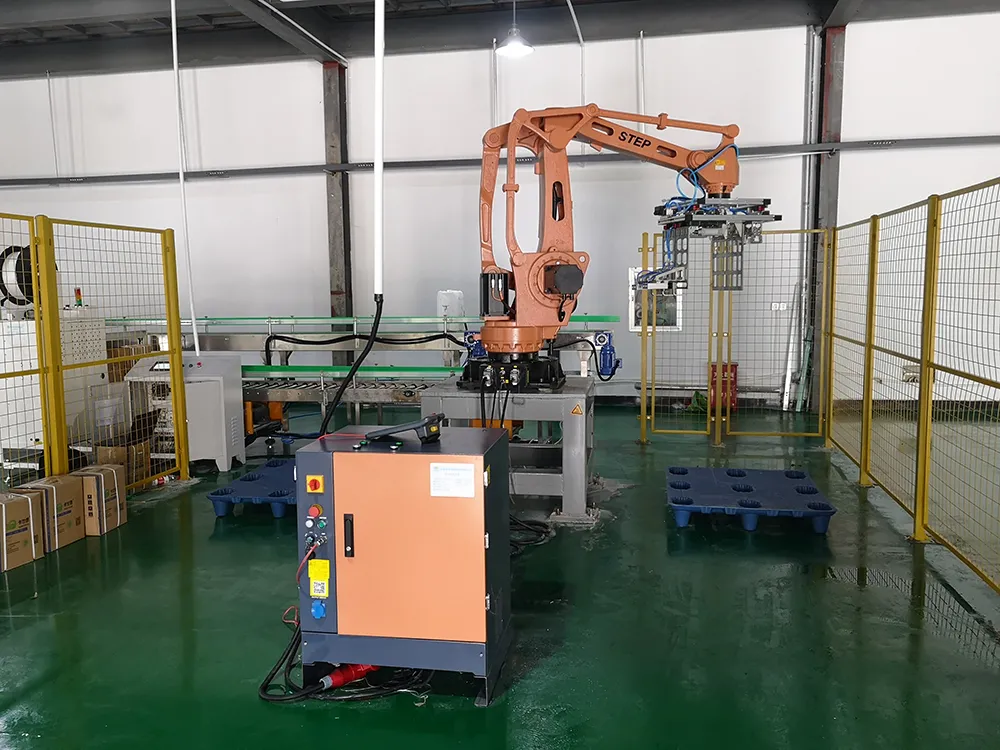
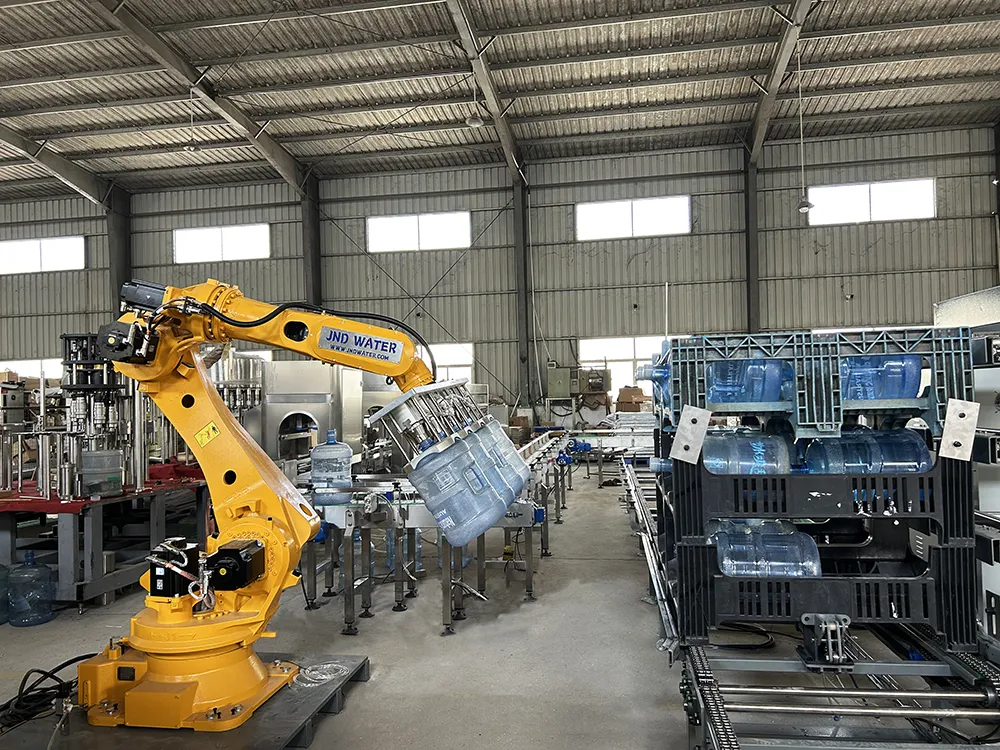
- Robotic Palletizer: Currently the most mainstream and flexible option. It mimics the human arm, possessing multiple rotating joints.
Core Advantages: Large working range and extremely flexible movement. By changing grippers, a single machine can easily handle products of various sizes and shapes, such as cartons, drums, and woven bags, making it ideal for production lines with diverse product lines and frequent product changeovers.
Applicable Scenarios: Production lines for fruit juice and tea beverages with diverse product specifications, or centralized palletizing stations requiring integration with downstream packaging machines.
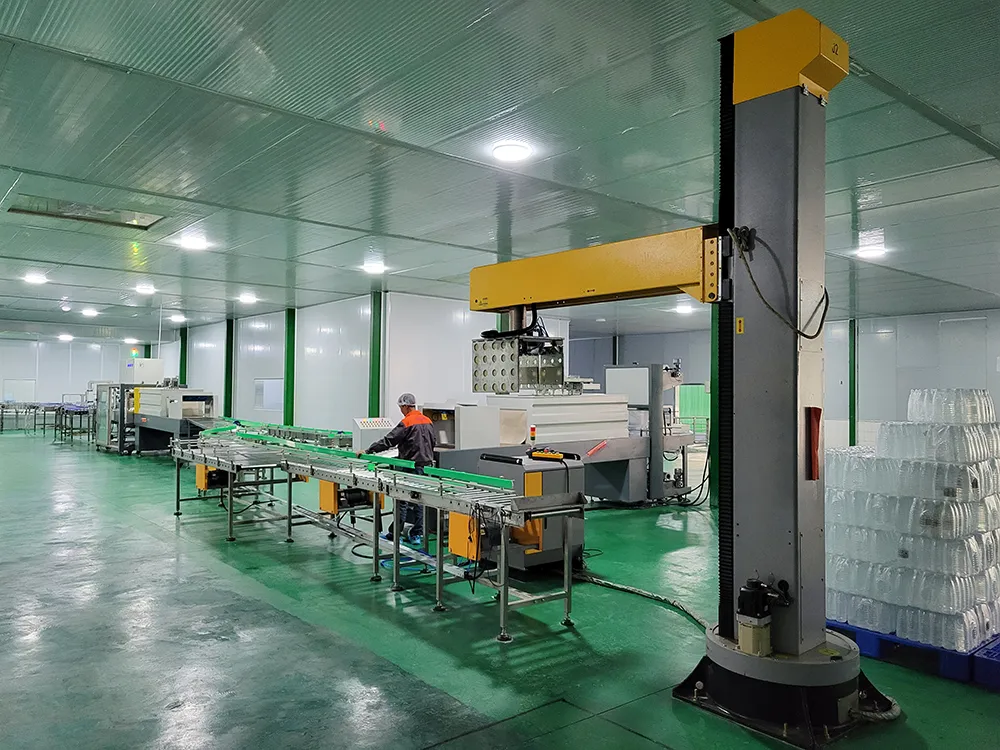
- Cartesian Coordinate Robotic Palletizer: It moves in three linear directions (X, Y, and Z), with a structure similar to a gantry.
Core Advantages: Simple structure, extremely fast operating speed, high positioning accuracy, and relatively convenient maintenance. Its efficiency is often outstanding when handling single or a few fixed product specifications.
Suitable Scenarios:** Highly standardized product specifications and large-scale production requiring extreme speed, such as bottled water or beer canning lines for a single product category.
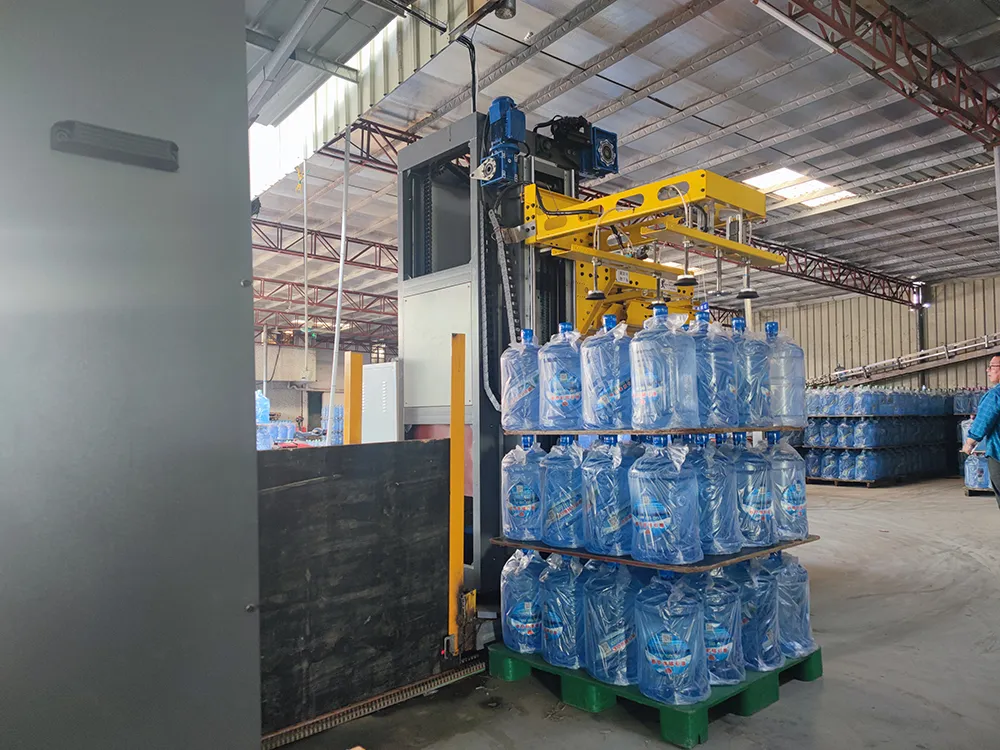
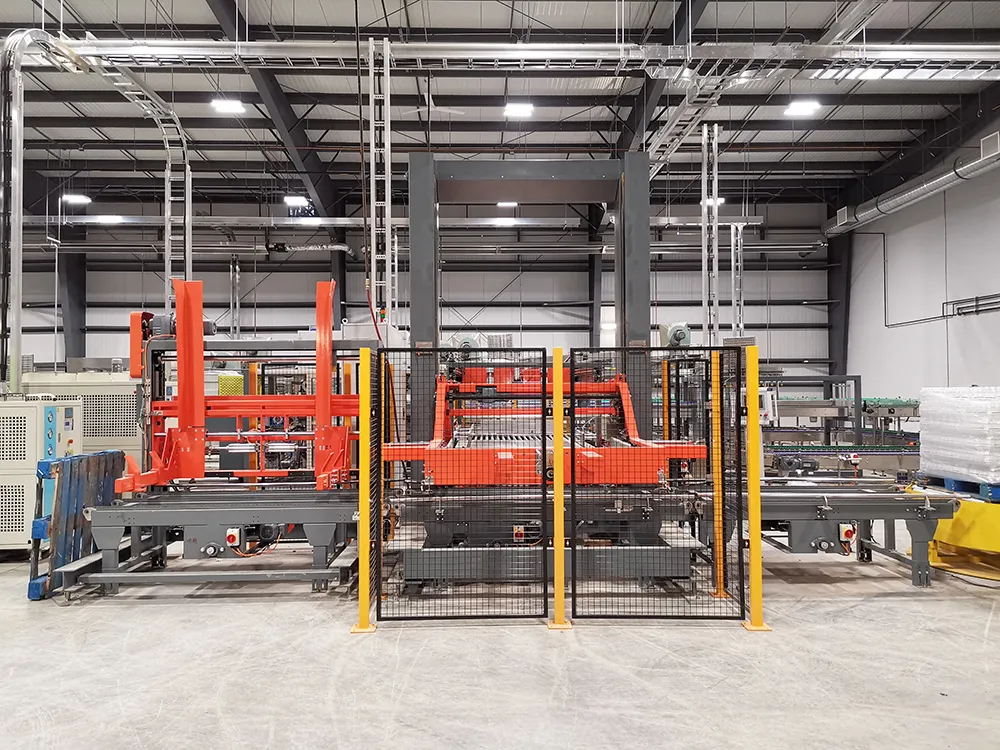
- Low/High Palletizer Machines:** Relatively simple specialized equipment, available in low-position (receiving and lifting materials from a low position) and high-position (receiving and lowering materials from a high position) models.
Core Advantages: Dedicated machine for specific applications; speed is its primary strength. Compact structure, direct action, perfectly matched to ultra-high-speed production lines, and extremely durable.
Suitable Scenarios: High-speed carbonated beverage bottling lines, 5-gallon bottled water production lines, and other applications with extremely high speed requirements.
- Collaborative Robot Palletizing Machine:** A new type of robot that can safely collaborate with humans at close range.
Core Advantages: Flexible deployment, high safety, no need for heavy safety fences, simple programming, and easily adaptable to small-batch, multi-batch tasks.
Suitable Scenarios: Small to medium-sized production lines, experimental production lines, or flexible manufacturing units requiring coordination with manual loading and unloading stations.
III. Key Selection: Four Steps to Find Your “Best Partner”
Faced with numerous options, you can follow these four steps to make a decision:
Assess Product and Capacity: Identify the products you primarily handle (e.g., 5-gallon drums, bottles, cartons, bags) and their weight, size, and specification variation frequency. Simultaneously, determine the production line’s maximum cycle time (e.g., boxes/hour), which forms the basis for selecting the palletizer speed.
Examine Space and Layout: Measure the floor space and overhead clearance of the installation area. High-gantry systems require high-altitude track space, while articulated robots require a safe area within their movement radius.
Weigh Flexibility Needs: If a production line needs to handle multiple different packaging sizes daily, the flexibility of articulated robots will bring significant value. If the product remains unchanged for many years, a high-speed dedicated machine may be a more efficient and economical choice.
Plan Investment and the Future: Define your budget range and consider product planning for the next 3-5 years. Sometimes paying a premium for “flexibility” is a key flexibility reserved for the company’s future development.

IV. JNDWATER’s Advantages
JNDWATER’s core advantage lies in its holistic approach to the entire production line. We are not just equipment providers, but also solution designers. We consider the characteristics of your water treatment system, blow molding machine, filling line, labeling machine, and packaging machine to ensure that the recommended palletizer works seamlessly with upstream and downstream equipment, maximizing the efficiency of the entire production line.