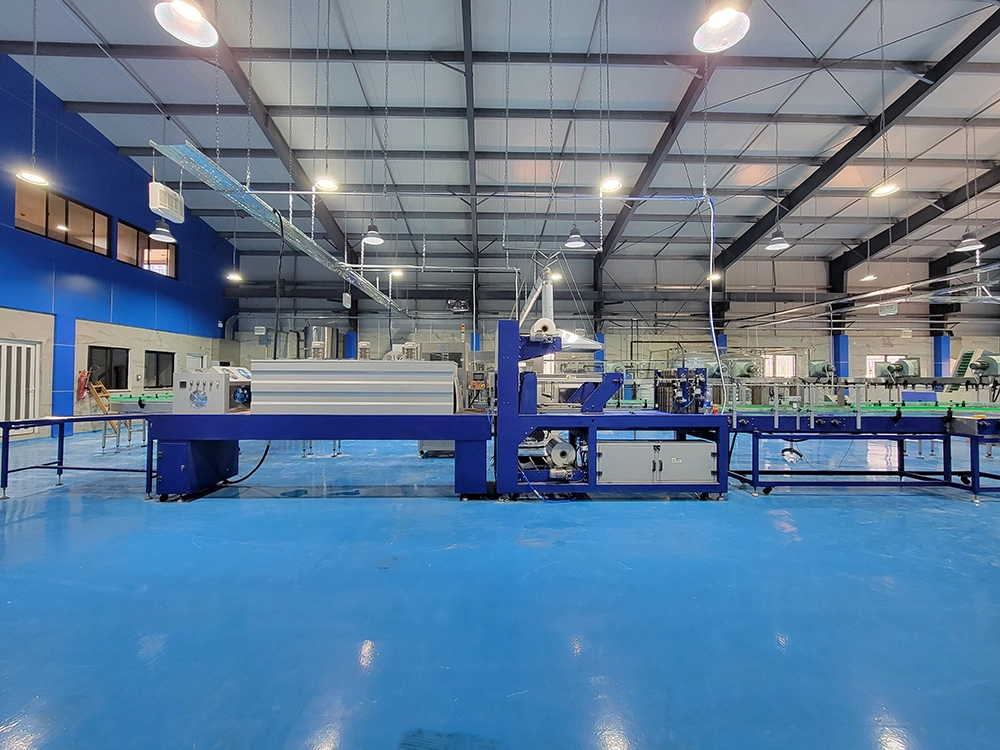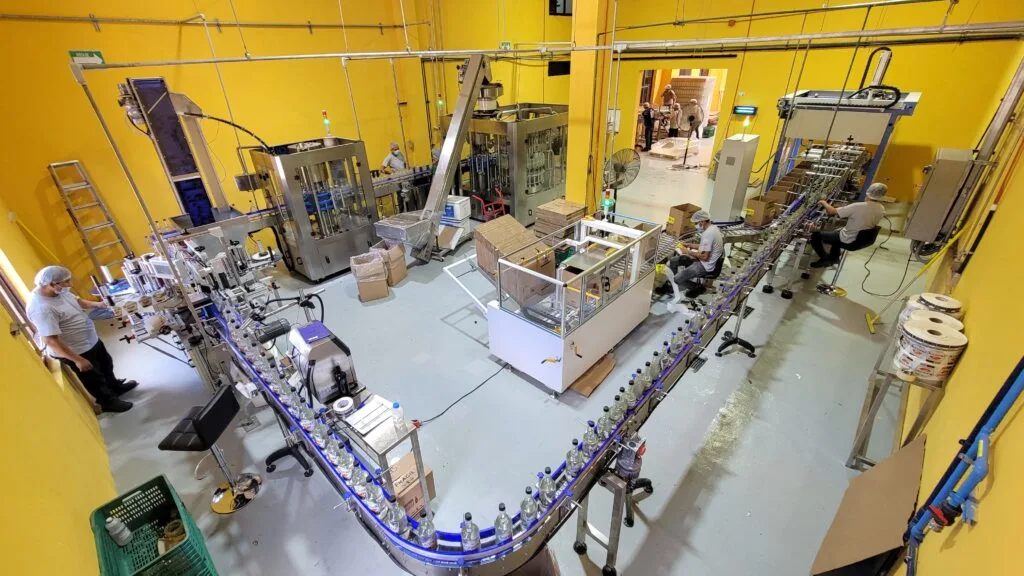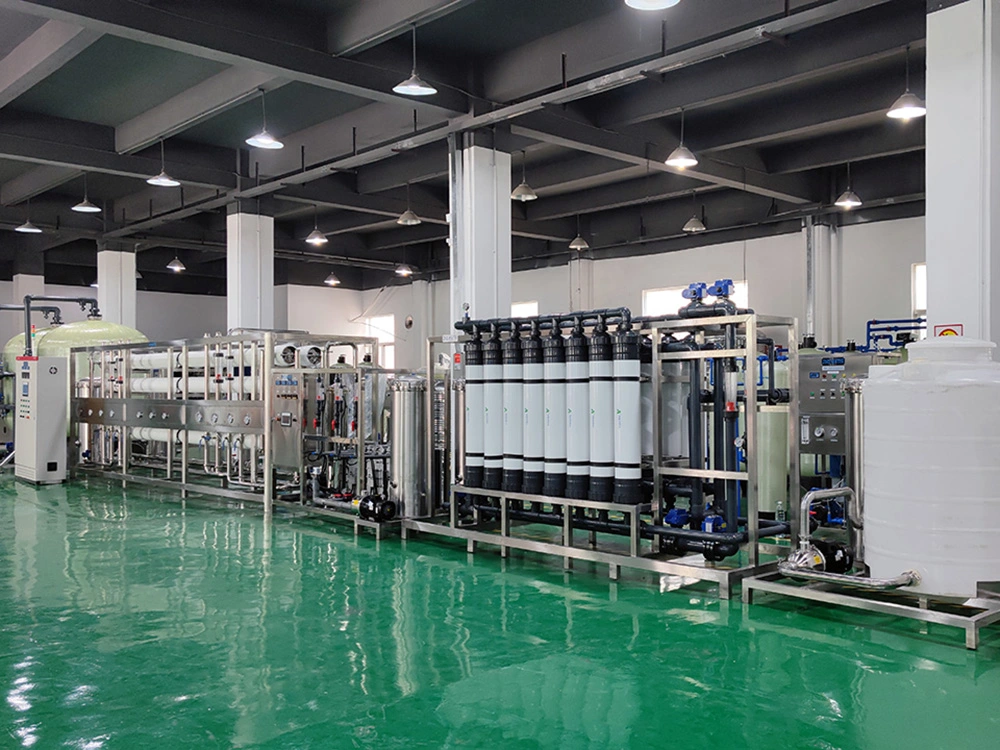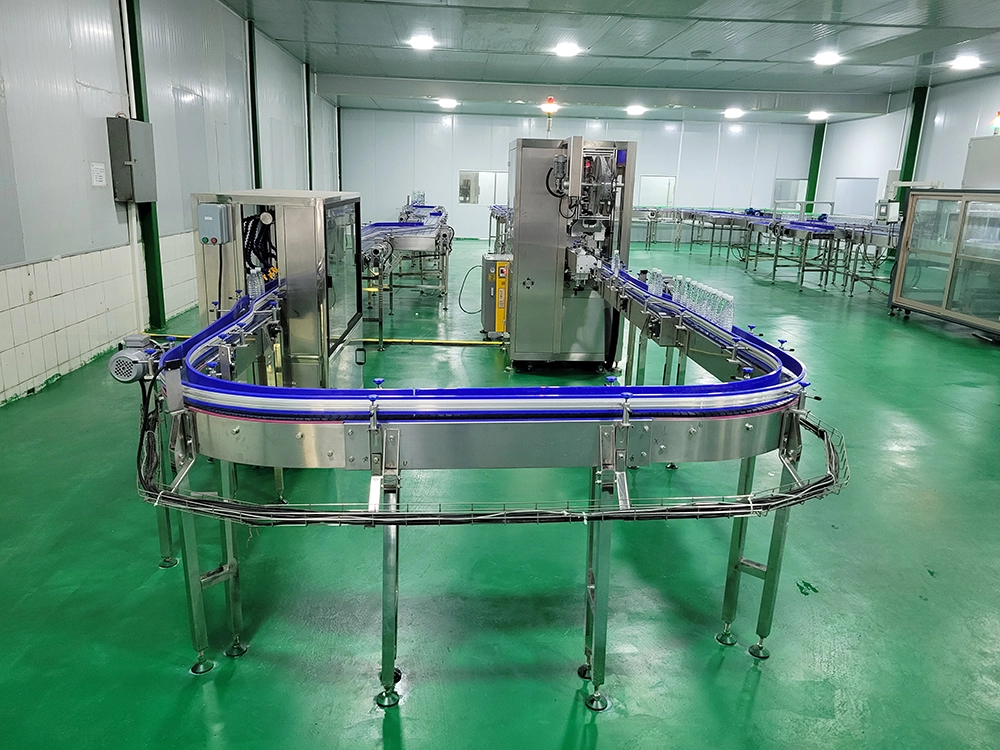
Shenzhen J&D Drinking Water Equipment Co., Ltd. offers turnkey projects such as bottled water production line, 5L bottled water production line, 5 gallon bottled water production line, juice beverage production line, tea beverage production line, energy drink production line, carbonated beverage production line, wine and beer production line, etc.
To start a purified water business, conduct a detailed market survey. Identify local demand, competitors, and price levels. Secure a reliable water source, which can be a clean well or municipal water supply. Purchase high-quality water purification machines and water bottling equipment. Obtain all necessary licenses and adhere to hygiene standards. Create an attractive brand name and packaging. Build a sales network. Promote your purified water through local advertising and social media.
Jndwater’s products include: blow molding machine, water filling machine, carbonated filling machine, juice filling machine, labeling machine, packing machine, palletizer, depalletizer, bottle unscrambler, reverse osmosis pure water machine, mineral water machine, distilled water machine, seawater desalination machine, conveyor, etc.
News
How to start a purified water business?
Market Research and Demand Assessment
Before diving into the purified water business, a thorough market research and demand assessment is crucial. This step helps you understand the competitive landscape, identify your target audience, and gauge the potential demand for your purified water. The goal is to determine if there's a viable market for your product and how you can differentiate yourself from existing players. Market research provides valuable insights into consumer preferences, pricing strategies, and distribution channels. Without this foundational knowledge, your business could face significant challenges in attracting customers and achieving profitability. Let's explore some detailed market research methods, including questionnaire design, data collection, and analysis techniques.
Detailed Market Research Methods:
- Questionnaire Design: Crafting effective questionnaires is essential for gathering reliable data. Start by defining your research objectives clearly. What specific information do you need to know about your potential customers? Are you trying to understand their preferences for bottled water, their willingness to pay a certain price, or their awareness of existing brands? Once you have clear objectives, design questions that are relevant, unbiased, and easy to understand. Use a mix of question types, such as multiple-choice, rating scales, and open-ended questions, to capture a comprehensive range of responses. Ensure your questionnaire is concise and focused to maximize response rates.
- Data Collection: There are several methods for collecting data, each with its own advantages and disadvantages. Online surveys are a cost-effective way to reach a large audience. You can use platforms like SurveyMonkey or Google Forms to create and distribute your survey. In-person surveys can provide more detailed insights, as you can engage directly with respondents and ask follow-up questions. However, they are more time-consuming and expensive. Focus groups involve gathering a small group of people to discuss their perceptions and opinions about your product or service. This method can provide valuable qualitative data, but it requires skilled facilitation to ensure that everyone participates and the discussion stays on track.
- Data Analysis Techniques: Once you've collected your data, it's time to analyze it to extract meaningful insights. Start by cleaning your data to remove any errors or inconsistencies. Then, use statistical techniques to summarize and analyze your responses. Descriptive statistics, such as mean, median, and mode, can help you understand the central tendencies of your data. Inferential statistics, such as t-tests and chi-square tests, can help you draw conclusions about the relationships between different variables. Look for patterns and trends in your data to identify opportunities and challenges for your business. For example, you might find that a certain demographic group is more likely to purchase purified water or that customers are willing to pay a premium for eco-friendly packaging.
Case Study: Successful Market Demand Assessment
Consider the example of a purified water company that conducted thorough market research before launching its product. They started by surveying potential customers in their target market to understand their preferences for bottled water. They asked questions about taste, price, packaging, and brand awareness. They also conducted focus groups to gather more detailed insights into consumer perceptions and attitudes. Based on their research, they found that customers were willing to pay a premium for purified water that was sourced locally and packaged in eco-friendly bottles. They used this information to develop a unique selling proposition and target their marketing efforts effectively. As a result, they were able to successfully launch their product and gain a significant market share.
Water Source Selection and Treatment
Choosing the right water source and implementing effective treatment methods are critical for producing high-quality purified water. The source of your water directly impacts its purity, taste, and the treatment processes required. Common water sources include municipal water, well water, and spring water, each with its own set of advantages and disadvantages. Municipal water is readily available and generally consistent in quality, but it may contain chemicals like chlorine that need to be removed. Well water can be a sustainable option, but it requires thorough testing and may contain contaminants like bacteria or minerals. Spring water is often perceived as being naturally pure, but it still needs to be treated to ensure it meets safety standards. The treatment methods you use will depend on the source water quality and the desired level of purity. Common treatment methods include filtration, reverse osmosis, and UV sterilization. Filtration removes sediment, chlorine, and other impurities. Reverse osmosis removes dissolved minerals and contaminants. UV sterilization kills bacteria and viruses. Let's explore the specific treatment methods and equipment needs for different water sources, along with a cost estimate and a benefit-risk analysis.
Specific Treatment Methods and Equipment Needs for Different Water Sources:
- Municipal Water: Municipal water typically undergoes some level of treatment before it reaches your facility, but further purification is usually necessary to meet the standards for purified water. A common treatment process for municipal water includes:
- Pre-filtration: Removes sediment and large particles. Equipment needed: Sediment filters.
- Activated Carbon Filtration: Removes chlorine, chloramine, and other chemicals that affect taste and odor. Equipment needed: Activated carbon filters.
- Reverse Osmosis (RO): Removes dissolved minerals, salts, and contaminants. Equipment needed: RO system.
- UV Sterilization: Kills bacteria and viruses. Equipment needed: UV sterilizer.
- Well Water: Well water can be a good option if you have access to a reliable well, but it requires thorough testing and treatment to ensure it's safe to drink. A typical treatment process for well water includes:
- Sediment Filtration: Removes sediment and sand. Equipment needed: Sediment filters.
- Iron and Manganese Removal: Removes iron and manganese, which can cause discoloration and taste issues. Equipment needed: Iron removal filter.
- Water Softener: Removes calcium and magnesium, which can cause hard water. Equipment needed: Water softener.
- Reverse Osmosis (RO): Removes dissolved minerals, salts, and contaminants. Equipment needed: RO system.
- UV Sterilization: Kills bacteria and viruses. Equipment needed: UV sterilizer.
Cost Estimate and Benefit-Risk Analysis for Each Water Source Treatment:
- Municipal Water Treatment:
- Cost Estimate: The initial investment for a municipal water treatment system can range from $5,000 to $20,000, depending on the size and complexity of the system. Ongoing costs include filter replacements, electricity, and maintenance.
- Benefits: Consistent water quality, readily available source.
- Risks: Potential for chemical contamination, reliance on municipal water supply.
- Well Water Treatment:
- Cost Estimate: The initial investment for a well water treatment system can range from $10,000 to $30,000, depending on the well depth and water quality. Ongoing costs include filter replacements, electricity, well maintenance, and regular water testing.
- Benefits: Sustainable water source, potential for lower water costs.
- Risks: Potential for contamination, fluctuating water quality, well maintenance requirements.
Legal and Hygiene Standards
Navigating the legal and hygiene standards is essential for operating a compliant and reputable purified water business. These standards are in place to protect public health and ensure that the water you're selling is safe for consumption. Failing to comply with these regulations can result in hefty fines, legal penalties, and damage to your brand reputation. Therefore, it's crucial to understand the necessary legal permits and hygiene standards, including the application process and required documents. This includes understanding both federal and local regulations that apply to your business. You must also adhere to strict hygiene protocols in your production facility to prevent contamination and maintain water quality. This might include regular sanitation, employee training, and water quality testing. Detailed information on necessary legal permits and hygiene standards, including the application process and required documents, is as follows.
Necessary Legal Permits and Hygiene Standards:
- Business License: Obtain a general business license from your local government to legally operate your business. The application process typically involves providing information about your business structure, location, and activities.
- Food and Beverage License: Obtain a food and beverage license from your state or local health department to manufacture and sell purified water. The application process may involve submitting a business plan, facility layout, and water testing results.
- Water Bottling Permit: Obtain a water bottling permit from your state or local environmental agency. This permit ensures that your water source and treatment processes meet the required standards. The application process typically involves submitting detailed information about your water source, treatment methods, and bottling procedures.
- Hygiene Standards: Adhere to strict hygiene standards in your production facility to prevent contamination and maintain water quality. This includes:
- Regular sanitation of equipment and surfaces.
- Employee training on proper hygiene practices.
- Water quality testing to ensure compliance with safety standards.
Contact Information and Websites of Relevant Regulatory Agencies:
- U.S. Food and Drug Administration (FDA): The FDA regulates bottled water as a food product and sets standards for safety and labeling. Visit the FDA website for more information on bottled water regulations.
- State and Local Health Departments: Contact your state and local health departments for information on specific permits and regulations in your area.
- Environmental Protection Agency (EPA): The EPA regulates public drinking water and sets standards for water quality. While bottled water is regulated by the FDA, the EPA's standards can provide useful guidance for water treatment processes.
Equipment List and Purchasing Guide
Investing in the right equipment is crucial for efficiently producing high-quality purified water. The equipment you need will depend on the scale of your operation and the level of automation you desire. Essential equipment includes water purification systems, bottling machines, labeling machines, and packaging equipment. Water purification systems remove impurities and contaminants from the water, ensuring it meets the required standards. Bottling machines fill the purified water into bottles, while labeling machines apply labels to the bottles. Packaging equipment prepares the bottles for distribution. It’s important to carefully research and select equipment that meets your specific needs and budget. Consider factors such as capacity, efficiency, reliability, and maintenance requirements. A detailed list of equipment needs at different levels and their functions, including bottle blowing machines and water filling machines, is provided below, along with a comparison of equipment brands and user reviews.
Detailed Equipment Needs at Different Levels and Their Functions:
- Small-Scale Operation:
- Water Purification System: A basic reverse osmosis (RO) system to remove impurities and contaminants.
- Manual Bottling Machine: A hand-operated bottling machine for filling bottles.
- Manual Labeling Machine: A hand-operated labeling machine for applying labels.
- Packaging Equipment: Basic equipment for packaging bottles, such as shrink wrap or cardboard boxes.
- Medium-Scale Operation:
- Water Purification System: A semi-automatic RO system with a higher capacity.
- Semi-Automatic Bottling Machine: A semi-automatic bottling machine for faster filling.
- Semi-Automatic Labeling Machine: A semi-automatic labeling machine for faster labeling.
- Packaging Equipment: Semi-automatic equipment for packaging bottles, such as a case packer.
- Bottle Blowing Machine (Optional): For manufacturing your own bottles, reducing reliance on external suppliers.
- Large-Scale Operation:
- Water Purification System: A fully automatic RO system with a high capacity.
- Automatic Bottling Machine: A fully automatic bottling machine for high-speed filling.
- Automatic Labeling Machine: A fully automatic labeling machine for high-speed labeling.
- Packaging Equipment: Fully automatic equipment for packaging bottles, such as a palletizer.
- Bottle Blowing Machine: Essential for large-scale operations to ensure a consistent supply of bottles.
Comparison of Equipment Brands and User Reviews:
- Water Purification Systems:
- Brands: GE Water, Culligan, Pure Aqua.
- User Reviews: GE Water and Culligan are known for their reliability and performance, while Pure Aqua offers more affordable options.
- Bottling Machines:
- Brands: JND Water, Meheen, PneumaticScaleAngelus.
- User Reviews: JND Water is known for their high-speed bottling machines, while Meheen offers more compact and versatile options. PneumaticScaleAngelus is known for their robust and reliable machines.
- Bottle Blowing Machines:
- Brands: SIDEL, Krones, Aoki Technical Laboratory.
- User Reviews: SIDEL and Krones are top-tier brands known for their high-output and advanced technology, suitable for large-scale operations. Aoki is recognized for its precision and efficiency in producing high-quality PET bottles, often favored by businesses focusing on specialized bottle designs.
Brand Creation and Packaging Design
Creating a strong brand and designing appealing packaging are essential for differentiating your purified water business in a competitive market. Your brand is more than just a logo; it's the overall image and perception of your company. It should reflect your values, mission, and the unique qualities of your product. Packaging design plays a crucial role in attracting customers and conveying your brand message. It should be visually appealing, functional, and environmentally friendly. Expert advice on how to name your brand and design packaging to increase market recognition, along with case studies showcasing successful brand packaging strategies and brand positioning, is presented below.
Expert Advice on Brand Naming and Packaging Design:
- Brand Naming:
- Keep it Simple: Choose a name that is easy to pronounce and remember.
- Make it Relevant: The name should reflect the purity and quality of your water.
- Be Unique: Avoid names that are similar to existing brands.
- Check Availability: Ensure the name is available as a trademark and domain name.
- Packaging Design:
- Visual Appeal: Use attractive colors, fonts, and imagery that reflect your brand.
- Functionality: Design packaging that is easy to handle, open, and reseal.
- Sustainability: Use eco-friendly materials and minimize packaging waste.
- Information: Clearly communicate the benefits of your product and provide essential information, such as ingredients and nutritional facts.
Case Studies Showcasing Successful Brand Packaging Strategies and Brand Positioning:
- Fiji Water: Fiji Water has successfully positioned itself as a premium brand by emphasizing the purity and exotic origin of its water. Its packaging features a distinctive square bottle and a minimalist label that conveys a sense of luxury and sophistication.
- LIFEWTR: LIFEWTR has differentiated itself by showcasing art and design on its bottles. Each series features a different artist, making the bottles collectible and appealing to consumers who value creativity and self-expression.
- Boxed Water Is Better: Boxed Water Is Better has positioned itself as an environmentally friendly alternative to plastic bottles. Its packaging is made from sustainable cardboard and features a minimalist design that emphasizes its commitment to sustainability.
Supply Chain Establishment and Management
Establishing and managing an efficient supply chain is critical for ensuring a consistent supply of raw materials and delivering your purified water to customers on time. Your supply chain includes all the activities involved in sourcing, producing, and distributing your product. This includes selecting suppliers for bottles, labels, and other packaging materials, as well as managing inventory and logistics. Choosing the right suppliers is crucial for ensuring the quality and reliability of your supply chain. Look for suppliers who offer competitive prices, high-quality products, and reliable delivery. Managing inventory effectively is essential for minimizing costs and preventing stockouts. Use inventory management techniques to track your stock levels and forecast demand. Designing an efficient supply chain involves optimizing the flow of materials and information from suppliers to customers. This includes selecting the right transportation methods, warehousing locations, and distribution channels. How to choose and manage suppliers and design an efficient supply chain, along with industry supplier recommendations and collaboration case studies, is detailed below.
How to Choose and Manage Suppliers and Design an Efficient Supply Chain:
- Supplier Selection:
- Quality: Ensure suppliers meet your quality standards for bottles, labels, and other materials.
- Price: Compare prices from different suppliers to get the best value.
- Reliability: Choose suppliers with a proven track record of on-time delivery.
- Location: Consider suppliers located close to your facility to reduce transportation costs.
- Supplier Management:
- Communication: Maintain open communication with suppliers to address any issues or concerns.
- Performance Monitoring: Track supplier performance metrics, such as on-time delivery and quality, to identify areas for improvement.
- Relationship Building: Build strong relationships with suppliers to foster collaboration and trust.
- Supply Chain Design:
- Transportation: Choose the most efficient transportation methods, such as trucking, rail, or shipping, depending on the distance and volume of materials.
- Warehousing: Select warehousing locations that are strategically located to minimize transportation costs and delivery times.
- Distribution: Use a mix of distribution channels, such as direct sales, retail, and wholesale, to reach your target market.
Industry Supplier Recommendations and Collaboration Case Studies:
- Bottle Suppliers:
- Amcor: A global supplier of plastic and glass bottles.
- Berry Global: A supplier of plastic bottles and containers.
- Alpha Packaging: A supplier of PET bottles and containers.
- Label Suppliers:
- CCL Industries: A global supplier of labels and specialty packaging.
- Multi-Color Corporation: A supplier of labels and packaging solutions.
- Avery Dennison: A supplier of labels and labeling materials.
- Collaboration Case Study: A purified water company partnered with a local trucking company to streamline its distribution process. By integrating their systems and sharing real-time data, they were able to reduce delivery times and improve customer satisfaction.
Marketing and Promotion Strategy
Developing a comprehensive marketing and promotion strategy is essential for building brand awareness and driving sales for your purified water business. Your marketing strategy should identify your target audience, define your unique selling proposition, and outline the tactics you will use to reach your customers. Promotion is the process of communicating your marketing message to your target audience. This can include advertising, public relations, social media marketing, and sales promotions. It’s important to use a mix of marketing channels to reach a wide audience and maximize your impact. Specific strategies and success stories for social media marketing and local advertising, along with practical marketing strategies such as discount promotions and online advertising techniques, are detailed below.
Specific Strategies and Success Stories for Social Media Marketing and Local Advertising:
- Social Media Marketing:
- Strategy: Create engaging content that highlights the purity, health benefits, and eco-friendliness of your water. Use visually appealing images and videos to capture attention. Run contests and giveaways to generate excitement and increase brand awareness.
- Success Story: A purified water company used Instagram to showcase its commitment to sustainability. They posted images of their eco-friendly packaging and partnered with environmental influencers to promote their brand. As a result, they saw a significant increase in followers and sales.
- Local Advertising:
- Strategy: Advertise in local newspapers, magazines, and radio stations. Sponsor local events and festivals. Partner with local businesses to offer cross-promotions.
- Success Story: A purified water company sponsored a local marathon and provided water to the runners. This increased brand visibility and generated positive publicity.
Practical Marketing Strategies Such as Discount Promotions and Online Advertising Techniques:
- Discount Promotions:
- Offer discounts on bulk purchases.
- Run limited-time promotions.
- Offer coupons to new customers.
- Online Advertising Techniques:
- Use search engine optimization (SEO) to improve your website's ranking in search results.
- Run pay-per-click (PPC) advertising campaigns on Google and other search engines.
- Use social media advertising to target specific demographics and interests.
Shenzhen J&D Drinking Water Equipment Co., Ltd. offers turnkey projects such as bottled water production line, 5L bottled water production line, 5 gallon bottled water production line, juice beverage production line, tea beverage production line, energy drink production line, carbonated beverage production line, wine and beer production line, etc.To start a purified water business, conduct…