Understanding Distillation Technology
What is distillation technology and why is it crucial for producing high-purity water? Distillation is a time-tested method that effectively separates water from impurities through a process of boiling, evaporation, and condensation. Think of it as nature's way of purifying water, but enhanced and controlled for industrial applications. Let’s break down the key steps involved:
- Preheating: The process begins with preheating the feed water. This initial heating stage increases the water temperature, reducing the energy required in the subsequent boiling phase. Preheating can be achieved through various methods, including heat exchangers that recover waste heat from other parts of the system, significantly improving energy efficiency.
- Evaporation: Next, the preheated water enters the boiling chamber, where it is heated to its boiling point. As the water boils, it transforms into steam, leaving behind most impurities, such as minerals, salts, heavy metals, and microorganisms. The design of the boiling chamber is crucial for efficient evaporation, often incorporating features that maximize the surface area for heat transfer.
- Separation: This stage ensures that only pure steam moves forward in the process. Techniques like using baffles or demisters are employed to prevent any carryover of impure water droplets into the steam. This is critical for achieving the high purity levels required in many industrial applications.
- Condensation: The pure steam then enters the condenser, where it is cooled, and it reverts back into liquid form – distilled water. The condenser typically uses cooling water or air to remove heat from the steam, facilitating the phase change. The efficiency of the condenser directly impacts the overall efficiency of the distillation process.
- Collection and Storage: Finally, the distilled water is collected and stored in a clean, sterile tank, ready for use. The storage tank material is carefully selected to prevent any contamination of the purified water. Stainless steel is a common choice due to its inertness and resistance to corrosion.
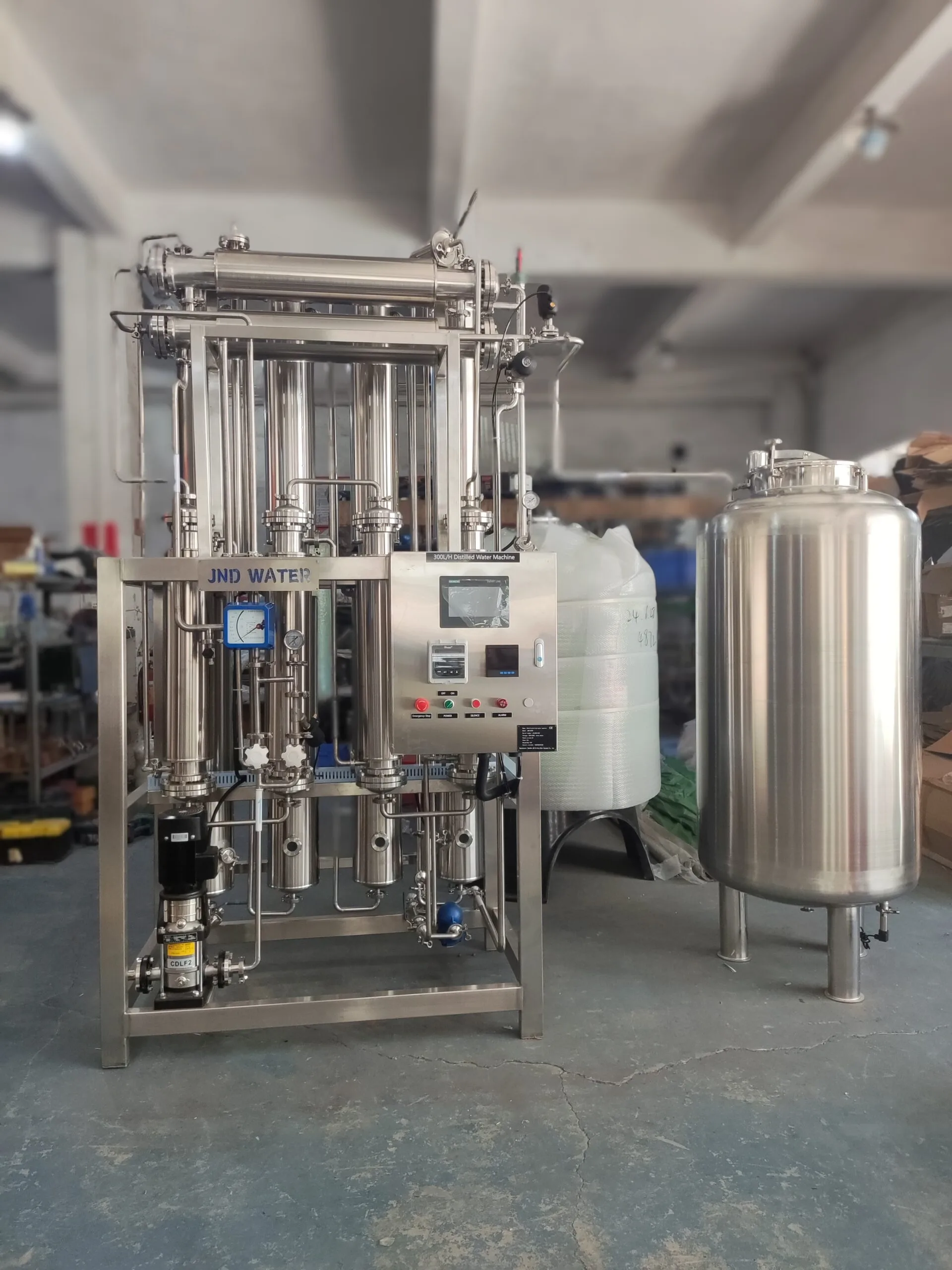
Understanding these steps is essential for appreciating the effectiveness of distillation. The technology ensures that the resulting water is free from contaminants, making it suitable for critical applications across various industries. To visually understand the process, consider these points:
- Diagrams: A detailed diagram showcasing the flow of water through each stage of the industrial distilled water machine.
- Animations: Animated graphics illustrating the phase changes and separation processes.
- Technical Specifications: Charts outlining temperature, pressure, and flow rates at each stage.
By incorporating these elements, we can provide a comprehensive understanding of how distillation technology works and its importance in producing high-purity water. This understanding builds trust and showcases the sophistication behind JNDwater's industrial distilled water machines.
Detailed Machine Specifications
When selecting an industrial distilled water machine, understanding the detailed technical specifications is paramount. These specifications dictate the machine's performance, suitability for specific applications, and overall efficiency. Here’s a breakdown of the key specifications you should consider:
- Production Capacity: This refers to the amount of distilled water the machine can produce within a given timeframe, typically measured in liters per hour (L/hr) or gallons per day (GPD). Production capacity varies widely depending on the machine's size and design, ranging from small units producing a few liters per hour to large-scale systems capable of thousands of liters per day.
- Power Requirements: This indicates the electrical power needed to operate the machine, specified in terms of voltage (V), current (A), and power consumption (kW). Ensuring that the machine's power requirements align with your facility's electrical infrastructure is crucial for seamless operation.
- Dimensions and Weight: These parameters define the physical size and weight of the machine, which are important for determining the installation space and structural support required. Compact designs are available for facilities with limited space, while larger systems may require dedicated rooms.
- Materials of Construction: The materials used in the machine's construction directly impact its durability, resistance to corrosion, and suitability for different water types. Stainless steel (SS304, SS316) is a common choice due to its excellent corrosion resistance and hygienic properties.
- Inlet Water Quality Requirements: This specifies the acceptable quality of the feed water entering the machine. Parameters such as turbidity, hardness, and total dissolved solids (TDS) should be within the specified limits to prevent damage to the machine and ensure optimal performance.
- Distilled Water Quality: This defines the purity of the water produced by the machine, typically measured in terms of conductivity (µS/cm) or resistivity (MΩ·cm). High-purity water with low conductivity is essential for sensitive applications in industries such as pharmaceuticals and electronics.
- Operating Pressure: This indicates the pressure at which the machine operates, which affects the efficiency of the distillation process. Optimal operating pressure ensures efficient evaporation and condensation.
- Cooling Water Requirements: Distillation machines often require cooling water to condense the steam back into liquid form. This specification defines the flow rate and temperature of the cooling water needed.
- Control System: Modern industrial distilled water machines are equipped with sophisticated control systems that automate the distillation process and monitor key parameters. These systems may include features such as programmable logic controllers (PLCs), human-machine interfaces (HMIs), and remote monitoring capabilities.
Here's how these specifications align with different applications:
- Electronics Industry: Requires ultra-pure water with extremely low conductivity. Machines must be constructed from materials that do not leach contaminants.
- Pharmaceutical Industry: Demands sterile, pyrogen-free water. Machines must adhere to strict regulatory standards like FDA and cGMP.
- Chemical Industry: Needs water with specific purity levels depending on the chemical processes involved. Material compatibility is crucial to prevent corrosion.
- Food and Beverage Industry: Requires potable water that meets stringent safety standards. Machines must be easy to clean and sanitize.
Providing a detailed technical specifications table, along with explanations of how these specifications relate to different applications, empowers customers to make informed decisions and choose the right industrial distilled water machine for their needs. This transparency builds trust and demonstrates JNDwater's commitment to providing high-quality, reliable solutions.
Customer Success Stories / Case Studies
Real-world examples of how JNDwater's industrial distilled water machines have benefited customers are invaluable in demonstrating the equipment's practical value and reliability. Customer success stories and case studies provide tangible evidence of the machine's performance, cost savings, and positive impact on various industries. Here’s how to craft compelling narratives:
- Identify Key Industries: Select case studies from diverse industries such as pharmaceuticals, electronics, food and beverage, and cosmetics to showcase the machine's versatility.
- Highlight Specific Challenges: Describe the specific water quality challenges faced by the customer before implementing the JNDwater solution. This could include issues with water purity, scale buildup, equipment corrosion, or regulatory compliance.
- Detail the Solution: Explain how the JNDwater industrial distilled water machine was implemented to address the customer's challenges. Include details about the machine's configuration, installation process, and any custom modifications made to meet specific requirements.
- Quantify the Results: Present concrete data and metrics to demonstrate the positive impact of the JNDwater solution. This could include improvements in water purity levels (e.g., reduction in TDS, conductivity), increased production efficiency, reduced maintenance costs, and improved product quality.
- Include Customer Testimonials: Feature quotes from satisfied customers that highlight their positive experiences with the JNDwater machine and the company's service and support.
Here are a few example scenarios:
- Pharmaceutical Manufacturer: A pharmaceutical company struggling to meet stringent water quality standards for injectable drugs implemented a JNDwater industrial distilled water machine. The machine consistently produced water with conductivity below 0.1 µS/cm, ensuring compliance with USP standards and improving the yield of high-quality pharmaceuticals.
- Electronics Factory: An electronics factory using distilled water for semiconductor manufacturing experienced frequent equipment failures due to impurities in the water. After installing a JNDwater machine, the factory saw a significant reduction in equipment downtime and improved the reliability of its production processes.
- Food and Beverage Plant: A beverage company needed a reliable source of high-purity water for its bottling operations. The JNDwater machine provided a consistent supply of water that met the company's strict quality standards, resulting in improved product taste and shelf life.
To further enhance the impact of these case studies, consider including the following:
- Performance Data: Charts and graphs illustrating the machine's performance over time, such as water purity levels, production rates, and energy consumption.
- ROI Analysis: A detailed breakdown of the return on investment (ROI) achieved by the customer, including cost savings, increased revenue, and reduced downtime.
- Visuals: Photos and videos of the JNDwater machine in operation at the customer's facility, as well as images of the customer's products and processes.
By showcasing real-world success stories with quantifiable results, you can effectively demonstrate the value and reliability of JNDwater's industrial distilled water machines, building trust and confidence among potential customers.
Maintenance and Support Services
Ensuring the longevity and optimal performance of an industrial distilled water machine requires a robust maintenance and support program. Providing comprehensive maintenance services and readily available technical support is crucial for customer satisfaction and long-term reliability. Here’s what a comprehensive maintenance and support section should include:
- Regular Maintenance Guidelines: Provide detailed instructions on routine maintenance tasks, such as cleaning, filter replacement, and inspection of critical components. Include a schedule for these tasks, specifying the frequency and procedures for each.
- Troubleshooting Guide: Offer a comprehensive troubleshooting guide that addresses common issues and provides step-by-step solutions. This guide should cover problems such as low water output, poor water quality, unusual noises, and system errors.
- Spare Parts Availability: Ensure that spare parts are readily available and easily accessible. Provide a catalog of commonly needed parts, along with instructions on how to order them. Consider offering spare parts kits for preventive maintenance.
- Technical Support Contact Information: Clearly display contact information for technical support, including phone numbers, email addresses, and online chat options. Ensure that support is available during business hours and, ideally, offer 24/7 emergency support.
- Remote Monitoring and Diagnostics: Offer remote monitoring and diagnostic services that allow JNDwater technicians to remotely access and troubleshoot the machine. This can help identify potential issues before they become major problems.
- On-Site Service and Repair: Provide on-site service and repair services performed by trained technicians. Offer service contracts that cover regular maintenance, repairs, and emergency service calls.
- Training Programs: Offer training programs for customers' maintenance personnel, teaching them how to properly operate and maintain the machine. This can help prevent issues and extend the lifespan of the equipment.
To enhance the maintenance and support section, consider including the following:
- Maintenance Checklist: A downloadable maintenance checklist that customers can use to track their maintenance activities.
- Video Tutorials: Video tutorials demonstrating how to perform common maintenance tasks.
- FAQ Section: A comprehensive FAQ section that addresses common questions about maintenance and troubleshooting.
- Service Level Agreements (SLAs): Clearly defined SLAs that outline the level of service and support that customers can expect.
- Transparent Pricing: Provide transparent pricing for maintenance services, spare parts, and service contracts.
By offering a comprehensive maintenance and support program, you can ensure that customers get the most out of their industrial distilled water machines, minimizing downtime and maximizing their investment. This commitment to customer support builds long-term relationships and reinforces JNDwater's reputation as a reliable and trusted provider.
Energy Efficiency and Sustainability
In today's environmentally conscious world, energy efficiency and sustainability are critical considerations for any industrial equipment, including distilled water machines. Highlighting the energy-saving features and eco-friendly design of JNDwater's machines can attract environmentally aware customers and reduce operational costs. Here’s how to detail energy efficiency and sustainability:
- Energy-Efficient Technologies: Describe the specific technologies used in the machine to reduce energy consumption. This could include features such as heat recovery systems, variable frequency drives (VFDs) for pumps and fans, and optimized insulation.
- Energy Consumption Data: Provide concrete data on the machine's energy consumption, measured in kilowatt-hours (kWh) per liter or gallon of distilled water produced. Compare this data to that of traditional distillation methods or competing machines.
- Water Conservation Measures: Explain any water conservation measures incorporated into the machine's design, such as recycling of cooling water or optimization of water usage in the distillation process.
- Sustainable Materials: Highlight the use of sustainable and recyclable materials in the machine's construction. This could include stainless steel, which is durable and recyclable, or bio-based plastics.
- Environmental Certifications: Mention any environmental certifications or compliance standards that the machine meets, such as Energy Star, ISO 14001, or RoHS.
- Carbon Footprint Reduction: Quantify the reduction in carbon footprint achieved by using the JNDwater machine compared to traditional methods. This could be expressed in terms of kilograms of CO2 emissions avoided per year.
To enhance the energy efficiency and sustainability section, consider including the following:
- Comparison Charts: Charts comparing the energy consumption of the JNDwater machine to that of traditional methods or competing machines.
- Case Studies: Case studies showcasing how customers have reduced their energy consumption and environmental impact by using the JNDwater machine.
- Life Cycle Assessment: A life cycle assessment (LCA) of the machine, analyzing its environmental impact from manufacturing to disposal.
- Energy Audit Services: Offer energy audit services to help customers identify opportunities to further reduce their energy consumption.
- Rebates and Incentives: Provide information on any government rebates or incentives available for energy-efficient equipment.
By emphasizing the energy efficiency and sustainability of JNDwater's industrial distilled water machines, you can appeal to environmentally conscious customers, reduce their operating costs, and contribute to a more sustainable future. This commitment to sustainability enhances JNDwater's brand image and differentiates its products from competitors.
Comparative Analysis: OEM vs ODM
Understanding the differences between Original Equipment Manufacturer (OEM) and Original Design Manufacturer (ODM) models is crucial for businesses looking to source industrial distilled water machines. JNDwater offers both OEM and ODM services, catering to diverse client needs. A comparative analysis helps clients make informed decisions. Here’s a breakdown:
- OEM (Original Equipment Manufacturer): In this model, JNDwater manufactures machines based on the client's existing designs and specifications. The client retains control over the design and intellectual property, while JNDwater focuses on efficient and high-quality manufacturing.
- ODM (Original Design Manufacturer): In this model, JNDwater designs and manufactures machines based on the client's general requirements. JNDwater owns the design and intellectual property, offering clients a ready-to-market solution with minimal upfront design costs.
Here’s a table comparing the key differences between OEM and ODM:
| Feature |
OEM |
ODM |
| Design Control |
Client |
JNDwater |
| Intellectual Property |
Client |
JNDwater |
| Upfront Costs |
Higher (design costs) |
Lower (ready-made design) |
| Time to Market |
Longer (design phase) |
Shorter (existing design) |
| Customization |
High |
Limited |
| Manufacturing Focus |
Based on client's design |
Based on JNDwater's design |
When to choose OEM:
- Specific Design Requirements: If you have a unique design or specific performance requirements that cannot be met by off-the-shelf solutions.
- Intellectual Property Protection: If you want to retain full control over the design and intellectual property of the machine.
- Existing Design: If you already have a well-developed design and are looking for a reliable manufacturing partner.
When to choose ODM:
- Quick Time to Market: If you need to launch a product quickly and do not have the time or resources for a lengthy design process.
- Lower Upfront Costs: If you want to minimize upfront costs and avoid the expenses associated with design and development.
- Limited Design Expertise: If you do not have in-house design expertise and prefer to rely on the manufacturer's design capabilities.
By providing a clear comparative analysis of OEM and ODM models, you can empower clients to make informed decisions that align with their specific needs and resources. This transparency builds trust and demonstrates JNDwater's commitment to providing flexible and customized solutions.
Purchase and Ordering Process
A clear and straightforward purchase and ordering process is essential for converting potential customers into satisfied clients. Detailing each step of the process, from initial inquiry to after-sales service, ensures a smooth and positive experience. Here’s how to outline the purchase and ordering process:
- Initial Inquiry: Describe how customers can initiate an inquiry, whether through the website, phone, or email. Emphasize the responsiveness of the sales team and the availability of technical experts to answer questions.
- Consultation and Needs Assessment: Explain how the sales team conducts a thorough consultation to understand the customer's specific needs and requirements. This includes assessing water quality requirements, production capacity, budget constraints, and any other relevant factors.
- Quotation and Proposal: Detail how a customized quotation and proposal are prepared based on the consultation. The proposal should include detailed specifications of the recommended machine, pricing, payment terms, delivery timeline, and warranty information.
- Order Placement: Explain how customers can place an order, whether through a formal purchase order, online order form, or other method. Clearly outline the terms and conditions of the sale.
- Manufacturing and Quality Control: Describe the manufacturing process and the quality control measures implemented to ensure that the machine meets the highest standards. This includes rigorous testing and inspection at each stage of production.
- Shipping and Delivery: Detail the shipping and delivery process, including packaging, transportation, and customs clearance. Provide estimated delivery timelines and tracking information.
- Installation and Training: Explain how the machine is installed and commissioned at the customer's facility. Offer on-site training for the customer's personnel on how to properly operate and maintain the machine.
- After-Sales Service and Support: Describe the after-sales service and support provided, including warranty coverage, maintenance services, spare parts availability, and technical assistance.
To enhance the purchase and ordering process section, consider including the following:
- Online Order Sample: An example of the online order form, showcasing the ease of use and information required.
- Customer Service Contact Information: Prominent display of customer service contact information, including phone numbers, email addresses, and online chat options.
- Payment Options: A list of accepted payment methods, such as credit cards, wire transfers, and letters of credit.
- Warranty Information: A detailed explanation of the warranty coverage, including the duration and scope of the warranty.
- Return Policy: A clear and concise return policy, outlining the conditions under which returns are accepted.
By providing a detailed and transparent purchase and ordering process, you can instill confidence in potential customers and make it easy for them to buy JNDwater's industrial distilled water machines. This smooth and positive experience enhances customer satisfaction and fosters long-term relationships.
Real-time Water Quality Monitoring
Real-time water quality monitoring is a crucial feature for ensuring the consistent purity and reliability of distilled water produced by industrial machines. Integrating a real-time monitoring system provides immediate feedback on water quality parameters, allowing for prompt corrective action if deviations occur. Here’s a detailed introduction to real-time water quality monitoring systems:
- Technology Principles: Explain the underlying technology principles behind real-time water quality monitoring. This includes the use of sensors to measure various parameters such as conductivity, pH, temperature, total organic carbon (TOC), and turbidity.
- Key Features: Describe the key features of the monitoring system, such as continuous data logging, alarm notifications, remote access, and data analysis tools.
- Benefits: Highlight the benefits of real-time water quality monitoring, including improved water purity, reduced downtime, early detection of problems, and compliance with regulatory standards.
- Components: Detail the components of the monitoring system, including sensors, data loggers, controllers, and software.
- Parameters Monitored: List the key water quality parameters that are monitored, such as:
- Conductivity: Measures the concentration of ions in the water, indicating the level of dissolved salts and minerals.
- pH: Measures the acidity or alkalinity of the water.
- Temperature: Monitors the temperature of the water, which can affect the performance of the distillation process.
- Total Organic Carbon (TOC): Measures the concentration of organic compounds in the water.
- Turbidity: Measures the cloudiness or haziness of the water, indicating the presence of suspended particles.
- Data Analysis and Reporting: Explain how the monitoring system provides data analysis and reporting capabilities. This includes generating graphs and charts to visualize trends, setting alarm thresholds, and creating reports for regulatory compliance.
To enhance the real-time water quality monitoring section, consider including the following:
- Interface Screenshots: Screenshots of the monitoring system's user interface, showcasing the real-time data display and analysis tools.
- Water Quality Data Charts: Charts illustrating typical water quality data over time, demonstrating the system's ability to detect and track changes in water purity.
- Alarm Notification Examples: Examples of alarm notifications, showing how the system alerts users to potential problems.
- Remote Monitoring Capabilities: A description of the remote monitoring capabilities, allowing users to access and control the system from anywhere with an internet connection.
- Integration with Control Systems: An explanation of how the monitoring system can be integrated with the machine's control system to automatically adjust operating parameters based on water quality data.
By providing a detailed introduction to real-time water quality monitoring systems, you can demonstrate the advanced technology and capabilities of JNDwater's industrial distilled water machines. This enhances customer confidence and reinforces the value proposition of the equipment.