Share this:
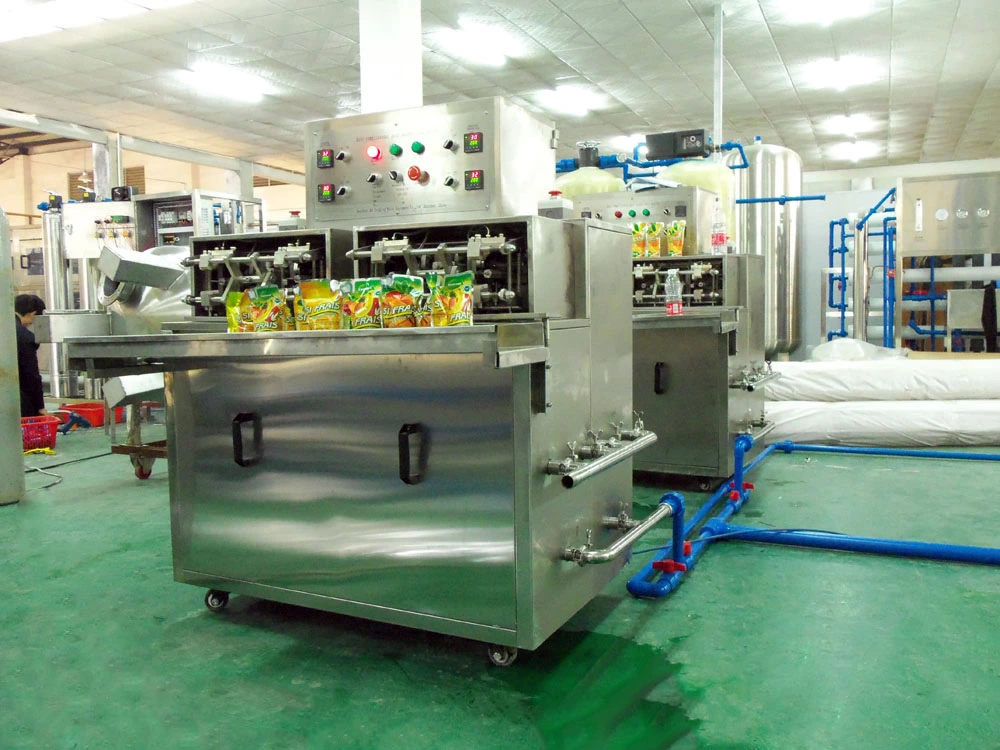
Juice Pouch Packing Filling Machine
The Jndwater Juice Pouch Packing Filling Machine is a kind of machine specially designed for water bag, liquid bag and other packaging. It can efficiently complete a series of operations such as bag making, metering, filling, sealing, cutting, counting and batch number printing, and is widely used in the packaging production of pure water, juice, beverages and other liquids.
Juice Pouch Packing Filling Machine detailed description
Products Description
Technology and Features of the JND Water Juice Pouch Filling Machine
The JND Water juice pouch filling machine represents a significant advancement in liquid packaging technology. Understanding its operational principles and key features is crucial for businesses aiming to optimize their production lines. This machine integrates several sophisticated technologies to ensure efficient, accurate, and hygienic filling and sealing of juice pouches. Let's delve into the core technologies and features that make this machine stand out.
At the heart of the machine is a precision filling system. This system typically employs volumetric or gravimetric filling methods, depending on the specific model and application. Volumetric filling uses precise measurements to dispense the juice, while gravimetric filling relies on weight, offering higher accuracy, especially for viscous liquids. The filling nozzles are designed to prevent dripping and ensure a clean, consistent fill every time. These nozzles are often made from stainless steel to maintain hygiene and prevent corrosion.
The sealing mechanism is another critical component. JND Water's machines use heat sealing technology to create airtight and leak-proof seals. The sealing temperature, pressure, and duration are precisely controlled to ensure optimal seal integrity. Advanced models may incorporate ultrasonic sealing, which offers faster sealing speeds and reduced energy consumption. The sealing dies are designed to accommodate various pouch materials and sizes, providing flexibility for different product requirements.
The machine's control system is typically based on a Programmable Logic Controller (PLC). The PLC allows for precise control over all machine functions, including filling volume, sealing temperature, and conveyor speed. The user interface is usually a touchscreen, providing an intuitive way to monitor and adjust machine parameters. The control system also includes safety features such as emergency stop buttons and overload protection to ensure operator safety and prevent equipment damage.
Here are some key technical parameters you should consider:
- Filling Range: The range of volumes that the machine can fill (e.g., 50ml to 500ml).
- Filling Accuracy: The degree of precision in filling volumes (e.g., ±1%).
- Production Capacity: The number of pouches that can be filled and sealed per hour (e.g., 2000-5000 pouches/hour).
- Sealing Type: The type of sealing technology used (e.g., heat sealing, ultrasonic sealing).
- Power Consumption: The amount of electricity the machine consumes.
- Dimensions: The physical size of the machine.
- Materials: The materials used in the machine's construction (e.g., stainless steel).
To truly appreciate the machine's capabilities, consider requesting a high-resolution video demonstrating its operation. Seeing the machine in action can provide a clearer understanding of its speed, precision, and ease of use. Additionally, detailed images of the machine's components, such as the filling nozzles, sealing dies, and control panel, can offer valuable insights into its design and construction. JND Water's commitment to quality and innovation ensures that its juice pouch filling machines are at the forefront of packaging technology.
Customer Testimonials and Case Studies for JND Water Juice Pouch Packing Machine
Real-world feedback and documented successes are invaluable when considering a significant investment like a juice pouch packing machine. Customer testimonials and case studies provide tangible evidence of how JND Water's equipment has helped businesses overcome challenges and achieve their production goals. These insights offer a glimpse into the machine's reliability, efficiency, and impact on overall operations. Let's explore the importance of customer testimonials and how they can influence your purchasing decision.
Customer testimonials are direct quotes and experiences shared by individuals or companies that have used the JND Water juice pouch packing machine. These testimonials often highlight specific benefits, such as increased production speed, reduced labor costs, improved product quality, and enhanced packaging aesthetics. They provide a personal perspective on the machine's performance and its impact on the customer's business. When reviewing testimonials, look for common themes and specific details that resonate with your own needs and challenges.
Case studies, on the other hand, are more in-depth analyses of how the machine has been implemented in specific business scenarios. A case study typically includes information about the customer's background, their challenges, the solution provided by JND Water, and the results achieved. These studies often include quantitative data, such as production output, cost savings, and return on investment (ROI). Case studies provide a comprehensive understanding of the machine's capabilities and its potential to deliver measurable results.
For example, a case study might detail how a small juice manufacturer increased their production capacity by 50% after installing a JND Water juice pouch packing machine. The study could include data on the reduction in labor costs due to the machine's automation features, as well as the improvement in product shelf life due to the airtight seals created by the machine. This type of detailed information can be extremely helpful in assessing the machine's potential value for your own business.
When evaluating customer testimonials and case studies, consider the following questions:
- What specific challenges did the customer face before using the JND Water machine?
- How did the machine help the customer overcome these challenges?
- What quantitative results did the customer achieve (e.g., increased production, reduced costs)?
- What qualitative benefits did the customer experience (e.g., improved product quality, enhanced packaging)?
- How does the customer's experience relate to your own needs and challenges?
JND Water should be able to provide you with access to a variety of customer testimonials and case studies that are relevant to your specific industry and application. Don't hesitate to ask for more information or to speak directly with existing customers to gain a deeper understanding of their experiences. This type of due diligence can help you make a more informed decision and ensure that the JND Water juice pouch packing machine is the right fit for your business.
Maintenance and Troubleshooting Guide for Juice Pouch Filling Machines
Ensuring the longevity and optimal performance of your juice pouch filling machine requires consistent maintenance and a proactive approach to troubleshooting. A well-maintained machine operates more efficiently, reduces downtime, and minimizes the risk of costly repairs. This section provides a comprehensive maintenance guide and troubleshooting tips to help you keep your JND Water juice pouch packing machine in top condition. Let's explore the key maintenance tasks and common issues you may encounter.
Regular Maintenance Tasks:
- Daily Cleaning: At the end of each production day, thoroughly clean all machine components that come into contact with juice. This includes the filling nozzles, sealing dies, and conveyor belts. Use a food-grade cleaning solution and ensure that all residue is removed.
- Lubrication: Regularly lubricate all moving parts, such as bearings, gears, and chains. Use a food-grade lubricant to prevent contamination. Refer to the machine's manual for specific lubrication points and recommended lubricants.
- Inspection: Conduct a visual inspection of the machine on a weekly basis. Check for any signs of wear and tear, such as loose bolts, worn belts, or damaged wires. Replace any worn or damaged parts immediately.
- Sealing Die Maintenance: Clean the sealing dies regularly to remove any buildup of juice or pouch material. This will ensure a clean and consistent seal. Inspect the sealing dies for any signs of damage and replace them as needed.
- Filter Replacement: Replace the air filters and liquid filters according to the manufacturer's recommendations. Clean filters ensure proper airflow and prevent contamination of the juice.
- Calibration: Calibrate the filling system regularly to ensure accurate filling volumes. This is especially important for gravimetric filling systems, which rely on precise weight measurements.
Common Troubleshooting Issues and Solutions:
- Inconsistent Filling Volumes: This can be caused by a clogged filling nozzle, a malfunctioning pump, or an improperly calibrated filling system. Clean the filling nozzle, check the pump for any issues, and recalibrate the filling system.
- Leaking Pouches: This is often due to a poor seal. Check the sealing temperature, pressure, and duration. Ensure that the sealing dies are clean and in good condition. Also, verify that the pouch material is compatible with the machine.
- Machine Not Starting: Check the power supply and ensure that the machine is properly connected. Also, check the emergency stop button to make sure it is not engaged.
- Conveyor Belt Issues: If the conveyor belt is not moving smoothly, check for any obstructions or worn belts. Adjust the belt tension as needed.
- PLC Errors: If the PLC is displaying an error message, consult the machine's manual for troubleshooting steps. You may need to contact JND Water's technical support for assistance.
In addition to these tips, consider creating a maintenance schedule and training your operators on proper maintenance procedures. Keep a log of all maintenance activities and repairs. This will help you track the machine's performance and identify any recurring issues. JND Water may also offer training programs and technical support to help you maintain your juice pouch packing machine. Remember, preventative maintenance is key to ensuring the long-term reliability and efficiency of your equipment.
For visual guidance, JND Water should provide high-definition images and videos demonstrating key maintenance procedures, such as cleaning the filling nozzles, lubricating moving parts, and replacing filters. These resources can be invaluable for training your operators and ensuring that maintenance tasks are performed correctly.
Technical Specifications Comparison of Juice Pouch Filling Machine Models
Choosing the right juice pouch filling machine requires a careful comparison of technical specifications and features. Different models offer varying capabilities in terms of filling range, production speed, automation level, and other key parameters. Understanding these differences is crucial for selecting a machine that aligns with your specific production needs and budget. This section provides a detailed comparison of different JND Water juice pouch filling machine models, along with a brief analysis of competing products.
Comparison Table: JND Water Juice Pouch Filling Machine Models
To effectively compare different models, consider creating a table that outlines the key technical specifications. Here's an example:
| Feature | Model A | Model B | Model C |
|---|---|---|---|
| Filling Range | 50-200ml | 100-500ml | 200-1000ml |
| Production Capacity | 2000 pouches/hour | 3000 pouches/hour | 4000 pouches/hour |
| Sealing Type | Heat Sealing | Heat Sealing | Ultrasonic Sealing |
| Automation Level | Semi-Automatic | Automatic | Automatic |
| Power Consumption | 2kW | 3kW | 4kW |
| Dimensions (L x W x H) | 1.5m x 1m x 2m | 2m x 1.2m x 2.2m | 2.5m x 1.5m x 2.5m |
| Price (Approx.) | $10,000 | $15,000 | $20,000 |
This table allows you to quickly compare the key features of each model and identify the one that best meets your needs. For example, if you require a high production capacity, Model C might be the best choice. However, if you have a limited budget, Model A might be a more suitable option.
Competitor Analysis:
In addition to comparing JND Water's models, it's also important to consider competing products from other manufacturers. Look for machines with similar specifications and features, and compare their prices, warranties, and customer reviews. Some popular competitors in the juice pouch filling machine market include:
- [Competitor A]: Known for their high-speed machines and advanced automation features.
- [Competitor B]: Offers a range of cost-effective machines for small to medium-sized businesses.
- [Competitor C]: Specializes in customized solutions for specific juice pouch packaging requirements.
When comparing competing products, consider the following factors:
- Reliability: Look for machines with a proven track record of reliability and durability.
- Service and Support: Choose a manufacturer that offers excellent service and support, including training, maintenance, and spare parts.
- Price: Compare the prices of different machines, but don't sacrifice quality for cost.
- Features: Select a machine with the features you need, such as automatic filling, sealing, and labeling.
By conducting a thorough comparison of technical specifications and features, you can make an informed decision and choose the juice pouch filling machine that best meets your needs and budget. JND Water's experienced sales team can provide you with detailed information and guidance to help you make the right choice.
Environmental Impact and Sustainability of Juice Pouch Packing
In today's environmentally conscious world, sustainability is a key consideration for businesses across all industries. The packaging industry, in particular, faces increasing scrutiny regarding its environmental impact. Juice pouch packing is no exception. Understanding the environmental impact of juice pouch packing and the sustainable practices associated with it is crucial for businesses seeking to minimize their carbon footprint. This section explores the environmental impact of juice pouch packing and highlights the sustainable features of JND Water's machines.
Environmental Impact of Juice Pouch Packing:
Juice pouches are typically made from multi-layer plastic films, which can be difficult to recycle. The production of these films requires energy and resources, and the disposal of pouches can contribute to landfill waste. The transportation of pouches also contributes to carbon emissions. However, juice pouches also offer some environmental advantages compared to other packaging options, such as glass bottles or rigid plastic containers. Pouches are lightweight and require less material, which can reduce transportation costs and carbon emissions. They also take up less space in landfills.
Sustainable Features of JND Water's Machines:
JND Water is committed to developing sustainable juice pouch filling machines that minimize environmental impact. Here are some of the key sustainable features of their machines:
- Energy Efficiency: JND Water's machines are designed to be energy-efficient, reducing power consumption and minimizing carbon emissions.
- Material Optimization: The machines are designed to minimize material waste by accurately controlling filling volumes and sealing processes.
- Recyclable Materials: JND Water encourages the use of recyclable pouch materials, such as polyethylene (PE) and polypropylene (PP).
- Reduced Water Consumption: The machines are designed to minimize water consumption during cleaning and sanitation processes.
- Long Lifespan: JND Water's machines are built to last, reducing the need for frequent replacements and minimizing waste.
Environmental Certifications:
JND Water may have obtained environmental certifications for its machines or its manufacturing processes. These certifications demonstrate a commitment to environmental sustainability and can provide assurance to customers. Some common environmental certifications include:
- ISO 14001: An international standard for environmental management systems.
- Energy Star: A certification for energy-efficient products.
- RoHS: A directive that restricts the use of hazardous substances in electrical and electronic equipment.
Tips for Sustainable Juice Pouch Packing:
In addition to using sustainable machines, there are several other steps you can take to minimize the environmental impact of juice pouch packing:
- Choose Recyclable Materials: Select pouch materials that are widely recyclable in your region.
- Reduce Material Usage: Optimize pouch designs to minimize material usage without compromising product quality or safety.
- Promote Recycling: Educate consumers about the importance of recycling juice pouches.
- Partner with Recycling Programs: Work with local recycling programs to ensure that juice pouches are properly recycled.
- Consider Biodegradable Materials: Explore the use of biodegradable pouch materials, although these may have limitations in terms of cost and performance.
By embracing sustainable practices, you can reduce the environmental impact of juice pouch packing and contribute to a more sustainable future. JND Water is committed to providing innovative and environmentally friendly solutions for the juice packaging industry.
Buying Guide and Cost Analysis for Juice Pouch Filling Machines
Investing in a juice pouch filling machine is a significant decision that requires careful consideration of various factors, including cost, features, and performance. A comprehensive buying guide and cost analysis can help you make an informed decision and choose the machine that best meets your needs and budget. This section provides a step-by-step guide to buying a juice pouch filling machine, along with a detailed cost analysis to help you understand the total cost of ownership.
Step-by-Step Buying Guide:
- Define Your Needs: Start by defining your specific needs and requirements. Consider the following questions:
- What is your desired production capacity?
- What is the range of pouch sizes you need to fill?
- What type of juice or liquid will you be filling?
- What is your budget?
- What level of automation do you require?
- Research Different Models: Research different juice pouch filling machine models from various manufacturers. Compare their features, specifications, and prices.
- Request Quotes: Request quotes from several manufacturers for the models that meet your needs. Be sure to provide them with detailed information about your requirements.
- Evaluate Quotes: Evaluate the quotes carefully, considering not only the price of the machine but also the cost of installation, training, and maintenance.
- Visit Manufacturers: If possible, visit the manufacturers' facilities to see the machines in operation and meet with their sales and technical teams.
- Check References: Ask for references from other customers who have purchased similar machines.
- Negotiate Terms: Negotiate the terms of the purchase agreement, including the price, payment schedule, warranty, and delivery date.
- Finalize Purchase: Once you are satisfied with the terms, finalize the purchase agreement and place your order.
Cost Analysis:
The total cost of ownership of a juice pouch filling machine includes not only the purchase price but also several other costs, such as:
- Installation Costs: The cost of installing the machine at your facility.
- Training Costs: The cost of training your operators on how to use the machine.
- Maintenance Costs: The cost of regular maintenance and repairs.
- Operating Costs: The cost of electricity, water, and other utilities required to operate the machine.
- Pouch Costs: The cost of the juice pouches themselves.
- Labor Costs: The cost of labor required to operate the machine.
To accurately assess the cost of a juice pouch filling machine, consider creating a spreadsheet that outlines all of these costs. This will help you determine the total cost of ownership over the machine's lifespan. For example:
| Cost Item | Amount |
|---|---|
| Purchase Price | $15,000 |
| Installation Costs | $1,000 |
| Training Costs | $500 |
| Annual Maintenance Costs | $1,000 |
| Annual Operating Costs | $2,000 |
| Annual Pouch Costs | $10,000 |
| Annual Labor Costs | $5,000 |
| Total Annual Costs | $19,500 |
This analysis can help you compare the costs of different machines and determine which one offers the best value for your money. JND Water's sales team can provide you with detailed cost estimates and help you understand the total cost of ownership of their machines.
User Manuals and Documentation for JND Water Juice Pouch Packing Machine
Comprehensive user manuals and technical documentation are essential for the successful operation and maintenance of any complex machine, including the JND Water juice pouch packing machine. These resources provide detailed information on the machine's features, functions, and procedures, enabling users to operate the machine safely and efficiently. This section highlights the importance of user manuals and documentation and outlines the types of materials that should be available for the JND Water juice pouch packing machine.
Importance of User Manuals and Documentation:
- Safe Operation: User manuals provide detailed instructions on how to operate the machine safely, preventing accidents and injuries.
- Efficient Operation: User manuals explain how to use the machine's features and functions effectively, maximizing its performance.
- Maintenance and Troubleshooting: User manuals provide guidance on how to maintain the machine and troubleshoot common problems, reducing downtime and repair costs.
- Training: User manuals serve as a valuable training resource for new operators, helping them learn how to use the machine quickly and effectively.
- Compliance: User manuals help ensure compliance with safety regulations and industry standards.
Types of User Manuals and Documentation:
JND Water should provide a variety of user manuals and documentation for its juice pouch packing machine, including:
- Operator's Manual: A comprehensive guide on how to operate the machine, including step-by-step instructions, safety precautions, and troubleshooting tips.
- Maintenance Manual: A detailed guide on how to maintain the machine, including lubrication schedules, cleaning procedures, and parts replacement instructions.
- Technical Specifications: A document that outlines the machine's technical specifications, such as filling range, production capacity, and power consumption.
- Wiring Diagrams: Detailed diagrams that show the machine's electrical wiring.
- Parts List: A comprehensive list of all the machine's parts, with part numbers and descriptions.
- Troubleshooting Guide: A guide that helps users diagnose and resolve common problems with the machine.
- Software Manual: A guide that explains how to use the machine's software, including the PLC and HMI.
Accessibility of User Manuals and Documentation:
JND Water should make user manuals and documentation readily accessible to its customers. This can be done by:
- Providing a hard copy of the user manuals with the machine.
- Uploading the user manuals to a secure online portal that customers can access with a password.
- Providing the user manuals in multiple languages.
- Offering technical support to answer any questions about the user manuals.
By providing comprehensive and accessible user manuals and documentation, JND Water can help its customers operate and maintain their juice pouch packing machines safely and efficiently. This can lead to increased productivity, reduced downtime, and lower operating costs. Make sure to ask JND Water about the availability of user manuals and documentation before purchasing a juice pouch packing machine.
1. Product introduction
The Jndwater Juice Pouch Packing Filling Machine is a kind of machine specially designed for water bag, liquid bag and other packaging. It can efficiently complete a series of operations such as bag making, metering, filling, sealing, cutting, counting and batch number printing, and is widely used in the packaging production of pure water, juice, beverages and other liquids.
2. Water Pouch Packing Machine Product features
High speed and high efficiency: production capacity of 3,000~12,000 bags/hour, supporting continuous production.
Precision filling: servo motor control, filling error ≤±1%
Aseptic packaging: high sealing strength, no leakage risk.
Flexible adaptation: fast mold replacement, compatible with a variety of bag types
Intelligent control: PLC+touch screen operation, real-time monitoring supports data traceability.
3. Product functions
Automatic bag making
Aseptic filling
Multiple sealing
Online testing
Coding and cutting
4. Technical specifications
Production capacity: 2000-2000 Bag/H.
Power supply: 220/380/480V, 50/60Hz.
5. How does the pouch packing machine work?
1. Film roll feeding → 2. Bag making → 3. Aseptic filling → 4. Heat sealing/ultrasonic sealing → 5. Coding/punching → 6. Slitting and output → 7. Finished product collection
6. Applications
Drinking water: portable emergency water bag, sports water bag.
Beverages: juice, electrolyte water, soft packaging of tea.
Medicine: oral liquid, disinfectant, medical flushing liquid.
Daily chemicals: shampoo trial pack, cosmetic essence
7.FAQs
Q: Does the pouch filling machine support packaging films of different materials (such as aluminum-plastic composite films)?
A: water pouch packing machine supports composite films such as PE, PET, and aluminum foil. The sealing temperature and pressure parameters need to be adjusted according to the material.
Products List
Recent Products
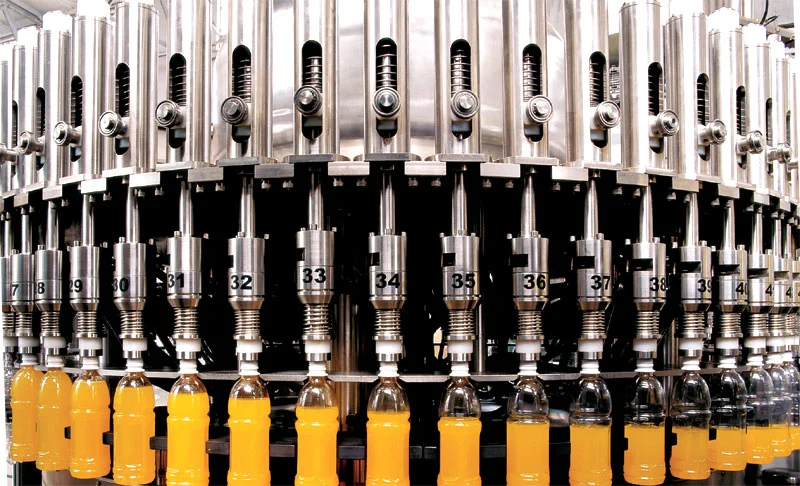
Jndwater fruit juice packing machine can accurately and efficiently fill juice into bottles or cans. Whether it is pure juice or mixed juice, it can achieve high-quality filling to meet the market demand for juice products.
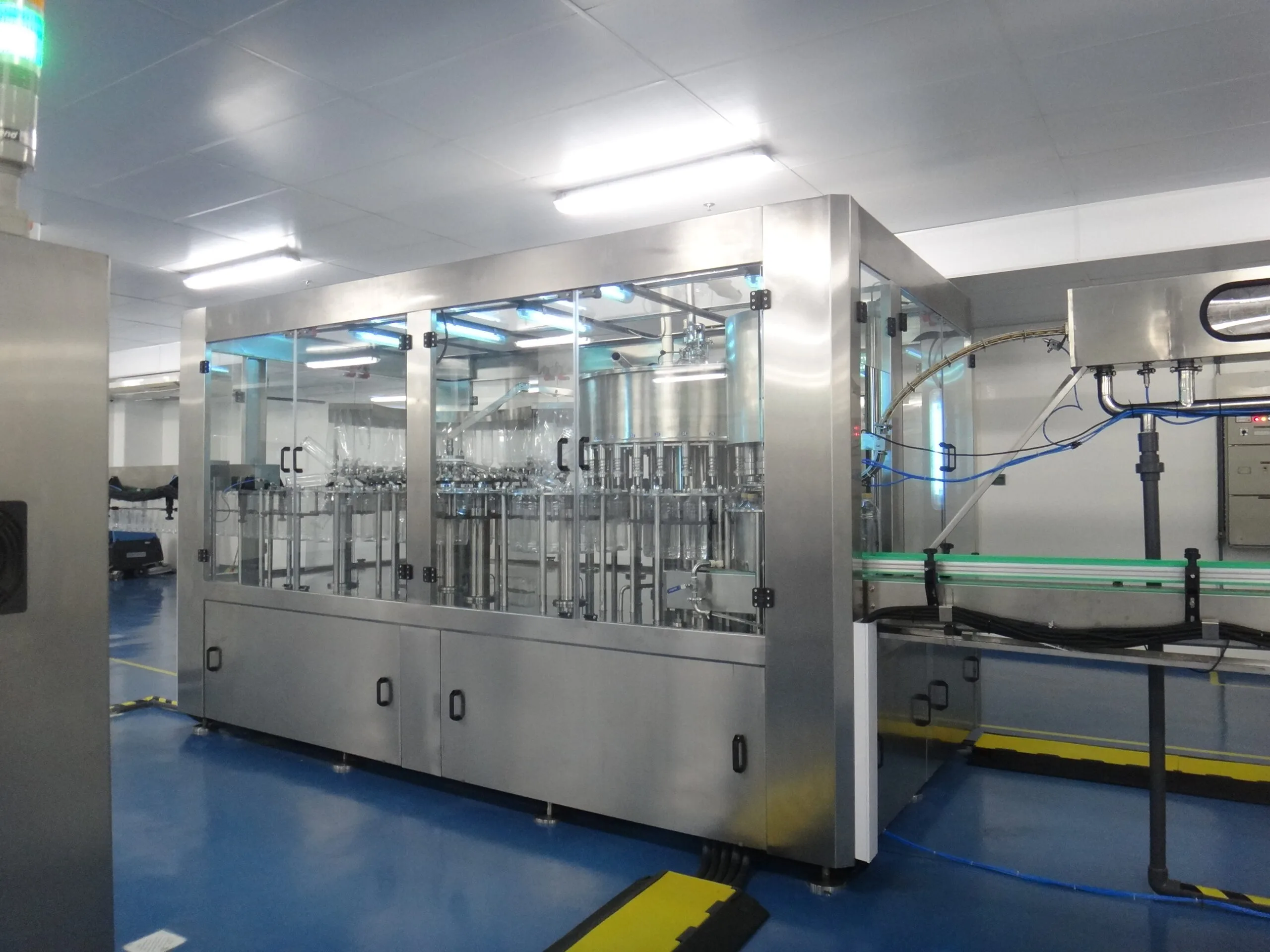
The Jndwater fruit juice bottling machine is designed for efficient and precise filling of fruit juice beverages. It uses advanced technology to ensure accurate and safe filling of every bottle, meeting the production needs of various sizes.
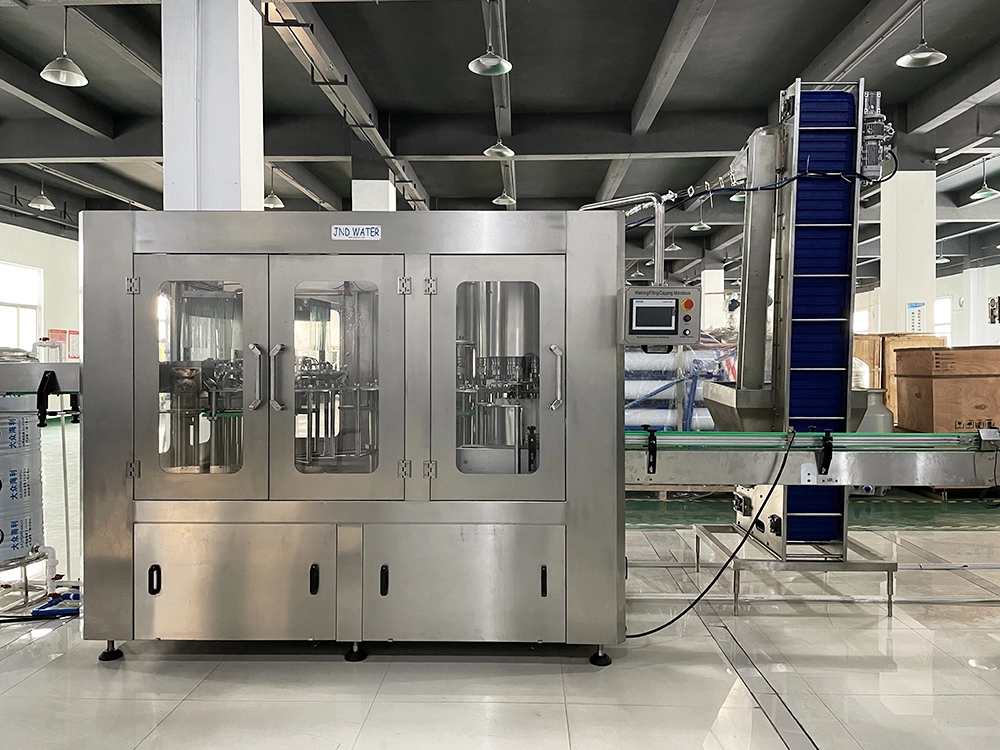
This Jndwater fruit Juice Filling Machine adopts plunger filling technology and is specially designed for juice beverage production. Through the dynamic pressure compensation system and anti-oxidation filling process,juice filling Machine can achieve high-precision filling of 200-2000ml full-specification juice, pulp beverage, and concentrated juice. It complies with NSF and ISO 22000 international standards and is suitable
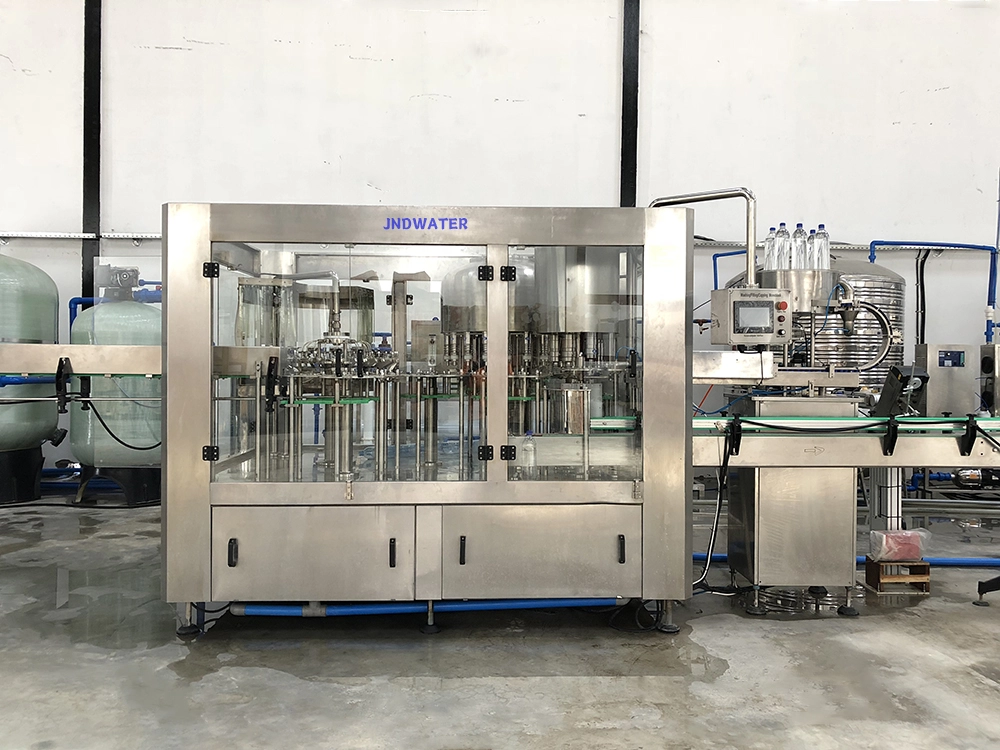
Jndwater juice bottling machine is an automated liquid packaging equipment, specially designed for carbonated (such as carbonated beverages, soda water) and non-carbonated liquids (such as mineral water, juice), integrating rinsing, filling and capping functions. The three-in-one model integrates rinsing, filling and capping, supports hot filling (such as juice, tea beverages), and the production efficiency can
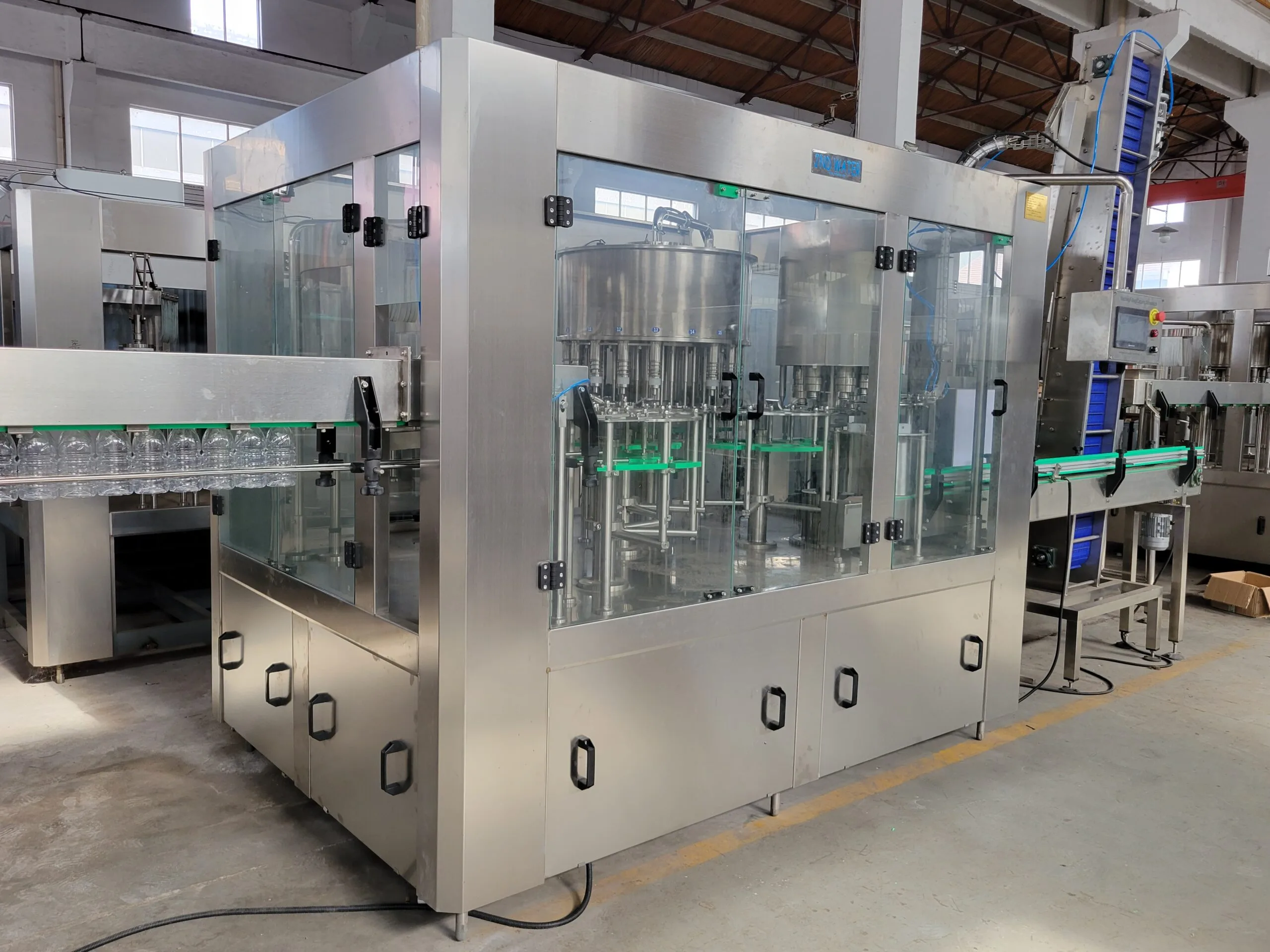
Jndwater series fruit juice packaging machine are designed for carbonated/non-carbonated liquids (carbonated beverages, juices, teas, functional drinks, etc.). fruit juice packing machine support full automation of the rinsing-filling-capping process, and are suitable for PET bottles, glass bottles (150ml-5L) and customized containers. The single machine capacity covers 6000-24000 bottles/hour.
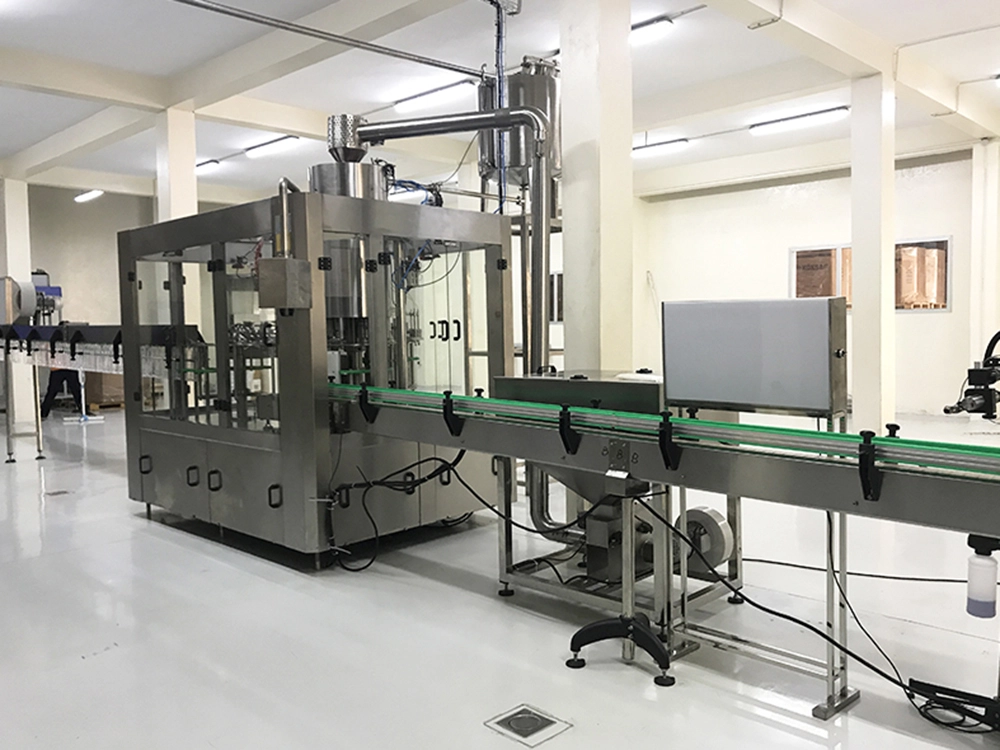
The Jndwater juice bottle filling machine is mainly used to accurately fill juice into various packaging bottle types. It is widely used in the filling of liquids such as juice, tea drinks, functional drinks, etc. small juice filling machine is suitable for filling PET bottles, glass bottles, and cans of various capacities and shapes.
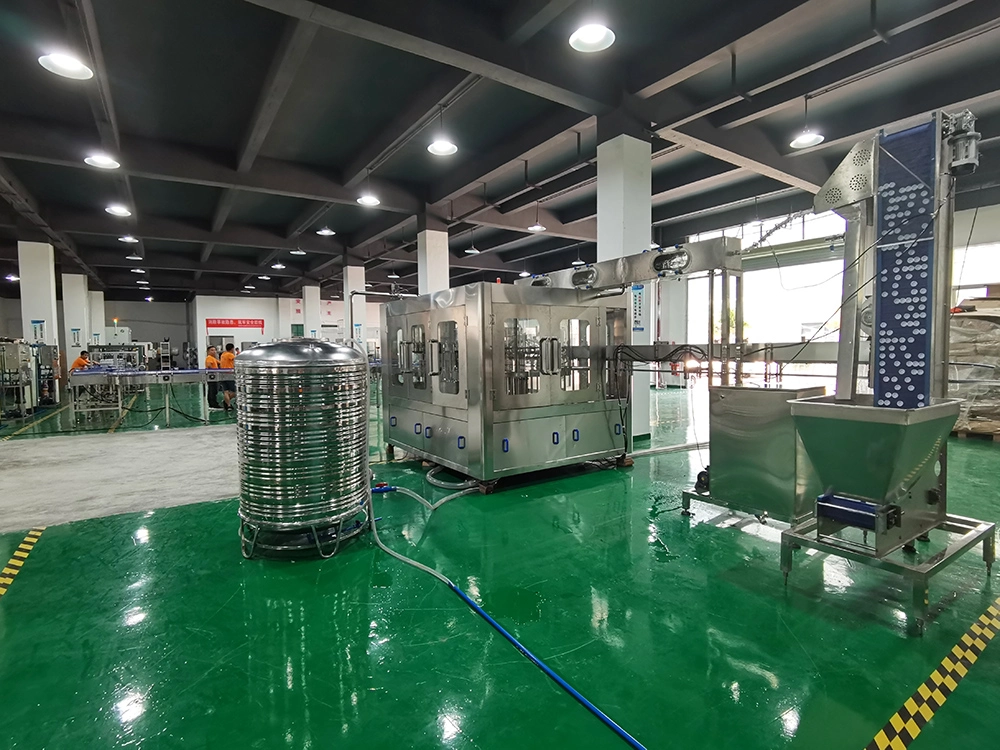
Jndwater juice filling machine can accurately and efficiently fill juice into bottles or cans. Whether it is pure juice or mixed juice, it can achieve high-quality filling to meet the market demand for juice products.