Detailed Working Process of a PET Bottle Blow Moulding Machine
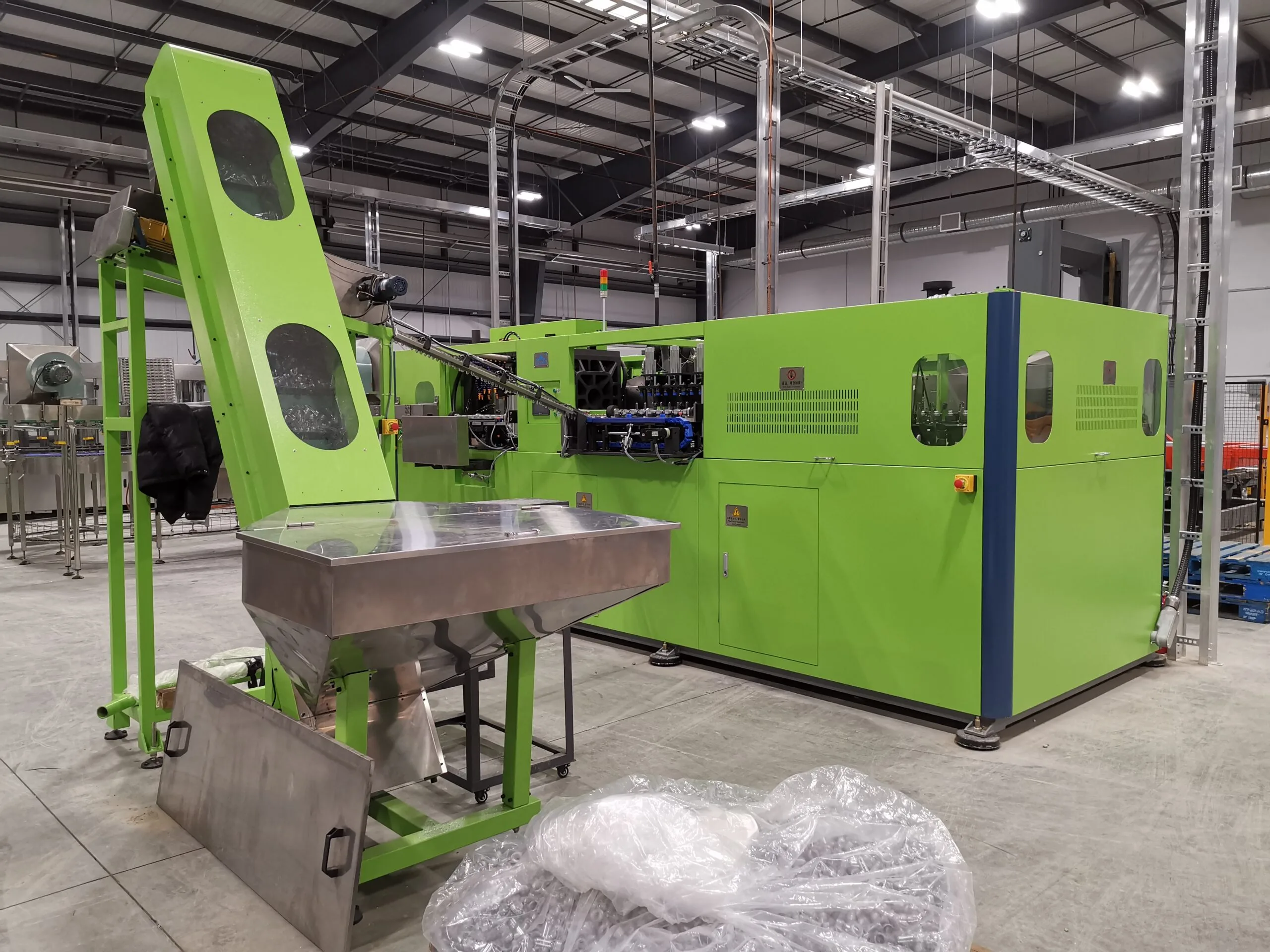
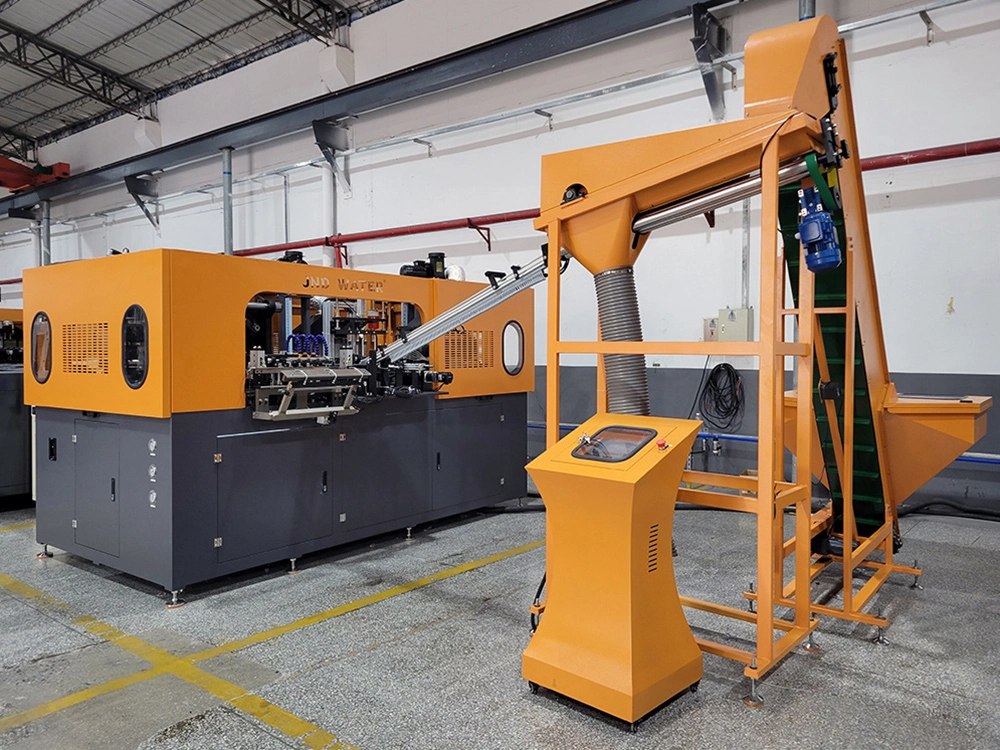
Understanding the detailed working process of a pet bottle blow moulding machine is crucial for anyone involved in the beverage or packaging industry. At JND Water, we've refined this process to ensure efficiency, precision, and reliability. Let's break down the steps involved, providing a clear picture of how these machines transform raw materials into the bottles we use every day.
Step 1: Preform Loading and Heating
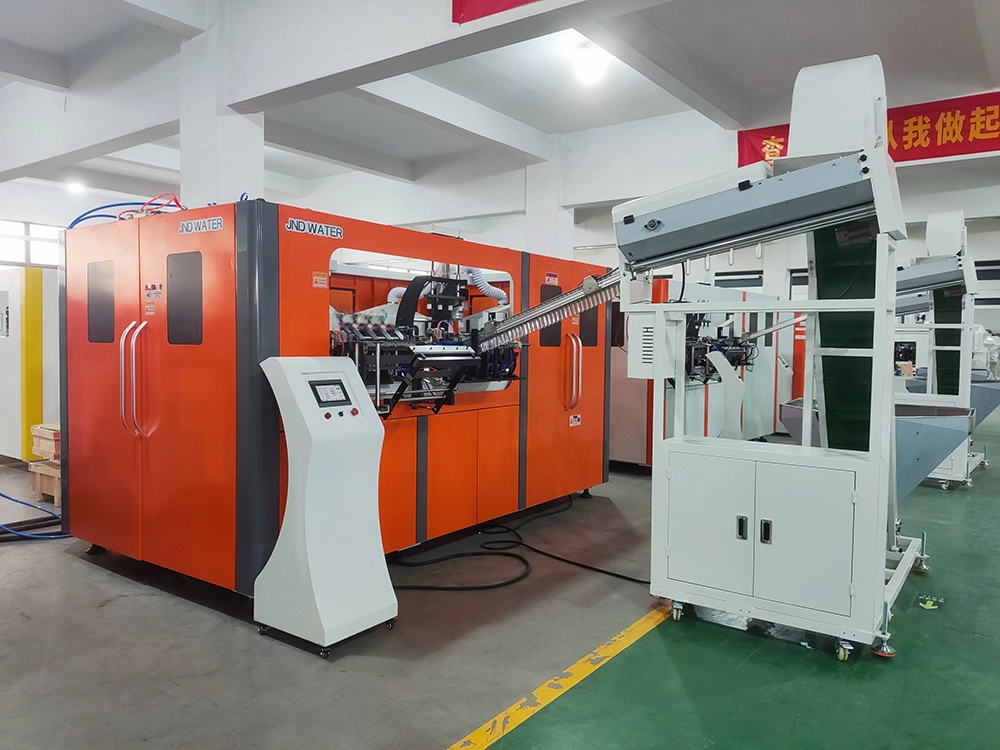
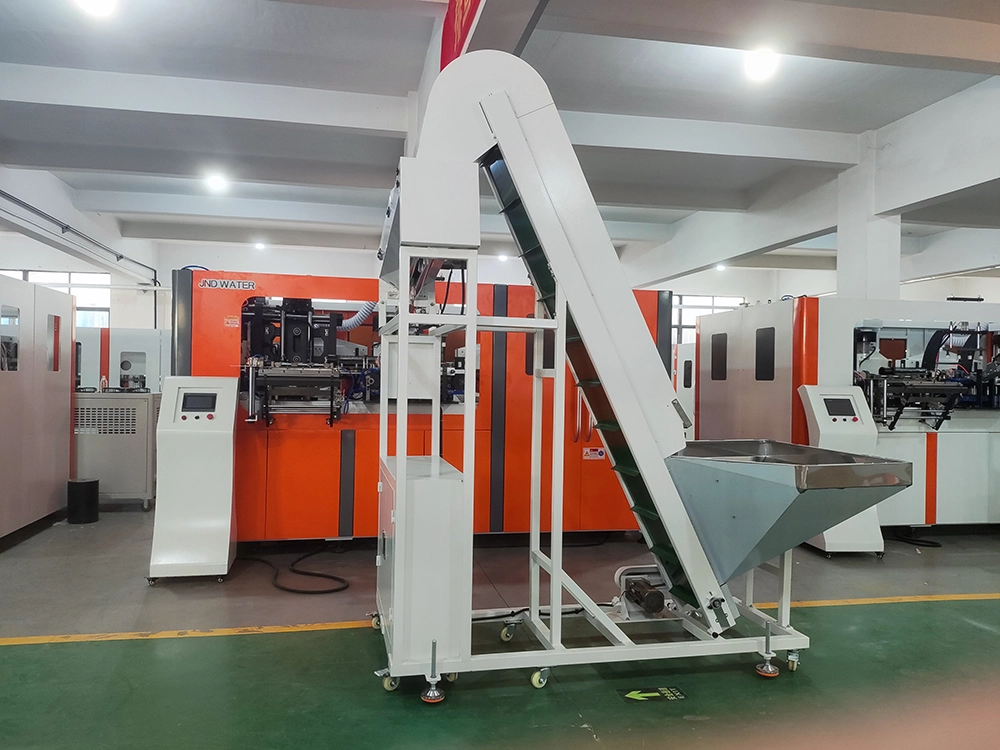
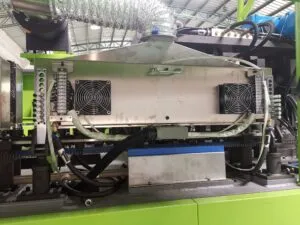
The process begins with loading PET preforms into the machine. These preforms, resembling test tubes with a screw neck, are made of PET resin. They are automatically loaded into the machine's hopper, which feeds them into a heating unit. The heating unit uses infrared lamps to heat the preforms to a specific temperature. This temperature is critical; it needs to be high enough to make the PET pliable but not so high that it melts or becomes deformed. The heating process is carefully controlled to ensure uniform heating across the preform's surface, which is essential for consistent bottle quality.
Step 2: Preform Stretching and Blowing
Once the preforms are heated to the optimal temperature, they are transferred to the blow moulding station. Here, each preform is placed inside a mould cavity that has the desired shape and size of the final bottle. A stretch rod is then inserted into the preform, stretching it lengthwise. Simultaneously, high-pressure air is injected into the preform, causing it to expand and conform to the shape of the mould. This simultaneous stretching and blowing process is what gives the PET bottle its final shape, strength, and clarity.
Step 3: Cooling and Solidification
After the bottle has been blown to its final shape, it needs to be cooled to solidify the PET material. The moulds are typically cooled using a water circulation system, which rapidly dissipates heat from the PET. This cooling process is crucial for maintaining the bottle's shape and preventing deformation. The cooling time is carefully controlled to ensure that the bottle is sufficiently hardened before it is ejected from the mould.
Step 4: Ejection and Quality Control
Once the bottle has cooled and solidified, the mould opens, and the finished bottle is ejected. The ejection process is automated to ensure a smooth and consistent flow of bottles. After ejection, the bottles undergo a quality control check to ensure they meet the required standards. This may involve visual inspection for defects, pressure testing to ensure strength, and dimensional checks to verify size and shape. Any bottles that do not meet the standards are rejected, while those that pass are sent on for filling and packaging.
Expert Commentary and Video Explanation
To further simplify the understanding of this process, JND Water provides technical expert commentary and professional video explanations. Our experts delve into the nuances of each step, offering insights into the critical parameters and potential challenges. The video explanations provide a visual representation of the process, making it easier to grasp the complex mechanics involved. These resources are invaluable for operators, technicians, and anyone looking to gain a deeper understanding of PET bottle blow moulding.
Integrated Production Line Solutions for PET Bottle Manufacturing
JND Water goes beyond just providing pet bottle blow moulding machines; we offer integrated production line solutions that encompass every stage of the PET bottle manufacturing process, from preform handling to filling, capping, and labeling. This holistic approach ensures seamless operation, optimized efficiency, and consistent product quality. Let’s explore the components of a typical integrated production line and the benefits of choosing a complete solution.
Comprehensive Solution Overview
An integrated PET bottle production line typically includes the following key components:
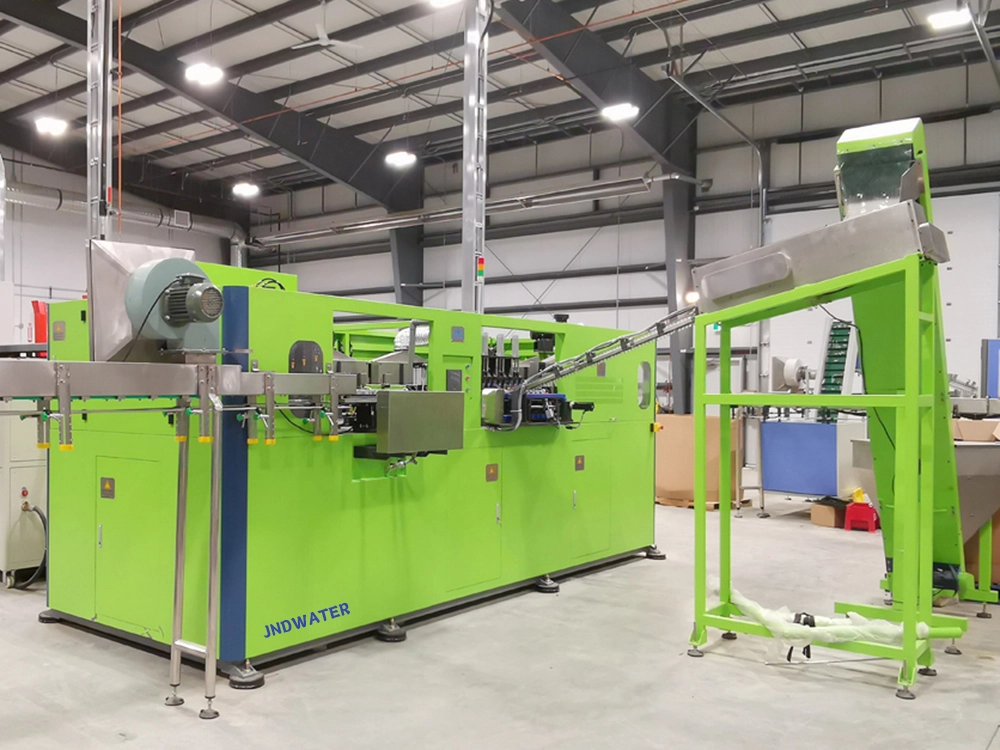
- Preform Feeding System: This system automatically loads preforms into the blow moulding machine, ensuring a continuous and uninterrupted supply.
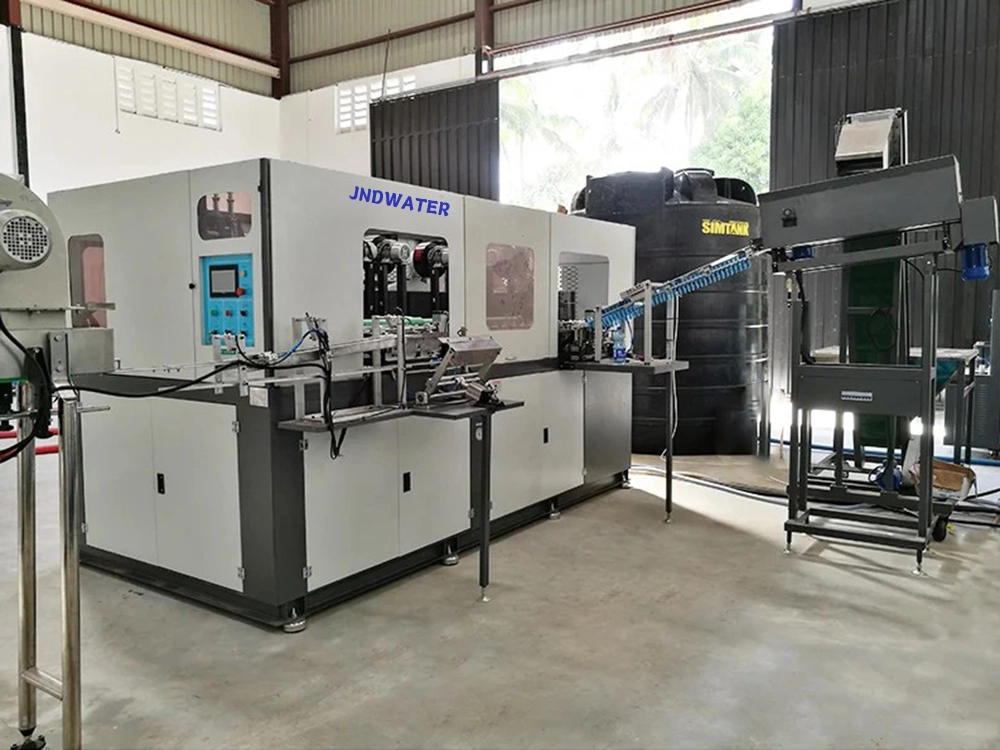
- Blow Moulding Machine: The heart of the production line, responsible for shaping the PET bottles to the desired specifications.
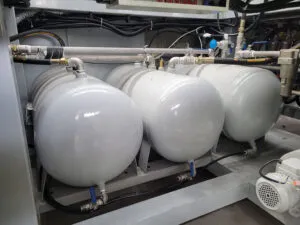
- Air Compressor System: Provides the high-pressure air required for blowing the preforms.
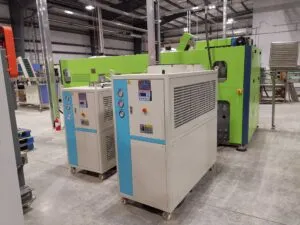
- Chiller System: Cools the moulds to solidify the PET bottles quickly and efficiently.
- Conveyor System: Transports the bottles from one stage of the production line to the next.
- Filling Machine: Fills the bottles with the desired liquid, whether it's water, juice, or another beverage.
- Capping Machine: Applies caps to the filled bottles, ensuring a secure and leak-proof seal.
- Labeling Machine: Applies labels to the bottles, providing product information and branding.
- Packaging Machine: Packages the labeled bottles into cases or shrink-wrapped bundles for shipping.
Benefits of an Integrated Solution
Choosing an integrated production line solution from JND Water offers numerous benefits:
- Increased Efficiency: By integrating all the components of the production line, we eliminate bottlenecks and optimize the flow of materials, resulting in increased efficiency and throughput.
- Improved Product Quality: Our integrated solutions are designed to ensure consistent product quality at every stage of the process, from preform handling to packaging.
- Reduced Labor Costs: Automation reduces the need for manual labor, lowering production costs and improving profitability.
- Simplified Maintenance: With a single supplier for the entire production line, maintenance and support are simplified, reducing downtime and minimizing disruptions.
- Customized Solutions: We offer customized solutions tailored to your specific needs and requirements, ensuring that you get the perfect production line for your business.
Case Studies and Customer Testimonials
To illustrate the benefits of our integrated production line solutions, we provide case studies and customer testimonials. These real-world examples demonstrate how our solutions have helped businesses like yours increase efficiency, improve product quality, and reduce costs. Our satisfied customers are a testament to the quality and reliability of our products and services.
For instance, a leading beverage company in Europe implemented our integrated PET bottle production line and saw a 30% increase in production efficiency and a 20% reduction in labor costs. Another customer in South America praised our customized solution for meeting their specific needs and improving their product quality. These are just a few examples of how JND Water is helping businesses around the world succeed in the competitive beverage industry.
Energy Efficiency and Sustainability in PET Bottle Blow Moulding
In today's world, energy efficiency and sustainability are paramount. JND Water is committed to providing pet bottle blow moulding machines that minimize energy consumption and reduce environmental impact. We understand that our customers are increasingly concerned about these issues, and we are dedicated to helping them achieve their sustainability goals. Let's explore how our machines compare in terms of energy consumption and the green production strategies we implement.
Energy Consumption Comparison
Our range of PET bottle blow moulding machines is designed with energy efficiency in mind. We utilize advanced technologies and innovative designs to minimize energy consumption without compromising performance. Here's a comparison of the energy consumption of different machine models:
- Model A: Consumes approximately 0.5 kWh per bottle.
- Model B: Consumes approximately 0.45 kWh per bottle.
- Model C: Consumes approximately 0.4 kWh per bottle.
These figures are based on standard operating conditions and may vary depending on the specific application and bottle size. However, they demonstrate our commitment to providing energy-efficient machines that help our customers reduce their carbon footprint and lower their energy costs.
Green Production Strategies
In addition to energy-efficient machines, JND Water also promotes green production strategies to further enhance sustainability. These strategies include:
- Recycling PET Waste: We encourage our customers to recycle PET waste generated during the production process. PET is a highly recyclable material, and recycling it reduces the need for virgin PET resin, conserving resources and reducing environmental impact.
- Optimizing Production Processes: We work with our customers to optimize their production processes, minimizing waste and maximizing efficiency. This includes optimizing machine settings, reducing scrap rates, and implementing lean manufacturing principles.
- Using Renewable Energy: We encourage our customers to use renewable energy sources, such as solar or wind power, to power their production facilities. This reduces their reliance on fossil fuels and lowers their carbon emissions.
- Reducing Water Consumption: We design our machines to minimize water consumption, using closed-loop cooling systems and other water-saving technologies. This conserves water resources and reduces the environmental impact of our operations.
Detailed Explanation of Sustainability Initiatives
At JND Water, sustainability is not just a buzzword; it's a core value that guides our business decisions. We are committed to continuously improving our environmental performance and helping our customers achieve their sustainability goals. We believe that by working together, we can create a more sustainable future for the beverage industry.
For example, we are actively involved in research and development to find new and innovative ways to reduce energy consumption and minimize waste. We are also working with our suppliers to ensure that our materials are sourced responsibly and sustainably. Furthermore, we are committed to transparency and accountability, regularly reporting on our environmental performance and progress towards our sustainability goals.
Customer Support and After-Sales Service for PET Bottle Blow Moulding Machines
At JND Water, we understand that customer support and after-sales service are just as important as the quality of our pet bottle blow moulding machines. We are committed to providing our customers with the highest level of support, ensuring that their machines operate smoothly and efficiently for years to come. Let's explore the specific contact methods for our 24/7 customer service and our global support network.
24/7 Customer Service
We offer 24/7 customer service to provide our customers with immediate assistance whenever they need it. Our customer service team is staffed by highly trained technicians who are experts in PET bottle blow moulding machines. They can provide assistance with a wide range of issues, including:
- Troubleshooting machine problems
- Providing technical support
- Answering questions about machine operation
- Processing warranty claims
- Scheduling maintenance and repairs
You can reach our 24/7 customer service team via the following methods:
- Phone: +[Insert Phone Number]
- Email: support@jndwater.com
- Live Chat: Available on our website
Global Support Network
In addition to our 24/7 customer service team, we also have a global support network of authorized service providers. These providers are located in key regions around the world and are trained to provide on-site maintenance and repair services for our machines. This ensures that our customers can get the support they need, no matter where they are located.
Our global support network offers a wide range of services, including:
- Machine installation and commissioning
- Preventive maintenance
- Emergency repairs
- Spare parts supply
- Training and education
Quick Guides and Video Tutorials
To help our customers quickly resolve common issues, we also provide quick guides and video tutorials. These resources cover a wide range of topics, including:
- Troubleshooting common machine problems
- Performing routine maintenance tasks
- Adjusting machine settings
- Replacing worn parts
Our quick guides and video tutorials are available on our website and are designed to be easy to understand and follow. They provide step-by-step instructions and clear visuals, making it easy for our customers to resolve issues quickly and efficiently.
At JND Water, we are committed to providing our customers with the best possible support and after-sales service. We believe that this is essential for ensuring their long-term success and satisfaction. We are always looking for ways to improve our support services and welcome feedback from our customers.
User-Friendly Interface and Controls of a PET Bottle Blow Moulding Machine
A user-friendly interface and intuitive controls are crucial for efficient and reliable operation of a pet bottle blow moulding machine. JND Water prioritizes ease of use in the design of our machines, ensuring that operators can quickly learn and effectively manage the production process. Let's explore the PLC control system and its features, along with detailed instructions on how to use the user interface for diagnostics.
PLC Control System Overview
Our PET bottle blow moulding machines are equipped with a state-of-the-art PLC (Programmable Logic Controller) control system. This system provides precise control over all aspects of the machine's operation, including:
- Preform heating
- Mould opening and closing
- Air pressure regulation
- Bottle ejection
- Safety interlocks
The PLC control system is designed to be user-friendly, with a clear and intuitive interface that allows operators to easily monitor and adjust machine settings. The system also includes advanced features such as:
- Real-time monitoring of machine performance
- Automatic fault detection and diagnosis
- Historical data logging
- Remote access for troubleshooting and support
User Interface Features and Troubleshooting Steps
The user interface of our PLC control system is designed to be easy to navigate and understand. The main screen provides a clear overview of the machine's status, with key parameters displayed in real-time. Operators can easily access different sections of the interface to adjust settings, view historical data, and troubleshoot problems.
Here are some key features of the user interface:
- Main Screen: Displays the machine's current status, including temperature, pressure, and production rate.
- Settings Menu: Allows operators to adjust machine settings, such as heating temperature, blowing pressure, and cooling time.
- Data Logging: Provides historical data on machine performance, allowing operators to track trends and identify potential problems.
- Fault Diagnosis: Displays a list of any faults that have occurred, along with possible causes and solutions.
- Remote Access: Allows authorized personnel to access the machine remotely for troubleshooting and support.
To troubleshoot problems using the user interface, follow these steps:
- Check the Main Screen: Look for any error messages or unusual readings.
- Access the Fault Diagnosis Menu: Review the list of faults and their possible causes.
- Consult the Machine Manual: Refer to the machine manual for detailed troubleshooting instructions.
- Contact Customer Support: If you are unable to resolve the problem, contact our customer support team for assistance.
By providing a user-friendly interface and comprehensive troubleshooting tools, JND Water empowers operators to quickly and effectively resolve problems, minimizing downtime and maximizing productivity. We are committed to continuously improving our user interface to make it even easier to use and more effective.