Introduction to Reverse Osmosis Technology
Reverse osmosis (RO) is a water purification technology that uses a semipermeable membrane to remove ions, molecules, and larger particles from drinking water. In reverse osmosis, an applied pressure is used to overcome osmotic pressure, a colligative property that is driven by chemical potential differences of the solvent, thermodynamically. Reverse osmosis can remove many types of dissolved and suspended species from water, including bacteria, and is used in both industrial processes and the production of potable water.
The technology's history is rooted in the mid-20th century, with significant advancements in membrane technology driving its widespread adoption. The initial developments focused on desalination, aiming to convert seawater into potable water. Today, reverse osmosis is not just limited to desalination; it's a critical component in various industries, from food and beverage production to pharmaceuticals and wastewater treatment. JND Water has been at the forefront of adapting and optimizing RO technology for diverse applications, ensuring that our reverse osmosis machine meets the evolving needs of a global market.
At its core, reverse osmosis works by forcing water through a semi-permeable membrane that filters out contaminants. This membrane is designed to allow water molecules to pass through while blocking larger molecules, ions, and particles. The process requires pressure to overcome the natural osmotic pressure, hence the name 'reverse' osmosis. The water that passes through the membrane is purified, while the concentrated contaminants are flushed away as waste.
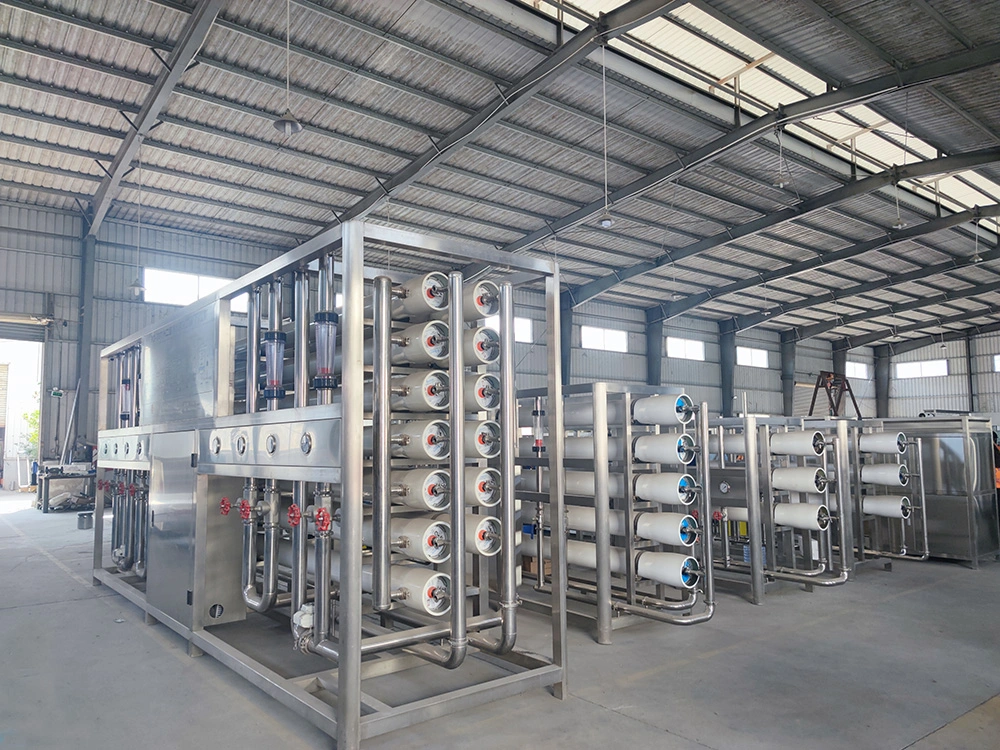
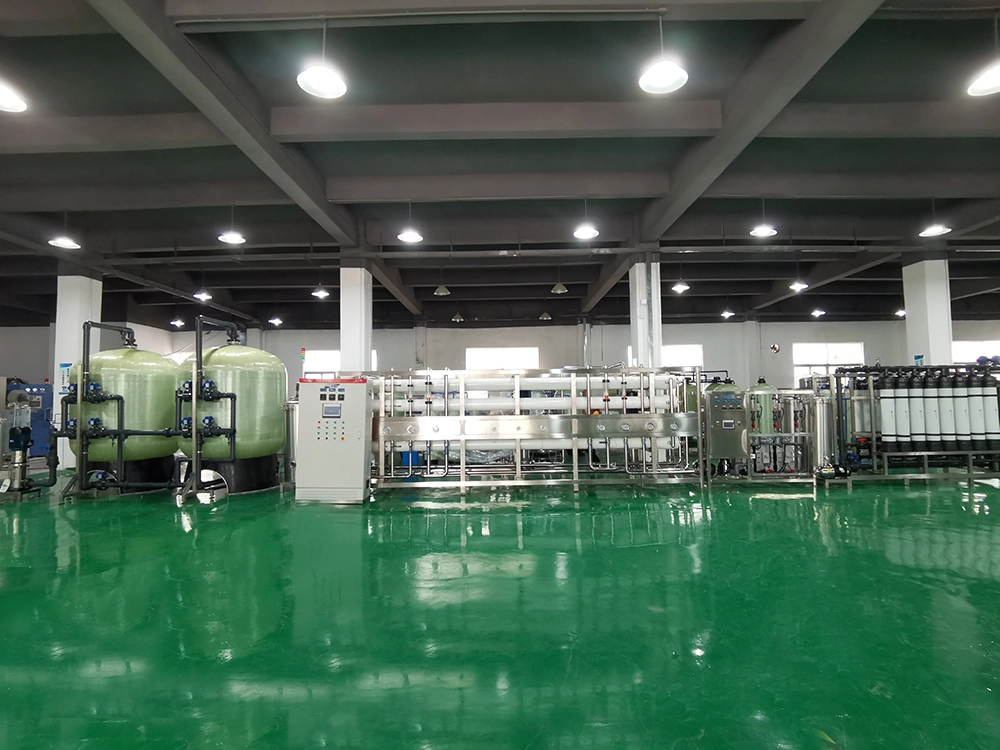
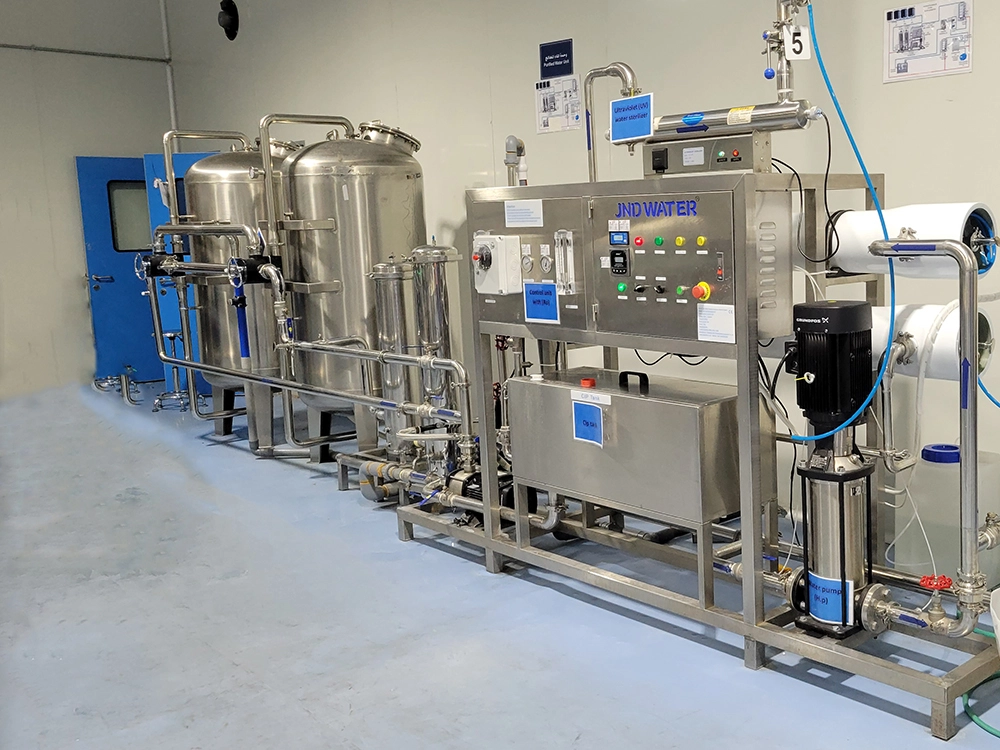
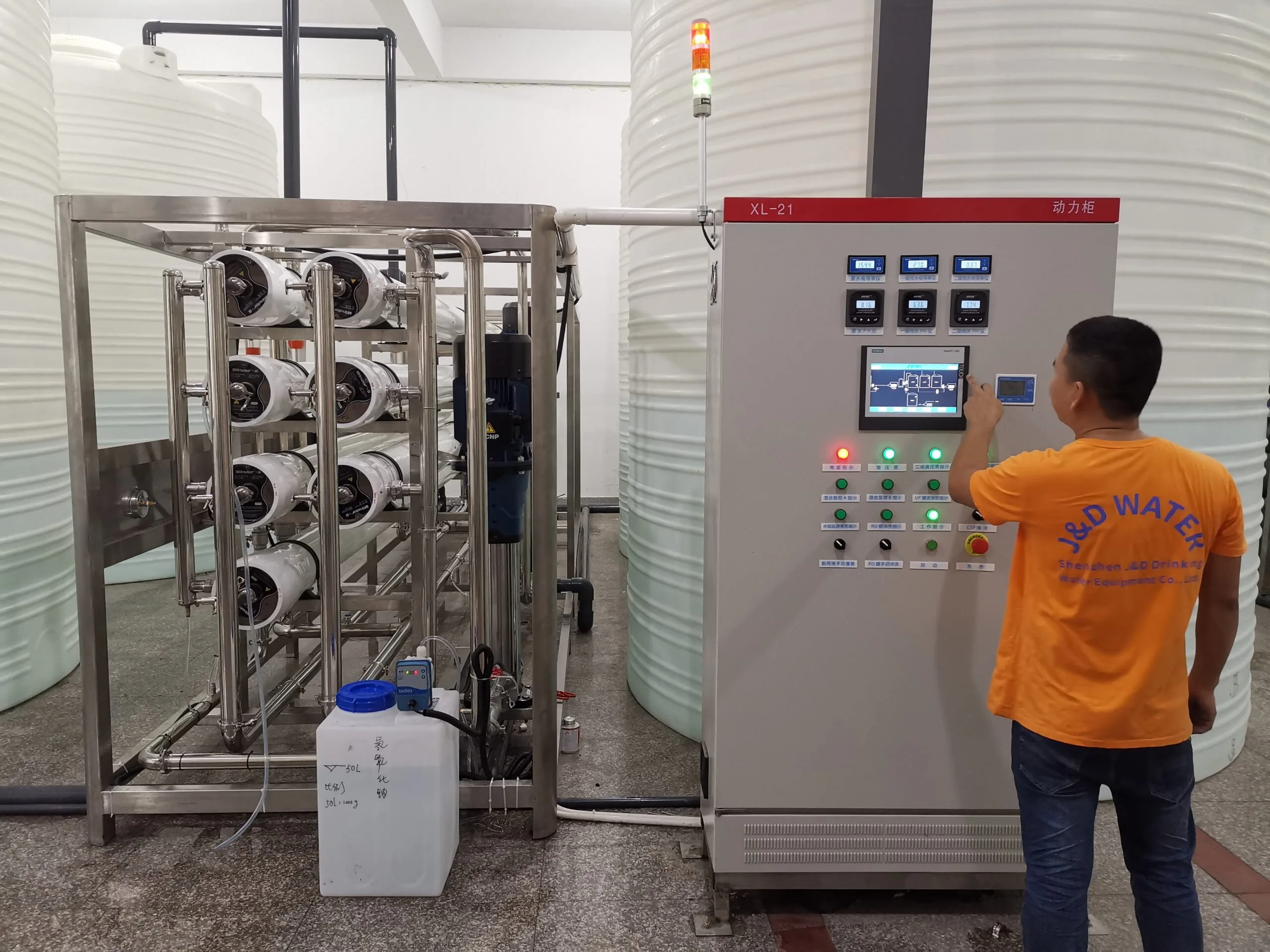
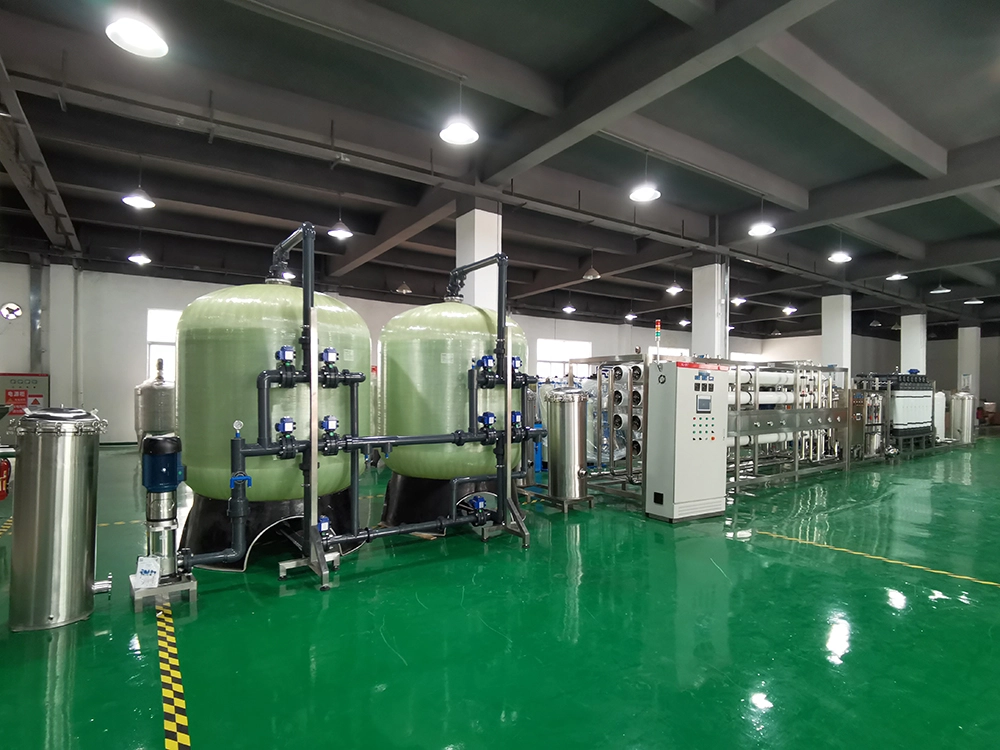
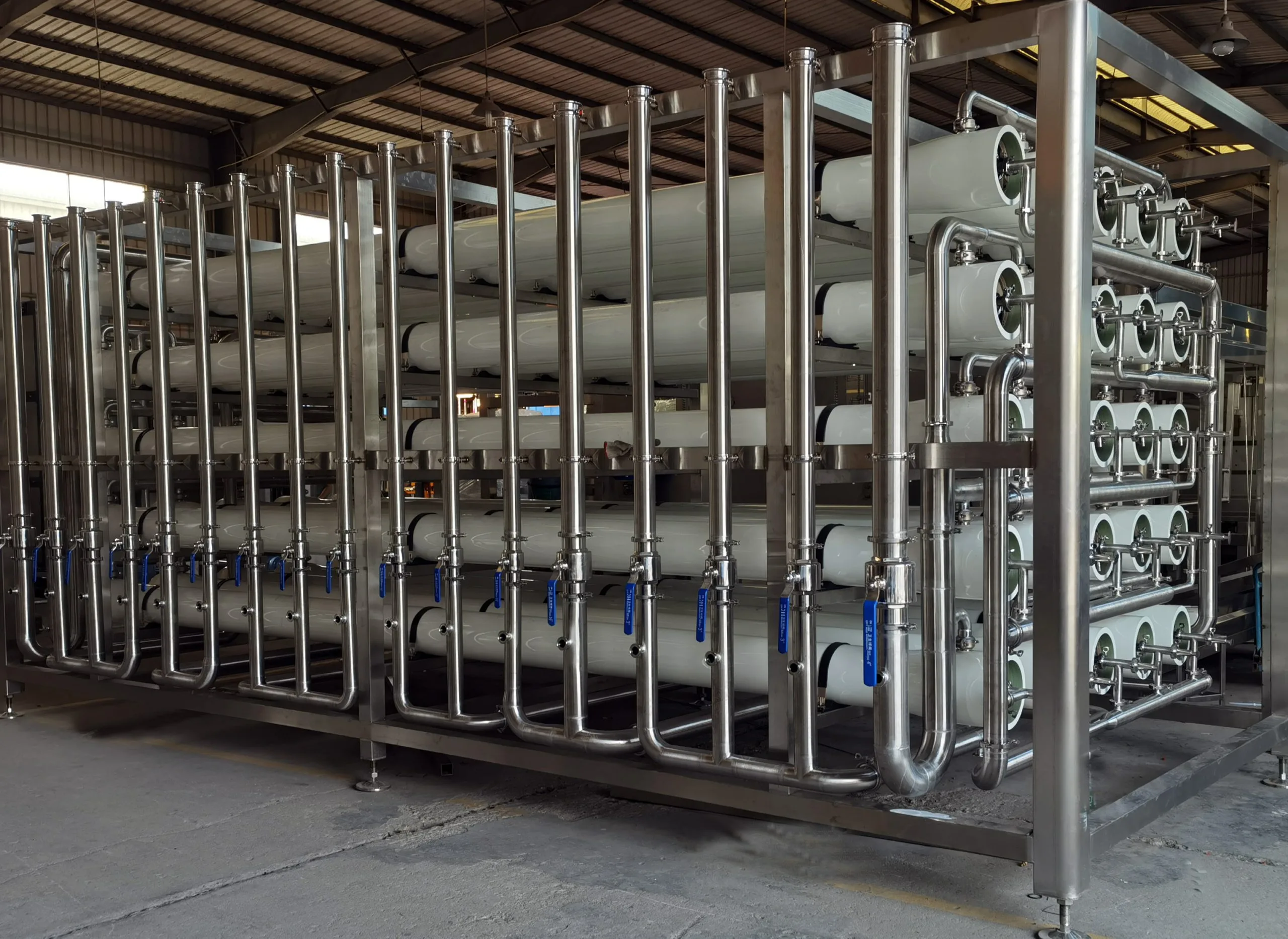
A diagram of a typical reverse osmosis system would show several key components: a pre-filter to remove larger particles and sediment, a high-pressure pump to force water through the membrane, the RO membrane itself, and post-filters to further refine the water quality. Each component plays a crucial role in ensuring the efficiency and effectiveness of the system.
The applications of reverse osmosis are vast and varied. In the food and beverage industry, it's used to purify water for production processes and to concentrate juices and other liquids. In pharmaceuticals, it provides ultra-pure water for drug manufacturing. In wastewater treatment, it helps remove pollutants and recycle water for reuse. And, of course, it remains a vital technology for desalination, providing fresh water to regions with limited access to freshwater sources. Specifically, JND Water's reverse osmosis machines are designed to cater to a diverse range of industries, ensuring that businesses of all sizes can benefit from this advanced water purification technology. For instance, a beverage company might use our RO system to ensure the purity of the water used in their products, enhancing the taste and quality. A pharmaceutical company, on the other hand, might rely on our system to meet the stringent purity standards required for drug manufacturing. By providing reliable and efficient water purification, JND Water helps businesses maintain high standards and operate sustainably.
The benefits of using reverse osmosis are numerous. It provides a highly effective method of water purification, removing a wide range of contaminants. It's a relatively energy-efficient process compared to other desalination methods. And it can be scaled to meet the needs of different applications, from small-scale operations to large industrial plants. However, it's essential to consider factors such as the initial investment, maintenance requirements, and the need for proper disposal of concentrated waste. With proper planning and maintenance, reverse osmosis can be a cost-effective and sustainable solution for water purification needs.
Comparative Analysis of OEM vs ODM Services
When sourcing reverse osmosis machines, businesses often encounter the terms OEM (Original Equipment Manufacturer) and ODM (Original Design Manufacturer). Understanding the differences between these two service models is crucial for making informed decisions that align with your specific needs and capabilities. Choosing the right model can significantly impact product quality, cost-effectiveness, and time-to-market.
OEM refers to a manufacturing model where a company produces products according to the designs and specifications provided by another company. In this scenario, the client retains control over the product design and intellectual property. The OEM simply acts as a manufacturing partner, leveraging its production capabilities to bring the client's vision to life. This model is suitable for businesses that have their own product designs and want to outsource manufacturing to reduce costs or increase production capacity. The advantages of OEM include greater control over product design, protection of intellectual property, and the ability to customize products to meet specific market needs. However, it also requires the client to have strong design and engineering capabilities, as well as the resources to manage the manufacturing process.
ODM, on the other hand, involves a company designing and manufacturing products that are then branded and sold by another company. In this model, the ODM owns the product design and intellectual property. The client essentially purchases a ready-made product that can be customized with their branding and packaging. This model is ideal for businesses that want to quickly launch new products without investing in extensive design and engineering resources. The benefits of ODM include lower upfront costs, faster time-to-market, and access to the ODM's design and engineering expertise. However, it also means less control over product design and reliance on the ODM's capabilities. The choice between OEM and ODM depends on the business's specific needs, resources, and strategic goals.
Here’s a comparison table summarizing the key differences between OEM and ODM services:
| Feature |
OEM (Original Equipment Manufacturer) |
ODM (Original Design Manufacturer) |
| Definition |
Manufacturing based on client's design |
Designing and manufacturing products that are branded and sold by the client |
| Design Control |
Client retains full control |
ODM owns the design |
| Intellectual Property |
Client owns the IP |
ODM owns the IP |
| Cost Structure |
Higher upfront costs for design and engineering |
Lower upfront costs |
| Time-to-Market |
Longer, due to design and development |
Faster, as the product is already designed |
| Suitable For |
Companies with strong design capabilities and specific product requirements |
Companies looking for quick product launches and lower upfront investment |
| Advantages |
Greater control, IP protection, customization |
Lower costs, faster launch, access to ODM expertise |
| Disadvantages |
Requires strong design capabilities, higher costs |
Less control over design, reliance on ODM |
To illustrate the impact of choosing between OEM and ODM, consider two hypothetical scenarios. In the first scenario, a large beverage company wants to launch a new line of flavored water using reverse osmosis technology. The company has its own proprietary water purification process and wants to ensure that the reverse osmosis machine is perfectly aligned with its existing infrastructure. In this case, the company would likely choose OEM services, providing JND Water with its design specifications and relying on our manufacturing expertise to produce the machine. In the second scenario, a startup company wants to enter the bottled water market but lacks the resources to design its own reverse osmosis machine. In this case, the company would likely opt for ODM services, selecting a pre-designed machine from JND Water and customizing it with its branding and packaging. By understanding the nuances of OEM and ODM, businesses can make strategic decisions that optimize their resources and achieve their goals. Customer testimonials further highlight the benefits of each approach, with some clients praising the control and customization afforded by OEM, while others value the speed and cost-effectiveness of ODM.
Detailed Product Specifications
Understanding the technical specifications of a reverse osmosis machine is crucial for selecting the right equipment for your specific needs. Detailed product specifications provide essential information about the machine's performance, capacity, and compatibility with your existing infrastructure. JND Water is committed to providing comprehensive product specifications for all our reverse osmosis machines, ensuring that our clients have the information they need to make informed decisions. This transparency builds trust and ensures that our clients are satisfied with their investment.
A comprehensive specification sheet typically includes several key parameters. The first is the machine's capacity, which refers to the amount of purified water it can produce per unit of time (e.g., gallons per day or liters per hour). This is a critical factor to consider, as it determines whether the machine can meet your daily water purification needs. The second is the machine's operating pressure, which indicates the pressure required to force water through the reverse osmosis membrane. This parameter is important for ensuring that the machine is compatible with your water source and that you have the necessary pumping capacity. The third is the machine's rejection rate, which refers to the percentage of contaminants that are removed from the water. A higher rejection rate indicates a more effective purification process. Other important specifications include the machine's power consumption, dimensions, and materials of construction.
To provide a clearer picture, let's consider an example. Suppose you are looking at a JND Water reverse osmosis machine with a capacity of 1000 gallons per day (GPD). The specification sheet might indicate that the machine operates at a pressure of 200 PSI and has a rejection rate of 99%. This means that the machine can produce 1000 gallons of purified water per day, requires a pressure of 200 PSI to operate, and removes 99% of contaminants from the water. Based on these specifications, you can determine whether the machine is suitable for your needs. For instance, if you require more than 1000 GPD, you would need to consider a larger machine or multiple machines. Similarly, if your water source has a low pressure, you would need to ensure that you have a booster pump to meet the machine's operating pressure requirements.
JND Water provides detailed specification sheets for all our reverse osmosis machine models. These sheets include not only the key parameters mentioned above but also additional information such as the types of contaminants that the machine can remove, the recommended pre-treatment requirements, and the maintenance schedule. We also provide high-quality images of our machines, allowing you to visually inspect the equipment and ensure that it meets your expectations. To further assist our clients, we offer the option to download specification sheets in PDF format or directly click to view more details on our website. This makes it easy to access the information you need and compare different models to find the perfect fit for your business.
By providing detailed product specifications, JND Water empowers our clients to make informed decisions and select the right reverse osmosis machine for their specific needs. We believe that transparency and clear communication are essential for building long-term relationships with our clients. Our commitment to providing comprehensive product information is just one of the ways we strive to exceed our clients' expectations.
Installation and Maintenance Guide
Proper installation and regular maintenance are essential for ensuring the long-term performance and reliability of your reverse osmosis machine. A well-installed and maintained machine will not only provide consistent water purification but also minimize downtime and reduce the risk of costly repairs. JND Water is committed to providing comprehensive installation and maintenance guides for all our reverse osmosis machines, empowering our clients to keep their equipment in optimal condition.
The installation process typically involves several key steps. First, you need to select a suitable location for the machine. The location should be clean, dry, and well-ventilated, with easy access to water and power sources. Next, you need to connect the machine to the water source, drain, and power supply. It's important to follow the manufacturer's instructions carefully and use the correct fittings and connections to avoid leaks and damage. Once the machine is connected, you need to prime the system and check for leaks. This involves running water through the machine and ensuring that all connections are tight and that there are no leaks. Finally, you need to calibrate the machine and adjust the settings to meet your specific water purification needs.
Maintenance involves several key tasks, including regular cleaning, filter replacement, and membrane inspection. Regular cleaning helps prevent the buildup of scale and other contaminants, which can reduce the machine's performance and lifespan. Filter replacement is essential for removing sediment and other particles that can clog the reverse osmosis membrane. The frequency of filter replacement depends on the quality of the water source and the machine's usage. Membrane inspection involves checking the membrane for damage and replacing it if necessary. The membrane is the heart of the reverse osmosis machine, and its condition directly affects the quality of the purified water. To ensure proper maintenance, it’s important to keep a detailed log of all maintenance activities, including dates, tasks performed, and parts replaced.
JND Water provides detailed installation and maintenance guides for all our reverse osmosis machine models. These guides include step-by-step instructions, diagrams, and troubleshooting tips. We also offer video tutorials that demonstrate the installation and maintenance process. These videos provide a visual guide that can be particularly helpful for those who are new to reverse osmosis technology. In addition to our written and video guides, we offer a comprehensive FAQ section that addresses common questions and concerns. This section covers topics such as troubleshooting common problems, optimizing machine performance, and extending the machine's lifespan. For more complex issues, we offer remote support and on-site service to ensure that our clients receive the assistance they need.
By providing comprehensive installation and maintenance guides, JND Water empowers our clients to keep their reverse osmosis machines in optimal condition. We believe that proper installation and regular maintenance are essential for ensuring the long-term performance and reliability of our equipment. Our commitment to providing comprehensive support is just one of the ways we strive to exceed our clients' expectations.
Customer Testimonials and Case Studies
Customer testimonials and case studies are powerful tools for demonstrating the value and effectiveness of reverse osmosis machines. They provide real-world examples of how these machines have helped businesses solve their water purification challenges and achieve their goals. JND Water is committed to showcasing customer testimonials and case studies to provide potential clients with a clear understanding of the benefits of our products and services. These stories build trust and credibility, demonstrating that our reverse osmosis machines are a reliable and effective solution for a wide range of applications.
Customer testimonials are firsthand accounts from clients who have used JND Water's reverse osmosis machines. These testimonials typically highlight the specific challenges that the client faced, the reasons why they chose JND Water, and the results they have achieved. Testimonials can be presented in various formats, including written quotes, video interviews, and audio recordings. The key is to capture the client's authentic voice and convey their genuine satisfaction with the product and service. For example, a testimonial might come from a beverage company that was struggling to maintain consistent water quality. The company might explain how they chose JND Water because of our reputation for reliability and our commitment to customer service. They might then describe how our reverse osmosis machine has helped them improve their water quality, reduce their operating costs, and enhance their brand reputation.
Case studies provide a more in-depth analysis of how JND Water's reverse osmosis machines have been used in specific applications. A case study typically includes a detailed description of the client's business, the challenges they faced, the solutions they implemented, and the results they achieved. Case studies often include quantitative data, such as water quality measurements, cost savings, and efficiency improvements. They also include qualitative data, such as customer satisfaction ratings and employee feedback. For example, a case study might focus on a pharmaceutical company that needed to meet stringent water purity standards for drug manufacturing. The case study might describe how JND Water's reverse osmosis machine was integrated into the company's existing water treatment system and how it helped them achieve the required purity levels. The case study might also include data on the machine's performance, such as its rejection rate, flow rate, and energy consumption.
JND Water showcases customer testimonials and case studies on our website, in our marketing materials, and at trade shows and conferences. We also encourage our clients to share their stories with us, and we provide incentives for those who are willing to participate. By sharing these stories, we not only demonstrate the value of our products and services but also build a community of satisfied customers who are willing to recommend JND Water to others. We strive to provide a diverse range of testimonials and case studies, representing different industries, geographic regions, and business sizes. This ensures that potential clients can find stories that resonate with their specific needs and challenges. Customer testimonials from various regions and industries demonstrate the versatility and reliability of JND Water's solutions. For instance, a food processing plant in Europe might praise the RO system's ability to maintain consistent water quality, while a beverage manufacturer in Asia might highlight the cost savings achieved through reduced water consumption.
By showcasing customer testimonials and case studies, JND Water provides potential clients with compelling evidence of the benefits of our reverse osmosis machines. We believe that these stories are more persuasive than any marketing message and that they build trust and credibility with our target audience. Our commitment to showcasing customer success is just one of the ways we strive to exceed our clients' expectations.
Environmental Benefits of Reverse Osmosis
Reverse osmosis technology offers significant environmental benefits, making it a sustainable choice for water purification and treatment. In an era of increasing environmental awareness, businesses are seeking solutions that not only meet their operational needs but also minimize their environmental impact. JND Water is committed to promoting the environmental benefits of reverse osmosis and providing solutions that help our clients operate sustainably. By reducing energy consumption, minimizing waste, and conserving water, reverse osmosis technology contributes to a healthier planet.
One of the primary environmental benefits of reverse osmosis is its energy efficiency compared to other water purification methods. Traditional methods, such as distillation, require significant amounts of energy to heat water and evaporate it. Reverse osmosis, on the other hand, uses pressure to force water through a membrane, requiring less energy. This reduced energy consumption translates into lower greenhouse gas emissions and a smaller carbon footprint. JND Water is continuously innovating to further improve the energy efficiency of our reverse osmosis machines, incorporating advanced technologies such as energy recovery systems and optimized membrane designs. These innovations help our clients reduce their energy costs and minimize their environmental impact.
Reverse osmosis also helps minimize waste by concentrating contaminants into a smaller volume of water. This concentrated waste can then be disposed of or treated more effectively, reducing the risk of environmental pollution. In some cases, the concentrated waste can be recycled or reused, further reducing its environmental impact. JND Water provides solutions for managing and treating the concentrated waste generated by our reverse osmosis machines. These solutions include waste reduction technologies, such as membrane bioreactors, and waste recycling programs, such as the recovery of valuable minerals from the waste stream. By providing comprehensive waste management solutions, we help our clients minimize their environmental footprint and comply with environmental regulations.
Water conservation is another significant environmental benefit of reverse osmosis. By purifying water and making it suitable for reuse, reverse osmosis helps reduce the demand for freshwater resources. This is particularly important in regions where water is scarce or where water resources are under stress. JND Water designs our reverse osmosis machines to maximize water recovery, ensuring that as much water as possible is purified and reused. We also provide solutions for integrating reverse osmosis into closed-loop water systems, where water is continuously recycled and reused. By conserving water, our clients can reduce their water costs, minimize their environmental impact, and contribute to a more sustainable future. Data from various industries demonstrates the positive environmental impact of RO. For example, a case study of a beverage plant showed a 40% reduction in water usage after implementing a JND Water RO system, significantly decreasing the plant's environmental footprint.
JND Water is committed to promoting the environmental benefits of reverse osmosis and providing solutions that help our clients operate sustainably. We believe that by reducing energy consumption, minimizing waste, and conserving water, reverse osmosis technology can contribute to a healthier planet. Our commitment to environmental sustainability is just one of the ways we strive to exceed our clients' expectations.
Cost Analysis and ROI
Understanding the cost implications and return on investment (ROI) of a reverse osmosis machine is crucial for making a sound business decision. While the initial investment may seem significant, the long-term cost savings and benefits can far outweigh the upfront expenses. JND Water is committed to providing transparent cost analysis and ROI calculations to help our clients understand the value of our reverse osmosis machines. By considering factors such as operating costs, maintenance expenses, and potential savings, businesses can make informed decisions that maximize their profitability.
The initial cost of a reverse osmosis machine depends on several factors, including its capacity, features, and manufacturer. Larger machines with advanced features typically cost more than smaller, basic models. However, it's important to consider the long-term costs and benefits, rather than focusing solely on the initial price. Operating costs include expenses such as energy consumption, filter replacement, and membrane cleaning. Energy consumption is a significant operating cost, as reverse osmosis machines require electricity to power the pumps and other components. Filter replacement is another recurring expense, as filters need to be replaced regularly to maintain water quality. Membrane cleaning is necessary to remove scale and other contaminants that can reduce the membrane's performance. Maintenance expenses include the cost of repairs, spare parts, and labor. Regular maintenance is essential for ensuring the long-term reliability of the machine and preventing costly breakdowns.
The potential savings from using a reverse osmosis machine can be substantial. One of the primary savings is reduced water costs. By purifying water and making it suitable for reuse, reverse osmosis can significantly reduce the amount of water that businesses need to purchase from external sources. This is particularly beneficial for businesses that use large quantities of water, such as food and beverage manufacturers, pharmaceutical companies, and power plants. Another potential saving is reduced wastewater disposal costs. By concentrating contaminants into a smaller volume of water, reverse osmosis can reduce the amount of wastewater that businesses need to dispose of. This can result in significant cost savings, particularly in areas where wastewater disposal fees are high. Reverse osmosis can also improve product quality, reduce production costs, and enhance brand reputation.
To illustrate the cost savings and ROI of a reverse osmosis machine, let's consider an example. Suppose a beverage company invests in a JND Water reverse osmosis machine for $50,000. The machine has an annual operating cost of $10,000 and an annual maintenance expense of $5,000. However, the machine saves the company $20,000 per year in water costs and $5,000 per year in wastewater disposal costs. In this case, the machine has a net annual savings of $10,000 ($25,000 savings - $15,000 expenses). The ROI of the machine is 20% per year ($10,000 savings / $50,000 investment). This means that the machine will pay for itself in five years and generate significant profits thereafter. JND Water provides customized ROI analyses for our clients, considering their specific needs and circumstances. These analyses take into account factors such as water usage, water costs, wastewater disposal fees, and energy consumption. We also provide case studies that demonstrate the cost savings and ROI achieved by our clients in various industries.
By providing transparent cost analysis and ROI calculations, JND Water helps our clients understand the value of our reverse osmosis machines. We believe that by considering the long-term costs and benefits, businesses can make informed decisions that maximize their profitability. Our commitment to providing comprehensive financial analysis is just one of the ways we strive to exceed our clients' expectations. A JND Water client in the food industry reported a 30% reduction in water-related costs within the first year of implementing our RO system, demonstrating the significant financial benefits of our technology.
Warranty and Support Services
A comprehensive warranty and reliable support services are essential for ensuring the long-term satisfaction and peace of mind of reverse osmosis machine owners. A warranty provides protection against defects and malfunctions, while support services offer assistance with installation, maintenance, and troubleshooting. JND Water is committed to providing a comprehensive warranty and reliable support services for all our reverse osmosis machines, ensuring that our clients receive the assistance they need to keep their equipment in optimal condition. This commitment to customer satisfaction is a cornerstone of our business philosophy.
JND Water offers a standard warranty on all our reverse osmosis machines. The warranty covers defects in materials and workmanship for a specified period, typically one year from the date of purchase. During the warranty period, JND Water will repair or replace any defective parts free of charge. The warranty covers a wide range of components, including pumps, membranes, filters, and controls. However, the warranty does not cover damage caused by misuse, abuse, or neglect. It also does not cover normal wear and tear or damage caused by improper installation or maintenance. To ensure that the warranty remains valid, it's important to follow the manufacturer's instructions for installation, operation, and maintenance. JND Water also offers extended warranty options for clients who want additional protection. These extended warranties provide coverage for a longer period and may include additional benefits, such as on-site service and preventative maintenance.
In addition to our warranty, JND Water provides a comprehensive range of support services to assist our clients with their reverse osmosis machines. These services include installation assistance, maintenance training, troubleshooting support, and on-site service. Installation assistance is available to help clients properly install their reverse osmosis machines. Our team of experienced technicians can provide guidance on site selection, plumbing connections, and electrical hookups. Maintenance training is offered to help clients properly maintain their reverse osmosis machines. These training sessions cover topics such as filter replacement, membrane cleaning, and system troubleshooting. Troubleshooting support is available to help clients diagnose and resolve any issues that may arise with their reverse osmosis machines. Our team of technical experts can provide assistance over the phone, via email, or through remote access to the machine's control system. On-site service is available for clients who need hands-on assistance with their reverse osmosis machines. Our team of experienced technicians can travel to the client's location to perform repairs, maintenance, and troubleshooting.
JND Water is committed to providing prompt and responsive support to our clients. We understand that downtime can be costly, so we strive to resolve issues as quickly as possible. Our support team is available 24/7 to answer questions and provide assistance. We also maintain a comprehensive online knowledge base that contains answers to common questions, troubleshooting tips, and installation guides. To contact our support team, clients can call our toll-free number, send an email, or submit a request through our website. We strive to respond to all inquiries within one business day. JND Water's commitment to customer support is reflected in our quick response times and comprehensive service offerings. For example, our average response time to support inquiries is under 2 hours, ensuring minimal downtime for our clients.
By providing a comprehensive warranty and reliable support services, JND Water ensures that our clients receive the assistance they need to keep their reverse osmosis machines in optimal condition. We believe that our commitment to customer satisfaction is a key differentiator and a major reason why clients choose JND Water. Our dedication to providing exceptional service is just one of the ways we strive to exceed our clients' expectations.