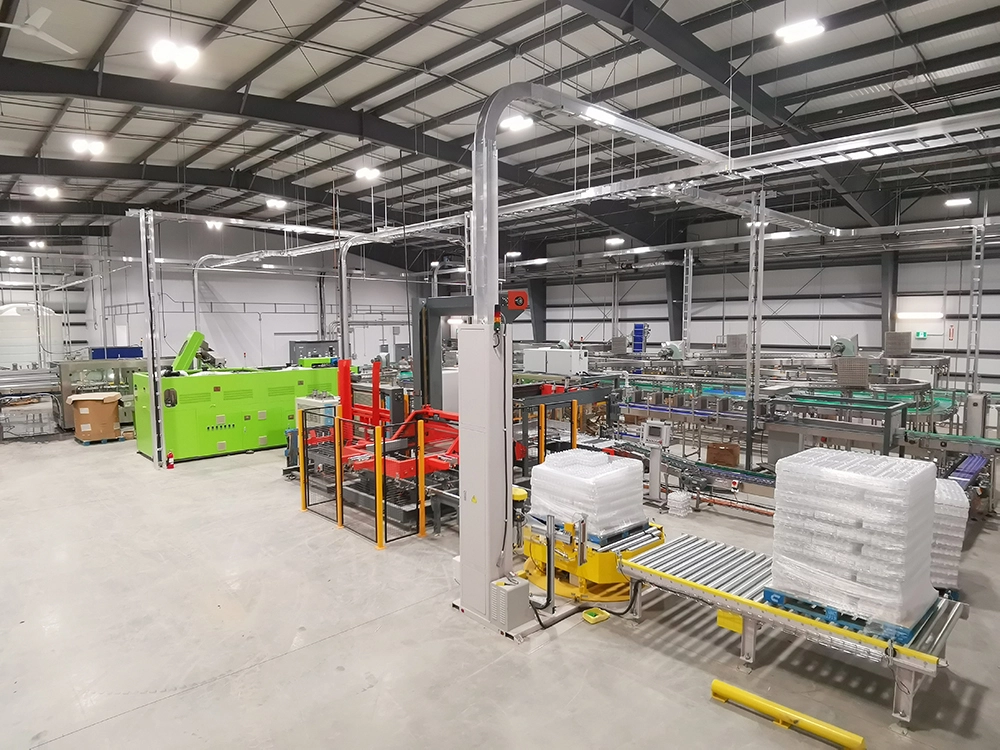
Installation and Integration Guide
So, you've invested in a JNDWATER robotic palletizer – congratulations! Now, let's get it up and running smoothly. A seamless installation is crucial for maximizing the efficiency and lifespan of your equipment. This guide provides a comprehensive overview of the installation process, ensuring a hassle-free setup. We understand that integrating a new piece of machinery into your existing production line can seem daunting, but with our step-by-step instructions, even those with limited technical expertise can successfully complete the installation.
Detailed Installation Steps:
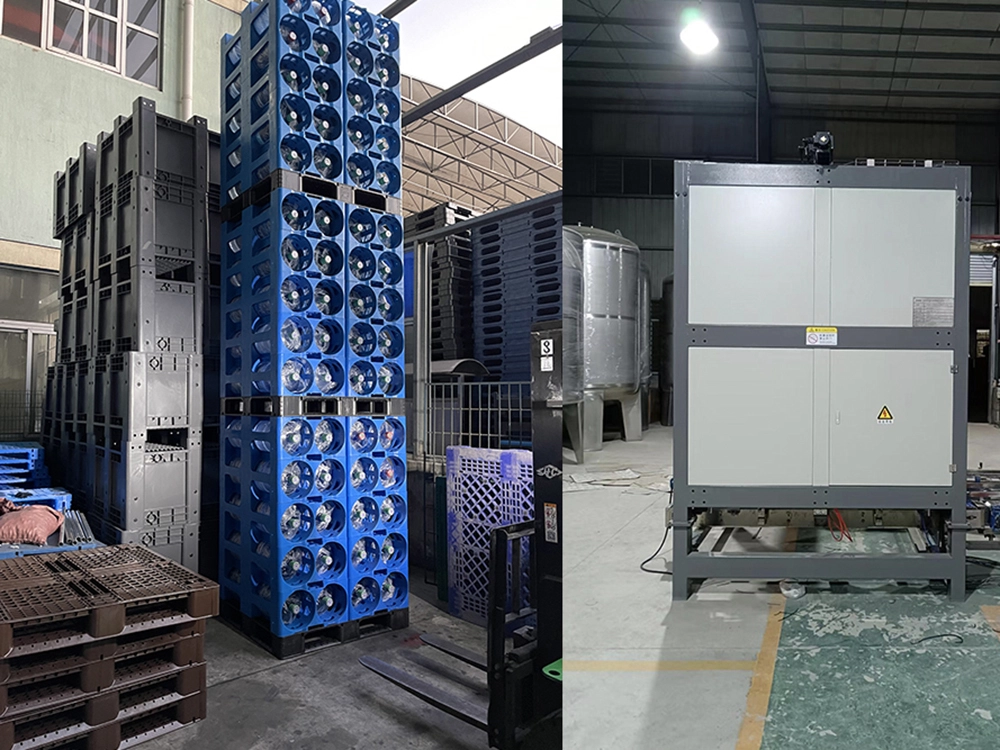
- Pre-Installation Checklist: Before you even unpack your robotic palletizer, ensure your facility meets the necessary requirements. This includes verifying floor space, power supply, and environmental conditions (temperature, humidity). Confirm that all required tools and equipment are readily available.
- Unpacking and Inspection: Carefully unpack the palletizer, taking care not to damage any components. Thoroughly inspect all parts for any signs of shipping damage. Report any discrepancies or damage to JNDWATER immediately.
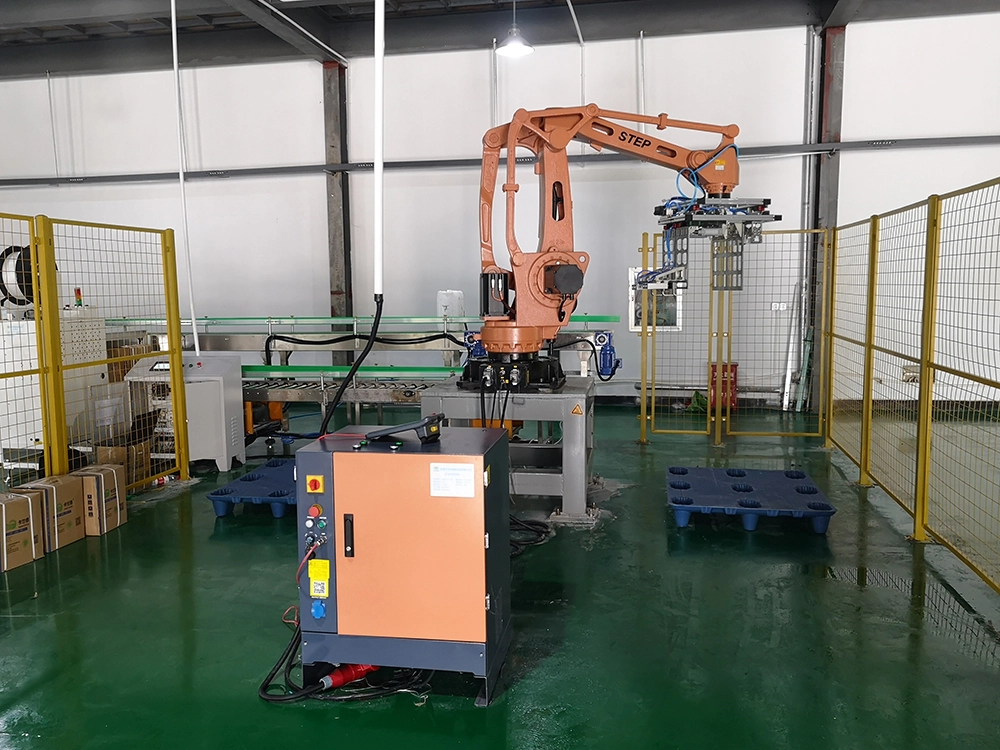
- Mechanical Assembly: Follow the detailed diagrams and instructions to assemble the mechanical components of the robotic palletizer. This may involve attaching the robot arm, end-effector, and other structural elements. Ensure all connections are secure and properly aligned.
- Electrical Connections: Connect the power supply and control cables according to the wiring diagrams provided. Double-check all connections to prevent short circuits or other electrical hazards. It's highly recommended to have a qualified electrician handle this step.
- Software Installation and Configuration: Install the necessary software on your control system and configure the robotic palletizer's parameters. This includes setting up the robot's movements, pallet patterns, and safety features.
- Calibration and Testing: Calibrate the robotic palletizer to ensure accurate and consistent performance. Run a series of tests to verify that all functions are working correctly. This includes testing the robot's speed, accuracy, and load capacity.
Video Tutorials:
We understand that some steps may be easier to follow visually. That's why we've created a series of video tutorials that walk you through each stage of the installation process. These videos provide clear, step-by-step instructions, making it even easier to set up your robotic palletizer. The videos cover everything from unpacking and assembly to software configuration and calibration. You can find these videos on our website or by scanning the QR code included in the installation manual.
Integrating with Existing Equipment:
Our robotic palletizers are designed for seamless integration with a variety of existing production line equipment, including:
- Conveyors: The palletizer can be easily integrated with existing conveyor systems to receive products for palletizing.
- Packaging Machines: Connect the palletizer directly to packaging machines to automate the entire packaging and palletizing process.
- Labeling Machines: Ensure accurate labeling by integrating the palletizer with labeling machines.
Common Installation Issues and Troubleshooting:
Even with the best instructions, you may encounter some challenges during the installation process. Here are some common issues and their solutions:
- Robot Arm Not Moving: Check the power supply, control cables, and software configuration.
- Inaccurate Palletizing: Calibrate the robot and adjust the pallet pattern settings.
- Communication Errors: Verify the network connections and software settings.
If you encounter any issues that you cannot resolve, our technical support team is available to assist you. Contact us via phone or email for prompt and professional assistance.
Case Studies and Customer Testimonials
Seeing is believing, right? That's why we've compiled a series of case studies and customer testimonials to showcase the real-world benefits of JNDWATER robotic palletizers. These stories highlight how our equipment has helped businesses across various industries improve efficiency, reduce costs, and enhance overall productivity. We believe that these real-life examples will provide valuable insights and demonstrate the tangible advantages of investing in our robotic palletizing solutions.
Case Study 1: Beverage Industry - Streamlining Bottling Operations
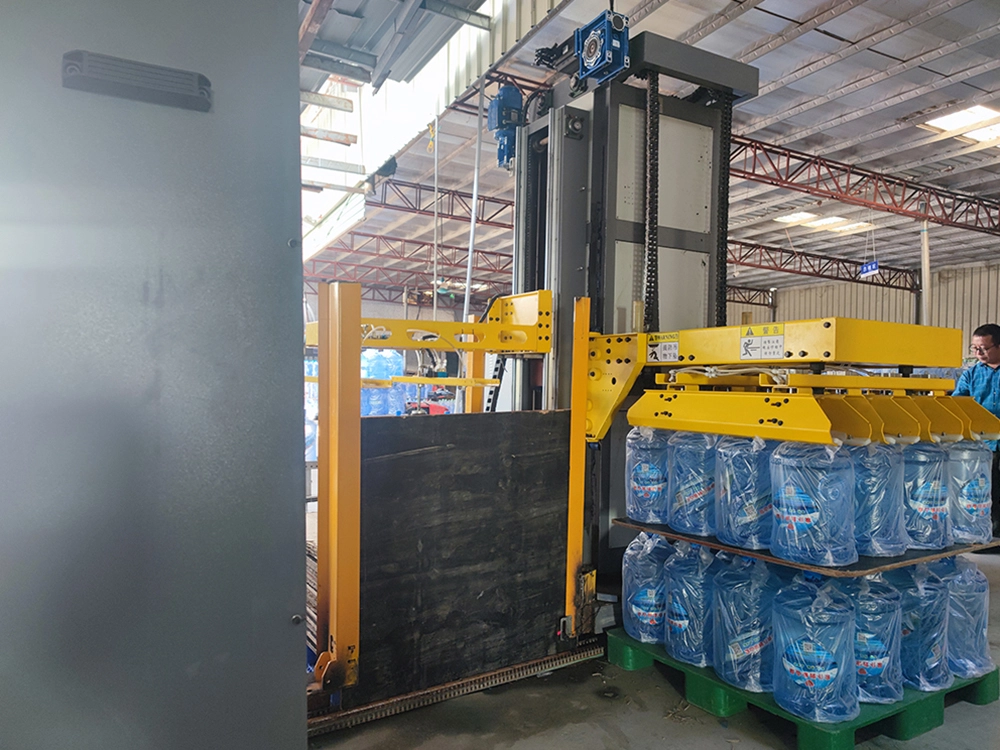
A leading beverage company was struggling with the manual palletizing of bottled drinks. The process was slow, labor-intensive, and prone to errors, leading to bottlenecks in their production line. By implementing a JNDWATER robotic palletizer, they were able to automate the entire palletizing process, increasing throughput by 40% and reducing labor costs by 60%. The robotic palletizer also improved the consistency and accuracy of pallet stacking, minimizing product damage during transportation. The company reported a significant return on investment within the first year of operation.
Case Study 2: Food Processing - Enhancing Packaging Efficiency
A large food processing plant needed a more efficient way to palletize packaged food products. Their existing manual system was unable to keep up with the demands of their high-volume production. By installing a JNDWATER robotic palletizer, they were able to automate the palletizing process, increasing production speed and reducing the risk of repetitive strain injuries among their workers. The robotic palletizer also improved the overall cleanliness of the packaging area, as it eliminated the need for human contact with the products.
Customer Testimonials:
- John Smith, Production Manager, ABC Beverages: "The JNDWATER robotic palletizer has been a game-changer for our bottling operations. It has significantly increased our throughput and reduced our labor costs. We are extremely happy with the performance of the equipment and the excellent support we have received from JNDWATER."
- Jane Doe, Plant Supervisor, XYZ Foods: "We were looking for a reliable and efficient palletizing solution, and the JNDWATER robotic palletizer has exceeded our expectations. It has helped us to improve our packaging efficiency and reduce the risk of injuries among our workers. We highly recommend JNDWATER to anyone looking for a top-quality robotic palletizing system."
Data Analysis:
The data collected from our case studies and customer testimonials consistently demonstrates the positive impact of JNDWATER robotic palletizers. On average, our customers have reported:
- Increased Throughput: 30-50% increase in palletizing speed.
- Reduced Labor Costs: 50-70% reduction in labor expenses.
- Improved Accuracy: Significant reduction in palletizing errors and product damage.
- Faster ROI: Return on investment within 1-2 years.
These results speak for themselves. JNDWATER robotic palletizers are a proven solution for businesses looking to improve efficiency, reduce costs, and enhance overall productivity.
Performance Metrics and ROI Analysis
Understanding the performance metrics and potential return on investment (ROI) is crucial when considering a robotic palletizer. JNDWATER provides comprehensive data and analysis to help you make an informed decision. We believe in transparency and want you to have a clear picture of how our robotic palletizers can benefit your business. Let's dive into the key performance indicators and explore how you can calculate the ROI for your specific application.
Key Performance Indicators (KPIs):
- Processing Speed: Measured in cases or units per hour, this indicates the palletizer's ability to handle your production volume. JNDWATER robotic palletizers boast impressive processing speeds, ensuring efficient throughput.
- Accuracy: This refers to the precision of the palletizing process, minimizing errors and product damage. Our robotic palletizers are equipped with advanced sensors and control systems to ensure accurate and consistent pallet stacking.
- Load Capacity: The maximum weight the palletizer can handle per cycle. JNDWATER offers a range of robotic palletizers with varying load capacities to suit different product types and sizes.
- Uptime: The percentage of time the palletizer is operational. High uptime is essential for maximizing productivity and minimizing downtime. JNDWATER robotic palletizers are designed for reliability and durability, ensuring consistent performance.
- Pallet Pattern Flexibility: The ability to handle different pallet patterns and configurations. Our robotic palletizers offer a wide range of pallet pattern options, allowing you to customize the palletizing process to your specific needs.
ROI Analysis:
Calculating the ROI of a robotic palletizer involves considering several factors, including:
- Initial Investment: The cost of the robotic palletizer, including installation and training.
- Operating Costs: Ongoing expenses such as electricity, maintenance, and spare parts.
- Labor Savings: The reduction in labor costs due to automation.
- Increased Throughput: The additional revenue generated from increased production volume.
- Reduced Product Damage: The savings from minimizing product damage during palletizing.
ROI Calculation Formula:
The basic formula for calculating ROI is:
ROI = (Net Profit / Cost of Investment) x 100
For example, let's say a robotic palletizer costs $100,000 and generates a net profit of $30,000 per year. The ROI would be:
ROI = ($30,000 / $100,000) x 100 = 30%
This means that the robotic palletizer is generating a 30% return on investment each year.
JNDWATER's ROI Calculator:
To simplify the ROI calculation process, we offer a free online ROI calculator. Simply enter your specific data, such as production volume, labor costs, and product damage rates, and the calculator will provide an estimate of your potential ROI. This tool can help you assess the financial benefits of investing in a JNDWATER robotic palletizer.
Customization Options and Flexibility
At JNDWATER, we understand that every business has unique needs and requirements. That's why we offer a wide range of customization options and flexibility to ensure that our robotic palletizers perfectly fit your specific application. We don't believe in a one-size-fits-all approach. Our team of experienced engineers works closely with you to understand your challenges and develop a customized solution that meets your exact needs.
Adapting to Product Dimensions, Shapes, and Weights:
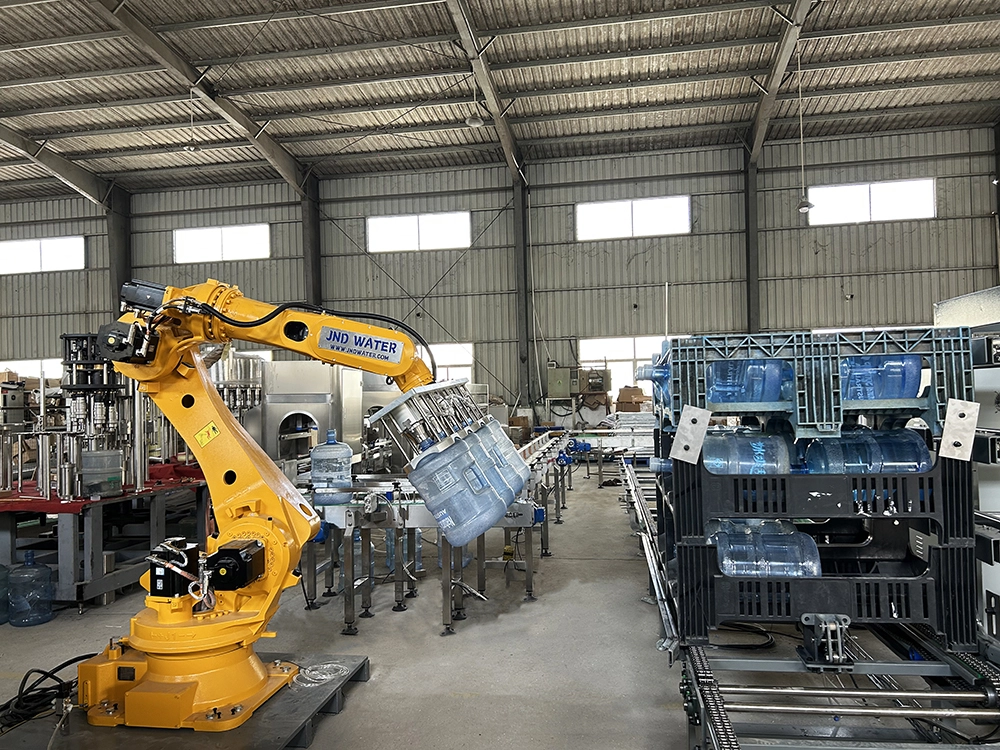
Our robotic palletizers can be customized to handle a wide variety of products, regardless of their dimensions, shapes, or weights. We offer different end-effector designs to accommodate various product types, including:
- Boxes: Standard gripper designs for handling cardboard boxes of various sizes.
- Bags: Vacuum grippers or clamp grippers for handling bags of different materials and weights.
- Bottles: Specialized grippers for handling bottles of various shapes and sizes, including glass and plastic bottles.
- Cans: Magnetic grippers or clamp grippers for handling cans of different sizes and materials.
- Trays: Forklift-style grippers for handling trays of products.
Customizable Pallet Patterns:
Our robotic palletizers can be programmed to create a wide variety of pallet patterns, ensuring optimal stability and space utilization. We can customize the pallet pattern to match your specific requirements, taking into account the size and shape of your products, the weight distribution, and the desired pallet height.
Different Configurations and Options:
We offer a range of configurations and options to suit different production environments and budgets. These include:
- Robot Arm Reach: Choose a robot arm with the appropriate reach to cover the required palletizing area.
- Payload Capacity: Select a robot arm with the necessary payload capacity to handle the weight of your products.
- Safety Features: Incorporate safety features such as light curtains, safety scanners, and emergency stop buttons to ensure a safe working environment.
- Software Options: Choose from a range of software options to customize the palletizing process and integrate with your existing systems.
The Advantages of a Customized Solution:
- Improved Efficiency: A customized robotic palletizer can optimize the palletizing process, increasing throughput and reducing cycle times.
- Reduced Costs: By automating the palletizing process, you can reduce labor costs and minimize product damage.
- Increased Flexibility: A customized solution can adapt to changing product requirements and production volumes.
- Enhanced Safety: By incorporating safety features, you can create a safer working environment for your employees.
We are committed to providing you with a robotic palletizing solution that perfectly meets your needs. Contact us today to discuss your specific requirements and learn how we can help you optimize your palletizing process.
Comparative Analysis with Competitors
Choosing the right robotic palletizer can be a complex decision. To help you make an informed choice, we've prepared a comparative analysis highlighting JNDWATER's key advantages over the competition. We believe in providing transparent and objective information so you can see why JNDWATER stands out in terms of technology, cost-effectiveness, and service.
Technology Advantages:
JNDWATER robotic palletizers incorporate cutting-edge technology to deliver superior performance and reliability. Here's how we differentiate ourselves:
- Advanced Control Systems: Our palletizers utilize state-of-the-art control systems that ensure precise and efficient operation. These systems are designed for easy programming and integration with existing production lines.
- High-Performance Robot Arms: We use only the highest quality robot arms from leading manufacturers. These arms are known for their speed, accuracy, and durability, ensuring long-lasting performance.
- Intelligent Vision Systems: Our optional vision systems allow the palletizer to automatically detect and adjust to variations in product size and orientation. This eliminates the need for manual adjustments and ensures consistent pallet stacking.
- User-Friendly Software: Our software is designed to be intuitive and easy to use, even for operators with limited technical experience. This reduces training time and allows you to quickly adapt to changing production requirements.
Cost-Effectiveness:
JNDWATER robotic palletizers offer excellent value for your investment. We focus on providing cost-effective solutions without compromising on quality or performance. Here's how we achieve this:
- Competitive Pricing: We offer competitive pricing on our robotic palletizers, making them accessible to businesses of all sizes.
- Reduced Operating Costs: Our palletizers are designed for energy efficiency, minimizing your electricity costs. They also require minimal maintenance, reducing your ongoing expenses.
- Increased Productivity: By automating the palletizing process, you can significantly increase your production volume and reduce labor costs.
- Long-Term Reliability: Our palletizers are built to last, minimizing downtime and ensuring a long service life.
Service and Support:
At JNDWATER, we are committed to providing exceptional service and support to our customers. We offer a comprehensive range of services, including:
- Installation and Training: Our experienced technicians will install your robotic palletizer and provide comprehensive training to your operators.
- Technical Support: We offer 24/7 technical support to address any issues or questions you may have.
- Preventive Maintenance: We offer preventive maintenance programs to ensure the long-term reliability of your palletizer.
- Spare Parts: We maintain a large inventory of spare parts to minimize downtime in case of a breakdown.
Comparison Table:
| Feature | JNDWATER | Competitor A | Competitor B |
|---|---|---|---|
| Control System | Advanced | Standard | Basic |
| Robot Arm | High-Performance | Mid-Range | Entry-Level |
| Vision System | Optional | Not Available | Optional (Limited Functionality) |
| Software | User-Friendly | Complex | Basic |
| Price | Competitive | Higher | Lower (Compromised Quality) |
| Service & Support | Excellent | Good | Limited |
We believe that JNDWATER offers the best combination of technology, cost-effectiveness, and service in the robotic palletizing market. Contact us today to learn more about how our solutions can benefit your business.
Maintenance and Troubleshooting
Ensuring the longevity and optimal performance of your JNDWATER robotic palletizer requires regular maintenance and a proactive approach to troubleshooting. Think of it as taking care of a high-performance vehicle – regular check-ups and preventative measures will keep it running smoothly for years to come. This section provides a detailed guide to help you maintain your robotic palletizer and address common issues that may arise. We want to empower you with the knowledge and tools to keep your equipment in top condition.
Daily Maintenance:
These simple tasks should be performed daily to prevent minor issues from escalating into major problems:
- Visual Inspection: Check for any loose cables, damaged components, or signs of wear and tear.
- Sensor Cleaning: Clean the sensors with a soft, dry cloth to ensure accurate readings. Dust and debris can interfere with sensor performance.
- Air Filter Check: Inspect the air filter and clean or replace it as needed. A clogged air filter can reduce the efficiency of the pneumatic system.
- Lubrication Check: Verify that all lubrication points are properly lubricated. Use the recommended lubricant specified in the manual.
Weekly Maintenance:
Perform these tasks weekly to maintain the overall health of your robotic palletizer:
- Motor Inspection: Check the motors for any unusual noises or vibrations. If you notice anything abnormal, contact our technical support team.
- Cable Inspection: Inspect all cables for signs of damage or wear. Replace any damaged cables immediately.
- Software Updates: Check for software updates and install them as needed. Software updates often include performance improvements and bug fixes.
- Safety Device Testing: Test all safety devices, such as light curtains and emergency stop buttons, to ensure they are functioning correctly.
Monthly Maintenance:
These tasks should be performed monthly to ensure the long-term reliability of your robotic palletizer:
- Gearbox Inspection: Inspect the gearbox for any leaks or unusual noises. If you notice anything abnormal, contact our technical support team.
- Bearing Inspection: Inspect the bearings for any signs of wear or damage. Replace any worn or damaged bearings.
- Encoder Inspection: Inspect the encoders for proper alignment and functionality.
- Grease Replenishment: Replenish grease in all lubrication points as needed.
Troubleshooting Common Issues:
- Robot Arm Not Moving: Check the power supply, control cables, and software configuration.
- Inaccurate Palletizing: Calibrate the robot and adjust the pallet pattern settings.
- Communication Errors: Verify the network connections and software settings.
- Error Messages: Consult the error code list in the manual for troubleshooting steps.
Professional Maintenance Tips:
- Keep the area around the robotic palletizer clean and free of debris.
- Train your operators on proper maintenance procedures.
- Keep a log of all maintenance activities.
- Contact our technical support team for any issues you cannot resolve.
By following these maintenance and troubleshooting guidelines, you can ensure the long-term reliability and optimal performance of your JNDWATER robotic palletizer.