Detailed Equipment Specifications and Technology
When considering a dairy production line or milk production line, understanding the detailed specifications and technology behind each piece of equipment is crucial. JND Water prides itself on providing comprehensive technical information to empower our clients in making informed decisions. Our equipment isn't just about processing milk; it's about leveraging cutting-edge engineering for optimal efficiency, hygiene, and product quality.
Let's delve into the specifics. For instance, our UHT (Ultra-High Temperature) sterilizers are designed with precision temperature control and rapid heating/cooling cycles. This minimizes thermal damage to the milk, preserving its nutritional value and flavor while ensuring complete sterilization. The key parameters include:
- Temperature Range: Typically, our UHT systems operate between 135°C to 150°C (275°F to 302°F) for a few seconds. The exact temperature and holding time are adjustable based on the specific product requirements and regulatory standards.
- Heating Method: We offer both direct and indirect heating methods. Direct heating, such as steam injection or infusion, provides extremely rapid heating, reducing the risk of Maillard reaction and preserving flavor. Indirect heating, using plate heat exchangers or tubular heat exchangers, offers precise temperature control and is suitable for a wider range of products.
- Material: All our equipment is constructed from high-grade stainless steel (typically 304 or 316L), ensuring corrosion resistance, hygiene, and longevity. The surface finish is meticulously polished to prevent bacterial adhesion and facilitate cleaning.
Our homogenization systems are equally sophisticated. Homogenization reduces the size of fat globules in milk, preventing creaming and improving the product's stability, texture, and appearance. Key specifications include:
- Pressure Range: Our homogenizers operate at pressures ranging from 100 to 250 bar (1450 to 3625 psi). The optimal pressure depends on the fat content of the milk and the desired particle size.
- Valve Design: We utilize advanced valve designs, such as two-stage homogenization valves, to achieve efficient particle size reduction and minimize energy consumption.
- Capacity: Our homogenizers are available in a wide range of capacities, from small-scale units for pilot plants to high-capacity systems for large-scale dairy operations.
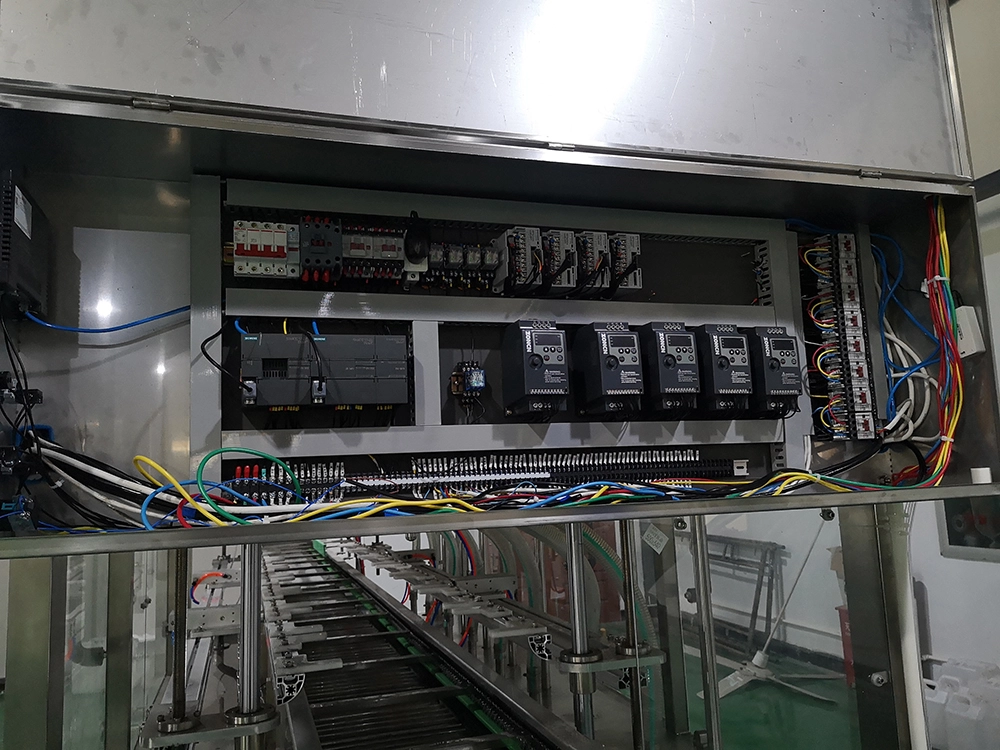
Automation is at the heart of our dairy production line solutions. Our systems incorporate sophisticated PLC (Programmable Logic Controller) based control systems that monitor and regulate every aspect of the production process, from raw milk intake to final product packaging. These systems offer:
- Real-time Monitoring: Continuous monitoring of temperature, pressure, flow rate, and other critical parameters.
- Automated Control: Automatic adjustment of process parameters to maintain optimal conditions and ensure consistent product quality.
- Data Logging: Comprehensive data logging and reporting capabilities for process analysis and quality control.
- Remote Access: Remote monitoring and control capabilities for enhanced operational flexibility and troubleshooting.
Furthermore, we prioritize energy efficiency in our designs. Our equipment incorporates features such as heat recovery systems, variable frequency drives (VFDs) for pumps and motors, and optimized insulation to minimize energy consumption and reduce operating costs. The CIP (Clean-In-Place) systems are designed to minimize water and chemical usage while ensuring thorough cleaning and sanitation of the equipment.
We understand that investing in a milk production line is a significant decision. That's why we provide detailed technical documentation, including equipment manuals, P&ID (Piping and Instrumentation Diagram) drawings, and electrical schematics. Our team of experienced engineers is available to answer any questions and provide technical support throughout the entire project lifecycle.
Case Studies and Success Stories
JND Water's commitment extends far beyond simply providing equipment; we aim to deliver comprehensive solutions that drive success for our clients. To illustrate this, we've compiled several case studies and success stories highlighting our impact on dairy operations worldwide. These examples showcase our ability to tailor solutions to diverse needs, from startups to established industry leaders.
One compelling example is our partnership with a burgeoning dairy farm in Argentina. Initially, they faced challenges in scaling their production due to inefficient manual processes and inconsistent product quality. JND Water provided a complete dairy production line, including advanced pasteurization, homogenization, and packaging equipment. The result was a significant increase in production capacity, improved product shelf life, and enhanced product consistency. The client reported a 40% increase in revenue within the first year of operation, directly attributable to the efficiency gains and quality improvements facilitated by our equipment. A video testimonial from the client captures their satisfaction and highlights the positive impact on their business.
Another success story comes from a well-established dairy cooperative in Europe. They were seeking to upgrade their existing milk production line to meet increasing demand for extended shelf-life (ESL) milk. JND Water designed and installed a state-of-the-art ESL processing system, incorporating advanced filtration and aseptic packaging technologies. This enabled the cooperative to significantly extend the shelf life of their milk products, opening up new market opportunities and reducing waste. The project not only increased their profitability but also enhanced their reputation as a leader in quality and innovation. Client feedback emphasized the seamless integration of our system with their existing infrastructure and the exceptional level of technical support provided by our team.
Our global reach is evident in our collaboration with a small-scale dairy processor in Southeast Asia. They were struggling to compete with larger players due to limited resources and outdated equipment. JND Water provided a cost-effective, modular dairy production line solution that was specifically tailored to their needs and budget. This included a compact pasteurization unit, a versatile filling machine, and a simple yet effective packaging system. The client was able to significantly improve their product quality, increase their production capacity, and gain a competitive edge in the local market. Their success story demonstrates our commitment to supporting small and medium-sized enterprises in the dairy industry.
These case studies are just a few examples of the many successful projects we've undertaken worldwide. With a presence in over 125 countries and regions and a track record of over 450 successful turnkey projects, JND Water has established itself as a trusted partner for dairy processors of all sizes. We believe that our success is directly linked to the success of our clients, and we are committed to providing innovative, reliable, and cost-effective solutions that help them achieve their business goals. We encourage you to explore our website for more detailed case studies, videos, and client testimonials.
These real-world examples underscore our expertise and dedication to delivering tangible results for our clients in the competitive dairy market. By focusing on innovation, customization, and customer satisfaction, JND Water continues to empower dairy businesses around the globe.
Energy Efficiency and Sustainability Practices
In today's world, energy efficiency and sustainability are not just buzzwords; they are essential considerations for any responsible business, especially in the dairy industry. JND Water recognizes the importance of minimizing environmental impact and reducing operating costs. That's why we design our dairy production line and milk production line solutions with a strong emphasis on energy efficiency and sustainable practices.
One of the key features of our energy-efficient designs is the integration of heat recovery systems. These systems capture waste heat from various processes, such as pasteurization and sterilization, and reuse it to preheat incoming milk or water. This significantly reduces the energy required for heating, leading to substantial cost savings and a lower carbon footprint. For example, in a typical pasteurization process, a heat recovery system can recover up to 90% of the heat, reducing energy consumption by as much as 50%. This translates into significant savings on energy bills and a reduced environmental impact.
Another important aspect of our sustainability efforts is the optimization of our CIP (Clean-In-Place) systems. CIP systems are essential for maintaining hygiene and sanitation in dairy processing plants. However, traditional CIP systems can consume significant amounts of water and chemicals. Our CIP systems are designed to minimize water and chemical usage while ensuring thorough cleaning and disinfection. We utilize advanced technologies such as multi-stage cleaning cycles, optimized flow rates, and precise chemical dosing to reduce waste and improve efficiency. Furthermore, we offer options for recovering and reusing CIP solutions, further reducing water and chemical consumption.
We also incorporate variable frequency drives (VFDs) on pumps and motors throughout our milk production line. VFDs allow us to precisely control the speed of pumps and motors, matching their output to the actual demand. This eliminates unnecessary energy consumption and reduces wear and tear on the equipment. For example, a pump operating at full speed when only half the flow is needed wastes a significant amount of energy. A VFD can reduce the pump's speed to match the demand, resulting in significant energy savings. In addition, we use high-efficiency motors and pumps that consume less energy than traditional models.
Our commitment to sustainability extends beyond the design of our equipment. We also work with our clients to implement sustainable operating practices in their dairy plants. This includes providing training on energy-efficient operation, waste reduction strategies, and water conservation techniques. We also offer consulting services to help our clients assess their environmental impact and develop strategies for improvement. By working together, we can create a more sustainable dairy industry.
JND Water is committed to providing solutions that are not only efficient and reliable but also environmentally responsible. We believe that sustainability is not just a trend; it's a necessity. By incorporating energy-efficient designs and sustainable practices into our dairy production line solutions, we help our clients reduce their environmental impact, lower their operating costs, and build a more sustainable future.
Customer Support and After-Sales Services
At JND Water, we understand that purchasing a dairy production line or milk production line is a significant investment. That's why we are committed to providing comprehensive customer support and after-sales services to ensure that our clients get the most out of their investment. Our commitment extends far beyond the initial sale; we strive to build long-term partnerships with our clients, providing ongoing support and assistance throughout the entire lifecycle of their equipment.
Our customer support team is available 7X24 to answer any questions and provide assistance. We have a team of experienced technicians and engineers who are experts in dairy processing equipment. They can provide technical support, troubleshooting assistance, and remote diagnostics to help resolve any issues quickly and efficiently. We understand that downtime can be costly, so we are committed to minimizing disruptions and getting our clients back up and running as soon as possible.
We offer a comprehensive range of after-sales services, including:
- Installation and Commissioning: Our experienced technicians can install and commission your equipment, ensuring that it is properly set up and operating according to specifications.
- Training: We provide comprehensive training to your operators and maintenance personnel, ensuring that they have the knowledge and skills to operate and maintain the equipment safely and efficiently.
- Preventive Maintenance: We offer preventive maintenance programs to help keep your equipment in optimal condition and prevent costly breakdowns. Our preventive maintenance programs include regular inspections, lubrication, and component replacement.
- Spare Parts: We maintain a comprehensive inventory of spare parts to ensure that you can get the parts you need quickly and easily. We offer genuine OEM (Original Equipment Manufacturer) parts to ensure the highest quality and performance.
- Technical Support: Our technical support team is available to answer any questions and provide assistance. We can provide remote diagnostics, troubleshooting assistance, and on-site support if needed.
- Upgrades and Modifications: We offer upgrades and modifications to help you improve the performance and efficiency of your equipment. This includes upgrades to automation systems, process controls, and equipment components.
We have a proven track record of providing excellent customer support and after-sales services. For example, a client in South America experienced a problem with their pasteurizer on a Saturday night. They contacted our customer support team, and within minutes, a technician was able to remotely diagnose the problem and provide instructions for a temporary fix. The technician then arranged for a service engineer to be on-site first thing Monday morning to make a permanent repair. The client was extremely impressed with our quick response and the expertise of our technical team.
Another client in Europe was looking to upgrade their existing milk production line to increase capacity and improve efficiency. We worked with them to develop a customized upgrade plan that included new equipment, automation systems, and process controls. Our team managed the entire project, from design and installation to commissioning and training. The client was extremely satisfied with the results, reporting a significant increase in production capacity and a reduction in operating costs.
At JND Water, we are committed to providing the highest level of customer support and after-sales services. We understand that our success depends on the success of our clients. That's why we go above and beyond to ensure that our clients are satisfied with our products and services.
Comparative Analysis with Competitors
Choosing the right supplier for your dairy production line or milk production line is a critical decision that can significantly impact your operational efficiency, product quality, and overall profitability. To help you make an informed choice, we've prepared a comparative analysis highlighting the key differences between JND Water and our competitors. This analysis focuses on several crucial aspects, including equipment specifications, technology, pricing, customer support, and overall value proposition.
One of the key differentiators for JND Water is our commitment to providing customized solutions. Unlike some of our competitors who offer standardized equipment packages, we take the time to understand your specific needs and design a dairy production line that is tailored to your requirements. This includes considering factors such as your production capacity, product range, budget, and future growth plans. Our engineering team works closely with you to develop a solution that meets your exact needs and maximizes your return on investment.
In terms of technology, JND Water utilizes the latest advancements in dairy processing equipment. Our UHT sterilizers, homogenizers, and filling machines incorporate state-of-the-art features that ensure optimal performance, efficiency, and hygiene. For example, our UHT sterilizers utilize advanced temperature control systems that minimize thermal damage to the milk, preserving its nutritional value and flavor. Our homogenizers feature high-efficiency valve designs that reduce energy consumption and improve product stability. And our filling machines are designed with aseptic technology to ensure product sterility and extend shelf life.
Compared to some of our competitors, JND Water offers a more comprehensive range of services. In addition to equipment supply, we provide installation, commissioning, training, and after-sales support. Our team of experienced technicians and engineers is available to assist you with every aspect of your milk production line, from initial design to ongoing maintenance. We also offer preventive maintenance programs to help keep your equipment in optimal condition and prevent costly breakdowns. This comprehensive approach ensures that you have a reliable partner throughout the entire lifecycle of your equipment.
While our prices may not always be the lowest on the market, we believe that our overall value proposition is superior. We offer high-quality equipment, customized solutions, advanced technology, and comprehensive services. This combination delivers a superior return on investment and helps you achieve your business goals. We are committed to providing our clients with the best possible value for their money.
The table below provides a summary of the key differences between JND Water and our competitors:
| Feature |
JND Water |
Competitor A |
Competitor B |
| Customization |
Highly Customized |
Standardized Packages |
Limited Customization |
| Technology |
Advanced Technology |
Mid-Range Technology |
Basic Technology |
| Services |
Comprehensive Services |
Limited Services |
Basic Services |
| Price |
Competitive Pricing |
Lower Price |
Higher Price |
| Overall Value |
Superior Value |
Good Value |
Average Value |
This comparative analysis is intended to provide you with a general overview of the key differences between JND Water and our competitors. We encourage you to contact us for a more detailed discussion of your specific needs and how we can help you achieve your business goals. We are confident that you will find JND Water to be the best choice for your dairy production line or milk production line.
FAQs and Common Issues
We understand that implementing a new dairy production line or milk production line can raise many questions. To help address some of the most common concerns and provide clarity, we've compiled a list of frequently asked questions (FAQs) covering various aspects, from equipment selection to troubleshooting common issues.
What factors should I consider when selecting equipment for my dairy production line?
Choosing the right equipment is crucial for a successful dairy operation. Key factors to consider include:
- Production Capacity: Determine your current and projected production volume to select equipment with the appropriate capacity.
- Product Range: Consider the types of dairy products you plan to produce (e.g., milk, yogurt, cheese) as different products require different equipment.
- Budget: Establish a realistic budget and prioritize equipment based on your most critical needs.
- Automation Level: Decide on the level of automation you require, balancing initial investment with long-term operational efficiency.
- Hygiene Standards: Ensure that all equipment meets or exceeds relevant hygiene standards and regulations.
- Energy Efficiency: Prioritize equipment with energy-efficient designs to minimize operating costs and environmental impact.
How long does it take to install and commission a dairy production line?
The installation and commissioning time can vary depending on the complexity of the dairy production line and the specific equipment involved. A typical installation can take anywhere from a few weeks to several months. Factors that can affect the timeline include:
- Equipment Complexity: More complex systems with advanced automation will generally take longer to install.
- Site Preparation: Proper site preparation, including utilities and infrastructure, is essential for a smooth installation.
- Customization: Customized solutions may require additional time for design, fabrication, and integration.
- Regulatory Approvals: Obtaining necessary permits and approvals can impact the overall timeline.
We work closely with our clients to develop a detailed project plan and timeline to ensure a timely and efficient installation.
What are some common issues that can arise during the operation of a milk production line, and how can they be resolved?
While our equipment is designed for reliability, some common issues can arise during operation. Here are a few examples and their solutions:
- Temperature Fluctuations: Inconsistent temperatures during pasteurization or sterilization can affect product quality. Solution: Check and calibrate temperature sensors, ensure proper steam or water flow, and inspect heating elements.
- Filling Inaccuracies: Inaccurate filling can lead to product waste and inconsistencies. Solution: Calibrate filling nozzles, check for leaks or blockages, and ensure proper product viscosity.
- CIP System Problems: Inadequate cleaning can compromise hygiene and product safety. Solution: Verify chemical concentrations, check spray nozzles for proper coverage, and ensure sufficient cleaning time and temperature.
- Equipment Malfunctions: Unexpected breakdowns can disrupt production. Solution: Implement a preventive maintenance program, keep spare parts on hand, and train operators on basic troubleshooting procedures.
Our technical support team is available to provide remote diagnostics and on-site assistance to resolve any issues quickly and efficiently.
How can I ensure the hygiene and sanitation of my dairy production line?
Maintaining strict hygiene and sanitation practices is paramount in the dairy industry. Key steps include:
- Regular Cleaning and Disinfection: Implement a rigorous cleaning and disinfection schedule using appropriate cleaning agents and disinfectants.
- Proper Equipment Design: Choose equipment with smooth surfaces, minimal dead spaces, and easy access for cleaning.
- Effective CIP System: Utilize a well-designed and properly maintained CIP system to clean and sanitize equipment automatically.
- Employee Training: Train employees on proper hygiene practices, including handwashing, sanitizing, and wearing appropriate protective gear.
- Regular Inspections: Conduct regular inspections to identify and address any potential hygiene issues.
What is the expected lifespan of dairy processing equipment?
The lifespan of dairy processing equipment can vary depending on factors such as the quality of the equipment, the operating conditions, and the level of maintenance. With proper maintenance, most equipment can last for 15-20 years or more. Regular maintenance, including lubrication, component replacement, and calibration, is essential for extending the lifespan of your equipment.
By addressing these FAQs, we aim to provide valuable information and support to our clients, helping them make informed decisions and operate their dairy production line or milk production line successfully.