Market Analysis & Trends
Before diving into the drinking water business, a thorough market analysis is crucial. This involves understanding the current market size, growth rate, key players, and emerging trends. Start by defining your target market. Are you focusing on bottled water, flavored water, sparkling water, or a niche market like alkaline or vitamin-infused water? Understanding your customer base is the first step.
Step-by-Step Market Analysis Process:
- Define Your Target Market: Identify the demographics, psychographics, and geographic location of your ideal customers. Are you targeting health-conscious individuals, athletes, or environmentally aware consumers?
- Research Market Size and Growth: Use industry reports from sources like Mintel, Statista, and IBISWorld to determine the market size and projected growth for your specific segment of the drinking water industry. Look for data on consumption patterns, sales volume, and revenue.
- Identify Key Competitors: Analyze your competitors' strengths and weaknesses. What are their market shares, pricing strategies, and distribution channels? Identify opportunities where you can differentiate your product or service.
- Analyze Market Trends: Stay updated on the latest trends in the drinking water industry. This includes consumer preferences for healthier options, sustainable packaging, and innovative flavors.
- SWOT Analysis: Conduct a SWOT (Strengths, Weaknesses, Opportunities, and Threats) analysis to evaluate your business's position in the market. This will help you identify areas where you have a competitive advantage and potential challenges.
- PESTLE Analysis: Examine the Political, Economic, Social, Technological, Legal, and Environmental factors that could impact your business. This will help you anticipate potential risks and opportunities.
Essential Tools for Market Analysis:
- Market Research Reports: Subscribe to industry-specific market research reports to access comprehensive data and analysis.
- Online Surveys: Use online survey tools like SurveyMonkey or Google Forms to gather data directly from your target market.
- Social Media Monitoring: Monitor social media channels to track consumer sentiment and identify emerging trends.
- Competitive Analysis Tools: Utilize tools like SEMrush or Ahrefs to analyze your competitors' online strategies.
Key Market Trends:
- Green Packaging: Consumers are increasingly demanding sustainable packaging options. Consider using recycled materials, biodegradable plastics, or innovative packaging solutions like plant-based bottles.
- Functional Beverages: The demand for functional beverages, such as vitamin-infused water and electrolyte-enhanced water, is growing. These products offer added health benefits and appeal to health-conscious consumers.
- Premium Water: High-end bottled water, sourced from natural springs or artesian wells, is gaining popularity. These products are often marketed as a luxury item and appeal to consumers seeking a premium experience.
- Flavored and Sparkling Water: Flavored and sparkling water options provide a refreshing alternative to sugary drinks. Experiment with natural flavors and unique combinations to attract consumers.
By conducting a thorough market analysis, you can gain valuable insights into the drinking water industry and identify opportunities for success. This will help you make informed decisions about your product, pricing, and marketing strategies.
Licensing & Legal Requirements
Navigating the licensing and legal landscape is a critical step in starting a drinking water company. Requirements vary significantly by region, so it's essential to conduct thorough research and consult with legal professionals to ensure compliance. Failing to meet these requirements can result in hefty fines, legal battles, and even the shutdown of your operations.
Understanding Regional Legal Requirements:
Each country, state, and even local municipality has its own set of regulations governing the production and sale of drinking water. These regulations cover various aspects, including water source approval, treatment processes, bottling standards, labeling requirements, and distribution protocols. For instance, in the United States, the Environmental Protection Agency (EPA) sets national standards for drinking water quality, while state agencies are responsible for enforcing these standards and issuing permits.
Steps to Obtain Necessary Licenses and Permits:
- Identify Applicable Regulations: Research the specific regulations that apply to your business based on your location and the type of drinking water you plan to produce. Contact your local health department, environmental protection agency, and business licensing office for guidance.
- Water Source Approval: If you're sourcing water from a natural spring, well, or other source, you'll need to obtain approval from the relevant authorities. This may involve submitting water samples for testing and demonstrating that the source meets quality standards.
- Facility Permits: You'll likely need permits for your production facility, covering aspects like building codes, zoning regulations, and environmental compliance. Ensure your facility meets all safety and sanitation standards.
- Bottling and Labeling Permits: Obtain permits for bottling your water and ensure your labels comply with labeling regulations. This includes listing ingredients, nutritional information, and any required warnings.
- Distribution Permits: If you plan to distribute your water through retail channels or directly to consumers, you may need distribution permits.
Common Questions and Solutions:
- Q: How do I ensure my water source is safe and compliant?
- A: Conduct regular water testing by a certified laboratory. Implement a water treatment system that meets or exceeds regulatory standards.
- Q: What are the labeling requirements for bottled water?
- A: Labels must include the name of the product, the name and address of the manufacturer, the net quantity of contents, a list of ingredients, and nutritional information.
- Q: How often do I need to renew my permits?
- A: Permit renewal frequencies vary by location. Check with your local authorities for specific renewal schedules.
Official Certification Authorities:
- United States: Environmental Protection Agency (EPA), State Health Departments
- European Union: European Food Safety Authority (EFSA), National Food Safety Agencies
- Canada: Health Canada, Provincial Health Authorities
By diligently addressing licensing and legal requirements, you can establish a solid foundation for your drinking water company and avoid potential legal pitfalls. Remember to stay updated on any changes in regulations and maintain open communication with regulatory authorities.
Cost & Budget Planning
Developing a comprehensive cost and budget plan is essential for the financial health and sustainability of your drinking water company. This plan should encompass all aspects of your business, from initial startup costs to ongoing operational expenses. A well-defined budget will help you secure funding, manage cash flow, and make informed financial decisions.
Detailed Initial Capital Allocation Example:
Let's consider a hypothetical scenario where you're starting a small-scale bottled water company. Here's a breakdown of how you might allocate your initial capital:
- Equipment (Bottling Machine, Water Treatment System, etc.): $50,000
- Facility (Rent, Utilities, Modifications): $30,000
- Raw Materials (Bottles, Caps, Labels): $10,000
- Licensing and Permits: $5,000
- Marketing and Advertising: $15,000
- Initial Inventory: $5,000
- Working Capital (for first 3-6 months): $20,000
- Contingency Fund: $15,000
- Total: $150,000
Budget Template:
Create a detailed budget template that includes the following categories:
- Revenue: Projected sales revenue based on market analysis and sales forecasts.
- Cost of Goods Sold (COGS): Direct costs associated with producing your drinking water, including raw materials, packaging, and labor.
- Operating Expenses: Indirect costs associated with running your business, including rent, utilities, marketing, salaries, and administrative expenses.
- Capital Expenditures (CAPEX): Investments in long-term assets, such as equipment and facilities.
- Financing Costs: Interest payments on loans or other financing arrangements.
- Taxes: Income taxes, sales taxes, and other applicable taxes.
- Net Profit: The difference between revenue and all expenses.
Key Considerations for Budget Planning:
- Be Realistic: Base your budget on realistic assumptions and market data. Avoid overly optimistic projections.
- Track Expenses: Monitor your actual expenses closely and compare them to your budget. Identify any variances and take corrective action.
- Update Regularly: Review and update your budget regularly to reflect changing market conditions and business performance.
- Seek Professional Advice: Consult with a financial advisor or accountant to help you develop a sound budget and manage your finances effectively.
Concrete Data and Success Stories:
- Case Study: A small bottled water company in Vermont started with a $100,000 investment and achieved profitability within two years by focusing on local distribution and sustainable practices.
- Industry Data: The average profit margin for bottled water companies is 5-10%, according to industry reports.
- Tip: Negotiate favorable terms with suppliers to reduce your raw material costs.
By carefully planning your costs and developing a detailed budget, you can increase your chances of success in the competitive drinking water industry. Remember to be proactive in managing your finances and adapt your budget as needed to respond to changing market conditions.
Production Line Setup
Setting up an efficient and reliable production line is paramount for any drinking water company. The right equipment and processes can significantly impact your product quality, production capacity, and overall profitability. This section provides a guide to selecting the appropriate equipment and optimizing your production line for maximum efficiency.
Equipment Selection Guide:
- Water Treatment System: Choose a water treatment system that effectively removes impurities and contaminants from your water source. Consider options like reverse osmosis, UV sterilization, and filtration.
- Bottling Machine: Select a bottling machine that matches your production volume and bottle size. Options range from manual fillers for small-scale operations to fully automated lines for high-volume production.
- Capping Machine: Ensure your capping machine securely seals your bottles to prevent leaks and maintain product freshness.
- Labeling Machine: Choose a labeling machine that accurately applies labels to your bottles. Options include pressure-sensitive labelers, wrap-around labelers, and shrink sleeve labelers.
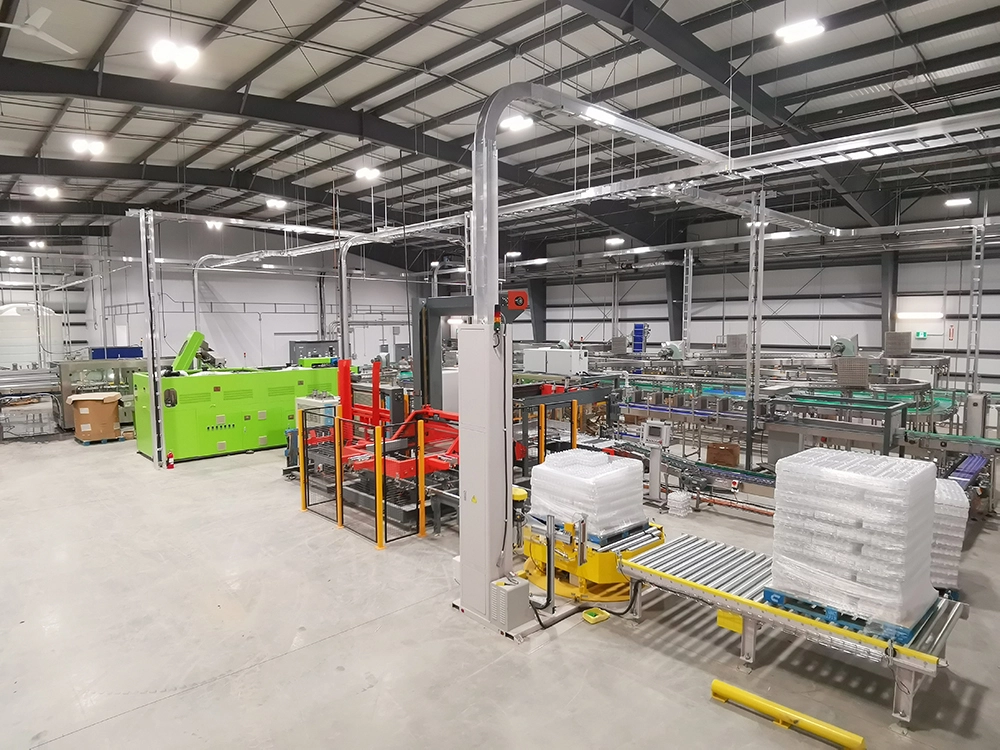
- Packaging Equipment: Invest in packaging equipment to efficiently pack your bottled water into cases or cartons for distribution.
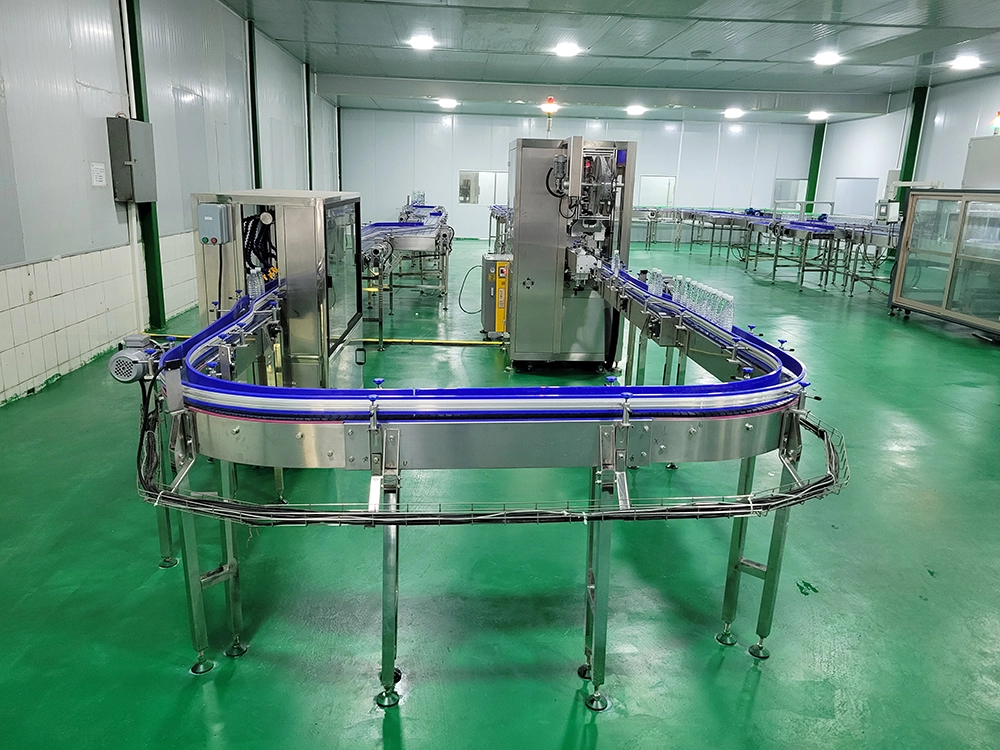
- Conveyor System: Implement a conveyor system to streamline the movement of bottles through the production line.
Configuration Recommendations:
- Small-Scale Production Line: For startups with limited capital, consider a semi-automatic bottling line with a capacity of 500-1,000 bottles per hour.
- Medium-Scale Production Line: For companies with growing demand, invest in an automated bottling line with a capacity of 2,000-5,000 bottles per hour.
- Large-Scale Production Line: For high-volume producers, opt for a fully automated bottling line with a capacity of 10,000+ bottles per hour.
Detailed Operation Procedures and Efficiency Comparisons:
- Water Treatment: Raw water is pre-filtered to remove sediment and large particles. Then, it undergoes reverse osmosis to remove dissolved minerals and contaminants. Finally, it's sterilized with UV light to kill any remaining bacteria.
- Bottling: Bottles are sanitized and filled with treated water. The filling process is automated to ensure consistent fill levels.
- Capping: Caps are applied to the bottles and tightened to create an airtight seal.
- Labeling: Labels are applied to the bottles, providing product information and branding.
- Packaging: Bottles are packed into cases or cartons for distribution.
Efficiency Comparison:
- Manual Bottling: Low initial cost, but slow and labor-intensive. Suitable for very small-scale operations.
- Semi-Automatic Bottling: Moderate initial cost, with increased production capacity and reduced labor requirements.
- Automated Bottling: High initial cost, but offers the highest production capacity and efficiency. Ideal for large-scale operations.
By carefully selecting your equipment and optimizing your production line, you can achieve significant gains in efficiency and profitability. Remember to prioritize quality, reliability, and scalability when making your equipment choices.
Marketing & Distribution Strategy
A well-defined marketing and distribution strategy is crucial for reaching your target market and building brand awareness. This involves identifying your ideal customers, crafting compelling marketing messages, and selecting the right distribution channels to get your product into their hands. This section provides a template for developing an effective marketing strategy and exploring various distribution options.
Marketing Strategy Template:
- Target Market: Define your target market based on demographics, psychographics, and purchasing behavior.
- Unique Selling Proposition (USP): Identify what makes your drinking water unique and appealing to your target market.
- Marketing Channels: Select the most effective marketing channels for reaching your target market, such as social media, online advertising, print advertising, and public relations.
- Marketing Budget: Allocate a budget for your marketing activities and track your return on investment (ROI).
- Marketing Message: Craft a compelling marketing message that communicates your USP and resonates with your target market.
Channel Distribution Strategies:
- Direct Sales: Sell your drinking water directly to consumers through your own website or retail store.
- Retail Partnerships: Partner with grocery stores, convenience stores, and other retailers to distribute your product.
- Wholesale Distribution: Sell your drinking water to wholesalers who will then distribute it to retailers.
- Online Marketplaces: Sell your drinking water through online marketplaces like Amazon or Alibaba.
- Food Service: Supply your drinking water to restaurants, cafes, and other food service establishments.
Successful Promotion Cases and User Feedback Data:
- Case Study: A bottled water company in California launched a successful social media campaign that focused on the health benefits of their water and the company's commitment to sustainability. The campaign resulted in a 20% increase in sales.
- User Feedback: A survey of bottled water consumers found that 70% of respondents were more likely to purchase water from a company that uses sustainable packaging.
- Tip: Offer discounts and promotions to incentivize customers to try your product.
By developing a comprehensive marketing and distribution strategy, you can effectively reach your target market and build a successful drinking water brand. Remember to track your results and adapt your strategy as needed to optimize your ROI.
Post-launch Support & Maintenance
Providing excellent post-launch support and maintenance is essential for building customer loyalty and ensuring the long-term success of your drinking water company. This involves addressing customer feedback, offering maintenance services for your equipment, and continuously improving your products and processes. This section provides guidance on gathering user feedback, offering maintenance services, and addressing common issues.
User Feedback and Maintenance Service Introduction:
- Customer Surveys: Conduct regular customer surveys to gather feedback on your products and services.
- Social Media Monitoring: Monitor social media channels to track customer sentiment and identify any issues.
- Customer Support Hotline: Provide a customer support hotline for customers to report issues or ask questions.
- Maintenance Services: Offer maintenance services for your equipment to ensure it operates efficiently and reliably.
Advanced Maintenance Techniques and Common Problem Solutions:
- Preventive Maintenance: Implement a preventive maintenance program to identify and address potential issues before they become major problems.
- Remote Monitoring: Use remote monitoring technology to track the performance of your equipment and identify any anomalies.
- Troubleshooting Guides: Develop troubleshooting guides to help customers resolve common issues on their own.
- On-Site Repairs: Provide on-site repair services for equipment that requires more complex maintenance.
Common Issues and Solutions:
- Issue: Water quality problems.
- Solution: Implement a more rigorous water treatment process.
- Issue: Equipment breakdowns.
- Solution: Implement a preventive maintenance program and provide regular maintenance services.
- Issue: Customer complaints about taste or odor.
- Solution: Investigate the source of the problem and take corrective action.
By providing excellent post-launch support and maintenance, you can build strong customer relationships and ensure the long-term success of your drinking water company. Remember to be responsive to customer feedback and continuously improve your products and processes.
Technology & Innovation Integration
Integrating new technologies and innovations into your drinking water production process can provide a competitive edge, improve efficiency, and enhance product quality. This involves staying updated on the latest technological advancements and exploring opportunities to incorporate them into your operations. This section explores the application of new technologies and provides examples of cutting-edge technology applications.
Applications of New Technologies and Innovative Technologies in Drinking Water Production:
- Advanced Water Treatment: Utilize advanced water treatment technologies like nanofiltration and activated carbon filtration to remove contaminants and improve water quality.
- Smart Bottling: Implement smart bottling systems that use sensors and data analytics to optimize the bottling process and reduce waste.
- Sustainable Packaging: Explore sustainable packaging options like plant-based bottles and biodegradable labels to reduce your environmental impact.
- Remote Monitoring: Use remote monitoring technology to track the performance of your equipment and identify any anomalies.
- Data Analytics: Utilize data analytics to optimize your production processes, improve product quality, and enhance customer satisfaction.
Technical Trend Analysis and Cutting-Edge Technology Application Cases:
- Trend: Increasing demand for sustainable packaging.
- Application: A bottled water company in Europe switched to plant-based bottles and reduced its carbon footprint by 30%.
- Trend: Growing adoption of smart bottling systems.
- Application: A bottled water company in Asia implemented a smart bottling system and reduced its waste by 15%.
- Trend: Rising demand for personalized water.
- Application: A bottled water company in North America launched a personalized water service that allows customers to customize the mineral content and flavor of their water.
By embracing new technologies and innovations, you can stay ahead of the curve and build a successful drinking water company that is both efficient and sustainable. Remember to continuously evaluate new technologies and explore opportunities to incorporate them into your operations.
ROI & Performance Measurement
Measuring your return on investment (ROI) and tracking key performance indicators (KPIs) are essential for evaluating the success of your drinking water company and making informed business decisions. This involves identifying the metrics that are most important to your business and tracking them regularly. This section provides specific ROI calculation methods and templates, along with key indicators and evaluation metrics for efficient operations.
Specific ROI Calculation Methods and Templates:
- ROI = (Net Profit / Cost of Investment) x 100
- Template: Create a spreadsheet to track your revenue, expenses, and investments. Use the ROI formula to calculate your ROI for each investment.
Key Indicators and Evaluation Metrics for Efficient Operations:
- Production Efficiency: Measure the number of bottles produced per hour and the amount of waste generated.
- Water Quality: Track the levels of contaminants in your water to ensure it meets regulatory standards.
- Customer Satisfaction: Measure customer satisfaction through surveys and feedback forms.
- Sales Growth: Track your sales revenue and market share.
- Profit Margin: Calculate your profit margin to assess the profitability of your business.
Examples of Key Performance Indicators (KPIs):
- KPI: Production Efficiency
- Metric: Bottles produced per hour
- Target: Increase production efficiency by 10% in the next year.
- KPI: Customer Satisfaction
- Metric: Customer satisfaction score
- Target: Achieve a customer satisfaction score of 4.5 out of 5.
- KPI: Sales Growth
- Metric: Sales revenue
- Target: Increase sales revenue by 15% in the next year.
By measuring your ROI and tracking key performance indicators, you can gain valuable insights into the performance of your drinking water company and make informed decisions to improve your profitability and efficiency. Remember to set realistic targets and track your progress regularly.