From soda water to mineral water, glass packaging is loved by the public for its high-end feel and ability to preserve the original flavor of the beverage. Unlike plastic, glass does not react with internal liquids, ensuring that your soda water maintains a carbonated taste and drinking water has a pure taste.
What is a glass bottle filling machine and how does it work?
Glass bottle filling machine is a type of machine that fills liquid products into glass bottles. These machines are typically used in the beverage, food, and chemical industries.
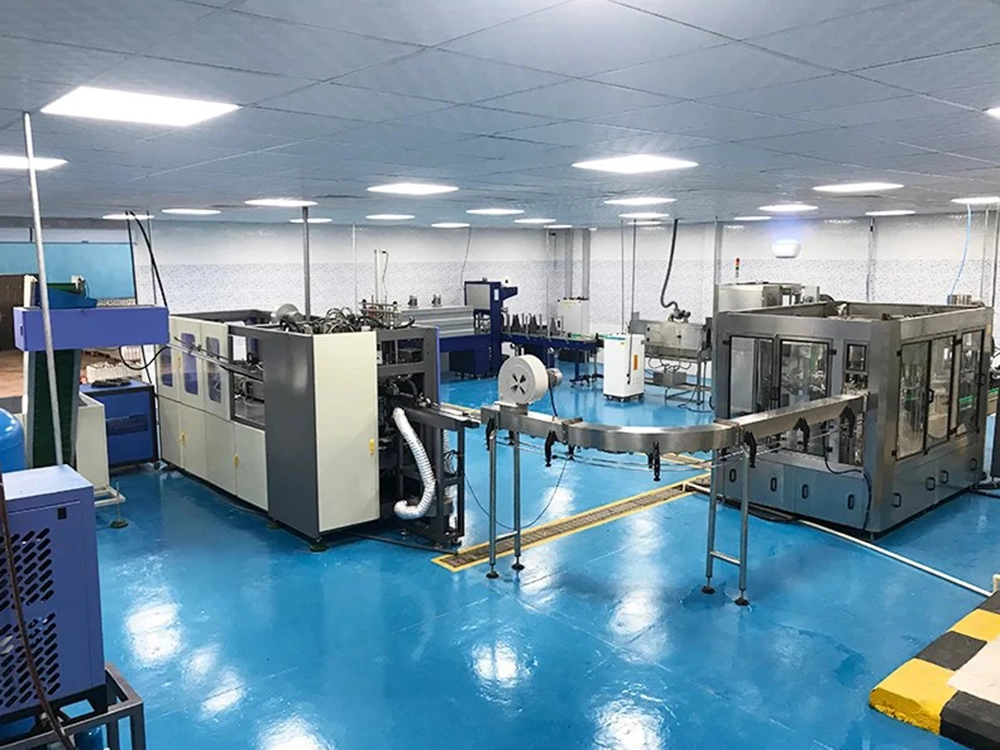
Most glass bottle filling machines use rotary or linear principles, and many devices integrate three functions into one:
Bottle washing – Clean or disinfect the bottle before filling.
Filling System – Accurately inject liquid into the bottle.
Capping System- Immediately screw on the bottle cap or lid after filling.
For carbonated beverages, the filling process must be carried out under back pressure conditions to retain carbon dioxide and prevent foaming. For non carbonated water, gravity filling is usually sufficient.
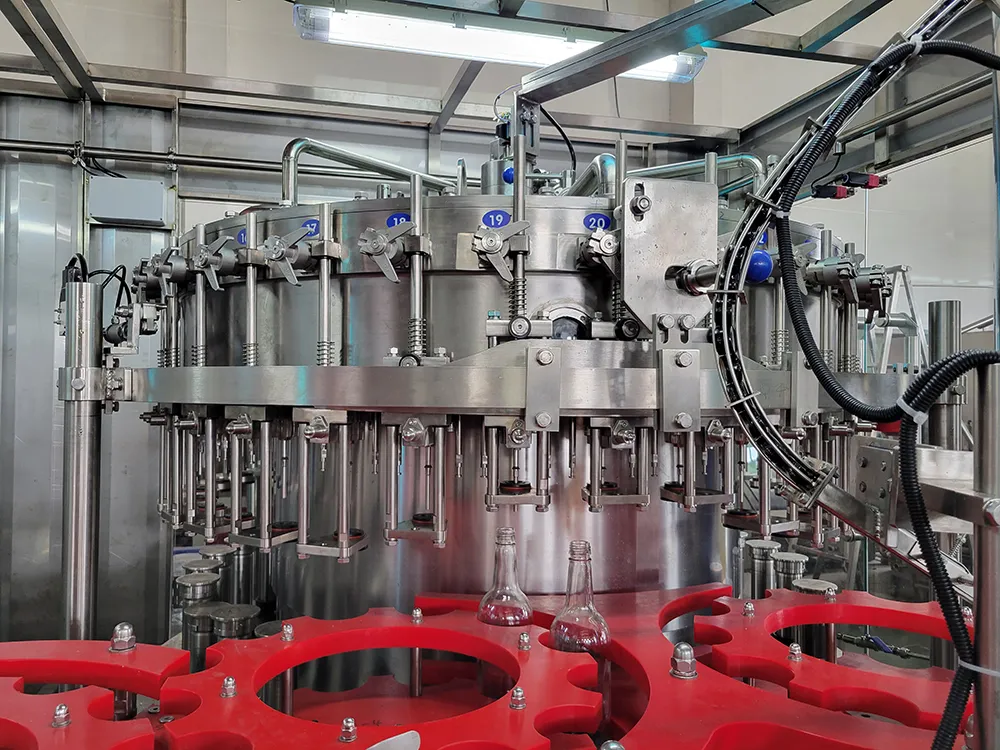
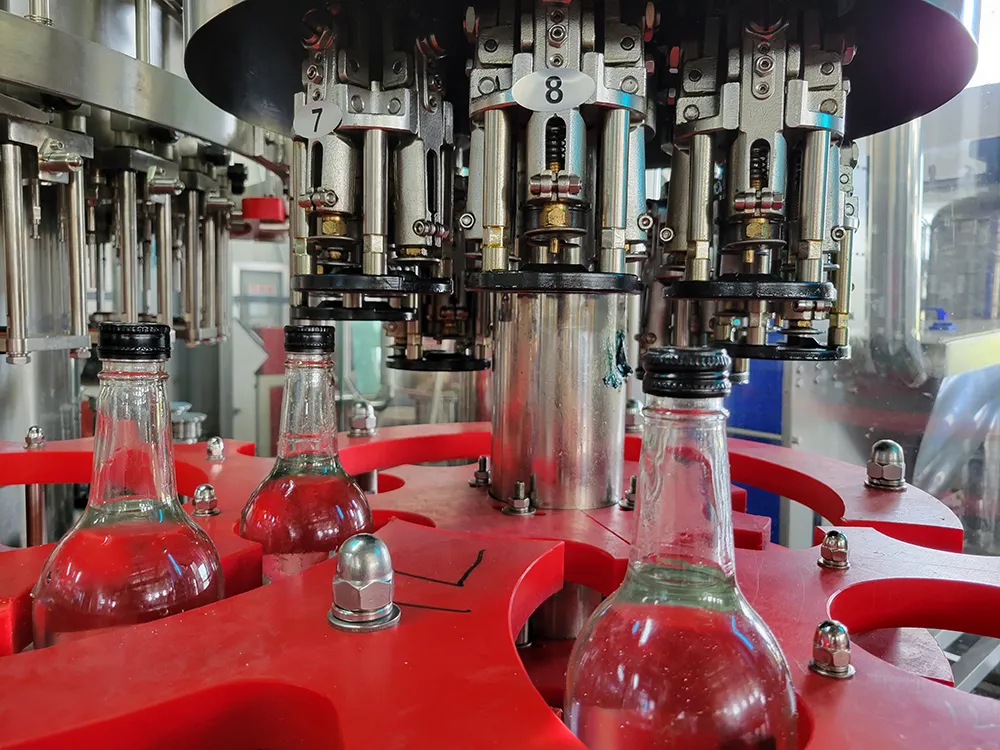
Glass bottle soda filling machine
Soda water is a carbonated beverage that contains dissolved carbon dioxide gas. When the soda water is poured into the glass bottle, the gas is easy to escape, resulting in too much foam, insufficient filling volume or decreased carbonation.
The glass bottle soda filling machine is specifically designed for processing carbonated liquids. Its main features include:
Back pressure filling – Before filling, pressurize the bottle with carbon dioxide to keep the gas in the solution.
Slow filling – reduces turbulence and foam generation.
Release pressure or exhaust – gradually release pressure before sealing to prevent overflow.
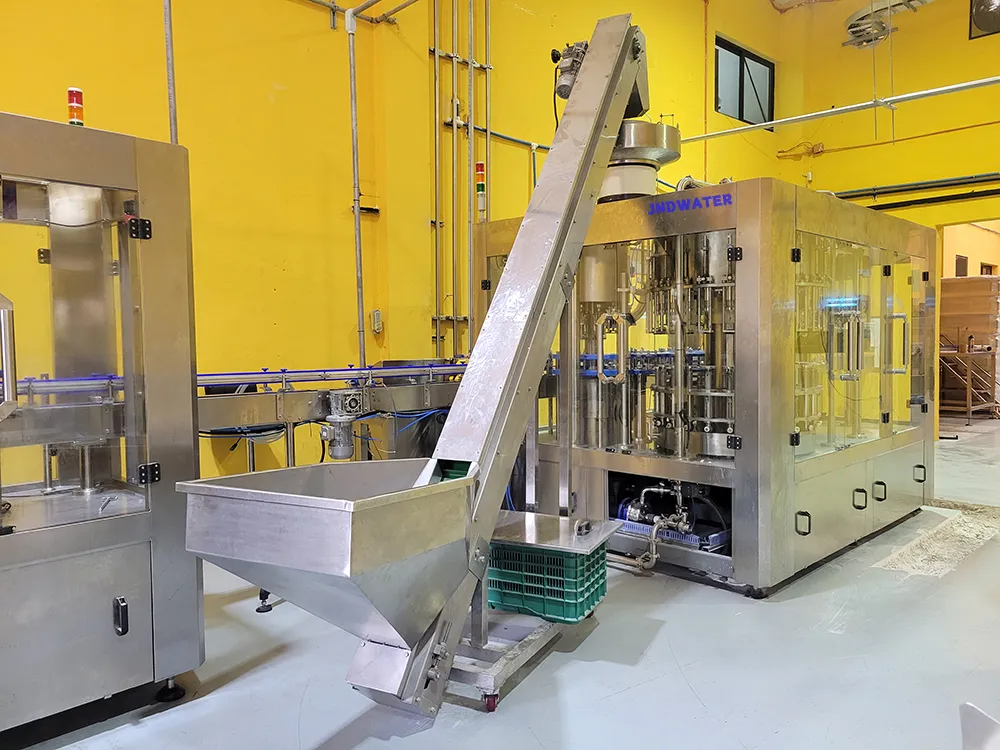
Glass bottle drinking water filling machine
Glass bottle drinking water filling machine is usually used for mineral water and purified water
Compared with soda water filling, drinking water filling is simpler and faster because there is no foam or gas loss
Gravity filling
Higher speed capability
The drinking water filling line also includes ozone treatment or ultraviolet sterilization functions to ensure product safety.
The machine can process both non carbonated water and carbonated soda water simultaneously, but this requires additional components
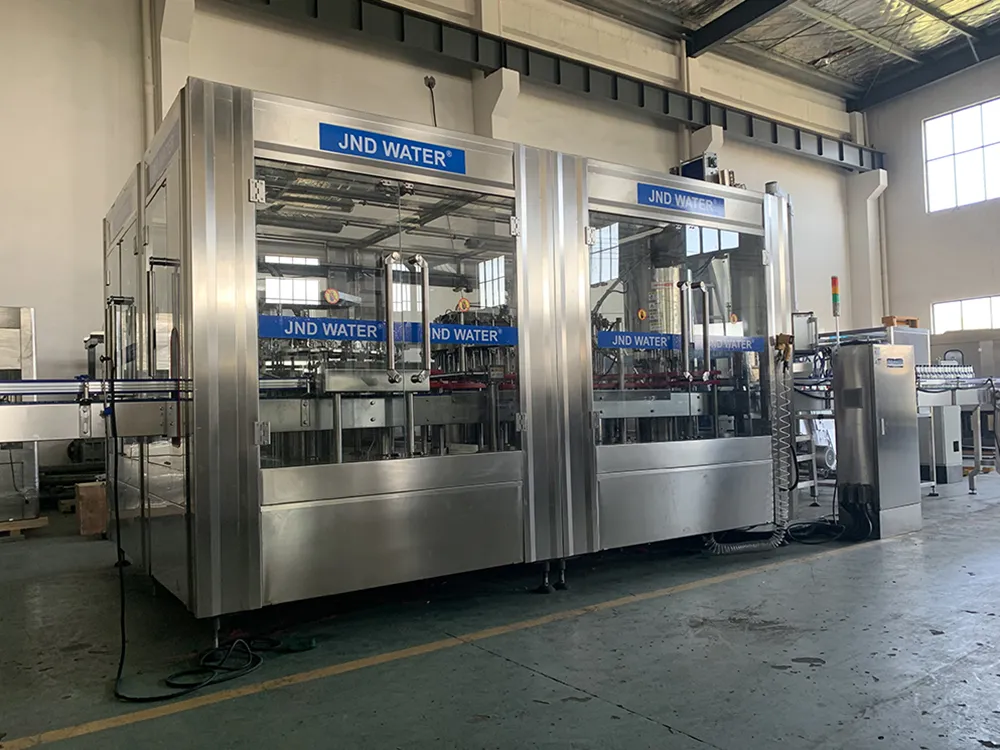
5 key factors affecting glass bottle filling machine
- Production speed
The production speed is usually measured in bottles per hour (BPH). Small machines may produce 1000-3000 bottles per hour, while industrial systems can produce over 30000 bottles per hour. - Filling accuracy
The glass bottle filling machine should control the filling volume error within ± 1-2 milliliters, depending on the bottle type and liquid type - Material
Stainless steel 304- suitable for most water and non acidic beverages.
Stainless steel 316- suitable for acidic or highly corrosive liquids (such as fruit juice, certain soda water, or cleaning solutions). - Compatibility of bottle type and size
Glass bottles come in various shapes and sizes – tall, short, wide mouthed, narrow mouthed, or custom designed. Not every machine can handle all bottle types.
Please inquire with the supplier:
What are the minimum and maximum bottle heights and diameters supported?
Does changing the bottle type require replacing parts?
How easy is it to switch between different bottle types?
- Sealing system
The capping system must match your bottle mouth type. The common types of caps for glass bottles include:
Crown cap – used for beer and soda water bottles.
Spiral cap (aluminum or plastic) – commonly found in water bottles and reusable bottles.
Flip or cork stoppers – used for high-end or specialty products.
frequently asked questions
Question 1: Can the drinking water glass bottle filling machine also fill soda water?
Cannot be used directly. The standard water filling machine uses gravity or low pressure filling, which will cause excessive foam and carbon dioxide loss of soda water. To fill two types of liquids, you need a glass bottle soda filling machine with back pressure function. Some suppliers offer combination models, but at a higher cost.
Question 2: How to maintain the glass bottle filling machine?
Daily maintenance
Clean the filling nozzle and surfaces in contact with the product daily.
Inspect seals, gaskets, and vulnerable parts weekly.
Lubricate moving parts monthly (please refer to the manual to confirm the use of food grade lubricants).
Calibrate the filling volume every quarter.
Perform professional maintenance on electrical and pneumatic systems every year.
Question 3: Can the same machine fill glass bottles of different sizes?
Sure, but you may need to replace parts such as bottle guides, star wheels, and filling nozzles. Some modern machines offer tool free switching, which can shorten the setup time from a few hours to a few minutes.
Question 4: What safety functions should a glass bottle filling machine have?
Due to the possibility of glass bottles breaking, safety features are very important:
Broken bottle detection and removal system.
No bottle, no filling sensor.
Easy to reach emergency stop button.
Closed filling area to prevent glass shards from splashing.
Overload protection for the sealed turret.
Choosing the right glass bottle filling machine is one of the most important decisions for any beverage company (whether you produce soda water, drinking water, or both). Appropriate machines can improve efficiency, reduce product waste, and ensure stable quality, allowing customers to continue repurchasing.
If you are filling soda water or carbonated beverages, you need a glass bottle soda water filling machine with back pressure technology.
If filling non carbonated water, a glass bottle drinking water filling machine that uses gravity or pressure filling is sufficient, and the cost is lower.