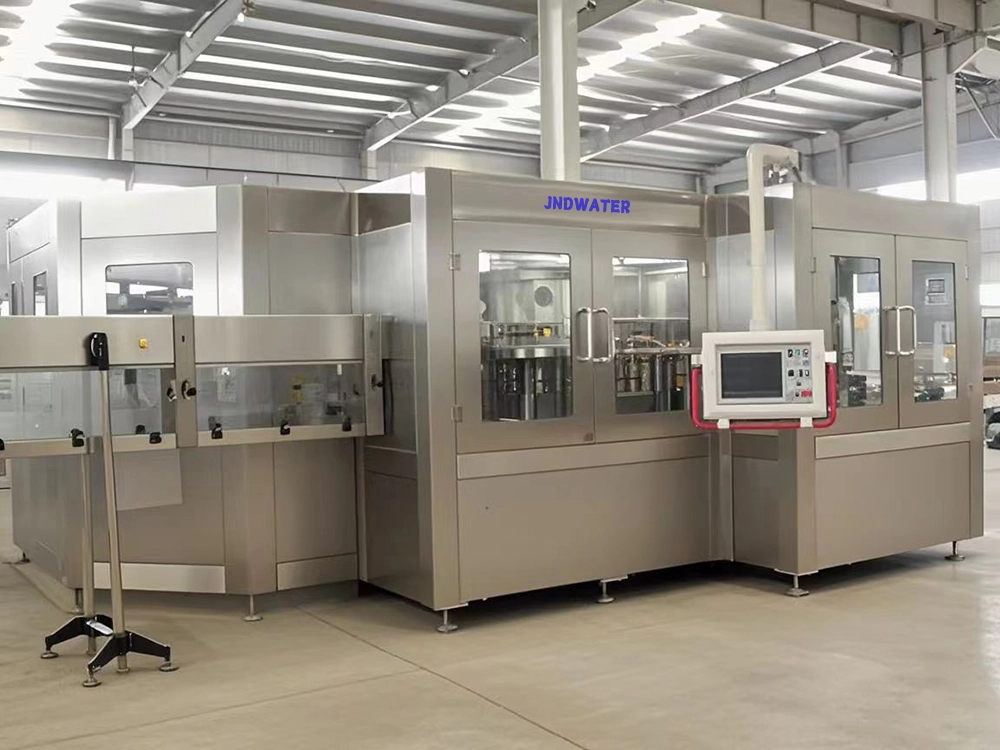
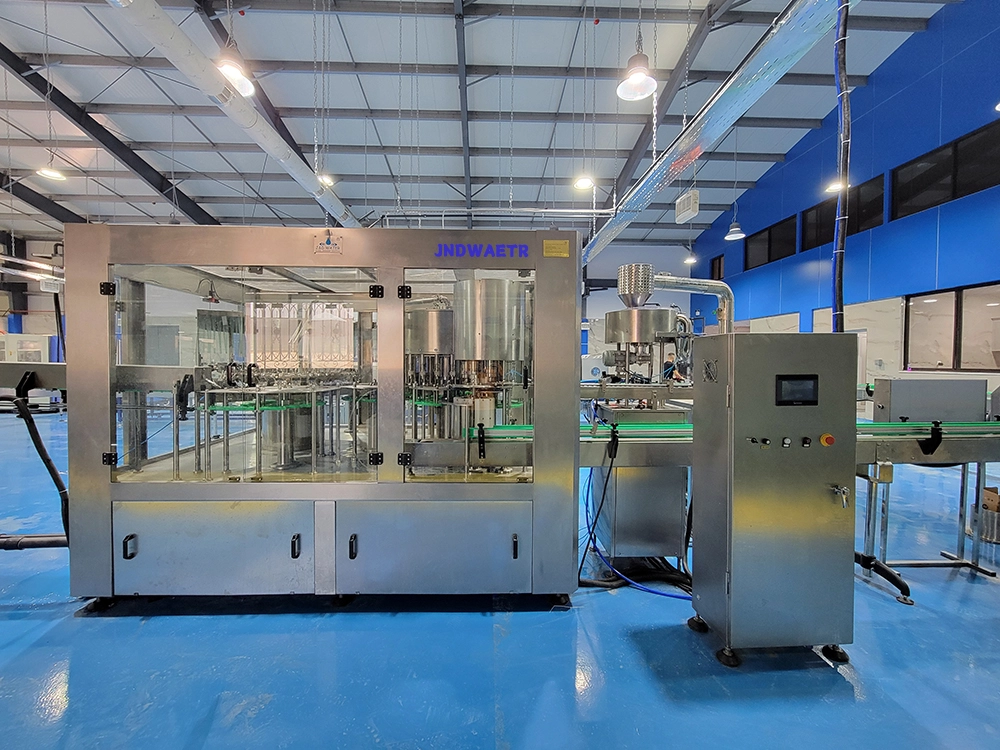
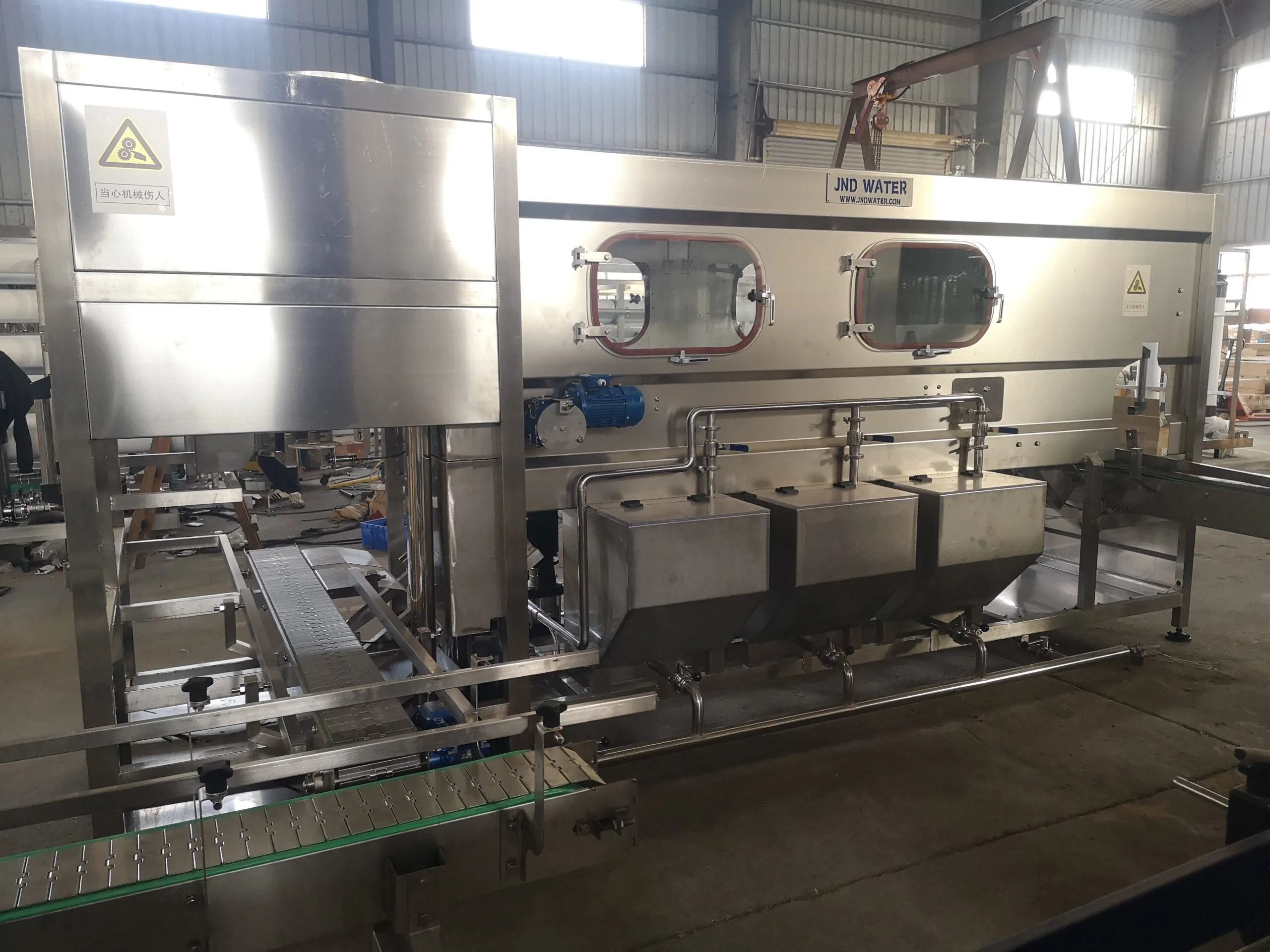
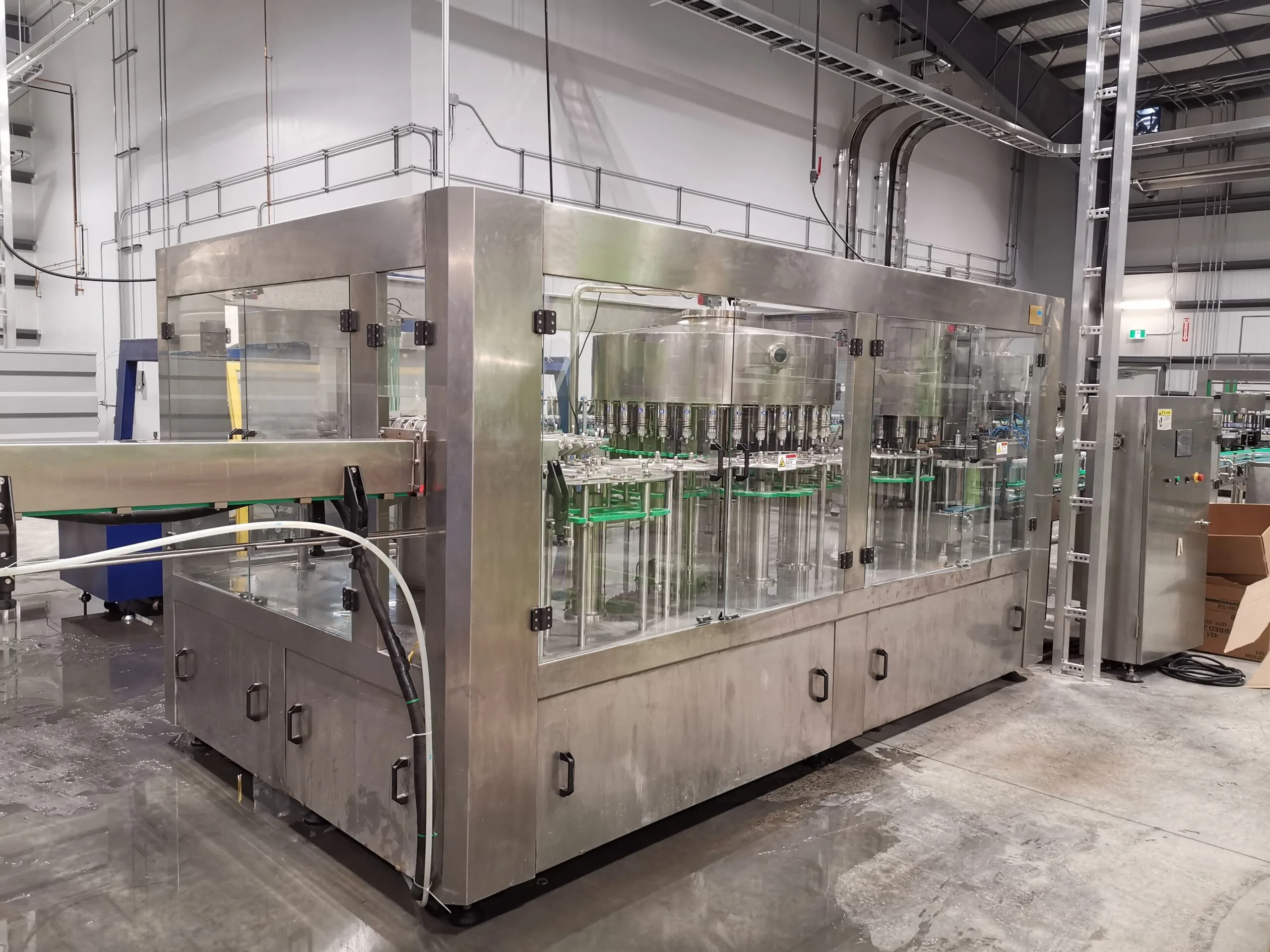
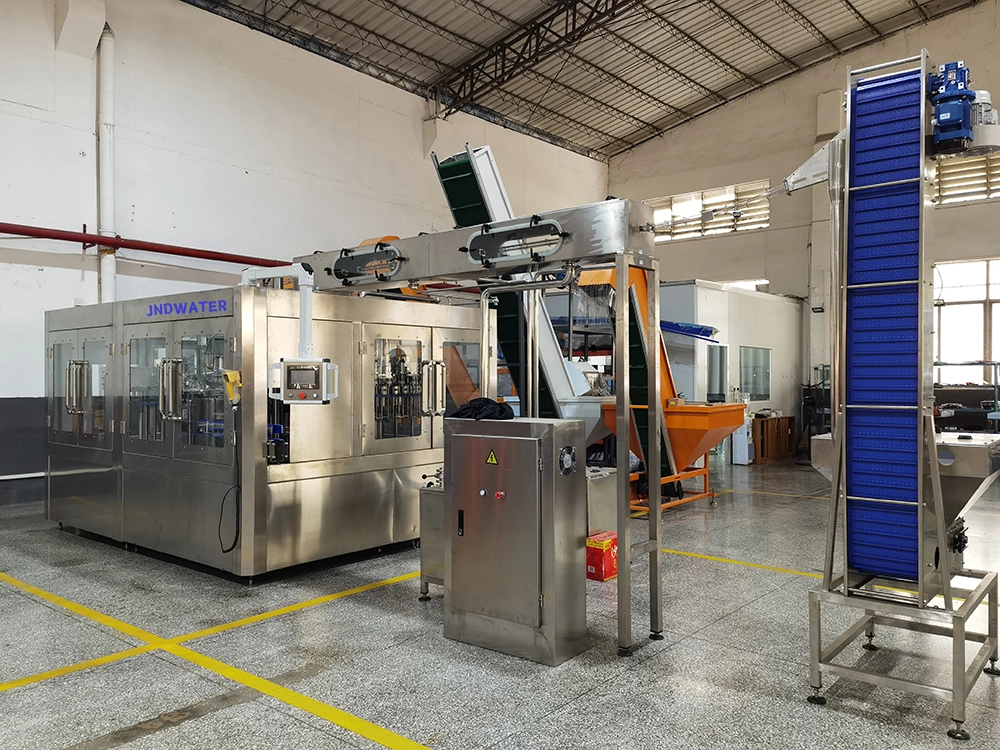
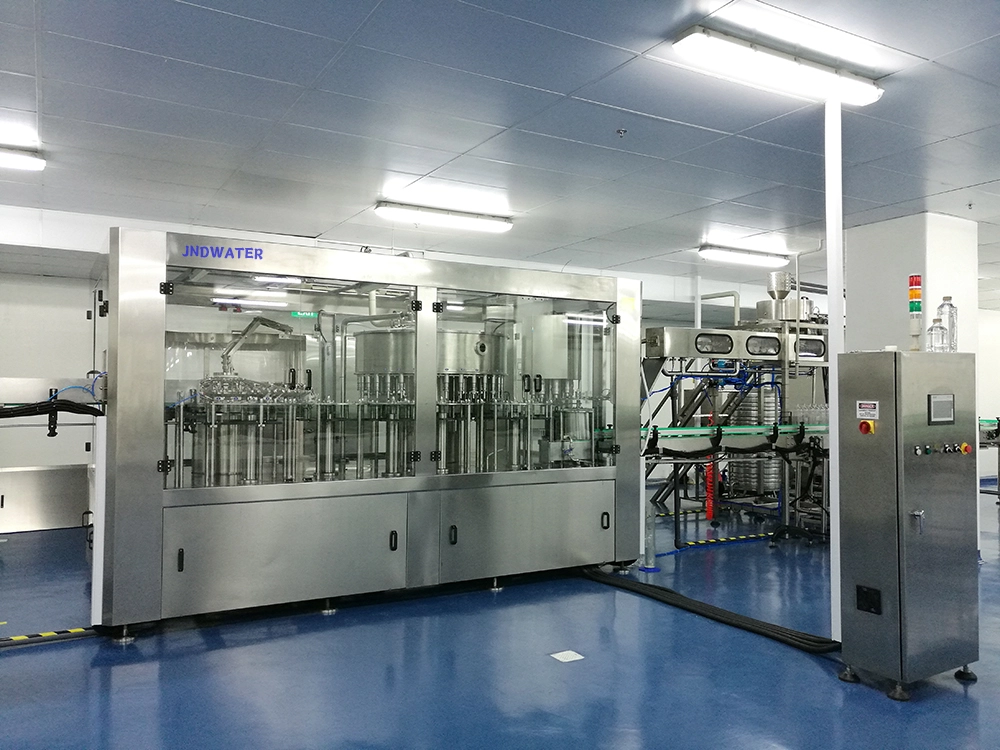
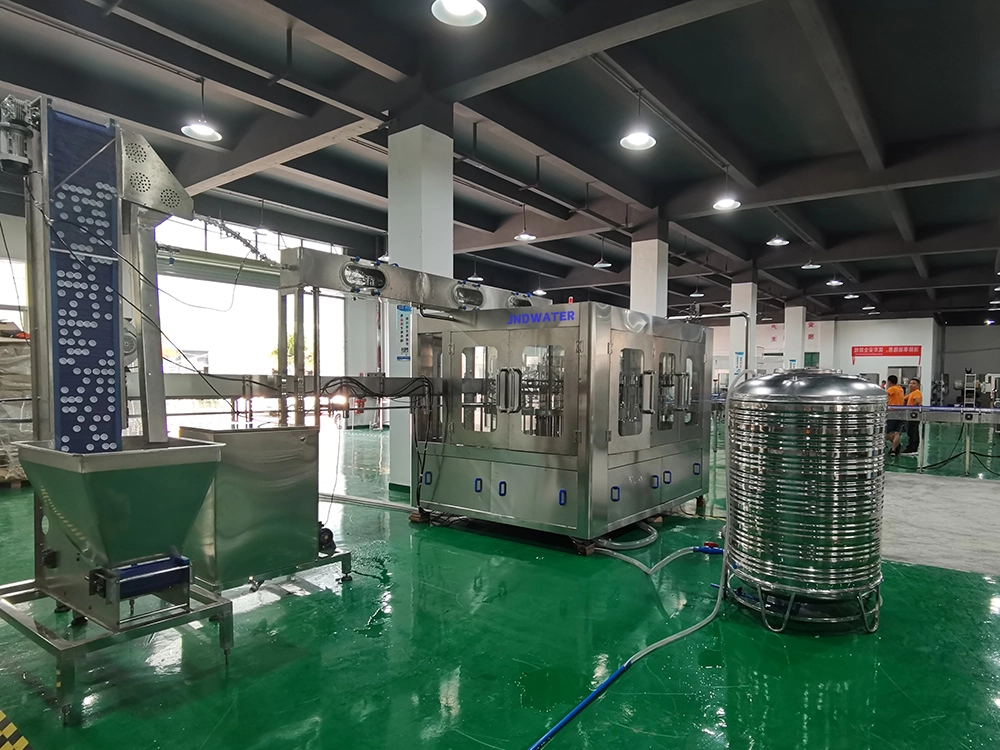
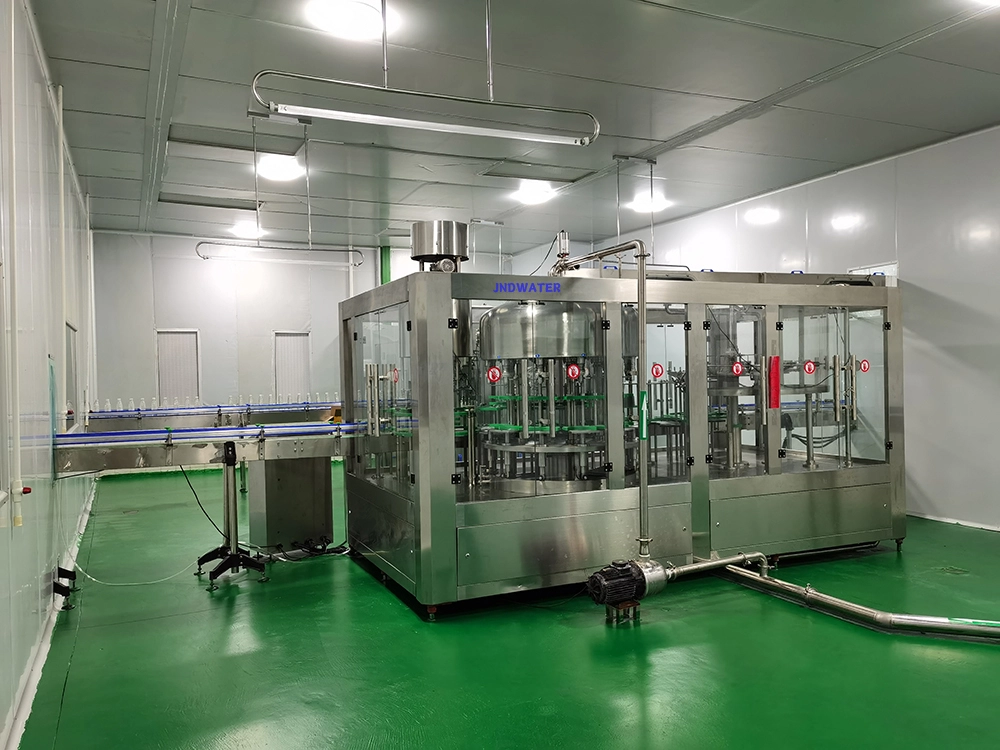
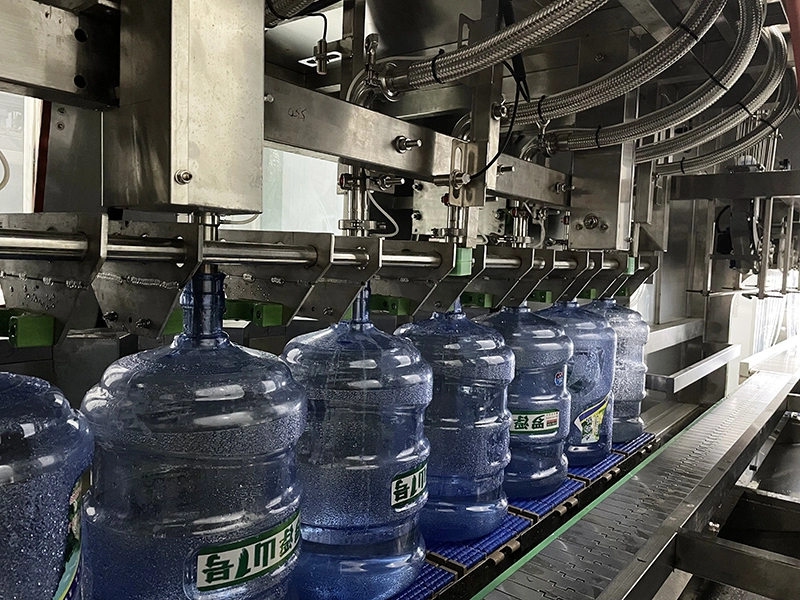
Technical Details of Wine Filling Machines
Understanding the nuances of wine filling technology is crucial for selecting the right equipment for your production needs. JNDwater offers a range of wine filling machines, each employing different techniques to ensure precision, efficiency, and preservation of wine quality. Let's delve into the technical aspects of each type:
Gravity Filling
Gravity filling is one of the most traditional and widely used methods in the wine industry. It relies on the force of gravity to transfer wine from a holding tank into bottles. Here's a closer look at its mechanics:
How it Works: A gravity filling machine typically features a series of filling heads positioned above the bottles. These heads are connected to a central tank or reservoir containing the wine to be filled. When a bottle is placed under a filling head, a valve opens, allowing wine to flow downwards into the bottle due to gravity. The flow stops when the wine reaches a predetermined level, usually controlled by a sensor or a timer.
Advantages:
- Simplicity: Gravity filling machines are relatively simple in design and operation, making them easy to maintain and troubleshoot.
- Cost-Effectiveness: Due to their straightforward construction, gravity fillers are generally more affordable than other types of filling machines.
- Versatility: They can handle a wide range of bottle sizes and shapes, making them suitable for diverse wine products.
- Gentle Filling: The gentle flow of wine minimizes turbulence and aeration, helping to preserve the wine's delicate flavors and aromas.
Disadvantages:
- Slower Filling Speed: Compared to pressure filling or vacuum filling, gravity filling tends to be slower, which may be a limitation for high-volume production.
- Level Variations: Achieving consistent fill levels can be challenging, especially with variations in bottle dimensions.
Pressure Filling
Pressure filling, also known as isobarometric filling, is designed to handle carbonated or sparkling wines. It maintains a controlled pressure environment throughout the filling process.
How it Works: In a pressure filling machine, the bottle is first pressurized to match the pressure of the wine in the holding tank. This equalizes the pressure inside and outside the bottle, preventing foaming or loss of carbonation. The wine then flows into the bottle under controlled pressure until the desired fill level is reached. Finally, the pressure is gradually released to avoid sudden degassing.
Advantages:
- Preserves Carbonation: Pressure filling is essential for maintaining the carbonation in sparkling wines like Champagne and Prosecco.
- High Speed: It allows for faster filling speeds compared to gravity filling, making it suitable for high-volume production of sparkling wines.
- Consistent Fill Levels: The controlled pressure ensures accurate and consistent fill levels, even with variations in bottle dimensions.
Disadvantages:
- Complexity: Pressure filling machines are more complex in design and operation than gravity fillers, requiring specialized knowledge for maintenance and troubleshooting.
- Higher Cost: Due to their complexity, pressure fillers are generally more expensive than gravity fillers.
- Limited Versatility: They are primarily designed for carbonated beverages and may not be suitable for still wines.
Piston Filling
Piston filling is a volumetric filling method that uses a piston and cylinder to measure and dispense a precise volume of wine into each bottle.
How it Works: A piston filling machine consists of a series of cylinders, each equipped with a piston. The piston moves back and forth within the cylinder, drawing wine from a supply tank and then dispensing it into the bottle. The volume of wine dispensed is determined by the stroke length of the piston, which can be adjusted to achieve the desired fill level.
Advantages:
- High Accuracy: Piston fillers offer excellent accuracy, ensuring consistent fill volumes with minimal variation.
- Versatility: They can handle a wide range of wine viscosities, from light-bodied whites to thick, fortified wines.
- Hygienic: The closed-system design minimizes exposure to air and contaminants, ensuring product purity.
Disadvantages:
- Complexity: Piston fillers are mechanically complex and require skilled technicians for maintenance and repair.
- Higher Cost: They tend to be more expensive than gravity fillers, especially for machines with multiple filling heads.
- Potential for Shear: The movement of the piston can create shear forces that may damage delicate wines.
Vacuum Filling
Vacuum filling uses a vacuum to draw wine into the bottle, creating a consistent fill level regardless of bottle variations.
How it Works: In a vacuum filling machine, a vacuum is created inside the bottle, which draws wine from a holding tank into the bottle. The vacuum ensures that the bottle is filled to a consistent level, as any excess wine is drawn back into the tank. This method is particularly useful for bottles with irregular shapes or dimensions.
Advantages:
- Consistent Fill Level: Vacuum filling provides a very consistent fill level, even with variations in bottle dimensions.
- Reduced Drip: The vacuum helps to prevent dripping after filling, minimizing product loss and mess.
- Suitable for Various Bottles: It can handle a wide range of bottle shapes and sizes, making it a versatile option.
Disadvantages:
- Complexity: Vacuum filling machines can be complex and require skilled maintenance.
- Potential for Degassing: The vacuum can cause some degassing of the wine, which may affect its quality.
- Cost: These machines can be more expensive than gravity fillers.
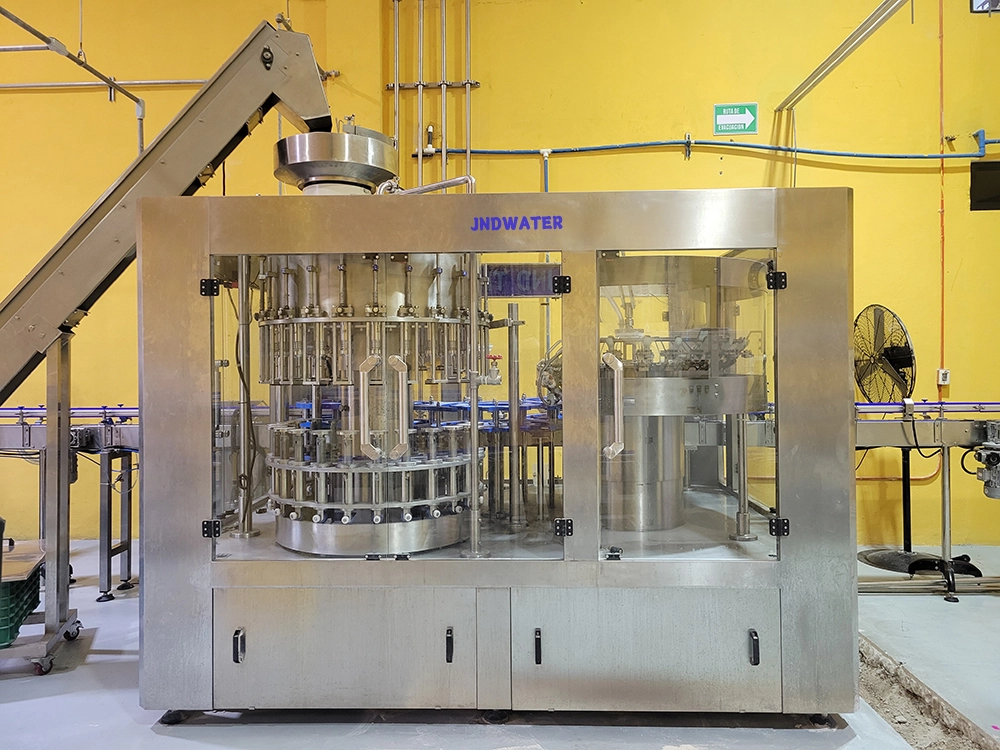
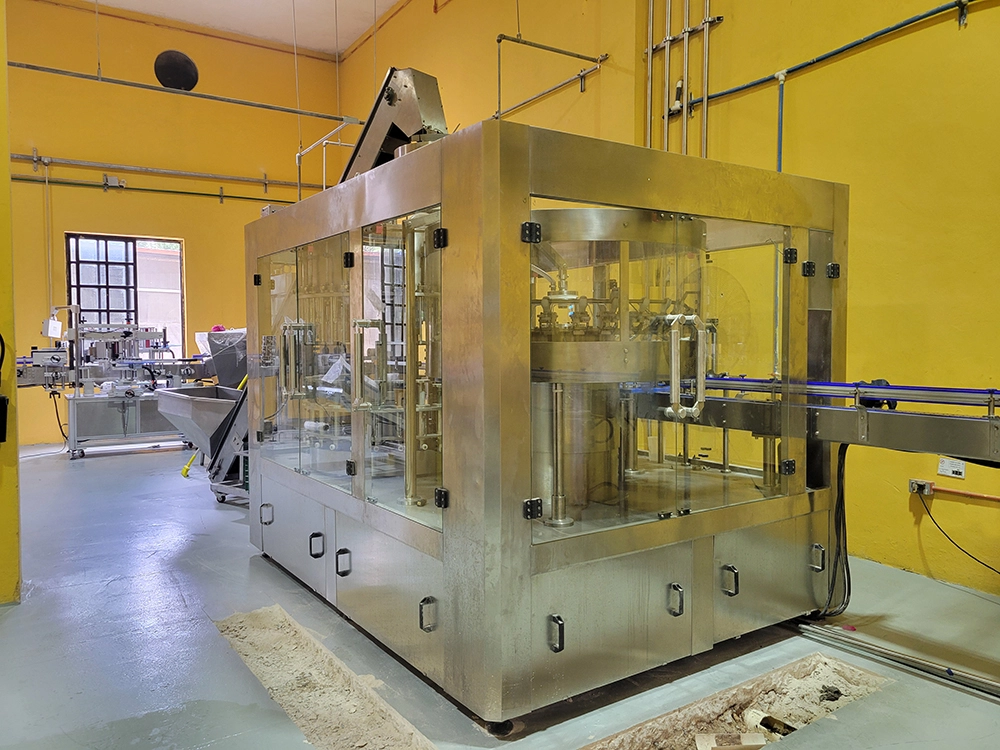
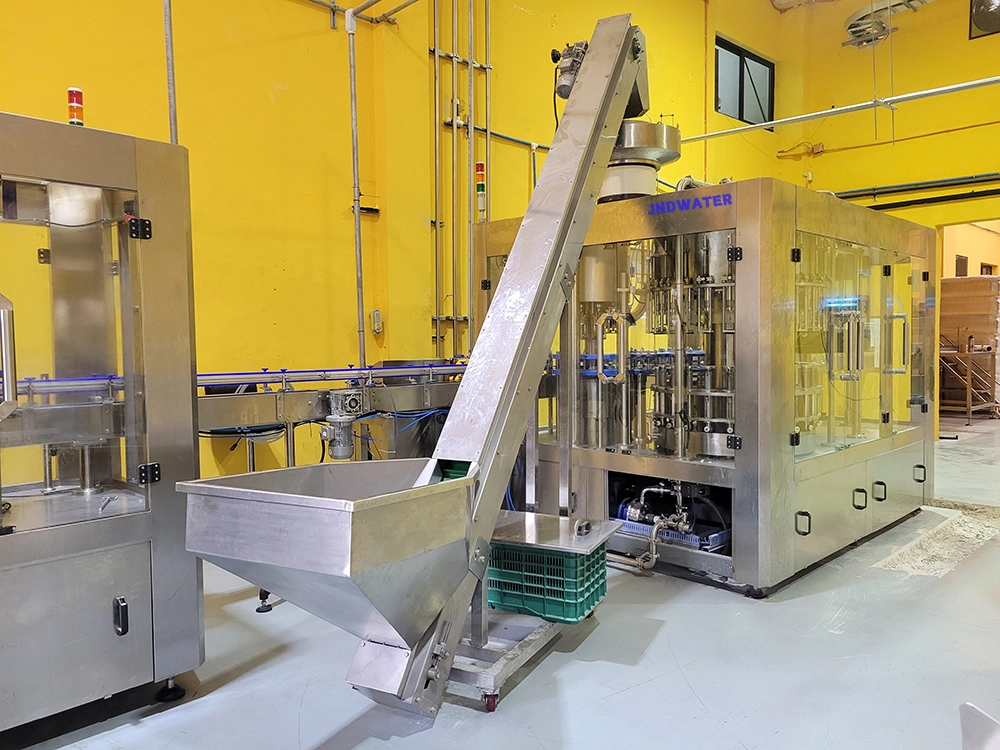
To visually understand these technologies, we offer demonstration videos and images showcasing each filling process. Contact us to learn more and see our machines in action.
Operating Instructions and Demonstrations for Wine Filling Machines
Ensuring your wine filling machine operates efficiently and maintains its performance requires proper usage and regular maintenance. At JNDwater, we provide comprehensive guidance to help you maximize the lifespan and effectiveness of your equipment. Here’s a detailed overview of how to use and maintain our wine filling machines, along with recommended best practices:
Step-by-Step Usage Instructions
1. Pre-Operation Checklist:
- Cleanliness: Ensure all parts of the machine, including the filling heads, tanks, and hoses, are thoroughly cleaned and sanitized before each use. Use a food-grade sanitizer to eliminate any potential contaminants.
- Connections: Verify that all connections are secure and properly sealed to prevent leaks. Check the hoses, clamps, and fittings for any signs of wear or damage.
- Calibration: Calibrate the machine according to the manufacturer’s instructions to ensure accurate filling volumes. This is particularly important for piston and volumetric filling machines.
- Power Supply: Confirm that the machine is properly connected to a stable power supply. Check the voltage and frequency to match the machine’s specifications.
2. Starting the Machine:
- Power On: Turn on the machine using the main power switch. Allow the machine to run through its self-check sequence.
- Settings Adjustment: Adjust the filling parameters, such as filling speed, volume, and pressure, according to the type of wine and bottle size. Refer to the machine’s manual for guidance.
- Test Run: Perform a test run with a few bottles to ensure the machine is operating correctly. Check the fill levels and adjust as necessary.
3. Filling Process:
- Bottle Placement: Place the bottles securely under the filling heads. Ensure they are properly aligned to prevent spills and ensure accurate filling.
- Initiate Filling: Start the filling process by pressing the start button or using the automated controls. Monitor the filling process to ensure smooth and consistent operation.
- Monitoring: Continuously monitor the fill levels and adjust the machine settings as needed to maintain accuracy. Check for any leaks or malfunctions.
4. Post-Operation Procedures:
- Shutdown: Turn off the machine using the main power switch. Allow the machine to cool down before cleaning.
- Cleaning: Thoroughly clean all parts of the machine that came into contact with wine. Use a food-grade cleaner and sanitizer to remove any residue.
- Inspection: Inspect the machine for any signs of wear or damage. Replace any worn or damaged parts immediately.
Maintenance Best Practices
1. Regular Cleaning:
Regular cleaning is essential to prevent the buildup of wine residue and bacteria. Clean the machine after each use and perform a deep cleaning at least once a week. Use hot water and a food-grade detergent to clean all parts of the machine. Rinse thoroughly with clean water and sanitize with a food-grade sanitizer.
2. Lubrication:
Lubricate all moving parts of the machine regularly to ensure smooth operation and prevent wear. Use a food-grade lubricant and follow the manufacturer’s recommendations for lubrication points and intervals.
3. Inspection and Replacement of Parts:
Regularly inspect the machine for any signs of wear or damage. Replace any worn or damaged parts immediately to prevent further damage and ensure optimal performance. Pay particular attention to the filling heads, seals, and hoses.
4. Calibration:
Calibrate the machine regularly to ensure accurate filling volumes. Use a calibrated measuring device to check the fill levels and adjust the machine settings as needed. Refer to the machine’s manual for calibration procedures.
5. Professional Servicing:
Schedule regular professional servicing to ensure the machine is operating at peak performance. A qualified technician can inspect the machine, perform necessary repairs, and provide recommendations for maintenance and improvements.
Troubleshooting Tips
1. Inconsistent Fill Levels:
Check the calibration of the machine and adjust the fill settings as needed. Ensure the bottles are properly aligned and the filling heads are clean and free of obstructions. Inspect the hoses and connections for leaks.
2. Leaks:
Check all connections and seals for leaks. Tighten any loose connections and replace any worn or damaged seals. Inspect the hoses for cracks or punctures.
3. Machine Malfunctions:
Refer to the machine’s manual for troubleshooting procedures. Check the power supply and electrical connections. If the problem persists, contact a qualified technician for assistance.
For a visual guide, we offer operation and maintenance videos that demonstrate each step. These videos provide a clear and concise overview of how to use and maintain your wine filling machine. Contact us to access these resources and ensure your machine operates at its best.
Compliance with Environmental and Hygiene Standards
Adhering to strict hygiene and safety standards is paramount in the wine industry. JNDwater's wine filling machines are engineered to meet and exceed these requirements, ensuring product integrity and consumer safety. Here’s a detailed look at how our machines comply with industry standards, focusing on the Clean-In-Place (CIP) system and relevant certifications:
Clean-In-Place (CIP) System
The Clean-In-Place (CIP) system is an automated cleaning process that allows for the sanitation of the wine filling machine without disassembling it. This system is crucial for maintaining hygiene and preventing contamination.
How CIP Works:
- Pre-Rinse: The CIP system begins with a pre-rinse using potable water to remove any residual wine and debris from the machine's internal surfaces.
- Detergent Wash: Next, a hot detergent solution is circulated through the machine to dissolve and remove any remaining organic matter. The detergent is typically a food-grade alkaline or acidic solution.
- Rinse: After the detergent wash, the machine is rinsed thoroughly with potable water to remove any traces of the detergent.
- Sanitization: A sanitizing solution, such as peracetic acid or chlorine dioxide, is circulated through the machine to kill any remaining bacteria or microorganisms.
- Final Rinse: The final step is a rinse with sterile water to remove any traces of the sanitizing solution.
Benefits of CIP:
- Reduced Downtime: CIP systems significantly reduce downtime compared to manual cleaning, as the machine does not need to be disassembled.
- Improved Hygiene: Automated cleaning ensures consistent and thorough sanitation, minimizing the risk of contamination.
- Cost Savings: CIP systems reduce labor costs associated with manual cleaning and minimize the use of cleaning chemicals.
- Enhanced Safety: Automated cleaning reduces the risk of worker exposure to harsh chemicals.
Hygiene and Safety Standards
Our wine filling machines are designed to comply with the following key hygiene and safety standards:
- FDA Regulations: The machines are constructed using materials that comply with the U.S. Food and Drug Administration (FDA) regulations for food contact surfaces.
- European Hygienic Engineering & Design Group (EHEDG): The design of the machines follows the principles of EHEDG to ensure hygienic design and prevent the accumulation of bacteria.
- Good Manufacturing Practices (GMP): Our manufacturing processes adhere to Good Manufacturing Practices (GMP) to ensure consistent quality and safety.
- ISO 22000: We follow the guidelines of ISO 22000, a food safety management system, to ensure that our machines contribute to the overall safety of the wine production process.
Third-Party Certifications
To further validate the compliance of our wine filling machines with industry standards, we have obtained the following third-party certifications:
- NSF International: NSF International is an independent organization that tests and certifies products for food safety. Our machines have been certified by NSF to meet their rigorous standards for hygiene and safety.
- 3-A Sanitary Standards: 3-A Sanitary Standards are a set of design and construction standards for equipment used in the food and beverage industry. Our machines comply with 3-A Sanitary Standards to ensure hygienic design and ease of cleaning.
- CE Marking: The CE marking indicates that our machines comply with the European Union's health, safety, and environmental protection standards.
These certifications provide assurance to our customers that our wine filling machines have been independently tested and verified to meet the highest standards for hygiene and safety. Contact us for documentation and more details about our compliance measures.
Use Cases and Customer Testimonials
Real-world examples and feedback from satisfied customers are invaluable in demonstrating the effectiveness and reliability of JNDwater's wine filling machines. Here are some compelling use cases and testimonials from wineries that have benefited from our solutions:
Success Stories
1. Napa Valley Winery: Streamlining Production with Automated Filling
Challenge: A renowned Napa Valley winery was facing bottlenecks in its production process due to manual filling methods. They needed a solution that could increase throughput while maintaining the quality and integrity of their premium wines.
Solution: JNDwater provided a fully automated wine filling machine equipped with advanced sensors and controls. The machine was customized to handle a variety of bottle sizes and shapes, allowing the winery to streamline its production process.
Results:
- Increased filling speed by 40%
- Reduced labor costs by 30%
- Improved fill level accuracy, minimizing product waste
- Enhanced product quality due to gentle filling technology
2. Boutique Vineyard in Bordeaux: Preserving Wine Quality with Precision Filling
Challenge: A boutique vineyard in Bordeaux, France, specializing in high-end wines, needed a filling solution that could preserve the delicate flavors and aromas of their wines. They required a machine that offered precise control over the filling process and minimized oxygen exposure.
Solution: JNDwater supplied a vacuum filling machine with a nitrogen purging system. This machine created a vacuum inside the bottle before filling, removing oxygen and preventing oxidation. The nitrogen purging system further protected the wine from oxygen exposure during the filling process.
Results:
- Improved wine quality and extended shelf life
- Reduced oxygen levels in bottled wine by 50%
- Enhanced control over the filling process, ensuring consistent quality
- Increased customer satisfaction due to improved product quality
3. Sparkling Wine Producer in Italy: Maintaining Carbonation with Pressure Filling
Challenge: A sparkling wine producer in Italy needed a filling solution that could maintain the carbonation of their wines during the filling process. They required a machine that could handle high-pressure filling and minimize CO2 loss.
Solution: JNDwater provided a pressure filling machine with isobarometric filling technology. This machine pressurized the bottles to match the pressure of the wine, preventing CO2 loss during filling. The machine also featured a de-aeration system to remove dissolved oxygen from the wine.
Results:
- Maintained carbonation levels in bottled wine
- Reduced CO2 loss during filling by 25%
- Improved product quality and consistency
- Increased production efficiency due to faster filling speeds
Customer Testimonials
[Name], Winemaker, Napa Valley Winery:
"JNDwater's wine filling machine has revolutionized our production process. The automated filling system has significantly increased our throughput while maintaining the quality of our premium wines. We are extremely satisfied with the performance and reliability of the machine."
[Name], Vineyard Owner, Bordeaux Vineyard:
"The vacuum filling machine from JNDwater has been instrumental in preserving the delicate flavors and aromas of our wines. The nitrogen purging system has minimized oxygen exposure, resulting in improved wine quality and extended shelf life. We highly recommend JNDwater to any winery looking for a precision filling solution."
[Name], Production Manager, Italian Sparkling Wine Producer:
"JNDwater's pressure filling machine has enabled us to maintain the carbonation of our sparkling wines during the filling process. The isobarometric filling technology has reduced CO2 loss, resulting in improved product quality and consistency. We are very pleased with the performance of the machine and the support provided by JNDwater."
These case studies and testimonials highlight the real-world benefits of JNDwater's wine filling machines. Contact us to learn more about how our solutions can help your winery achieve its production goals.
Competitive Analysis
Choosing the right wine filling machine involves comparing different options to ensure you get the best value and performance. Here’s a detailed comparison of JNDwater’s wine filling machines against those of our competitors, focusing on key factors such as technology, efficiency, and cost-effectiveness:
Technology Comparison
JNDwater:
- Advanced Filling Technologies: Offers a range of filling technologies, including gravity, pressure, piston, and vacuum filling, to suit different types of wines and production requirements.
- Precision Control: Equipped with advanced sensors and controls to ensure accurate fill levels and minimize product waste.
- Hygienic Design: Designed with smooth surfaces and minimal crevices to prevent bacteria buildup and facilitate easy cleaning.
- Automated CIP System: Features an automated Clean-In-Place (CIP) system for efficient and thorough sanitation.
- Customization Options: Offers customization options to meet specific customer needs, such as bottle size, filling speed, and integration with existing production lines.
Competitor A:
- Limited Filling Technologies: Primarily offers gravity filling machines, with limited options for pressure or vacuum filling.
- Basic Controls: Equipped with basic controls, which may not provide the same level of precision as JNDwater's machines.
- Standard Design: Features a standard design with limited customization options.
- Manual Cleaning: Requires manual cleaning, which can be time-consuming and less effective than automated CIP systems.
Competitor B:
- Specialized Filling Machines: Focuses on specialized filling machines for specific types of wines, such as sparkling wines or fortified wines.
- High-Speed Filling: Offers high-speed filling capabilities, but may not be suitable for delicate wines that require gentle handling.
- Complex Design: Features a complex design that may be difficult to maintain and troubleshoot.
- High Cost: Generally more expensive than JNDwater's machines, with limited cost-effectiveness for small to medium-sized wineries.
Efficiency Comparison
JNDwater:
- High Filling Speed: Offers high filling speeds without compromising accuracy or product quality.
- Minimal Downtime: Designed for minimal downtime, with easy-to-maintain components and automated CIP systems.
- Reduced Product Waste: Precision controls and accurate fill levels minimize product waste, resulting in cost savings.
- Energy Efficiency: Designed for energy efficiency, reducing operating costs and minimizing environmental impact.
Competitor A:
- Slower Filling Speed: Slower filling speeds compared to JNDwater's machines, which may limit production capacity.
- Higher Downtime: Requires more frequent maintenance and cleaning, resulting in higher downtime.
- Increased Product Waste: Less precise controls may result in increased product waste.
- Lower Energy Efficiency: Less energy-efficient design, resulting in higher operating costs.
Competitor B:
- High Filling Speed: Offers high filling speeds, but may require more energy and maintenance.
- Complex Maintenance: Complex design may result in higher maintenance costs and downtime.
- Potential for Product Damage: High-speed filling may damage delicate wines, resulting in product loss.
- High Energy Consumption: Higher energy consumption compared to JNDwater's machines.
Cost-Effectiveness Comparison
JNDwater:
- Competitive Pricing: Offers competitive pricing without compromising quality or performance.
- Lower Operating Costs: Designed for lower operating costs, with energy-efficient components and minimal maintenance requirements.
- Long-Term Value: Provides long-term value with durable construction and reliable performance.
- Customization Options: Offers customization options to meet specific budget requirements.
Competitor A:
- Lower Initial Cost: Lower initial cost, but may result in higher operating costs and lower performance in the long run.
- Higher Maintenance Costs: Requires more frequent maintenance, resulting in higher maintenance costs.
- Limited Customization: Limited customization options may not meet specific needs.
- Shorter Lifespan: Less durable construction may result in a shorter lifespan.
Competitor B:
- Higher Initial Cost: Higher initial cost, which may not be cost-effective for small to medium-sized wineries.
- Higher Operating Costs: Higher operating costs due to increased energy consumption and maintenance requirements.
- Limited Versatility: Specialized design may limit versatility and adaptability to changing production needs.
- Complex Installation: Complex installation may result in higher installation costs.
In summary, JNDwater’s wine filling machines offer a superior combination of technology, efficiency, and cost-effectiveness compared to our competitors. Contact us for a detailed quote and to discuss your specific requirements.
Free Trial and Quote Request
To make your decision easier, JNDwater offers a free trial and a straightforward quote request process. Here’s how you can take advantage of these opportunities:
Free Trial
1. Request a Trial:
Contact our sales team to request a free trial of our wine filling machine. We will work with you to schedule a trial at your facility or at our demonstration center.
2. Trial Setup:
Our team will set up the machine and provide training on its operation. We will also provide technical support throughout the trial period.
3. Test the Machine:
Use the machine to fill your wine bottles and evaluate its performance. Assess the filling speed, accuracy, and product quality.
4. Evaluate the Results:
Evaluate the results and determine if the machine meets your needs. We will be available to answer any questions and address any concerns.
Quote Request
1. Visit Our Website:
Visit our website and navigate to the wine filling machine product page.
2. Complete the Form:
Complete the quote request form, providing details about your winery, production requirements, and budget.
3. Contact Us Directly:
Alternatively, you can contact our sales team directly by phone or email to request a quote.
4. Receive a Customized Quote:
Our sales team will review your request and provide you with a customized quote that meets your specific needs. The quote will include details about the machine, pricing, and payment options.
Call to Action
Don't miss the opportunity to experience the benefits of JNDwater's wine filling machines. Contact us today to request a free trial or get a free quote. Our team is ready to assist you in finding the perfect filling solution for your winery.
Contact Information:
- Phone: [Phone Number]
- Email: [Email Address]
- Website: [Website URL]
We look forward to hearing from you and helping you optimize your wine production process.
Frequently Asked Questions (FAQ)
Here are some frequently asked questions about JNDwater's wine filling machines to help you make an informed decision:
Q: What types of wine filling machines do you offer?
A: We offer a range of wine filling machines, including gravity filling machines, pressure filling machines, piston filling machines, and vacuum filling machines. Each type is designed to meet different production requirements and wine types.
Q: What is the filling speed of your machines?
A: The filling speed varies depending on the type of machine and the size of the bottles. Our machines can fill up to [Number] bottles per hour, ensuring high production efficiency.
Q: Can your machines handle different bottle sizes and shapes?
A: Yes, our machines are designed to handle a wide range of bottle sizes and shapes. We offer customization options to ensure that the machine meets your specific needs.
Q: Do your machines comply with hygiene and safety standards?
A: Yes, our machines comply with all relevant hygiene and safety standards. They are constructed using food-grade materials and feature automated CIP systems for efficient sanitation. We also hold certifications such as NSF and 3-A Sanitary Standards.
Q: What is the maintenance requirements for your machines?
A: Our machines are designed for easy maintenance. Regular cleaning and lubrication are required to ensure optimal performance. We also offer maintenance contracts and technical support to assist you with any issues.
Q: Do you offer training on how to use your machines?
A: Yes, we offer comprehensive training on how to use our machines. Our team will provide on-site training and technical support to ensure that you are comfortable operating the machine.
Q: What is the warranty period for your machines?
A: Our machines come with a [Number]-year warranty, covering any defects in materials or workmanship. We also offer extended warranty options for added peace of mind.
Q: Can I see a demonstration of your machines?
A: Yes, we offer demonstrations of our machines at our demonstration center or at your facility. Contact our sales team to schedule a demonstration.
Q: How do I request a quote?
A: You can request a quote by visiting our website and completing the quote request form, or by contacting our sales team directly by phone or email.
Q: What payment options do you offer?
A: We offer a range of payment options, including wire transfer, credit card, and financing. Contact our sales team to discuss the best payment option for your needs.
If you have any other questions, please don't hesitate to contact us. Our team is ready to assist you with all your wine filling needs.