Benefits of Automation in Wine Bottling
What are the advantages of automating your wine bottling process? The integration of automation into your wine bottling line offers a transformative shift from traditional methods. JND Water's automated systems are engineered to significantly reduce costs, enhance efficiency, and ensure consistent quality across every bottle. Let’s delve into the specific advantages that automation brings to the wine production line:
- Reduced Labor Costs: One of the most immediate benefits of automation is the reduction in labor costs. Automated systems require fewer personnel to operate compared to manual lines. Tasks such as bottle cleaning, filling, capping, labeling, and packaging are performed by machines, minimizing the need for a large workforce. This not only lowers wage expenses but also reduces costs associated with training, benefits, and human error. For instance, a winery that previously employed ten workers on a bottling line might reduce that number to two or three with automation, leading to substantial savings over time.
- Increased Production Efficiency: Automated wine bottling lines can operate at much higher speeds than manual processes. Machines can consistently perform tasks without fatigue, leading to increased throughput and faster production cycles. This means more bottles filled and packaged in less time, allowing wineries to meet growing demand and expand their market reach. JND Water's systems are designed for optimal speed and efficiency, capable of handling a wide range of bottle sizes and shapes.
- Consistent Quality: Maintaining consistent quality is crucial in the wine industry, where even slight variations can affect the taste and perception of the product. Automated systems ensure that each bottle is filled to the precise level, capped with the correct pressure, and labeled accurately. This level of precision is difficult to achieve with manual processes, where human error can lead to inconsistencies. By minimizing variations, automation helps wineries maintain a high standard of quality and protect their brand reputation.
- Minimized Product Loss: In manual bottling processes, spillage and breakage are common occurrences, leading to product loss and wasted resources. Automated systems are designed to handle bottles with care, minimizing the risk of damage and reducing spillage. Precision filling mechanisms ensure that the correct amount of wine is dispensed into each bottle, preventing overfilling and waste. Over time, the reduction in product loss can translate into significant cost savings for the winery.
- Improved Hygiene and Sanitation: Maintaining a clean and sanitary environment is essential in wine production to prevent contamination and ensure the safety of the product. Automated systems are designed with hygiene in mind, featuring easy-to-clean surfaces and enclosed components that minimize the risk of contamination. Automated cleaning cycles can be programmed to regularly sanitize the equipment, further reducing the risk of microbial growth. This helps wineries meet stringent hygiene standards and protect the quality of their wine.
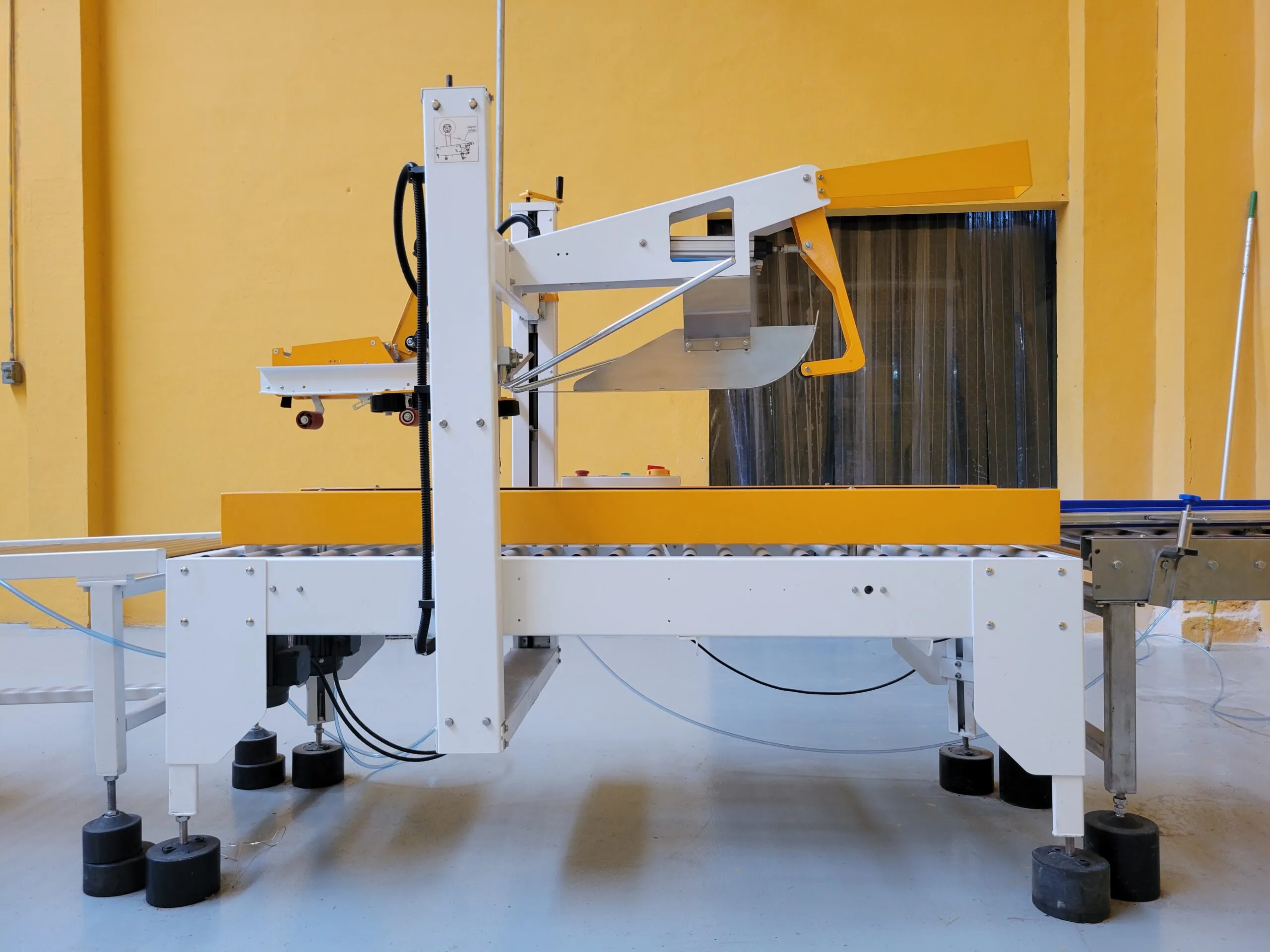
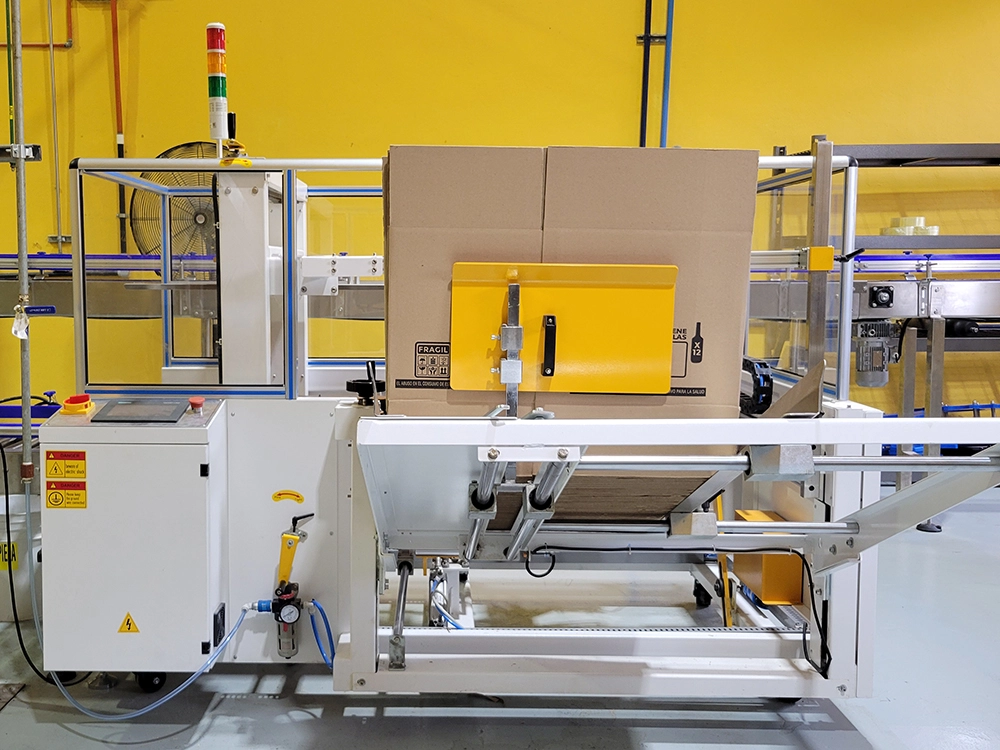
- Enhanced Flexibility and Scalability: Automated wine bottling lines can be easily adjusted to accommodate different bottle sizes, shapes, and label designs. This flexibility allows wineries to produce a variety of products without the need for extensive changeovers. As the winery grows, the automated system can be scaled up to handle increased production volumes. Additional modules can be added to the line to incorporate new features, such as automated case packing or palletizing. This scalability ensures that the winery can adapt to changing market demands and maintain a competitive edge.
Data Support and User Testimonials:
According to a recent study by the Wine Institute, wineries that have invested in automated bottling lines have seen a 20-30% reduction in production costs and a 15-20% increase in overall efficiency. These figures highlight the tangible benefits of automation and its impact on the bottom line.
Here’s what some of our clients have to say:
- "JND Water's automated bottling line has transformed our production process. We've seen a significant reduction in labor costs and a marked improvement in the consistency of our product." - John Smith, Vineyard Owner
- "The flexibility of the system has allowed us to produce a wider range of wines without the need for extensive changeovers. The support team at JND Water has been fantastic, providing timely assistance and ensuring that our system runs smoothly." - Jane Doe, Head Winemaker
Comparison with Manual Bottling Processes
How does automated wine bottling compare to manual methods? The contrast between automated and manual wine bottling processes is stark, particularly when considering efficiency, cost, and labor requirements. While manual bottling may seem appealing for small-scale or artisanal producers, the long-term benefits of automation often outweigh the initial investment. Let's examine a detailed comparison of these two approaches:
Efficiency:
Manual bottling is inherently slower and less consistent than automated bottling. In a manual process, each bottle is individually handled, filled, capped, labeled, and packed by hand. This is time-consuming and labor-intensive, limiting the number of bottles that can be processed in a given time frame. In contrast, automated bottling lines can process thousands of bottles per hour, significantly increasing throughput and reducing production time. The speed and precision of automated systems are unmatched by manual methods.
Cost:
While the initial investment in an automated bottling line may be higher than setting up a manual operation, the long-term cost savings can be substantial. Manual bottling requires a large workforce, leading to high labor costs. In addition to wages, there are expenses associated with training, benefits, and worker compensation. Automated systems require fewer personnel to operate, reducing labor costs and minimizing the risk of human error. Furthermore, automated systems can reduce product loss due to spillage and breakage, leading to additional cost savings.
Labor Requirements:
Manual bottling is heavily reliant on human labor, requiring a team of workers to perform each step of the process. This can be challenging to manage, especially during peak seasons when demand is high. Automated systems, on the other hand, require minimal human intervention. A small team of operators can oversee the entire process, monitoring the equipment and making adjustments as needed. This reduces the burden on the workforce and allows wineries to allocate resources more efficiently.
Accuracy and Consistency:
Maintaining accuracy and consistency is crucial in wine bottling to ensure that each bottle meets the required standards. Manual bottling is prone to human error, leading to variations in fill levels, cap tightness, and label placement. Automated systems use precise sensors and controls to ensure that each bottle is filled to the correct level, capped with the appropriate pressure, and labeled accurately. This level of precision is difficult to achieve with manual processes, resulting in a more consistent and high-quality product.
Hygiene and Sanitation:
Maintaining a clean and sanitary environment is essential in wine production to prevent contamination and ensure the safety of the product. Manual bottling processes can be difficult to keep clean, as workers come into direct contact with the bottles and equipment. Automated systems are designed with hygiene in mind, featuring easy-to-clean surfaces and enclosed components that minimize the risk of contamination. Automated cleaning cycles can be programmed to regularly sanitize the equipment, further reducing the risk of microbial growth.
Comparison Table:
| Feature |
Manual Bottling |
Automated Bottling |
| Efficiency |
Low |
High |
| Cost |
High (Labor Intensive) |
Lower (Reduced Labor) |
| Labor Requirements |
High |
Low |
| Accuracy |
Low |
High |
| Consistency |
Low |
High |
| Hygiene |
Difficult to Maintain |
Easy to Maintain |
Technical Specifications and Customization Options
What technical specifications and customization options are available for our wine bottling lines? JND Water understands that every winery has unique requirements and preferences when it comes to their bottling line. That's why we offer a wide range of technical specifications and customization options to ensure that our systems meet your specific needs. Here's a detailed look at the technical aspects and customization possibilities:
Technical Specifications:
- Filling Capacity: Our wine bottling lines can be configured to handle a variety of filling capacities, ranging from 1,000 bottles per hour to 10,000 bottles per hour or more. The filling capacity depends on the size and type of bottles being used, as well as the viscosity of the wine.
- Bottle Sizes: We can accommodate a wide range of bottle sizes, from small sample bottles to large magnum bottles. Our systems are designed to handle different bottle shapes, including round, square, and custom-shaped bottles.
- Filling Technology: We offer a variety of filling technologies, including gravity filling, vacuum filling, and pressure filling. The choice of filling technology depends on the type of wine being bottled and the desired level of precision. Gravity filling is suitable for free-flowing wines, while vacuum filling is ideal for delicate wines that require gentle handling. Pressure filling is used for carbonated wines and other beverages.
- Capping Options: We offer a range of capping options, including corking, screw capping, and crown capping. The choice of capping option depends on the type of closure being used and the desired level of security. Our capping machines are designed to apply closures with consistent pressure and torque, ensuring a tight seal.
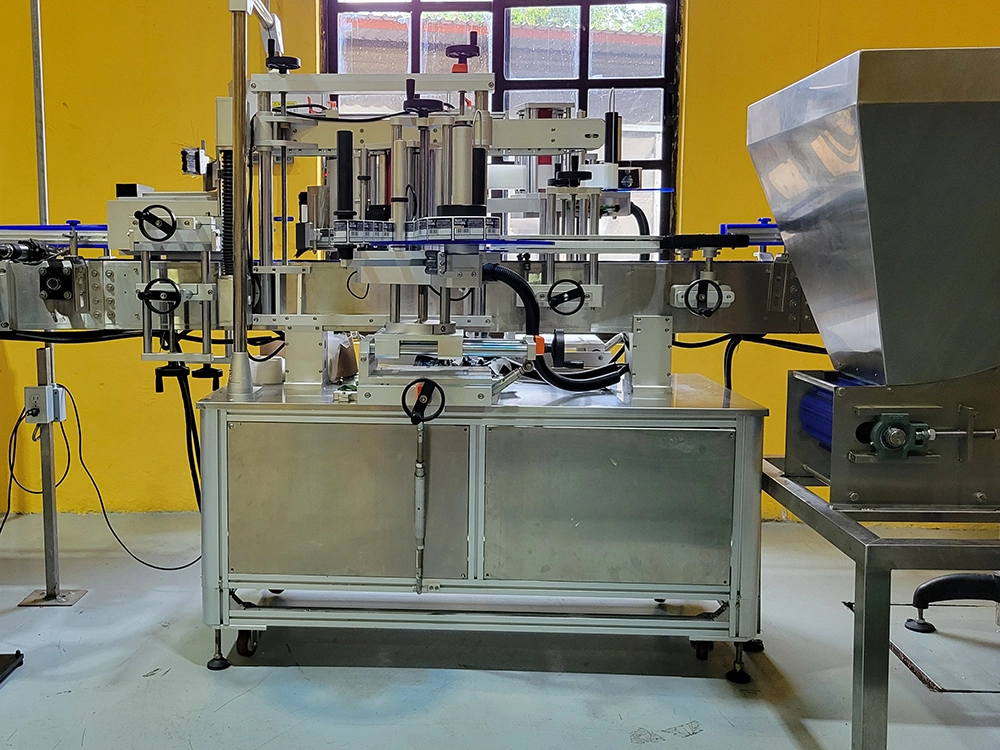
- Labeling Options: We offer a variety of labeling options, including pressure-sensitive labeling, wet glue labeling, and heat-shrink labeling. The choice of labeling option depends on the type of label being used and the desired aesthetic. Our labeling machines are designed to apply labels accurately and consistently, creating a professional finish.
- Materials: Our wine bottling lines are constructed from high-quality materials, such as stainless steel and food-grade plastics. These materials are durable, corrosion-resistant, and easy to clean, ensuring a long service life and minimizing the risk of contamination.
- Control Systems: Our systems are equipped with advanced control systems that allow operators to monitor and adjust the bottling process in real-time. The control systems feature user-friendly interfaces and intuitive controls, making it easy to operate the equipment.
Customization Options:
- Line Layout: We can customize the layout of the wine bottling line to fit your specific facility and production needs. Our engineers will work with you to design a layout that maximizes efficiency and minimizes space requirements.
- Filling Heads: We can add or remove filling heads to adjust the filling capacity of the line. This allows you to scale your production as your business grows.
- Automation Level: We can customize the level of automation to match your budget and production requirements. We offer everything from semi-automatic systems to fully automated lines.
- Specialty Modules: We can integrate specialty modules into the line to perform specific tasks, such as bottle rinsing, nitrogen purging, or case packing.
- Software Integration: Our systems can be integrated with your existing inventory management and production planning software, providing real-time data on production volumes and costs.
Technical Details and Product Manuals:
For detailed technical specifications and product manuals, please visit our website or contact our sales team. We are happy to provide you with all the information you need to make an informed decision about your wine bottling line.
Case Studies and Client Testimonials
Can you provide examples of successful wine bottling line implementations? At JND Water, we believe that real-world examples speak louder than words. Our commitment to providing top-tier wine bottling solutions is reflected in the success stories of our clients. Here are a few case studies and client testimonials that showcase the impact of our wine production line on their businesses:
Case Study 1: Streamlining Production at a Boutique Winery
- Client: A small, family-owned winery in Napa Valley known for its premium Cabernet Sauvignon.
- Challenge: The winery was struggling to meet growing demand with its manual bottling process. Production was slow, labor costs were high, and inconsistencies in fill levels and labeling were affecting product quality.
- Solution: JND Water designed and installed a semi-automated wine bottling line tailored to the winery's specific needs. The line included an automatic bottle rinser, a four-head filler, a corking machine, and a pressure-sensitive labeler.
- Results:
- Production capacity increased by 150%.
- Labor costs were reduced by 40%.
- Fill level consistency improved by 98%.
- The winery was able to meet growing demand and expand its distribution network.
- Client Quote: "JND Water's bottling line has been a game-changer for our winery. We're now able to produce more wine, more efficiently, and with better quality control. The investment has paid for itself in less than two years."
Case Study 2: Enhancing Efficiency at a Large-Scale Wine Producer
- Client: A large-scale wine producer in Australia with multiple vineyards and a high-volume bottling operation.
- Challenge: The producer was looking to improve the efficiency of its bottling line, reduce waste, and minimize downtime.
- Solution: JND Water installed a fully automated wine bottling line with advanced features such as automatic bottle inspection, precision filling, and integrated case packing. The line was designed to handle a variety of bottle sizes and shapes.
- Results:
- Bottling line efficiency increased by 30%.
- Product waste was reduced by 15%.
- Downtime was minimized due to the line's robust design and reliable performance.
- The producer was able to reduce its carbon footprint by optimizing energy consumption.
- Client Quote: "JND Water's automated bottling line has exceeded our expectations. It's helped us to streamline our operations, reduce costs, and improve our environmental performance. We're very pleased with the results."
Client Testimonials:
- "We were looking for a reliable and efficient wine bottling line that could handle our growing production volumes. JND Water delivered exactly what we needed. Their team was professional, responsive, and easy to work with. We highly recommend them." - Sarah M., Winery Owner
- "JND Water's bottling line has helped us to improve the quality and consistency of our wine. The system is easy to operate and maintain, and the support team is always available to answer our questions. We're very happy with our investment." - David L., Head Winemaker
- "We've been using JND Water's bottling line for several years now, and it's been a great asset to our business. The system is durable, reliable, and easy to customize. We're confident that it will continue to serve us well for many years to come." - Michael B., Production Manager
FAQ Section with Detailed Answers
Do you have questions about our wine bottling lines? We've compiled a list of frequently asked questions to help you understand our products and services better. Here are some of the most common questions we receive, along with detailed answers:
-
What is the typical cost of a wine bottling line?
The cost of a wine bottling line varies depending on several factors, including the level of automation, the filling capacity, and the customization options. A semi-automatic line can range from $50,000 to $150,000, while a fully automated line can cost between $200,000 and $500,000 or more. We recommend contacting our sales team for a custom quote based on your specific requirements.
-
How long does it take to deliver and install a wine bottling line?
The delivery and installation time depends on the complexity of the system and our current production schedule. Typically, it takes between 8 and 12 weeks from the time of order to the completion of installation. We will work with you to schedule the installation at a time that is convenient for your business.
-
What type of maintenance is required for a wine bottling line?
Regular maintenance is essential to ensure the reliable performance of your wine bottling line. We recommend following a preventative maintenance schedule that includes tasks such as cleaning, lubrication, and inspection. We also offer maintenance contracts to provide ongoing support and ensure that your system is always running at its best.
-
What type of training is provided for operators of the wine bottling line?
We provide comprehensive training for operators of our wine bottling lines. Our training program covers all aspects of the system, including operation, maintenance, and troubleshooting. We can provide on-site training or training at our facilities, depending on your preference.
-
What type of warranty is offered on your wine bottling lines?
We offer a standard warranty on all of our wine bottling lines. The warranty covers defects in materials and workmanship for a period of one year from the date of installation. Extended warranties are also available.
-
Can your wine bottling lines handle different types of closures?
Yes, our wine bottling lines can handle a variety of closures, including corks, screw caps, and crown caps. We offer different capping machines to accommodate each type of closure.
-
Can your wine bottling lines be integrated with existing equipment?
Yes, our wine bottling lines can be integrated with existing equipment, such as bottle washers, labelers, and case packers. We can work with you to design a system that seamlessly integrates with your current operations.
Comparison with Competitor Products
How do JND Water's wine bottling lines stack up against the competition? Choosing the right wine bottling line is a critical decision that can significantly impact your winery's efficiency, quality, and profitability. At JND Water, we are committed to providing our customers with the best possible solutions, and we believe that our products offer several advantages over the competition. Here's a comparison of our wine bottling lines with those of our competitors:
JND Water vs. Competitor A:
- Technology: JND Water utilizes cutting-edge filling and capping technologies that ensure precise and consistent results. Competitor A's systems are based on older technologies that may not be as accurate or efficient.
- Customization: JND Water offers a wide range of customization options to meet the specific needs of each customer. Competitor A's systems are more standardized and may not be as flexible.
- Service and Support: JND Water provides comprehensive service and support, including installation, training, and ongoing maintenance. Competitor A's service and support may be limited.
- Price: JND Water's prices are competitive with those of Competitor A, but our systems offer better value due to their advanced technology and superior service.
JND Water vs. Competitor B:
- Reliability: JND Water's wine bottling lines are known for their reliability and durability. Competitor B's systems have been reported to have higher rates of downtime and maintenance.
- Hygiene: JND Water's systems are designed with hygiene in mind, featuring easy-to-clean surfaces and enclosed components that minimize the risk of contamination. Competitor B's systems may not meet the same standards of hygiene.
- Automation: JND Water offers a wide range of automation options, from semi-automatic to fully automated lines. Competitor B's systems are primarily semi-automatic and may not be suitable for high-volume production.
- Price: JND Water's prices are higher than those of Competitor B, but our systems offer better value due to their reliability, hygiene, and automation options.
JND Water vs. Competitor C:
- Innovation: JND Water is committed to innovation and is constantly developing new technologies to improve the performance of our wine bottling lines. Competitor C's systems are based on older designs and may not be as innovative.
- Flexibility: JND Water's systems are designed to handle a wide range of bottle sizes and shapes. Competitor C's systems may be limited to certain bottle types.
- Integration: JND Water's systems can be easily integrated with existing equipment and software. Competitor C's systems may not be as compatible with other systems.
- Price: JND Water's prices are similar to those of Competitor C, but our systems offer better value due to their innovation, flexibility, and integration capabilities.
Why Choose JND Water?
When you choose JND Water, you are choosing a partner that is committed to your success. We offer:
- Cutting-edge technology
- Customized solutions
- Comprehensive service and support
- Reliable and durable systems
- Hygienic designs
- A commitment to innovation
We are confident that our wine bottling lines will help you to improve your efficiency, quality, and profitability. Contact us today to learn more about our products and services.
Product introduction
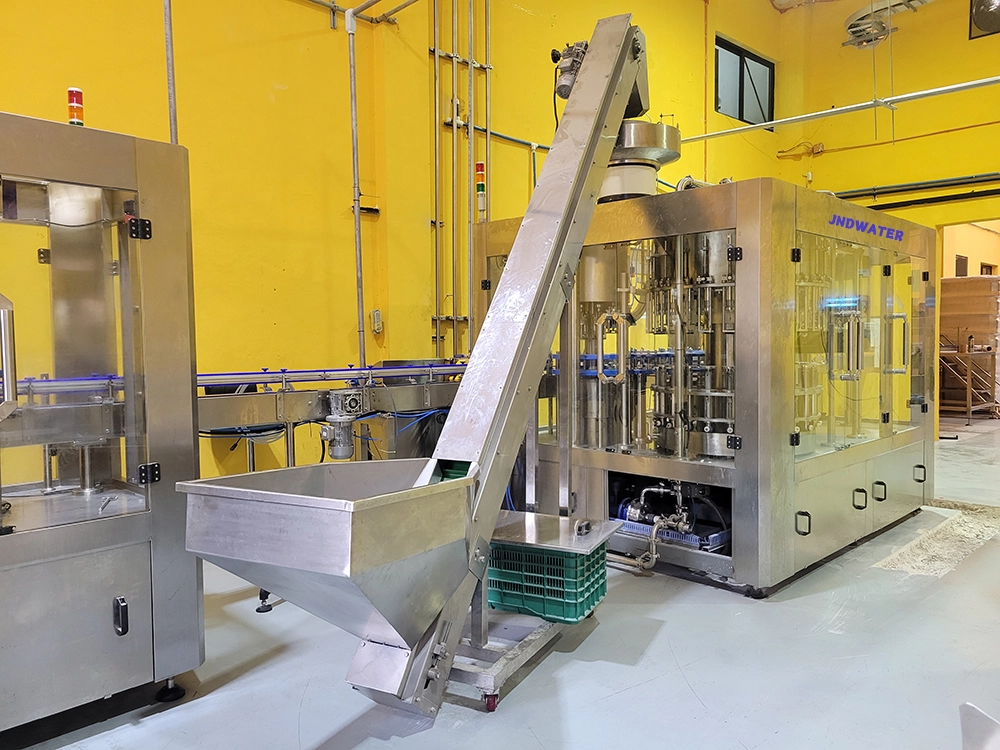
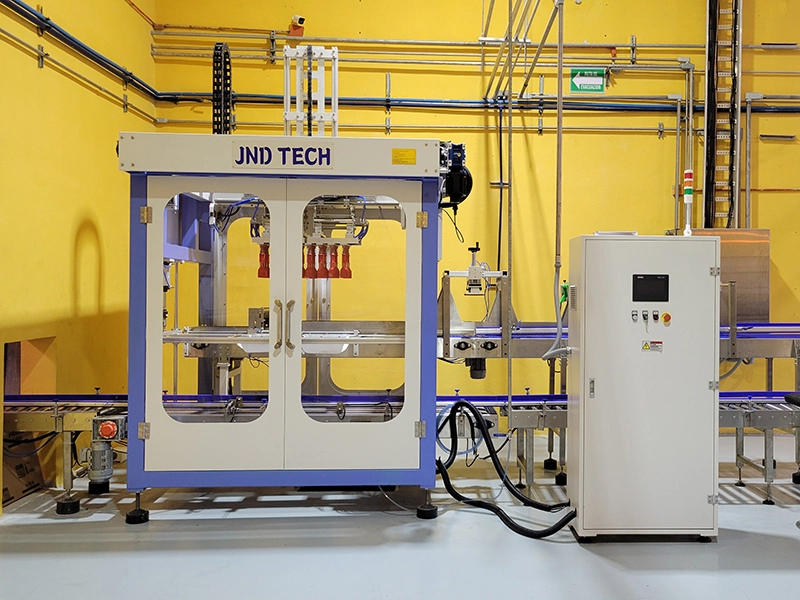
The jndwater wine production line is an integrated production line equipment for producing bottled wine. The wine filling line can be automated from bottle unloading to bottle washing, filling, capping, labeling, packaging, and palletizing, greatly improving production efficiency.
The Wine bottling line can be filled with non-carbonated alcoholic beverages, such as: wine, vodka, whiskey, white wine, medicinal wine, yellow wine, rice wine, etc.
Features
High degree of automation and low labor intensity.
The parts in contact with materials are made of food-grade high-quality stainless steel, which is corrosion-resistant and easy to clean.
Equipped with a complete overload protection device, it can effectively protect the safety of the machine and operators.
The whole machine operation adopts advanced touch screen control, and the production speed, output count, fault category, fault occurrence point, etc. are all displayed on the screen. And it can automatically count the time of fault occurrence, fault category and other information.
The main electrical components are imported products from world-renowned companies such as ABB, Siemens, FESTO, Omron, Mitsubishi, etc.
Process flow
Automatic bottle unloading–conveyor system–automatic bottle feeding–automatic cleaning–automatic filling machine–covering–automatic cover washing–automatic capping–automatic labeling–automatic packaging–automatic palletizing
Wine bottling equipment complete line equipment list
Water making machine,Depalletizer,Wne filling machine,Labeling machine,Marking Machine,Palletizing machine,Conveyor,Packing machine,Mixing tank,Storage tank
Applications
Food and beverage plant
Winery
Wine factory