Get the label wrong and the bottle still leaves the factory — just crooked, wrinkled or half off. Labeling is the last thing that happens before shipping, so a bad labeling machine shows up as rework, rejected batches and downtime on every changeover. Buy it wrong and you will know within the first pallet.
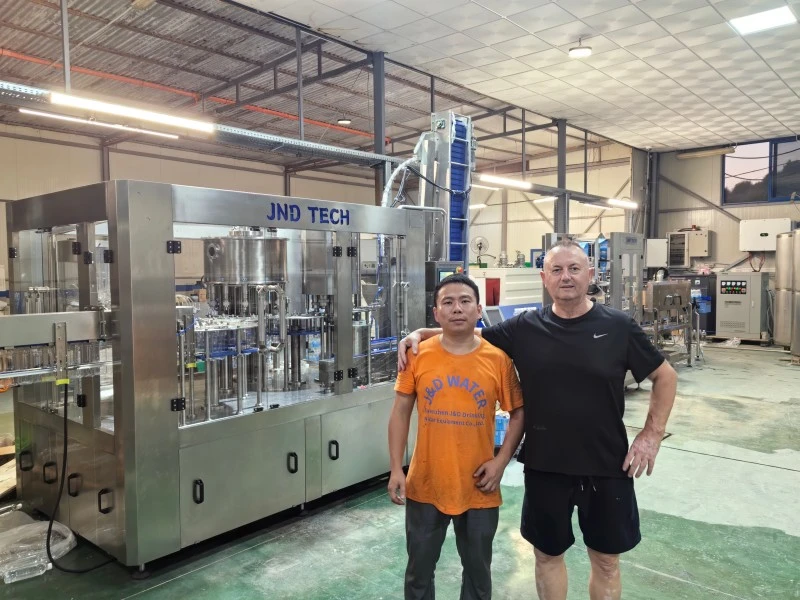
We are JNDWATER. We build water and beverage filling lines, and a bottle labeling machine is the last station on most of them — after the filling machine, the capping machine and the coder. You will see this station written several ways: labeling machine in the US, labelling machine in the UK, and in the trade you will hear labeler or labeller. They all mean the same thing, and this guide uses the full name. It walks through what actually decides the choice: your label type, your bottle shape, your speed, and the tolerance your brand can live with.
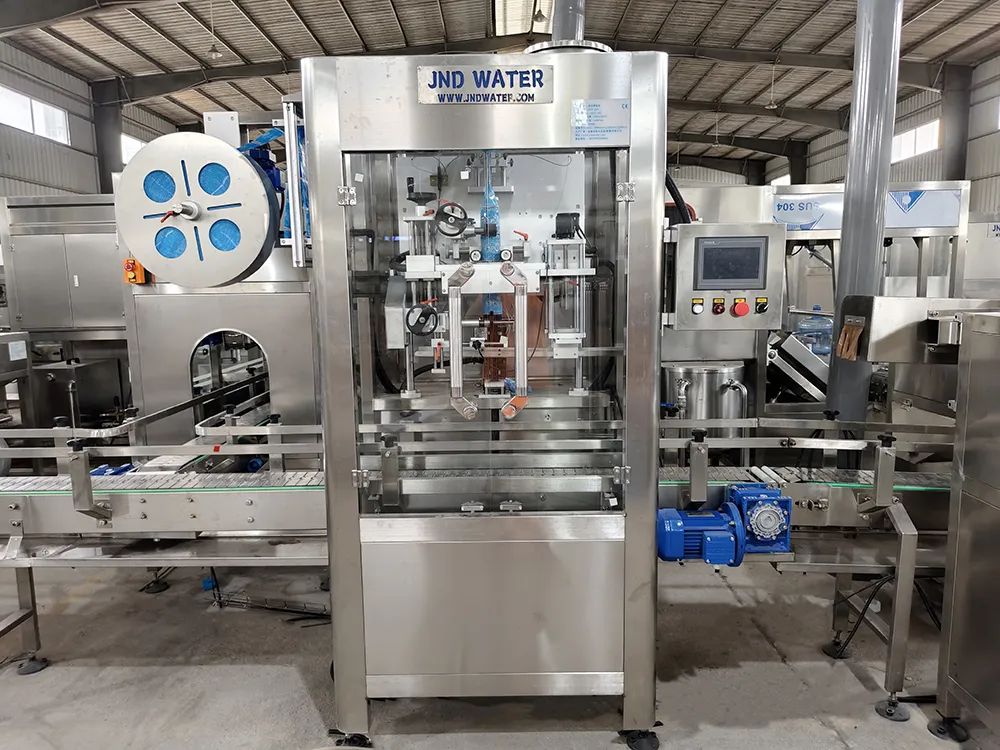
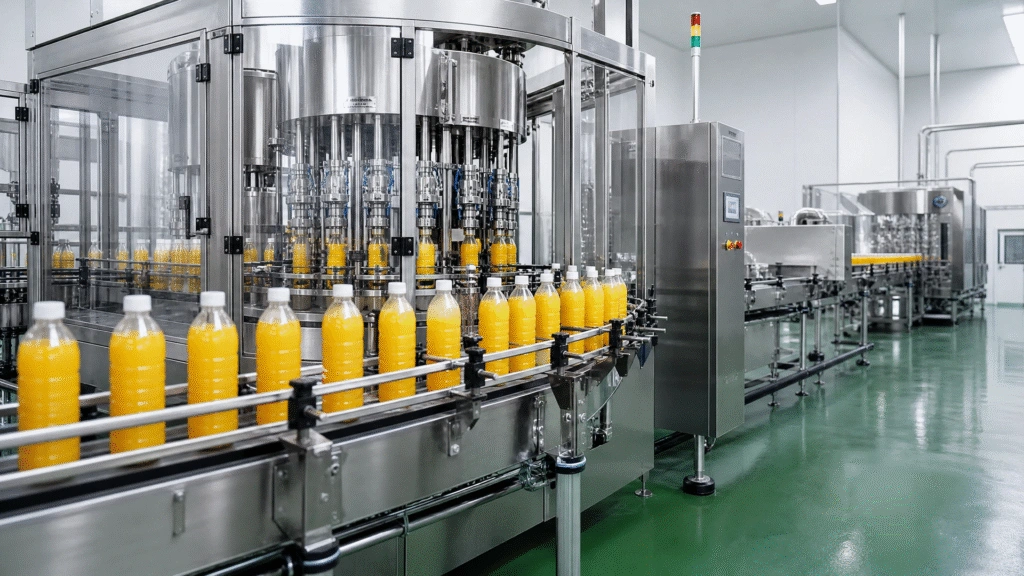
JNDWATER automatic bottle labeling machine applying wrap-around labels to round PET bottles
Match the Label First, Then the Machine
People shop for a “labeling machine” before deciding what label they will run. That order is backwards. The label format rules out half the machines on the market before you ever compare prices.
| Label type | How it applies | Best for | Watch out for |
|---|---|---|---|
| Self-adhesive / wrap-around | Roll-fed paper or film label wrapped around the bottle | Water, juice, CSD, most round PET and glass | Needs stable bottle rotation and a clean surface |
| Front & back (two-side) | Two labels applied to opposite sides | Square bottles, jars, household chemicals | Alignment between the two labels must be set precisely |
| Shrink sleeve | Full-body sleeve shrunk over the whole bottle | Tapered or irregular bottles, premium drinks | Separate sleeve applicator + shrink tunnel; higher running cost |
| Roll-fed pre-glued | Label fed from a magazine and glued | High-speed glass lines | Glue system needs maintenance; less common in small plants |
Rule of thumb we give every buyer: decide the label and bottle shape before you look at a machine. If you plan to move to shrink sleeve later, a wrap-around labeling machine bought today will not do that job — and no amount of adjustment changes it.
The Bottle Shape Decides the Labeling Method
Round bottles are the easy case. Everything else adds work, and the price moves with it.
- Round bottles — wrap-around or self-adhesive labels spin on with high accuracy. This is the most forgiving setup and the one most water plants run.
- Square and rectangular bottles — need two-side labeling or precise orientation so the label sits flat on the face. Corner misalignment is the usual complaint.
- Tapered and conical bottles — the label has to follow a changing diameter. Either a special applicator or a shrink sleeve, depending on the look you want.
- Jars (wide mouth) — a jar labeling machine uses a different wrap mechanism and heavier roller pressure than a machine built for slim bottles.
- Cans — aluminum can labeling needs a rigid, non-squeeze handling system so the can is not dented during rotation.
If you run more than one shape, say so at the quoting stage. A machine built for round bottles can usually be fitted to handle jars with a change part, but it will never handle a tapered bottle cleanly.
Speed and Output: What BPH Really Means
Labeling machine output is quoted in bottles per hour (BPH) or bottles per minute (BPM). Two numbers matter more than the headline: sustained output and changeover time. A machine rated at 6,000 BPH that takes 90 minutes to change label reels is slower in real life than a 4,000 BPH unit that swaps in ten minutes.
| Class | Typical output | Operation | Who buys it |
|---|---|---|---|
| Semi-automatic labeling machine | 1,000–3,600 BPH | Manual bottle feed, automatic label apply | Small plants, short runs, tight budget |
| Automatic linear labeling machine | 3,000–8,000 BPH | In-line with conveyor, one operator | Growing water and juice plants |
| Automatic rotary labeling machine | 8,000–24,000 BPH | Full line integration, high speed | High-volume beverage factories |
| Shrink sleeve line | 4,000–18,000 BPH | Sleeve applicator + steam tunnel | Premium and shaped-bottle brands |
A common mistake is matching the labeling machine to the filling machine’s top speed. Size the labeling machine a little above your normal running rate — it is the last station, and when it stops, the whole line backs up.
The Details That Cause Wrinkles and Misalignment
Almost every labeling complaint comes from five things. None of them is the label itself.
Label placement accuracy — good machines hold ±0.5–1 mm. If the label edge position wanders, the wrap mechanism or the sensor is the cause, not the operator.
Bottle stability on the conveyor — a bottle that wobbles or rotates on its own will produce skewed labels at high speed.
Bottle rotation control — the labeling machine must know where the bottle’s seam or logo is. This is what an orientation sensor is for.
Label tension and web control — uneven tension wrinkles the label before it ever touches the bottle.
Surface cleanliness — condensation or dust on the bottle stops the adhesive from bonding, so labels lift at the corners.
When you ask for a demo, ask them to run your bottle with your label reel. A machine that labels a perfect demo bottle can still fail on your production bottles if the shape or the label material is different.
Think of the Line, Not Just the Labeling Machine
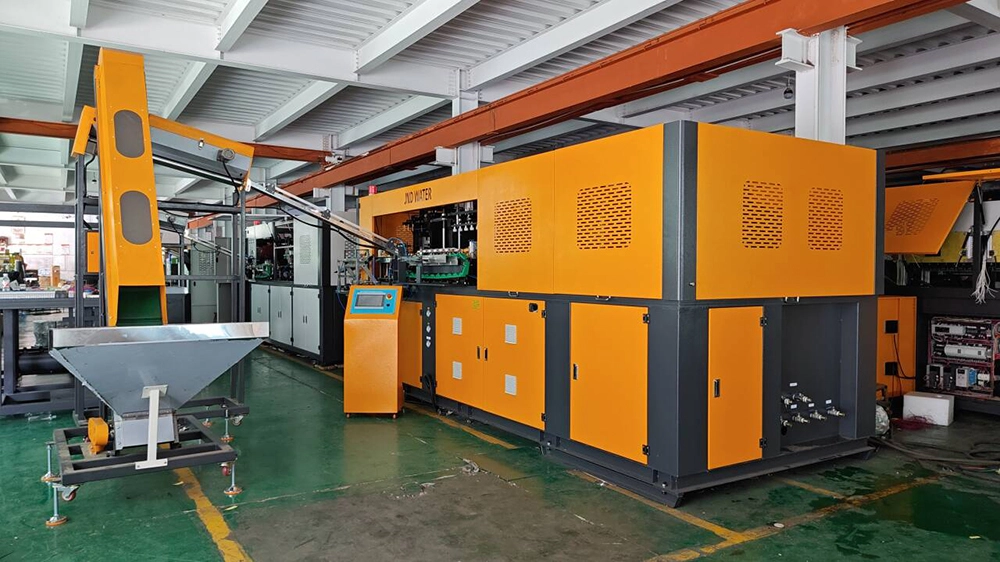
A labeling machine rarely runs alone. On a real line it sits downstream of the filling machine and the capping machine, and upstream of the case packer. Plan that flow now so you are not rebuilding conveyors in year two:
Filling machine — fills the bottle to the target volume; its speed sets the pace for everything after it. On small lines a combined bottle filling and capping machine covers both stations in one frame.
Capping machine — closes the bottle with controlled torque so the seal is consistent and the cap is not over-tightened. Screw capping and press-on capping use different heads, so match it to your cap.
Coder / printer — date and batch codes, usually before or after labeling depending on the label type.
Labeling machine — the station this article is about.
Inspection — a sensor that rejects a bottle with a missing or crooked label before it reaches the case.
One honest note: our core business is water and beverage filling lines, and labeling is the station we integrate most often. We are not a dedicated label-press company — we configure and supply the labeling machine as part of the line — together with the filling machine and the capping machine around it — sized to your bottle and your speed, rather than selling a standalone machine in isolation.
Bottle Labeling Machine Price Ranges in 2026
The ranges below are what we see across the market in 2026, in USD. They are budgets, not quotes — final price depends on speed, bottle shape, label type, number of labeling stations and what else is in the line.
| Setup | Typical output | Who buys it |
|---|---|---|
| Semi-automatic labeling machine | 1,000–3,600 BPH | Startups, small batch, hand-fed bottles |
| Automatic linear labeling machine | 3,000–8,000 BPH | Small to mid water and juice plants |
| Automatic rotary labeling machine | 8,000–24,000 BPH | High-volume beverage factories |
| Labeling line with feeder + coder + inspection | 3,000–12,000 BPH | Factories wanting label-to-case in one flow |
Note for us at JNDWATER: replace these with your own quotation bands before publishing, or remove the table and describe pricing as configuration-based.
Questions to Ask Before You Order
Send this list to any supplier. Their answers will separate a labeling solution from a brochure pitch:
- What label placement accuracy do you guarantee — and is it on my bottle, not a demo bottle?
- Will this machine handle my most difficult bottle shape, not just the easy one?
- How long does a bottle-size or label changeover take, and can settings be stored as recipes?
- Is the price for the labeling machine only, or does it include the conveyor, coder and inspection?
- What is the real sustained output at my bottles per minute, not the headline maximum?
- Can you run my actual bottle and label sample before I commit?
FAQ
How much does a bottle labeling machine cost in 2026?
Budget roughly $3,000–$9,000 for a semi-automatic machine, $12,000–$28,000 for an automatic linear machine, and $28,000–$60,000 for a high-speed rotary machine. A full labeling line with feeder, coder and inspection runs higher. Speed, bottle shape and label type drive the final price more than anything else.
Can one labeling machine handle both round and square bottles?
Often yes, with change parts and a different wrap mechanism, but the accuracy will be better on the shape the machine was built for. If you run both regularly, tell the supplier at the quoting stage so the machine is configured for your main shape and adapted for the second.
How is a jar labeling machine different from a bottle labeling machine?
A jar labeling machine uses heavier roller pressure and a wider wrap path to handle the jar’s larger diameter and weight. A machine tuned for slim PET water bottles will usually struggle with a heavy glass jar, so the two are specified differently.
Why are my labels coming out wrinkled or crooked?
Wrinkling and misalignment almost always come from label tension, bottle stability on the conveyor, or the orientation sensor — not the label material. Check that the bottle does not wobble, that web tension is even, and that the sensor is reading the bottle’s reference point correctly.
Do I need a self-adhesive or a shrink sleeve labeling line?
Choose self-adhesive wrap-around labels for standard round bottles — they are cheaper to run and simpler to maintain. Choose shrink sleeve if you have tapered or irregular bottles, or you want a full-body premium look. Shrink sleeve needs an extra applicator and steam tunnel, so it costs more to buy and to run.
Bottom Line
Choosing a bottle labeling machine comes down to four things — your label type, your bottle shape, your real running speed, and the tolerance your brand can accept. Decide those before you compare prices, and you will not be replacing the machine when you move to a new bottle.
Tell us your bottle shape, label type, and bottles per minute. We supply the full line around the label — the filling machine, the capping machine, the labeling machine and the conveyors between them — and our team will size the right machine for your line and send an itemized quotation, with no hidden line items.