Freshwater resources around the world are becoming increasingly scarce. Whether it’s large seawater desalination plants or small water supply stations on islands, seawater desalination is providing clean drinking water to millions of people Seawater desalination refers to the use of specific techniques to remove salt and impurities from seawater, transforming it into drinkable fresh water.
Seawater desalination technology: reverse osmosis vs thermal distillation
- Reverse osmosis technology
Reverse seawater equipment is currently the most widely used seawater desalination technology, accounting for over 70% of global seawater desalination capacity.
Principle: Using a semi permeable RO membrane, only water molecules are allowed to pass through under pressure higher than the osmotic pressure, while impurities such as salt, bacteria, viruses, heavy metal ions, etc. in seawater are trapped on the other side of the membrane.
Simply put, the reverse osmosis machine uses a high-pressure pump to push seawater towards the reverse osmosis membrane, where water molecules are squeezed into fresh water and salt is trapped and discharged with concentrated water.
Key components :
High pressure pump: Provides the pressure required to overcome osmotic pressure (typically 5.5-8.0 MPa)
Reverse Osmosis Membrane : Core Separation Element, Common Brands include Dow, Heidelberg, and Dongli
Preprocessing system : Multi media filtration, activated carbon filtration, precision filtration, scale inhibitor addition
- Thermal distillation
Thermal distillation involves heating seawater to evaporate it, and then condensing the steam into fresh water,
Multi stage flash evaporation: After heating seawater, it is sent to a flash evaporation chamber with stepwise pressure reduction. Part of the seawater vaporizes instantly, and the steam is collected after condensation.
Multi effect distillation: Steam is passed into the first effect evaporator to heat seawater, and the secondary steam generated serves as the heat source for the next effect. The thermal energy is gradually utilized, resulting in higher efficiency.
Reverse osmosis method: Low energy consumption, moderate investment, and small footprint, it is currently the preferred choice for new construction projects
Thermal distillation: suitable for scenarios with cheap waste heat, with extremely high water quality but higher energy consumption and investment
Complete process flow of seawater desalination
Step 1: Water intake and pretreatment
Firstly, pre-processing is a crucial step in protecting reverse osmosis equipment. Preprocessing typically includes:
Multi media filtration: removing fine particles through quartz sand and anthracite filter layers
Precision filtration: 5 μ m or 1 μ m filter element, serving as the final protective barrier for the RO membrane
Scale inhibitor addition: prevent calcium and magnesium ions from scaling on the membrane surface
Step 2: High pressure reverse osmosis desalination
The pre treated seawater enters the core desalination unit. The high-pressure pump of industrial reverse osmosis equipment pressurizes seawater to 5.5-8.0 MPa and sends it into the reverse osmosis membrane module. Water molecules pass through the membrane to become fresh water, while salts and impurities are intercepted to form concentrated saltwater and discharged.
For large-scale projects, reverse osmosis machines are typically equipped with energy recovery devices – which recover high-pressure energy from the concentrated water side and transfer it to the feed seawater, reducing overall energy consumption by 30% -50%.
Step 3: Post processing and stabilization
The water produced by reverse osmosis is weakly acidic with extremely low mineral content and requires post-treatment before it can be used as drinking water
PH adjustment: Add alkaline solution (such as sodium hydroxide, lime) to adjust the pH to 7.5-8.5
Re mineralization: adding mineral salts such as calcium carbonate to improve taste
Disinfection: UV sterilization or chlorine disinfection to ensure microbial safety
Step 4: Discharge of Concentrated Saltwater
The concentrated saltwater produced during the desalination process (with a salinity of about twice that of seawater) needs to be properly discharged. Usually discharged back into the ocean through a diffuser to ensure rapid dilution and reduce the impact on marine ecology.
Application scenarios
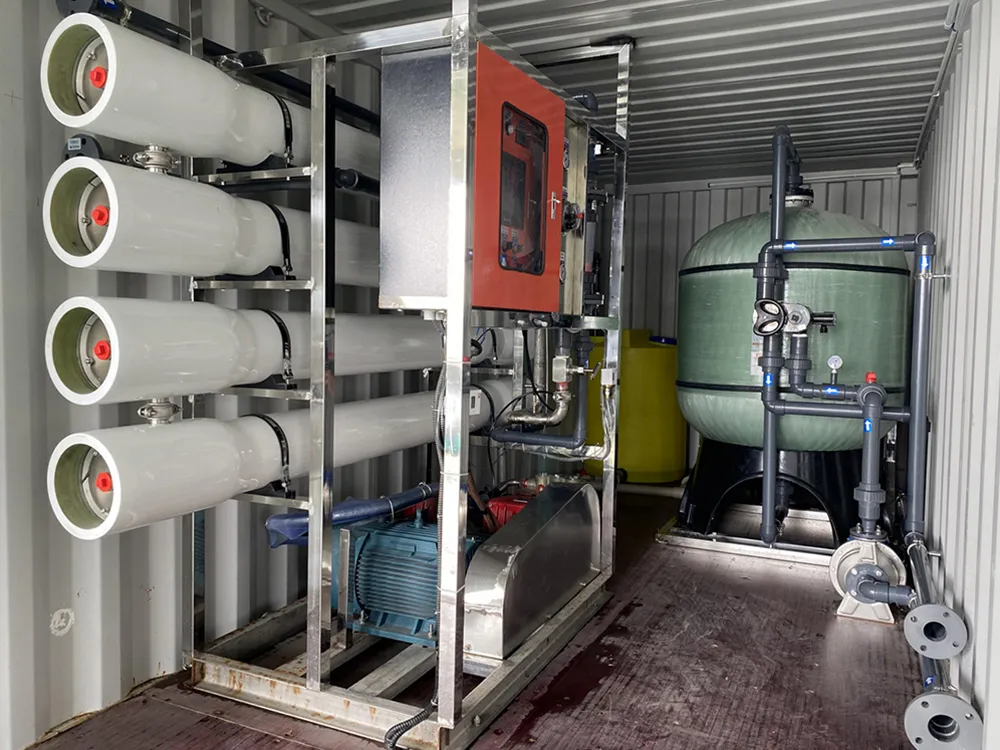
Island water supply : containerized seawater desalination equipment
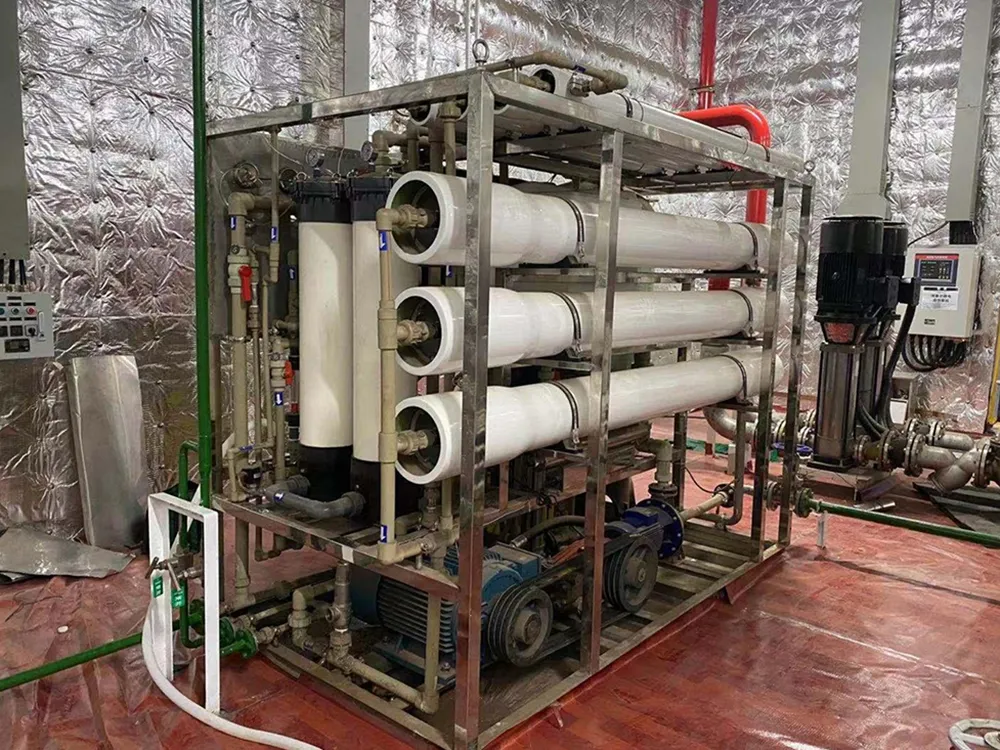
Ship applications: ocean going cargo ships, yachts, with high requirements for equipment anti-corrosion
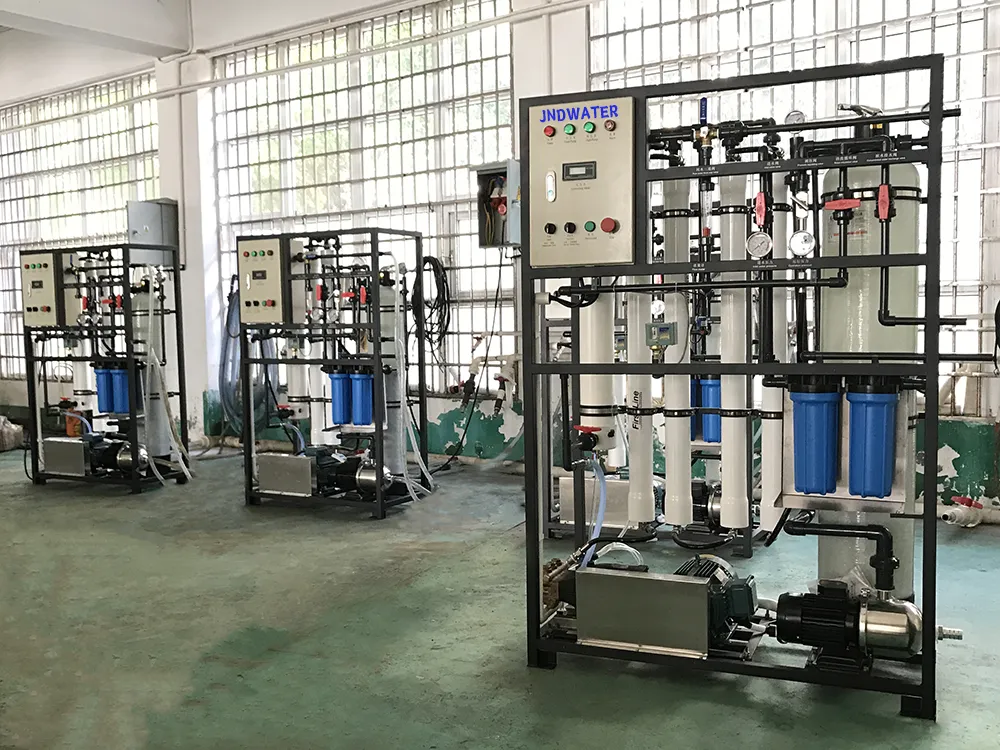
Coastal industries: power plants, chemical plants, require a large amount of high-purity water, and industrial reverse osmosis equipment can provide stable process water.
Municipal water supply: Large scale seawater desalination machines can meet the daily water needs of several residents
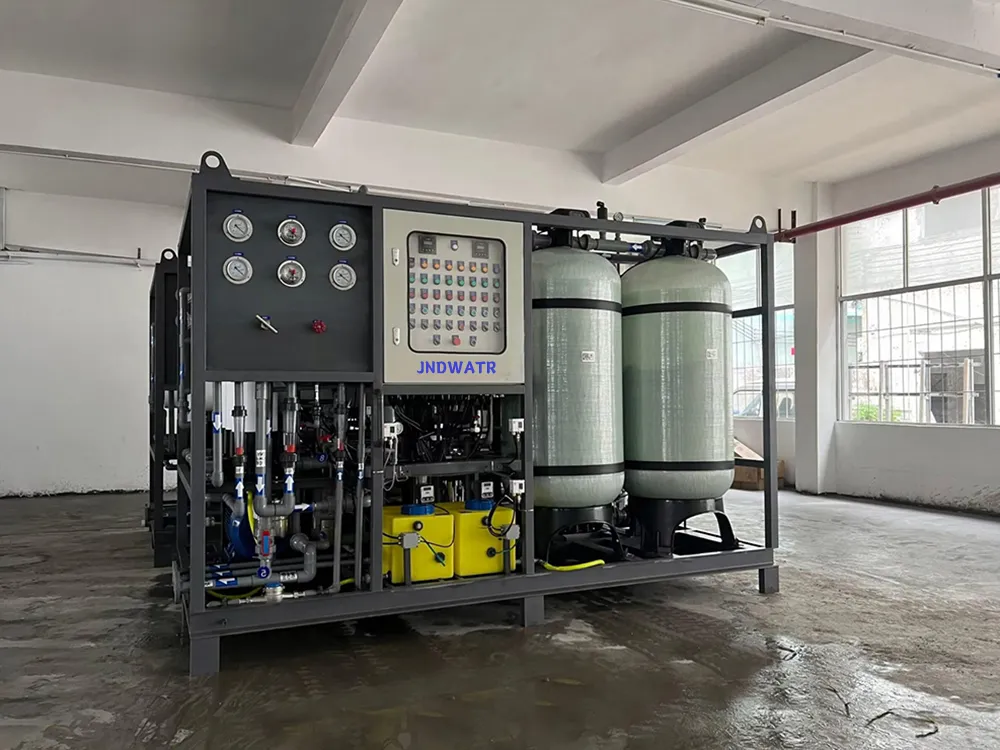
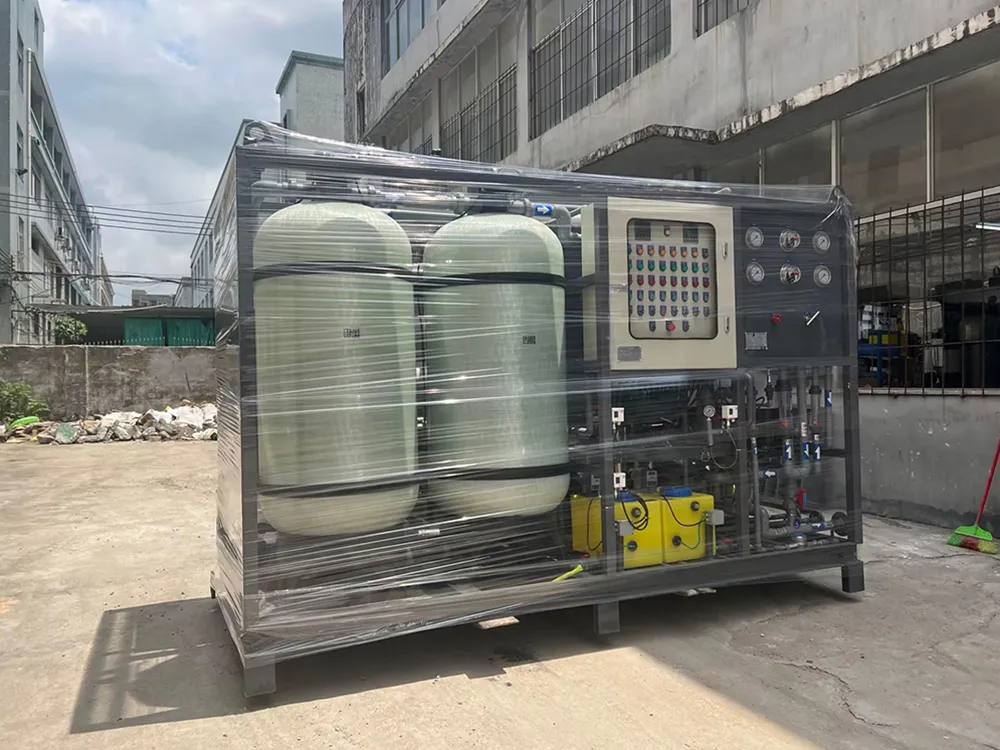
Analysis of operating costs
Energy cost: The electricity consumption per ton of water for reverse osmosis seawater desalination is usually 3-5 kWh, and with energy recovery, it can be reduced to 2.5-3.5 kWh, which is the largest component of operating costs.
Membrane replacement cost: Reverse osmosis membranes are usually replaced every 3-5 years, accounting for approximately 10% -15% of total operating costs.
Chemical consumption: scale inhibitors, reducing agents, cleaning agents, etc., accounting for 5% -10% of the total operating costs.
Manual and maintenance: Equipment with high automation requires less manual labor, mainly including regular inspections, membrane cleaning, and instrument calibration.
The comprehensive cost per ton of water can be as low as 0.5-0.8 US dollars per ton for large-scale projects (>100000 tons/day), and typically 1.0-2.0 US dollars per ton for small and medium-sized projects.
Seawater desalination has become a core solution to global water scarcity, and reverse osmosis technology is currently the mainstream choice in the market. From pre-treatment of water intake, high-pressure reverse osmosis desalination, to stable effluent after post-treatment, each step directly affects the operational efficiency and water quality of the system.
Whether it is purchasing small seawater desalination machines for island resorts or constructing large-scale industrial reverse osmosis equipment for coastal cities, reasonable process design, reliable selection of reverse osmosis equipment, and professional operation and maintenance management are all key factors for project success.
As a professional water treatment equipment supplier, JNDWATER can provide you with full process services from scheme design, equipment manufacturing to installation and commissioning. If you have a need for seawater desalination or water treatment projects, please feel free to contact us at any time for technical solutions and investment estimates.