Share this:
Water Pouch Packing Machine
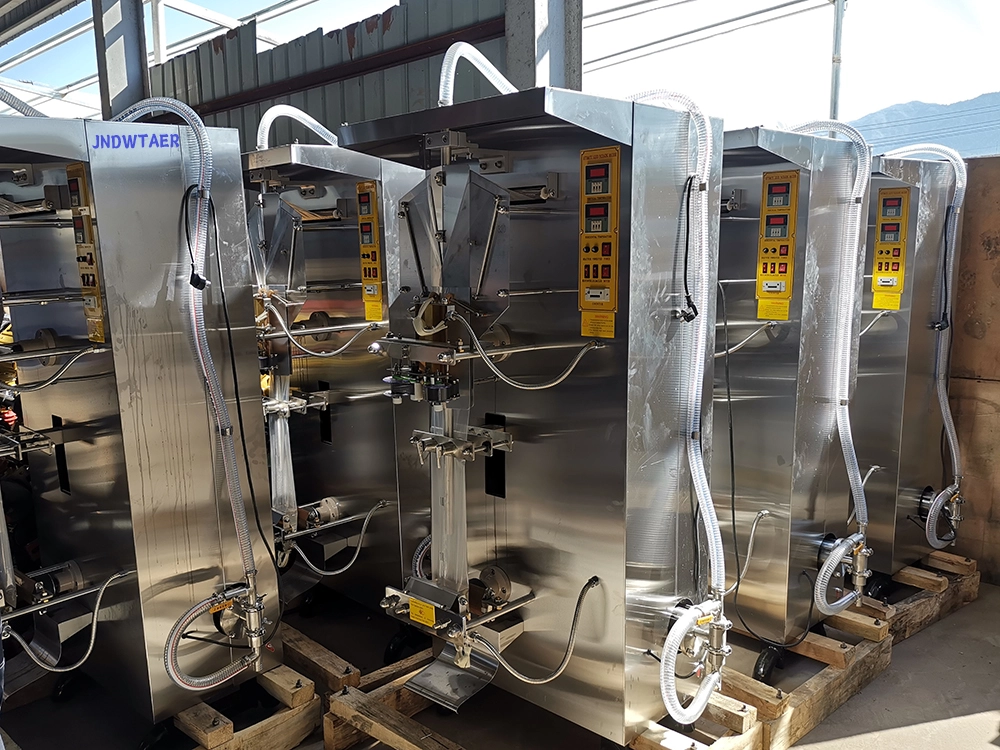
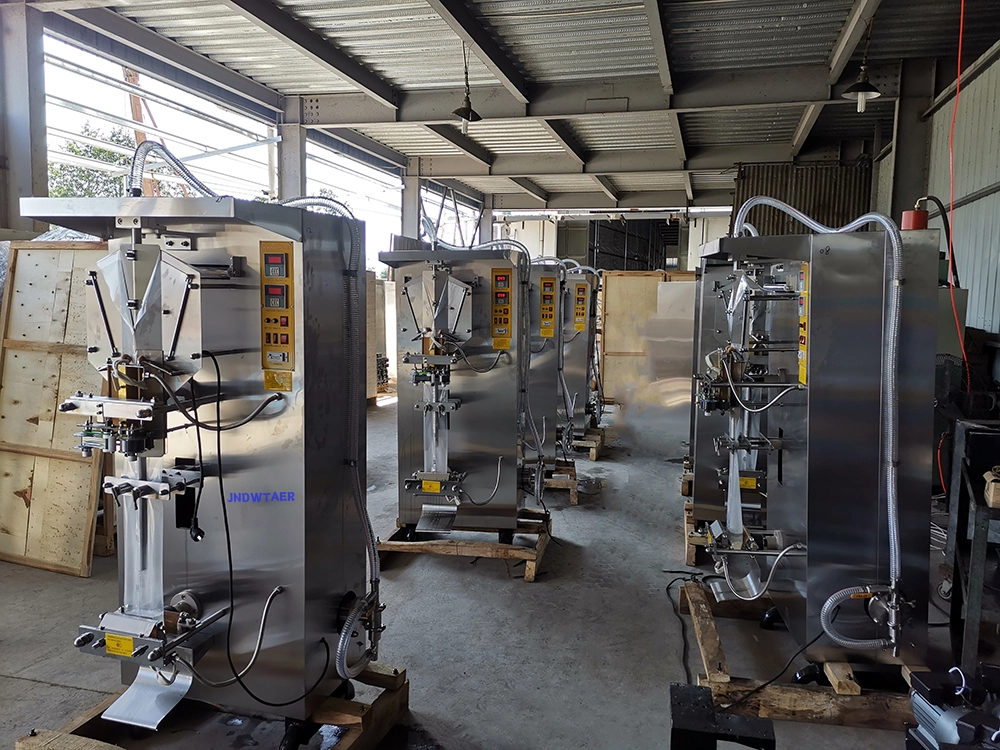
The Jndwater Water Pouch Packing Machine is used for packaging drinking water, purified water, mineral water, etc.the water packet machine is a packaging device that fills materials into plastic PE bags and automatically seals and shapes them. The water pouch filling machine can also be used to package items such as milk, soy milk, soy sauce, vinegar, and traditional Chinese medicine.
Water Pouch Packing Machine Detailed Description
One leaking pouch can look like a small defect, but thousands of weak seals can quietly drain a water business through film waste, product loss, repacking labor, customer complaints, and downtime. That is why a water pouch packing machine should never be chosen by price alone. The right system must match your pouch volume, roll film, target output, water treatment capacity, factory utilities, and maintenance ability.
A water pouch packing machine forms, fills, seals, cuts, and discharges drinking water pouches from roll film. It is commonly used for sachet water, purified water pouches, mineral water pouches, and compact drinking water packaging where lightweight distribution, affordable unit cost, and fast market entry matter.
For many buyers, the search starts with a simple question: “Which pouch water packing machine should I buy?” In practice, the better question is: “Which complete production setup will keep pouch quality stable after the first week, the first month, and the first busy season?” That wider view matters because pouch water production depends on more than the packing unit. It also depends on treated water quality, stable pressure, compatible film, trained operators, and supplier support.
If you are planning a sachet water project, send your pouch size, target capacity, water source details, and factory layout to receive a suitable water pouch packing machine configuration.
Why Pouch Water Packaging Can Be a Practical Investment
Bottles Are Not Always the Most Efficient Format
Bottled water remains the familiar choice in many retail channels, but bottles also bring higher packaging rigidity, larger storage volume, and heavier transport handling. For some markets, that structure works well. For others, especially high-volume, price-sensitive, event-based, or remote drinking water distribution, pouches offer a lighter and more compact alternative.
Pouch water can help producers enter a market with flexible packaging and lower storage pressure. A distributor can move more units in limited space. A startup water brand can test local demand without committing immediately to a full bottle blowing and bottling line. A bottled water factory can add pouches as a second format when customers ask for smaller, lower-cost drinking water units.
Still, pouch water is not automatically better than bottled water. It depends on local regulations, retail habits, film supply, transport conditions, and consumer expectations. In some regions, sachet water sells quickly because buyers value affordability and convenience. In other regions, bottles may carry stronger trust in retail. A good supplier should help you judge these trade-offs instead of pushing one format as a universal answer.
Where Pouch Water Production Works Best
A water pouch packaging machine works especially well when a business needs high unit output, compact packaging, and simple distribution. It can suit drinking water startups, bottled water plants adding a pouch line, distributors serving remote communities, and factories supplying schools, worksites, events, or neighborhood retail points.
The strongest projects usually start with clear numbers: target pouch volume, daily sales target, expected production hours, film cost, labor cost, local selling price, and water treatment requirements. Without these figures, a buyer may overpay for capacity they do not need or underbuy a machine that cannot keep up with actual demand.
automatic water pouch packing machine
How a Water Pouch Packing Machine Works
From Roll Film to Finished Sachet
A sachet water packing machine works through a continuous sequence. Roll film enters the machine, the forming structure shapes it into a pouch, the sealing system closes the sides or back, treated water flows into the pouch, the horizontal sealing system closes the top and bottom, and the cutting unit separates the finished pouches.
- Film unwinding: the operator loads roll film and guides it into the machine.
- Film forming: the machine folds or shapes the film into the pouch structure.
- Vertical sealing: heat and pressure create the side seal or back seal.
- Water filling: treated water enters each pouch according to the required volume.
- Horizontal sealing: the machine closes the top and bottom of the pouch.
- Cutting: connected pouches are cut into individual sachets.
- Discharge: finished pouches leave the machine for collection, inspection, or secondary packing.
Roll Film → Forming → Sealing → Filling → Cutting → Finished Water Pouch
The process looks simple from the outside, but each step affects final quality. If film tension drifts, the pouch shape may twist. If filling pressure changes, volume accuracy may suffer. If sealing temperature does not match the film, pouches may leak after packing or during transport. A reliable pure water pouch packing machine must control all these small details at production speed.
Key Specifications Buyers Should Compare
The Numbers That Affect Daily Production
B2B buyers often ask for “machine price” first, but specification matching protects the investment far more than a low initial quote. A machine that is too slow creates labor pressure. A machine that cannot handle your film width forces packaging changes. A machine with weak sealing control turns raw material into rejected pouches.
| Specification | Why It Matters | Buyer Question |
|---|---|---|
| Production Capacity | Sets hourly output, labor planning, and delivery ability. | How many pouches per hour do I need? |
| Filling Volume Range | Controls whether the machine fits 200 ml, 300 ml, 500 ml, or other formats. | Which pouch sizes will I sell? |
| Film Width and Thickness | Affects pouch size, strength, sealing quality, and material cost. | Which roll film can my supplier provide consistently? |
| Sealing Method | Directly affects leakage rate, pouch appearance, and shelf stability. | Can the sealing system handle my selected film? |
| Filling Accuracy | Reduces product giveaway and keeps pouch weight consistent. | How stable is the fill volume during long runs? |
| Power and Air Requirements | Affects installation, utility planning, and operating cost. | Does my facility support the required utilities? |
| Machine Material | Supports hygiene, cleaning, and long-term durability. | Are contact parts made from suitable food-grade materials? |
J&D Water supports production precision through digital processing centers, CNC bending, CNC laser cutting, laser welding, and CAD-assisted design. Its machinery uses food-grade stainless steel such as 304 or 316L where suitable, helping factories plan equipment around hygiene, durability, and long-term use.
Film Compatibility and Sealing Reliability
Weak Seals Usually Start Before Production
Many pouch water problems start before the first commercial batch. The buyer chooses a machine, then chooses film later, or buys film based only on price. That shortcut can create weak seals, distorted pouch edges, corner leakage, film deviation, and high setup waste.
A water pouch filling machine must match the film material, film thickness, roll width, sealing temperature, sealing pressure, and cutting structure. LDPE and other suitable pouch films can behave differently under heat. Printed film may require photoelectric tracking. Thicker film may need different temperature and pressure settings. Recyclable or biodegradable film may need testing before purchase, not assumptions after installation.
The cheapest film becomes expensive when the sealing system turns it into rejected pouches.
Before finalizing the machine, ask the supplier to test your intended pouch size and film. Confirm the roll width, pouch dimensions, filling volume, sealing temperature range, cutting accuracy, and sample pouch strength. If your market requires printed pouches, confirm tracking accuracy. If your distribution route includes long transport, stacking, or hot storage conditions, test pouch strength under conditions close to real use.
Water Treatment Comes Before Pouch Packing
A Good Pouch Cannot Fix Poor Water
The pouch is only the final container. It cannot improve poor incoming water quality, unstable microbial control, dirty storage tanks, or weak hygienic transfer. For drinking water production, factories should plan the water treatment process before choosing the packing line. That usually means evaluating raw water, filtration, reverse osmosis or ultrafiltration, sterilization, storage, and clean transfer to the packing machine.
This point often separates serious projects from risky ones. A buyer may focus on the pouch water packing machine because it is visible and easy to compare. Yet the water treatment system does the quiet work that supports product safety and taste. If the treatment capacity cannot feed the packing machine steadily, filling accuracy may suffer. If storage and transfer pipes lack hygienic design, finished pouch quality may become inconsistent.
J&D Water’s product range covers both water treatment systems and filling and packaging machinery. Its reverse osmosis and ultrafiltration systems can reach high purification rates according to the company profile, and they can be planned as part of a complete beverage or drinking water production solution.
Share your raw water report and target pouch capacity before requesting a final quotation. J&D Water can recommend a water treatment and pouch packing layout that fits the full production flow rather than only the packing point.
Automatic vs Semi-Automatic Water Pouch Packing Machine
When Automatic Makes Sense
An automatic water pouch packing machine suits factories that need higher output, repeatable sealing, stable filling, and lower labor dependency. It helps production managers plan shifts more clearly because the machine handles film forming, filling, sealing, cutting, and discharge in a controlled sequence.
Automatic systems often make sense when the business already has steady demand or expects rapid growth. They also help when labor availability is limited or when the factory wants more consistent pouch appearance. For a distributor supplying many retail points, consistency matters because every pouch becomes a small trust signal. If pouches look uneven or leak during transport, customers notice quickly.
When Semi-Automatic Can Still Work
A semi-automatic setup may suit smaller workshops, testing-stage projects, or lower-volume production where budget matters more than speed. It can help a new business validate local demand before scaling into a faster automatic line.
The trade-off is clear. Semi-automatic production usually depends more on operator skill, manual handling, and labor availability. It may produce more variation in speed and consistency. If your sales plan requires continuous output, lower labor cost per pouch, and easier scale-up, automatic equipment usually provides a stronger long-term path.
The Practical Decision Checklist
- Daily target output
- Available labor and operator skill
- Budget range
- Factory space and layout
- Film supply stability
- Water treatment capacity
- Future expansion plan
Total Cost of Ownership: What Buyers Should Calculate
Machine Price Is Only the First Line
The long-term cost of a water pouch packing machine includes more than the quotation. A low-priced machine can become costly if it wastes film, leaks pouches, needs frequent adjustment, lacks spare parts, or stops production during peak demand.
Calculate estimated monthly profit with a simple model: monthly pouch sales revenue minus water treatment cost, film cost, labor cost, power cost, maintenance cost, spare parts cost, and rejected pouch loss. The rejected pouch line deserves special attention because it combines several hidden costs at once: wasted film, wasted treated water, lost time, extra inspection, repacking labor, and possible customer complaints.
Film waste can rise during setup, roll changes, sealing adjustment, and cutting calibration. Leakage rate can increase when film and heat settings do not match. Power consumption depends on production hours and equipment design. Spare parts such as sealing components, cutters, sensors, belts, and valves affect both cost and uptime. Operator training also matters because a skilled operator can spot small issues before they become batch problems.
J&D Water conducts more than 80 hours of continuous operation testing before delivery according to its company profile. The company also maintains a dedicated after-sales service team and follows a 7x24 customer service policy, helping customers reduce technical downtime when production questions arise.
Maintenance and Troubleshooting That Keep Production Stable
Weak or Leaking Seals
When pouches leak, do not only increase the temperature and hope the problem disappears. Check whether the sealing temperature matches the film material. Inspect sealing pressure, jaw condition, film thickness, and film storage condition. Clean the sealing jaws and remove residue. Confirm that the filling volume does not interfere with the seal area.
Inaccurate Filling Volume
Filling variation often points to unstable water pressure, air pockets, valve wear, poor calibration, or supply issues from the treatment and storage system. Check the filling path, confirm calibration settings, and make sure the water treatment system can supply stable flow during continuous production.
Film Deviation
Film deviation can cause poor pouch shape, uneven seals, and cutting errors. Check roll film alignment, guide rollers, film tension, and photoelectric tracking if printed film is used. A small alignment error at the start can become a large defect after hundreds of cycles.
Maintenance should not wait until the machine stops. Build a daily, weekly, and monthly inspection routine. Daily checks can cover cleaning, film path, sealing surface, and basic output quality. Weekly checks can cover rollers, cutters, sensors, and fastening points. Monthly checks can review wear parts, electrical components, filling accuracy, and operator feedback.
How to Evaluate a Water Pouch Packing Machine Supplier
Look Beyond the Product Photo
A polished product image does not prove a supplier can support your project. A reliable supplier should understand water treatment, pouch packing, installation planning, spare parts, operator training, and troubleshooting. The supplier should ask about raw water, target pouch volume, film type, daily output, factory utilities, and available space before recommending a configuration.
J&D Water serves startups, small-scale producers, and industrial-scale manufacturing plants across food and beverage applications. Its machinery supports multiple container formats, including PET bottles, glass bottles, cans, 5-gallon barrels, and pouches. That broader production-line experience matters when a buyer wants to grow from one packaging format into several.
Manufacturing and Quality Control
Ask how the supplier manufactures critical parts, controls quality, tests machines before delivery, and documents installation requirements. J&D Water uses 6S management in production processes and supports precision manufacturing through digital processing and CAD-assisted design. These details help buyers judge whether the supplier can deliver repeatable equipment quality rather than one-off assembly.
Certifications and Documentation
J&D Water is ISO9001 quality management system certified, and its products have obtained multiple invention patents and CE certifications according to the provided company profile. Buyers should still confirm which certificates apply to the exact model or project scope they plan to purchase, because certification coverage may vary by product configuration.
After-Sales Support
For pouch water producers, support speed matters because production often runs on tight delivery schedules. Ask about installation guidance, remote support, spare parts availability, maintenance documents, training materials, and troubleshooting response. A supplier that can answer technical questions clearly before purchase is more likely to support the line properly after delivery.
Recommended Products
- water treatment system
- pure water production line
- packing machine for water factory
- water bottling machine
- oil filling machine
Water Pouch Packing Machine FAQ
What is a water pouch packing machine?
It is a machine that forms, fills, seals, cuts, and discharges drinking water pouches from roll film. It is used for sachet water, purified water pouches, mineral water pouches, and compact drinking water packaging.
How does a sachet water packing machine work?
It unwinds roll film, forms the pouch, seals the film, fills treated water, seals the top and bottom, cuts the pouch, and releases finished sachets for inspection or secondary packing.
What film is used for water pouch packing?
Many projects use LDPE or other suitable heat-sealable films, but the correct choice depends on pouch size, thickness, local packaging rules, transport conditions, and machine sealing design. Buyers should test film before mass production.
How do I prevent pouch water leakage?
Match the film with the sealing system, set the correct temperature and pressure, keep sealing jaws clean, control filling volume, inspect film storage condition, and test finished pouches under realistic handling conditions.
What capacity should I choose?
Choose capacity based on daily sales target, working hours, labor availability, film change time, maintenance time, and future expansion plans. Do not select capacity only from a catalog number.
Is automatic or semi-automatic pouch packing better?
Automatic equipment usually suits higher-volume factories that need stable quality and lower labor dependency. Semi-automatic equipment may suit small or testing-stage projects, but it can limit speed and consistency.
Can one machine make different pouch sizes?
Some machines can support different pouch sizes within a designed range, but buyers must confirm filling volume range, film width, forming structure, sealing layout, and adjustment method before purchase.
What water treatment system is needed before pouch packing?
The system depends on raw water quality and local drinking water requirements. Common planning areas include filtration, reverse osmosis or ultrafiltration, sterilization, hygienic storage, and clean transfer to the packing machine.
How much does a water pouch packing machine cost?
Cost depends on automation level, capacity, filling range, sealing system, machine material, control components, customization, and after-sales support. Buyers should compare total ownership cost, not only the initial machine price.
Can J&D Water provide a complete pouch water production line?
Yes. Based on its company profile, J&D Water provides water treatment systems, filling and packaging machinery, turnkey projects, OEM and ODM services, and support for multiple container formats including pouches.
What to Do Next
A reliable water pouch packing machine should fit your pouch size, output plan, film material, sealing requirements, water treatment process, maintenance routine, and long-term cost target. The strongest purchase decision starts with production reality, not a catalog photo.
Prepare five details before requesting a proposal: raw water condition, target pouch volume, required hourly output, intended film material, and available factory layout. With those details, J&D Water can recommend a customized water pouch packing machine and supporting water treatment setup for your sachet water production plan.
The Jndwater Water Pouch Packing Machine is used for packaging drinking water, purified water, mineral water, etc.the water packet machine is a packaging device that fills materials into plastic PE bags and automatically seals and shapes them. The water pouch filling machine can also be used to package items such as milk, soy milk, soy sauce, vinegar, and traditional Chinese medicine.
2. Wter Pouch Filling Machine Product Features
High – speed Packaging: 2000 BPH.
Precision Packaging System: Equipped with advanced sensors and control mechanisms, it ensures accurate filling and sealing.
Versatile Compatibility: 250-500ML
Sturdy and Durable Construction: Made of high – quality materials, it can withstand continuous operation in harsh industrial environments.
3. Wter Pouch Packing Machine Product Functions
Automatic bag making: Automatically turns the film into a bag.
Water filling: Accurately fills water into the bag according to the preset capacity.
Sealing: The heated sealing mechanism seals the filled bag to prevent water leakage
| Model | Packing Capacity
(Bags/H) |
Application Voltage | HorsePower | OverallDimension(MM) |
| JND-1 | 1500-2000 | 220V-380V
50HZ-60HZ |
1.6KW | 880×760×1800 |
| JND-2 | 1100-1300 | 2.5KW | 1050×850×2050 | |
| JND-1ZF | 1100-1300 | 2.1KW | 880×760×1800 | |
| JND-2ZF | 1100-1300 | 2.5KW | 1050×850×2050 |
4. How does the sachet water machine work?
The plastic film passes through the film feeding mechanism, and the PE film is sent to the bag former to form a bag, and then sent to the filling position to fill water, and then the bag mouth is sealed by the heat sealing film mechanism and automatically transported out.
5. Applications
Mineral water bottling plants.
Purified water production lines.
Drinking water production lines.
6. Asked Questions
7、Q: water pouch packing machine price?
A: Our sachet water machine have different models, so the prices are also different.
Products List
Recent Products
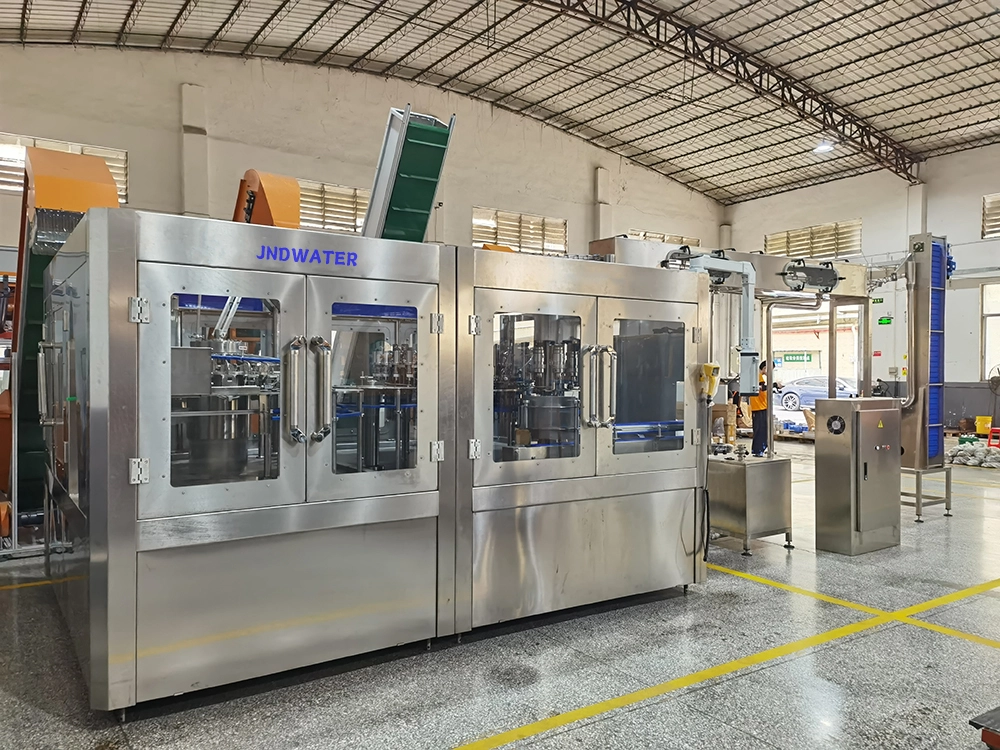
Jndwater bottled water filling line is a fully automatic bottled water filling line, specially designed for bottled water production, suitable for bottles made of PET, glass and other materials, covering the entire process of rinsing, filling, sealing, labeling, testing and packaging. It can meet the production needs of various water products such as mineral
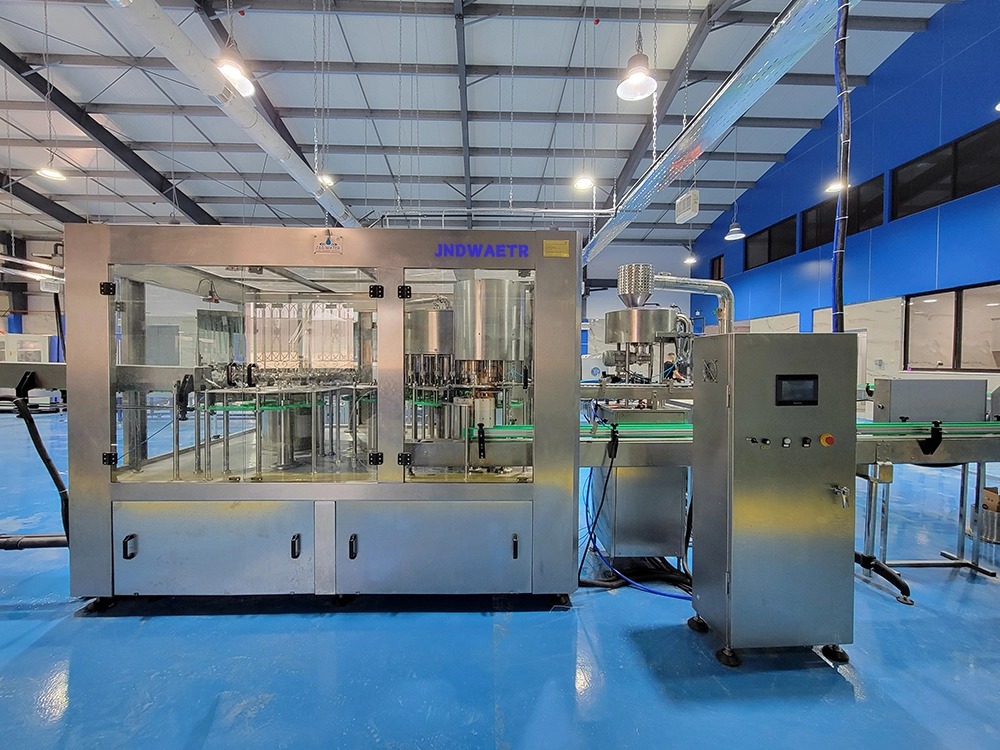
Jndwater automatic water filling machine is used in the production of non-carbonated drink, such as mineral water and purified water etc. Washing, filling and capping are integrated into one machine, suitable for the bottle whose size from 100-2000ml. suitable for water , juice , milk such liquid which conductivity higher than 10us/m the machine with
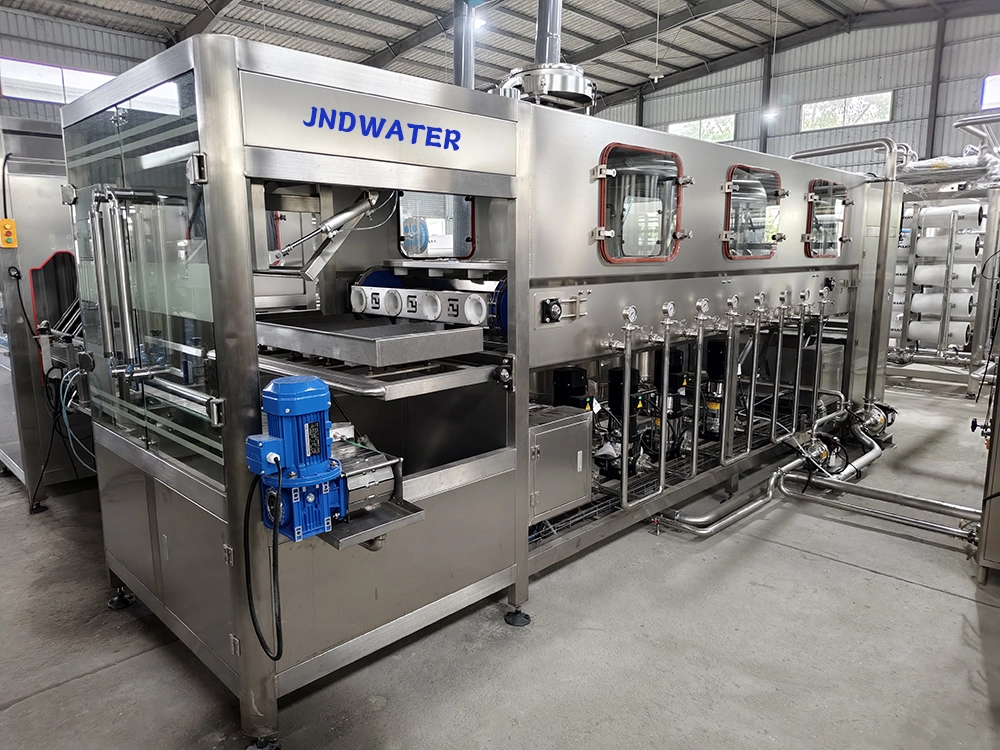
The Jndwater 5 gallon water washing filling capping machine is an automated equipment widely used in the filling of drinking water, mineral water, distilled water and other liquids. It integrates cleaning, filling and capping, and can efficiently and hygienically complete the filling of 5-gallon (about 18.9 liters) buckets. It is an ideal choice for bottled
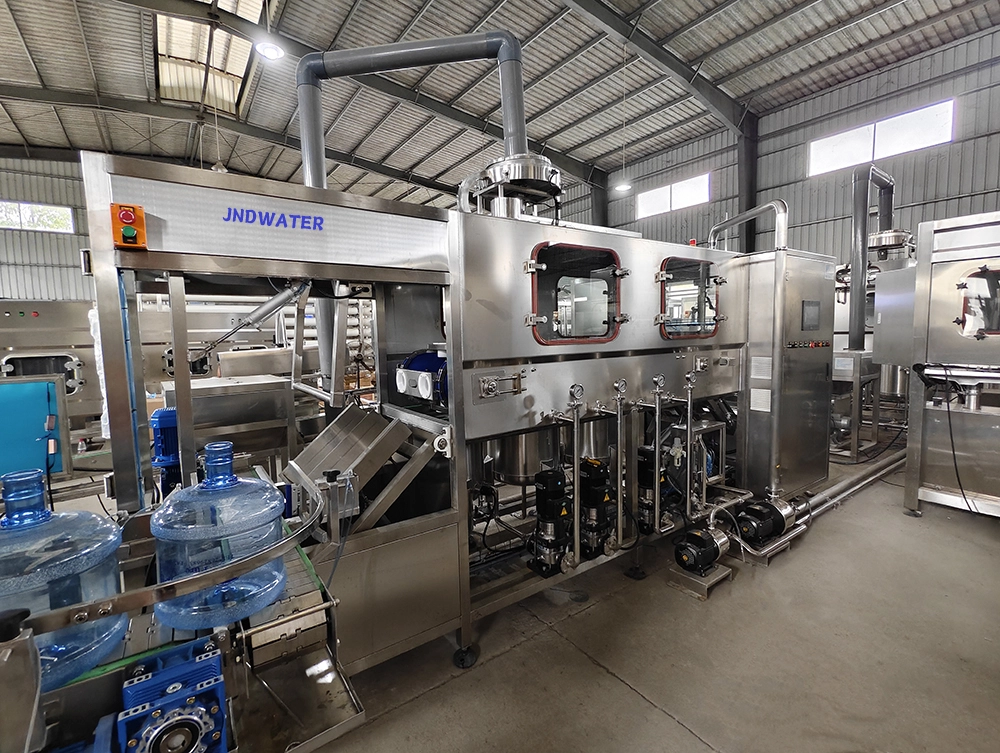
The Jndwater 3 Gallon Bottle Water Filling Machine integrates rinsing, filling and capping. It is suitable for the production of 3-gallon (about 11.4 liters) and 5-gallon (18.9 liters) bottled water, and is compatible with round barrels, square barrels and special-shaped barrels.
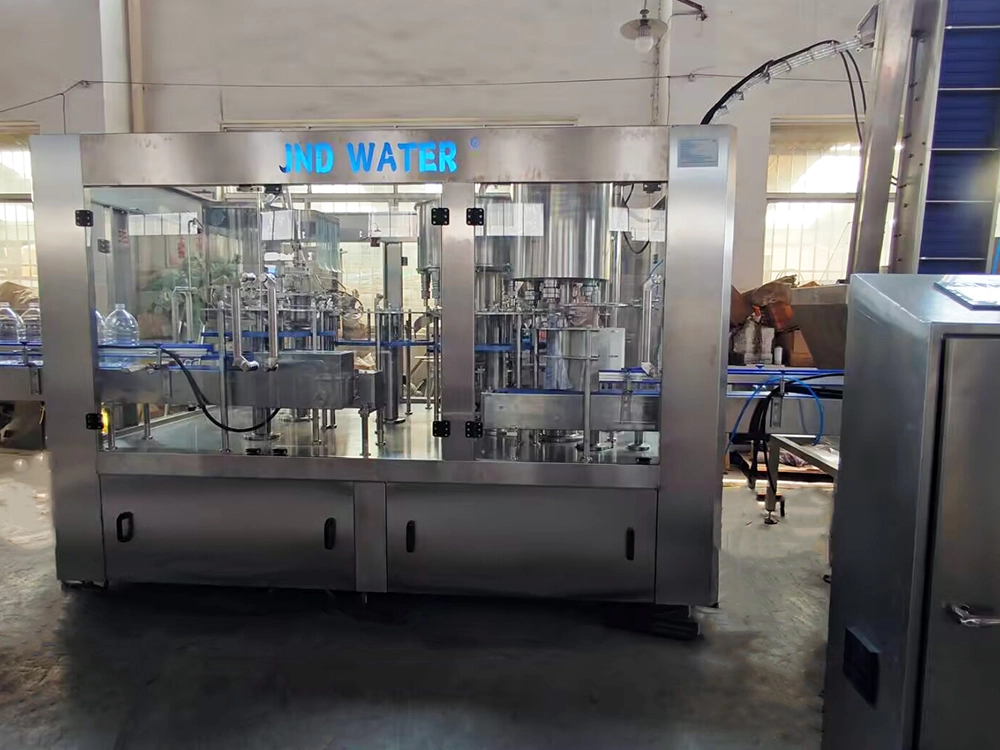
Jndwater 4L Bottle Water Bottling Machine is a fully automatic filling equipment designed for large-capacity drinking water. It integrates bottle washing, filling and capping, and is suitable for containers such as PET bottles and plastic barrels.
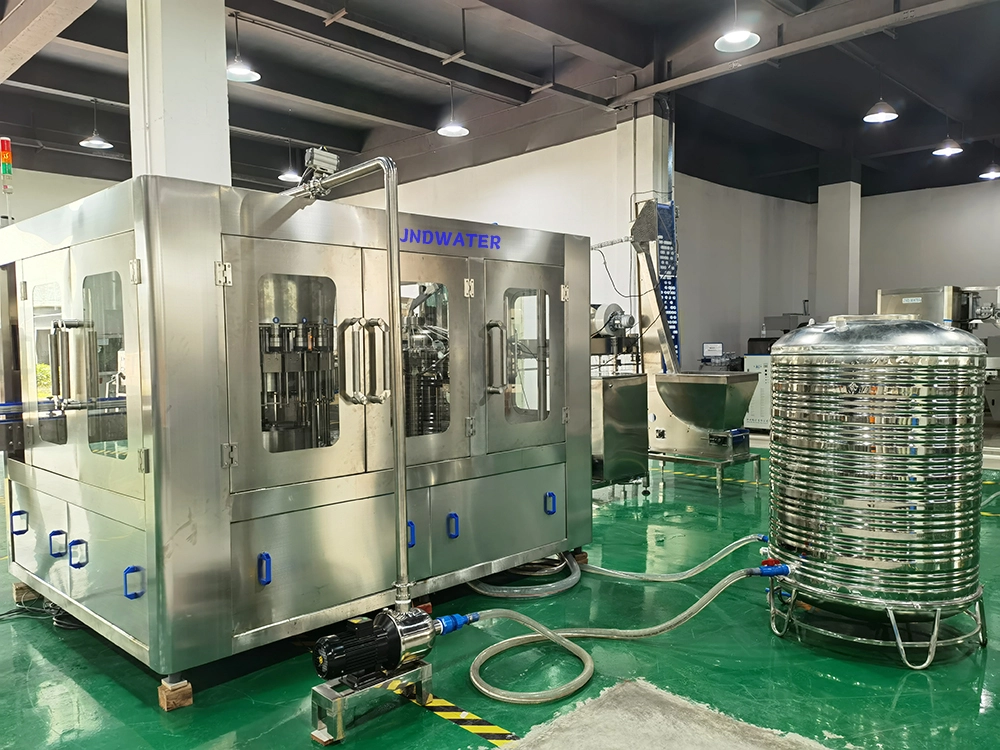
The jndwater series auto water filling machine is a filling equipment that integrates cleaning, filling and capping. The automatic water bottle filling machine can fill drinking water, purified water, mineral water, and still drinks, and the water filling bottle machine can meet the mass production needs of modern bottling plants.
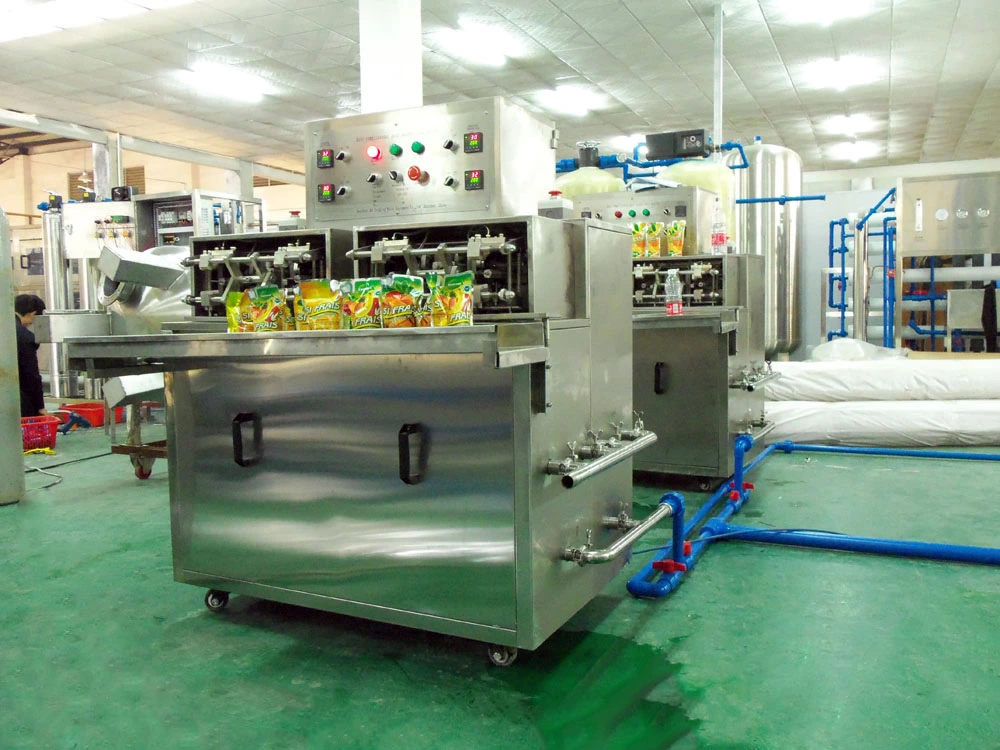
The Jndwater water pouch filling machine is a kind of machine specially designed for water bag, liquid bag and other packaging. It can efficiently complete a series of operations such as bag making, metering, filling, sealing, cutting, counting and batch number printing, and is widely used in the packaging production of pure water, juice, beverages
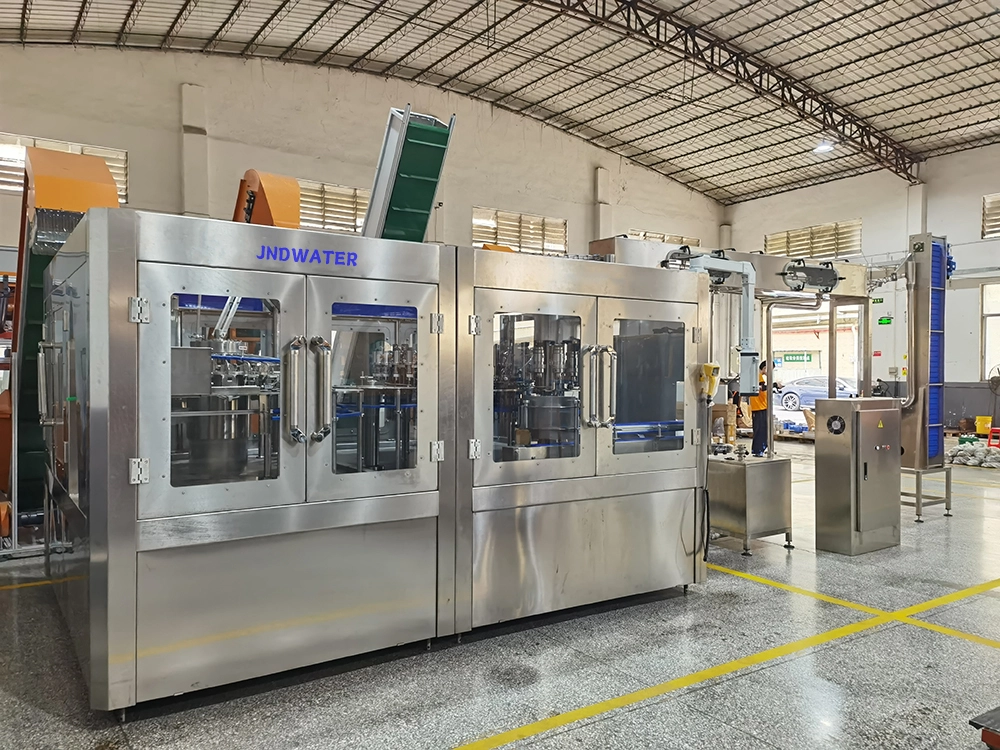
Jndwater automatic water filling machine is used in the production of non-carbonated drink, such as mineral water and purified water etc. Washing, filling and capping are integrated into one machine, mineral water bottling machine is suitable for the bottle whose size from 3L to 10L.with 12heads filling valves suitable for water , juice , milk
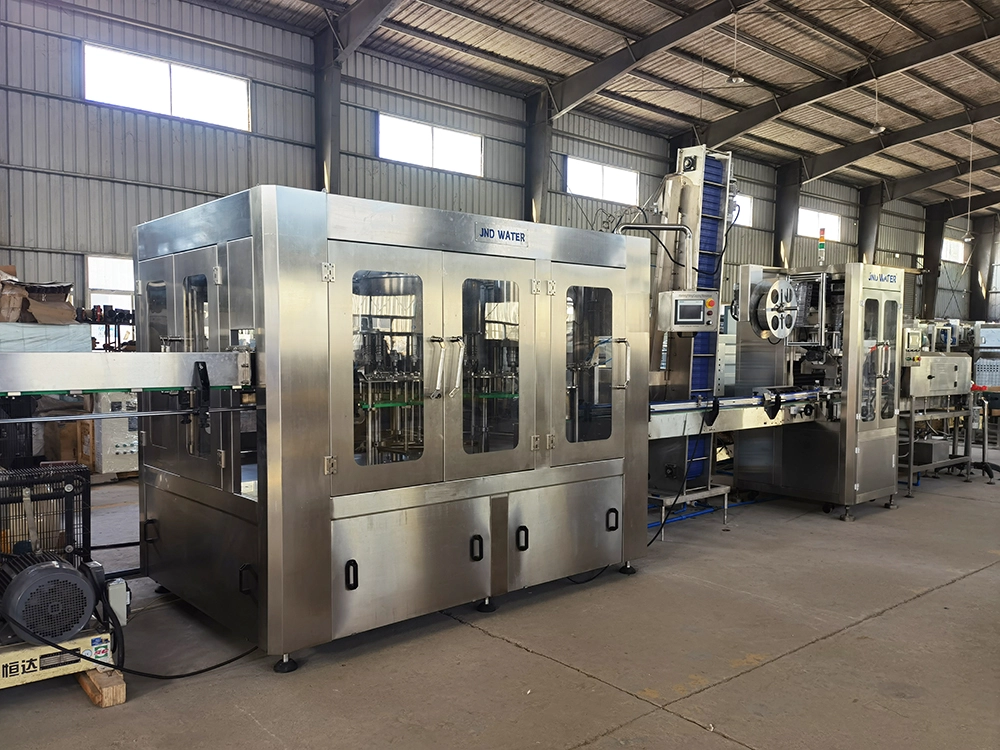
Jndwater series bottled water machine 25 years of production experience, factory price, provide turnkey project, can fill purified water, mineral water, distilled water, etc. Filling capacity 500ml-2000ml.
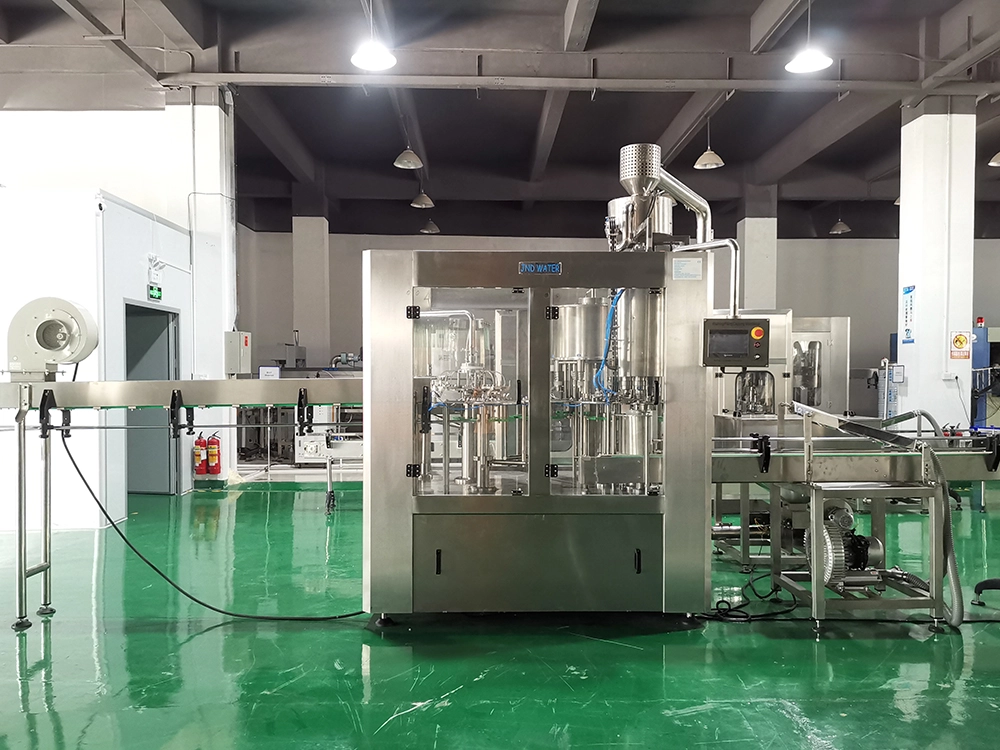
The Jndwater bottling water machine is an all-in-one solution designed to revolutionize the bottled water production process. With a focus on efficiency, quality and reliability, water filling machine is an essential piece of equipment for in the bottled water plant.water bottling machine can fill purified water, mineral water, distilled water, etc.