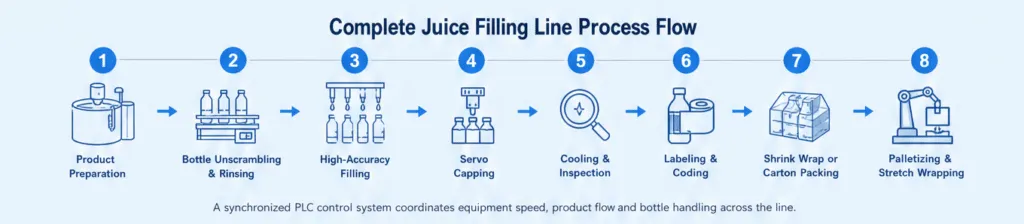
Uma fábrica de sucos deve configurar sua linha de produção como um sistema sincronizado, e não como um conjunto de máquinas independentes. A solução correta conecta preparação do produto, manuseio de garrafas, enchimento e tampa de alta precisão, inspeção em linha, rotulagem, codificação, embalagem secundária e paletização por meio de controle coordenado de esteira e PLC. Essa abordagem ajuda a fábrica a adaptar cada processo à fórmula do suco, formato do recipiente, alvo de saída e requisitos de distribuição.
O ponto de partida mais importante não é a velocidade de uma máquina. É a relação entre o produto e todo o processo. Suco claro, suco de polpa, néctar, bebidas de chá e bebidas quentes se comportam de forma diferente durante o recheio. Uma linha corretamente configurada para o produto pode suportar um enchimento mais consistente, manuseio mais limpo de recipientes, embalagens mais suaves e um fluxo de produção mais controlado.
Comece pelo Objetivo de Suco, Recipiente e Produção
Antes de selecionar o equipamento de enchimento, defina os requisitos do produto e da embalagem. O fornecedor deve entender se a bebida é um suco claro, de baixa viscosidade, ou um suco mais espesso com polpa; se o produto será preenchido em temperatura ambiente, preenchido a quente ou produzido sob condições assépticas; e se o recipiente é PET, vidro ou outro formato compatível. Volume de garrafa, acabamento do gargalo, tipo de tampa, tipo de etiqueta e a produção necessária de garrafas por hora também afetam a configuração final da linha.
| Pergunta sobre produção | Por que isso afeta a configuração |
| O líquido é claro, polporoso ou de alta viscosidade? | As características do fluxo do produto influenciam o método adequado de enchimento e o design do bico. |
| Qual é a alvo de produção em garrafas por hora? | A saída determina o tamanho necessário do preenchimento necessário, capacidade de transporte, velocidade de rotulagem e capacidade do equipamento no fim da linha. |
| O produto está pronto a quente? | A linha pode precisar coordenar temperatura do produto, compatibilidade das garrafas, tampas e resfriamento. |
| Qual recipiente será usado? | PET, vidro e latas têm requisitos diferentes de manuseio, enxágue, rotulagem e embalagem. |
| Como as garrafas finalizadas serão embaladas? | O embalamento retrátil, embalagem em caixa, embalagem em bandeja e padrões de paletes moldam a configuração a jusante. |
Essas informações permitem que a fábrica configure toda a linha em torno de uma necessidade real de produção, em vez de comprar equipamentos que não operam eficientemente juntos.
Prepare e enxágue as garrafas antes de encher
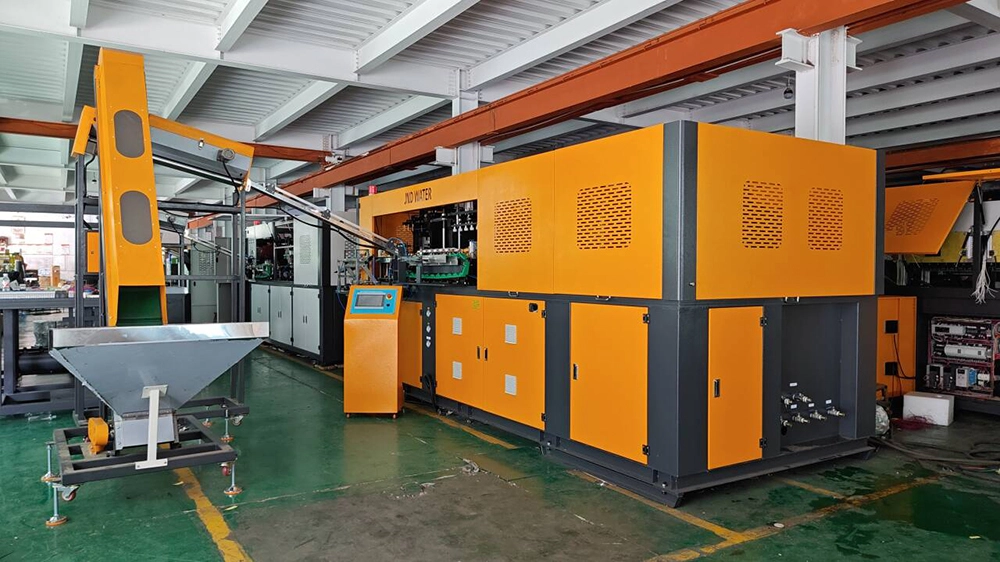
A parte frontal da linha deve entregar recipientes limpos, estáveis e corretamente orientados ao enchimento. Para suco engarrafado, isso pode incluir um embaralhador automático de garrafas, transportador de ar, enxaguador de garrafas ou esterilizador rotativo. A configuração necessária depende do formato do recipiente e do processo de higiene utilizado pela fábrica.
O manuseio de garrafas não é apenas um passo preliminar. Alimentação ruim com mamadeira ou enxágue inconsistente podem interromper o preenchimento, afetar o desempenho do tapão ou criar paragens mais adiante. Portanto, a seção de preparação da garrafa deve ser ajustada à velocidade da linha e conectada à máquina de enchimento por meio de transporte controlado.
Selecione um método de preenchimento de alta precisão para o produto
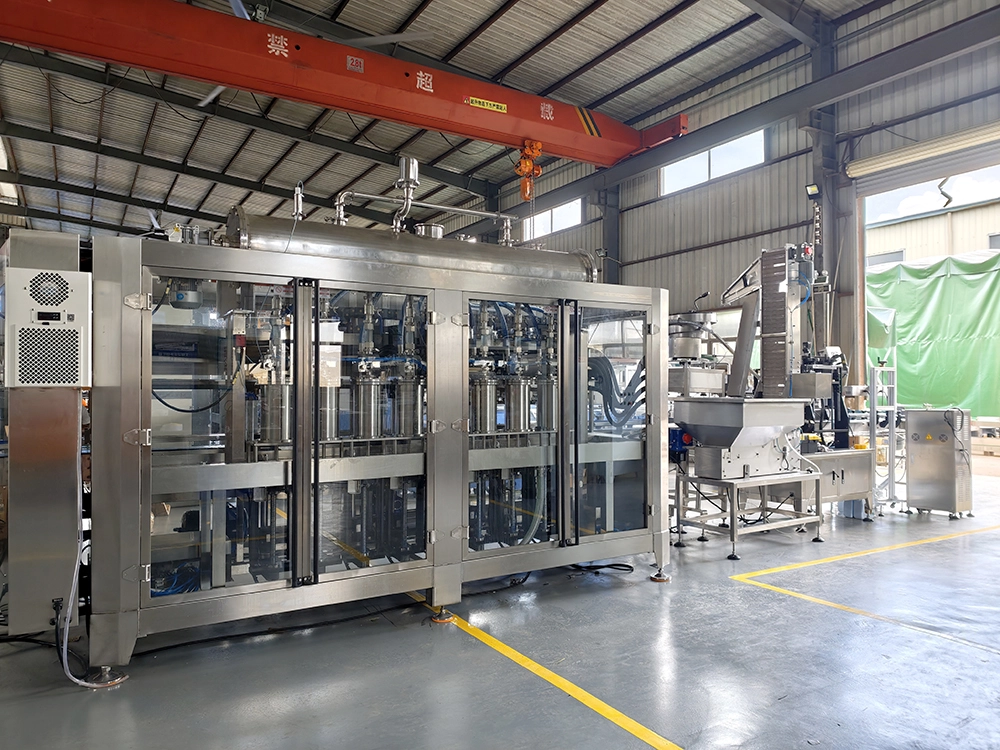
O sistema de enchimento é o módulo central de produção. Sua configuração deve ser selecionada de acordo com viscosidade, nível de polpa, temperatura de enchimento, comportamento da espuma, formato da garrafa e controle volumétrico desejado.
Para bebidas de suco transparente e de baixa viscosidade, o preenchimento por gravidade ou medidor de fluxo pode ser considerado quando o produto flui de forma consistente. Para suco de polpa, néctar de frutas, suco concentrado ou bebidas mais espessas, uma configuração de enchimento por pistão pode ser mais adequada porque utiliza dosagem volumétrica medida e pode ser adaptada a texturas de produtos mais exigentes. A escolha final deve ser validada com base na fórmula real, tamanho da polpa, teor de sólidos, temperatura do produto e requisitos de limpeza.
Quando uma bebida de suco requer enchimento quente, o preenchimento e a tampa devem ser configurados como parte do processo térmico. Em muitas aplicações de enchimento a quente, o produto é preenchido a uma temperatura elevada, geralmente dentro de uma faixa de processo como 85–90°C quando apropriado para a receita e o processo validado. A garrafa, a tamponha, a operação de fechamento e o estágio de resfriamento devem funcionar juntos. Um túnel de resfriamento ou outra solução controlada pode seguir o preenchimento e a tampa para apoiar o manuseio estável e proteger o pacote final.
Uma linha de enchimento de suco de alta precisão não é definida apenas pelo preenchimento. É definido por como o enchimento, as condições do produto, o tamper, o sistema de inspeção e os equipamentos a jusante operam como uma sequência de produção coordenada.
Integre a cobertura e a inspeção imediatamente após o preenchimento
Após o enchimento, os recipientes devem ir diretamente para a estação de tampagem. Uma máquina servo-parafusa ou outra configuração compatível pode ser integrada à saída do enchimento para suportar uma colocação estável do fechamento e minimizar o manuseio desnecessário do produto entre o encher e a vedação.
A linha deve então incluir pontos de controle de qualidade inline antes da rotulagem. Dependendo dos requisitos do projeto, estes podem verificar o nível de atenchimento, a presença ou a colocação da tampa e vazamentos no contêiner. Detectar um problema antes que a garrafa receba seu rótulo e embalagem secundária pode reduzir a quantidade de material que precisa ser retrabalhada ou removida da linha.
A etapa de inspeção deve ser projetada para o mesmo ritmo de produção do preenchimento e do tampon. Se a inspeção, transporte ou manuseio de rejeição não acompanhar o preenchimento, pode se tornar um gargalo para toda a linha.
Corresponder a rotulagem e a codificação ao contêiner
Os equipamentos de rotulagem devem ser escolhidos de acordo com o formato do recipiente, material, requisitos de marca e velocidade de saída. Um rotulador de mangas termo-retrátil pode ser adequado para recipientes que necessitam de decoração de mangas completas, enquanto um sistema de rotulagem autoadesivo ou rotativo pode se adequar a outros formatos de garrafas e formatos de etiqueta. O equipamento de rotulagem selecionado deve ser sincronizado com a velocidade do transportador e o espaçamento das garrafas provenientes da seção de inspeção.
A codificação de rastreabilidade também deve ser integrada à linha transportadora. Um codificador de jato de tinta ou a laser pode ser posicionado para imprimir números de lote, datas de produção, datas de validade ou outras informações necessárias de produção. A localização da impressão, a orientação da garrafa e a superfície de codificação devem ser revisadas durante o planejamento da linha para que o código permaneça visível após a rotulagem e a embalagem.
Configure o Embalagem e a Paletização para Prontidão de Distribuição
O final da linha transforma garrafas individuais em unidades prontas para distribuição. Após rotulagem e codificação, as garrafas podem ser agrupadas com uma máquina automática de embalagem de filme, embaladora de caixas, sistema de embalagem de bandeja ou outro formato secundário de embalagem adequado. A melhor escolha depende do tamanho das garrafas, número de embalagens, condições de transporte, apresentação no varejo e manuseio no armazém.
Os pacotes finalizados devem então passar por esteiras controladas para um paletizador automático, quando necessário. Um paletizador pode organizar as embalagens em um padrão definido para armazenamento e envio, enquanto uma embaladora extensível pode fixar o pallet finalizado para transporte. Os equipamentos de embalagem e paletização devem ser planejados para o mesmo volume de processamento do enchimento; caso contrário, a seção a jusante pode limitar a saída efetiva da linha.
Use automação de CLP para sincronizar toda a linha
Os módulos de equipamentos devem se comunicar por meio de um sistema de automação de PLC coordenado. O objetivo é sincronizar o fluxo do produto, manuseio das garrafas, operação do enchimento, velocidade da etiquetadora, ritmo de embalagem e demanda por paletização. Quando uma estação desacelera ou para, a linha deve responder de forma controlada, em vez de permitir que garrafas ou pacotes se acumulem de forma imprevisível.
Uma abordagem de controle integrado também pode facilitar o monitoramento dos dados operacionais. A fábrica pode acompanhar a velocidade da linha, status do equipamento, condições de falha, contagens de produção e resultados selecionados de inspeção pelo sistema de controle, sujeito à configuração final do equipamento. Isso ajuda os operadores a entender a condição da linha de produção completa, e não apenas o desempenho das máquinas individuais.
Um caminho prático de configuração para uma fábrica de sucos
Para um projeto típico, comece definindo o tipo de suco, garrafa ou recipiente, BPH alvo, temperatura de enchimento, formato de tampa e etiqueta, e método de embalagem preferido. Depois, selecione a tecnologia de enchimento apropriada e dimensione os equipamentos a montante e a jusante ao redor dela. O resultado deve ser um sistema completo e conectado, incluindo preparação do produto, manuseio de garrafas, enchimento e tampo, inspeção, rotulagem e codificação, embalagem, transporte e paletização.
A JND WATER pode ajudar a avaliar esses requisitos e propor um Máquina de enchimento de suco junto com o apropriado Rotulagem e Equipamento de embalagem para uma linha de produção coordenada de sucos.