Một nhà máy sản xuất nước ép nên cấu hình dây chuyền sản xuất của mình như một hệ thống đồng bộ duy nhất, thay vì chỉ là một nhóm các máy độc lập. Giải pháp phù hợp kết nối chuẩn bị sản phẩm, xử lý chai, chiết rót và đóng nắp chính xác cao, kiểm tra trực tuyến, dán nhãn, mã hóa, đóng gói thứ cấp và xếp pallet thông qua điều khiển phối hợp băng tải và PLC. Cách tiếp cận này giúp nhà máy điều chỉnh từng quy trình phù hợp với công thức nước ép, định dạng chai, mục tiêu đầu ra và yêu cầu phân phối.
Điểm khởi đầu quan trọng nhất không phải là tốc độ của một cỗ máy. Đó là mối quan hệ giữa sản phẩm và toàn bộ quy trình. Nước ép trong suốt, nước ép bã, mật hoa, nước trà và đồ uống chiết rót nóng có hành vi khác nhau trong quá trình chiết rót. Một dây chuyền được cấu hình đúng cho sản phẩm có thể hỗ trợ việc chiết rót nhất quán hơn, xử lý bao bì sạch hơn, đóng gói mượt mà hơn và quy trình sản xuất được kiểm soát tốt hơn.
Bắt đầu với mục tiêu Nước ép, Hộp đựng và Sản xuất
Trước khi lựa chọn thiết bị chiết rót, hãy xác định các yêu cầu về sản phẩm và bao bì. Nhà cung cấp cần hiểu rõ liệu đồ uống là nước ép trong suốt, độ nhớt thấp hay nước ép đặc hơn có phần bã; liệu sản phẩm sẽ được chiết rót ở nhiệt độ môi trường, chiết rót nóng hay sản xuất trong điều kiện vô trùng; và liệu hộp chứa là PET, thủy tinh hay định dạng tương thích khác. Thể tích chai, lớp hoàn thiện cổ chai, loại nắp, loại nhãn và lượng chai theo giờ cần thiết cũng ảnh hưởng đến cấu hình dây chuyền cuối cùng.
| Câu hỏi về sản xuất | Tại sao nó ảnh hưởng đến cấu hình |
| Nước ép có trong suốt, bã hay có độ nhớt cao? | Đặc tính dòng chảy của sản phẩm ảnh hưởng đến phương pháp chiết rót phù hợp và thiết kế đầu phun. |
| Sản lượng mục tiêu tính theo chai mỗi giờ là bao nhiêu? | Đầu ra quyết định kích thước máy chiết rót cần thiết, khả năng vận chuyển, tốc độ dán nhãn và công suất thiết bị cuối dây chuyền. |
| Sản phẩm có được chiết rót nóng không? | Dây chuyền có thể cần phối hợp nhiệt độ sản phẩm, khả năng tương thích với chai, nắp và làm mát. |
| Hộp đựng nào sẽ được sử dụng? | PET, thủy tinh và lon có yêu cầu xử lý, rửa, dán nhãn và đóng gói khác nhau. |
| Đóng chai đã hoàn thành sẽ được đóng gói như thế nào? | Gói co, đóng gói thùng carton, đóng gói khay và các mẫu pallet định hình cấu hình phía sau. |
Thông tin này cho phép nhà máy cấu hình toàn bộ dây chuyền dựa trên yêu cầu sản xuất thực tế thay vì mua thiết bị không hoạt động hiệu quả cùng lúc.
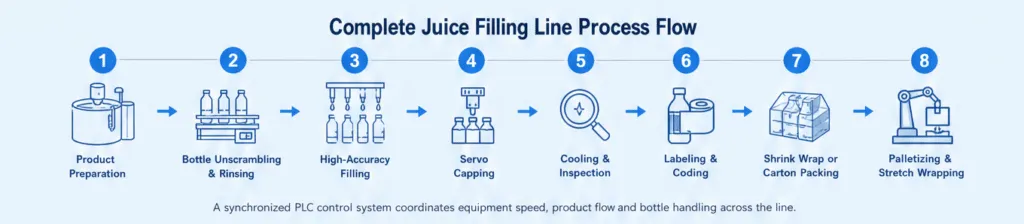
Chuẩn bị và rửa chai trước khi đổ đầy
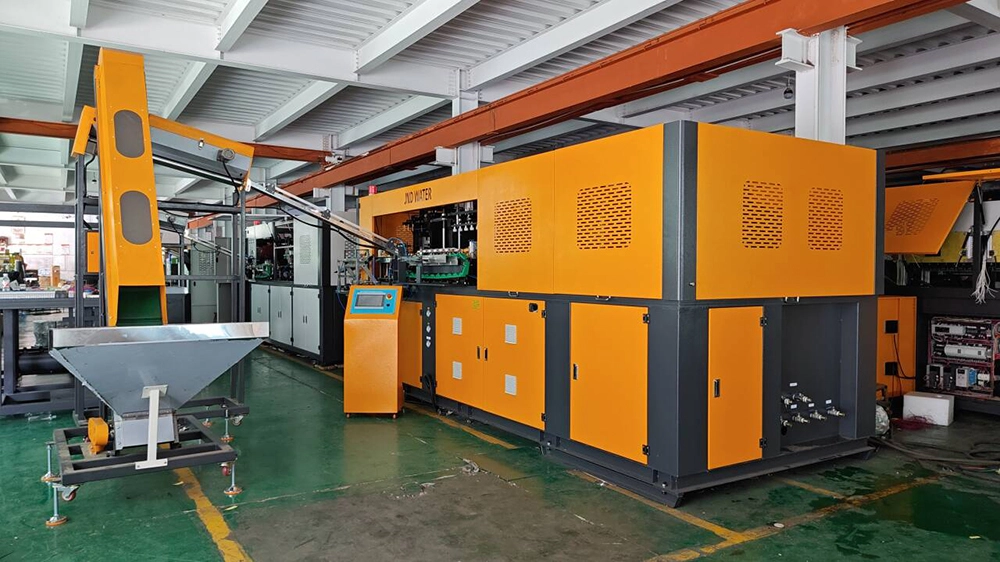
Đầu dây chuyền nên cung cấp các container sạch, ổn định và được định hướng chính xác cho bộ chiết rót. Đối với nước ép đóng chai, điều này có thể bao gồm máy giải mã chai tự động, băng tải khí, máy rửa chai hoặc máy rửa - tiệt trùng quay. Việc thiết lập cần thiết phụ thuộc vào kích thước container và quy trình vệ sinh mà nhà máy sử dụng.
Xử lý chai không chỉ là bước sơ bộ. Việc cho bú chai kém hoặc rửa không đều có thể làm gián đoạn chất đâm, ảnh hưởng đến hiệu quả đóng nắp hoặc gây tắc nghẽn ở phía sau dòng chảy. Do đó, phần chuẩn bị chai nên được điều chỉnh theo tốc độ dây chuyền và kết nối với máy chiết rót thông qua vận chuyển kiểm soát.
Chọn phương pháp chiết rót chính xác cao cho sản phẩm
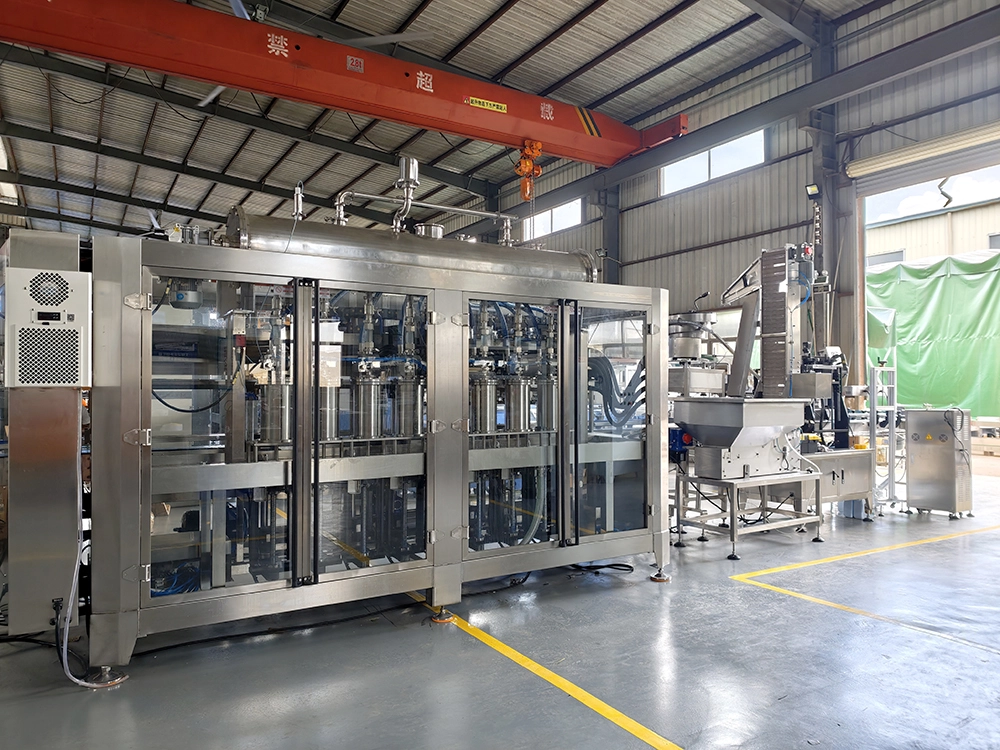
Hệ thống chiết rót là mô-đun sản xuất trung tâm. Cấu hình của nó nên được lựa chọn dựa trên độ nhớt, mức bột giấy, nhiệt độ làm rót, hành vi bọt, kích thước chai và kiểm soát thể tích mong muốn.
Đối với các loại nước ép trong suốt, có độ nhớt thấp, có thể xem xét chiết rót trọng lực hoặc đồng hồ đo lưu lượng khi sản phẩm chảy đều đặn. Đối với nước ép bã, mật trái cây, nước ép cô đặc hoặc các loại đồ uống đặc hơn, cấu hình chiết rót piston có thể phù hợp hơn vì sử dụng định lượng thể tích được đo lường và có thể điều chỉnh phù hợp với kết cấu sản phẩm đòi hỏi cao hơn. Lựa chọn cuối cùng cần được xác nhận dựa trên công thức thực tế, kích thước bột giấy, hàm lượng chất rắn, nhiệt độ sản phẩm và yêu cầu làm sạch.
Khi nước ép cần chiết rót nóng, bộ chiết rót và nắp nên được cấu hình như một phần của quá trình nhiệt. Trong nhiều ứng dụng chiết rót nóng, sản phẩm được chiết rót ở nhiệt độ cao, thường trong phạm vi quy trình như 85–90°C khi phù hợp với công thức và quy trình đã được xác nhận. Nắp chai, nắp, hoạt động đóng và giai đoạn làm lạnh phải phối hợp với nhau. Một đường hầm làm mát hoặc một giải pháp làm mát kiểm soát khác có thể theo sau quá trình chiết rót và đóng nắp để hỗ trợ việc xử lý ổn định và bảo vệ bao bì hoàn thiện.
Dây chuyền chiết rót nước ép có độ chính xác cao không chỉ được xác định bởi chất độn. Nó được xác định bởi cách bộ chiết rót, điều kiện sản phẩm, máy đóng nập, hệ thống kiểm tra và thiết bị hạ nguồn hoạt động như một chuỗi sản xuất phối hợp.
Tích hợp nắp và kiểm tra ngay sau khi chiết rót
Sau khi đầy, các thùng chứa nên được chuyển thẳng đến trạm nắp. Máy đóng nắp vít servo hoặc cấu hình đóng nắp tương thích khác có thể được tích hợp với đầu ra của máy chiết rót để hỗ trợ vị trí nắp ổn định và giảm thiểu việc xử lý sản phẩm không cần thiết giữa việc chiết rót và niêm phong.
Dây chuyền sau đó nên bao gồm các điểm kiểm soát chất lượng nội bộ trước khi dán nhãn. Tùy theo yêu cầu của dự án, các đơn vị này có thể kiểm tra mức đầy, sự hiện diện hoặc vị trí nắp và rò rỉ container. Phát hiện vấn đề trước khi chai nhận được nhãn và bao bì phụ có thể giảm lượng vật liệu cần được gia công lại hoặc loại bỏ khỏi dây chuyền.
Giai đoạn kiểm tra nên được thiết kế theo cùng nhịp độ sản xuất với chất chiết rót và nắp đậy. Nếu việc kiểm tra, vận chuyển hoặc xử lý loại bỏ không theo kịp với việc chiết rót, nó có thể trở thành nút thắt cổ chai cho toàn bộ dây chuyền.
Ghép nhãn và mã hóa với container
Thiết bị dán nhãn nên được lựa chọn phù hợp với hình dáng, vật liệu, yêu cầu thương hiệu và tốc độ đầu ra. Máy dán nhãn ống co nhiệt có thể phù hợp với các thùng cần trang trí toàn thân, trong khi hệ thống dán nhãn tự dính hoặc quay có thể phù hợp với các hình dạng chai và định dạng nhãn khác. Thiết bị dán nhãn được chọn nên được đồng bộ với tốc độ băng tải và khoảng cách giữa chai xuất phát từ khu vực kiểm tra.
Mã truy xuất nguồn gốc cũng nên được tích hợp vào dây chuyền băng tải. Máy mã hóa phun hoặc laser có thể được đặt để in số lô, ngày sản xuất, ngày hết hạn hoặc các thông tin sản xuất cần thiết khác. Vị trí in, hướng chai và bề mặt mã hóa nên được xem xét trong quá trình lập kế hoạch dây chuyền để mã vẫn hiển thị sau khi dán nhãn và đóng gói.
Cấu hình đóng gói và xếp pallet để sẵn sàng phân phối
Cuối dây chuyền biến từng chai thành các đơn vị sẵn sàng phân phối. Sau khi dán nhãn và mã hóa, chai có thể được nhóm lại với máy co màng tự động, máy đóng gói hộp, hệ thống đóng gói khay hoặc các định dạng đóng gói phụ phù hợp khác. Lựa chọn tốt nhất phụ thuộc vào kích thước chai, số lượng đóng gói, điều kiện vận chuyển, cách trình bày bán lẻ và cách xử lý kho.
Các gói hoàn thiện sau đó sẽ được di chuyển qua các băng tải điều khiển đến máy xếp pallet tự động khi cần thiết. Máy xếp pallet có thể sắp xếp các kiện hàng theo một mẫu xác định để lưu trữ và vận chuyển, trong khi máy bao bì co giãn có thể cố định pallet hoàn chỉnh để vận chuyển. Thiết bị đóng gói và xếp pallet phải được lên kế hoạch với cùng lưu lượng với máy chiết rót; nếu không, phần hạ lưu có thể giới hạn hiệu quả đầu ra của đường ống.
Sử dụng tự động hóa PLC để đồng bộ hóa toàn bộ dây chuyền
Các mô-đun thiết bị nên giao tiếp thông qua hệ thống tự động hóa PLC phối hợp. Mục tiêu là đồng bộ hóa luồng sản phẩm, xử lý chai, vận hành máy chiết rót, tốc độ dán nhãn, nhịp độ đóng gói và nhu cầu xếp pallet. Khi một trạm giảm tốc hoặc dừng lại, đường dây nên phản ứng một cách có kiểm soát thay vì để chai lọ hoặc bao bì tích tụ một cách khó đoán.
Phương pháp kiểm soát tích hợp cũng giúp việc giám sát dữ liệu vận hành trở nên dễ dàng hơn. Nhà máy có thể theo dõi tốc độ dây chuyền, trạng thái thiết bị, điều kiện lỗi, số lượng sản xuất và kết quả kiểm tra được chọn thông qua hệ thống điều khiển, tùy thuộc vào cấu hình thiết bị cuối cùng. Điều này giúp người vận hành hiểu được tình trạng của toàn bộ dây chuyền sản xuất thay vì chỉ đánh giá hiệu suất của từng máy móc.
Lộ trình cấu hình thực tế cho nhà máy sản xuất nước ép
Đối với một dự án điển hình, hãy bắt đầu bằng việc xác định loại nước ép, chai hoặc hộp đựng, chỉ số BMH mục tiêu, nhiệt độ chiết rót, nắp và định dạng nhãn, cũng như phương pháp đóng gói ưu tiên. Sau đó chọn công nghệ chiết rót phù hợp và kích thước thiết bị ở đầu nguồn và hạ nguồn xung quanh nó. Kết quả nên là một hệ thống hoàn chỉnh, kết nối bao gồm chuẩn bị sản phẩm, xử lý chai, đóng gói và đóng nắp, kiểm tra, dán nhãn và mã hóa, đóng gói, vận chuyển và xếp pallet.
JND WATER có thể giúp đánh giá các yêu cầu này và đề xuất một Máy chiết rót nước trái cây cùng với các cơ quan thích hợp việc dán nhãn và thiết bị đóng gói cho một dây chuyền sản xuất nước ép phối hợp.