Sauce & Condiment Filling Line: Complete Solution & Equipment List JND WATER

深圳市金富来饮水设备有限公司is specialized in products for mineral water machines, carbonated beverage production line, air delivery systems and juice beverage production line in Shenzhen,Guangdong,China. JND WATER features state-of-the-art manufacturing facilities, a full complement of testing tools, and devices.

新闻

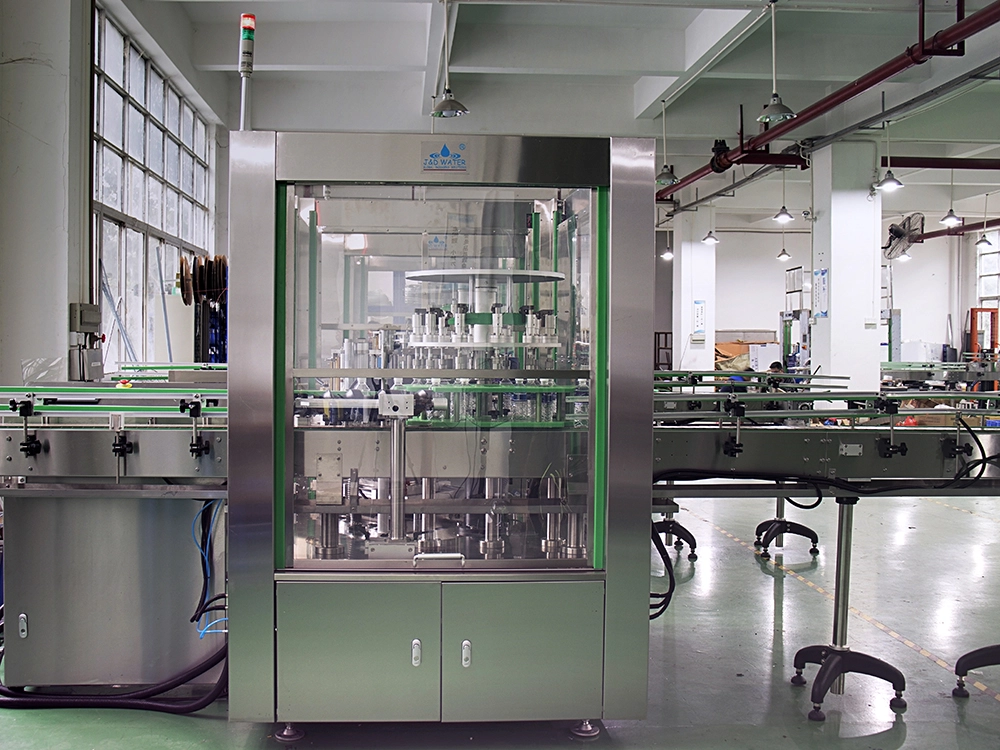
Sauce & Condiment Filling Line: Complete Solution & Equipment List

A sauce or condiment filling line turns a batch of liquid or semi-liquid food — ketchup, chili sauce, mayonnaise, salad dressing, oyster sauce, soy sauce, vinegar — into sealed, labeled, shelf-ready bottles. Compared with a water line, sauce is harder: viscosity varies, many recipes carry solid particles, and food hygiene rules are strict. This guide walks through the equipment list, the filling technology behind each sauce type, a typical line configuration, the engineering details that actually decide quality, and indicative USD cost ranges.

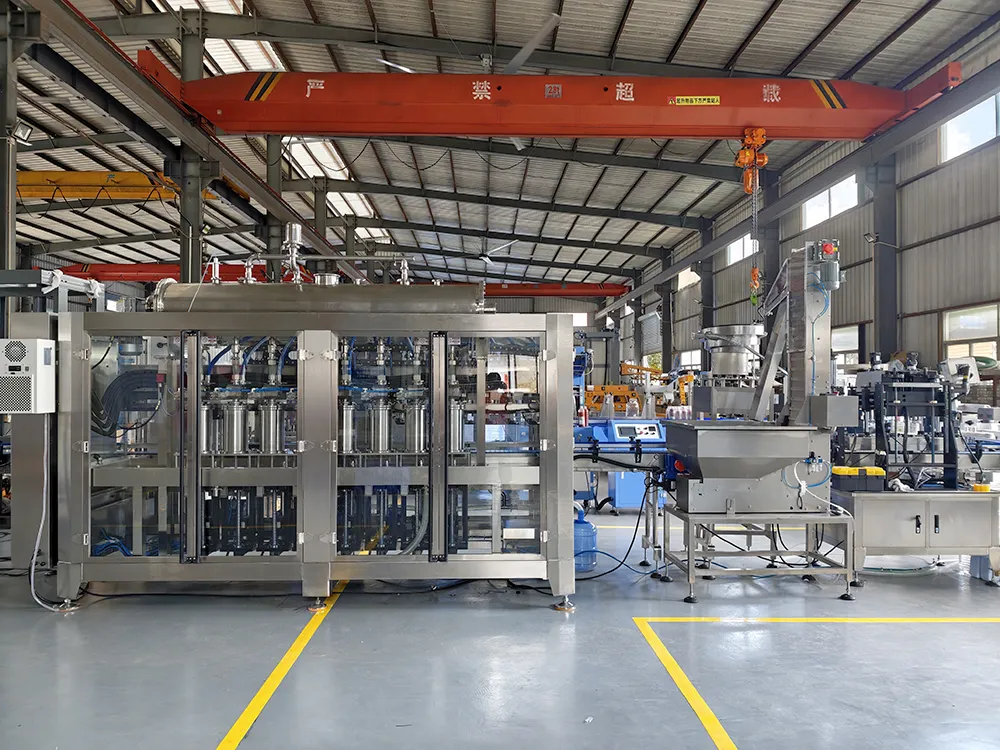
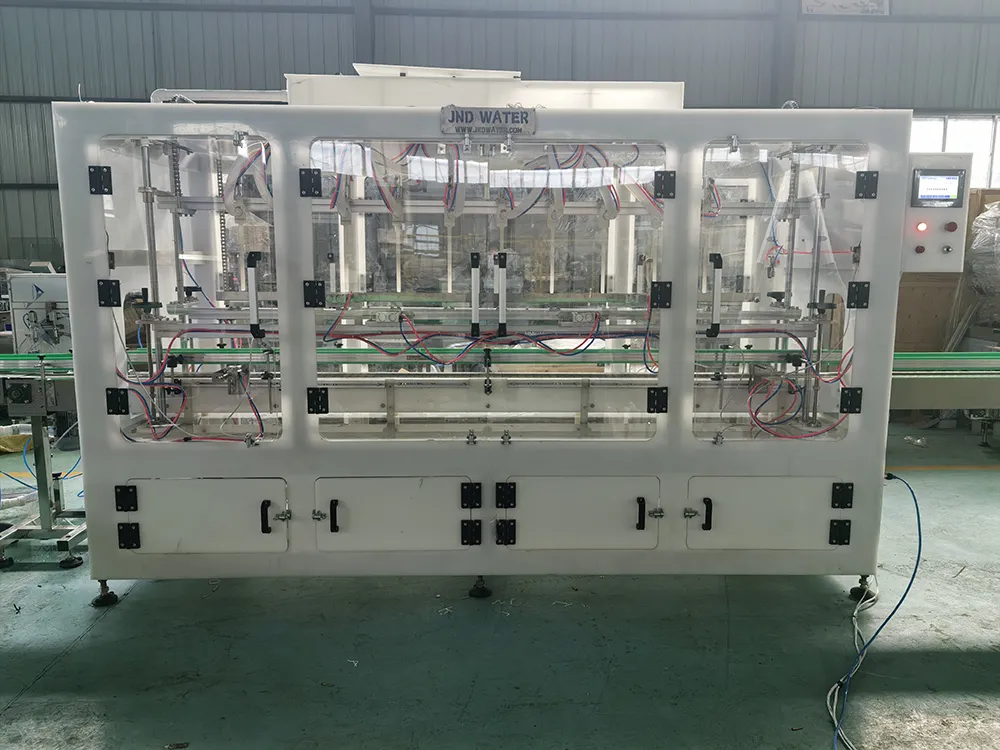
Fruit sauce filling machine-1

What Is a Sauce & Condiment Filling Line?

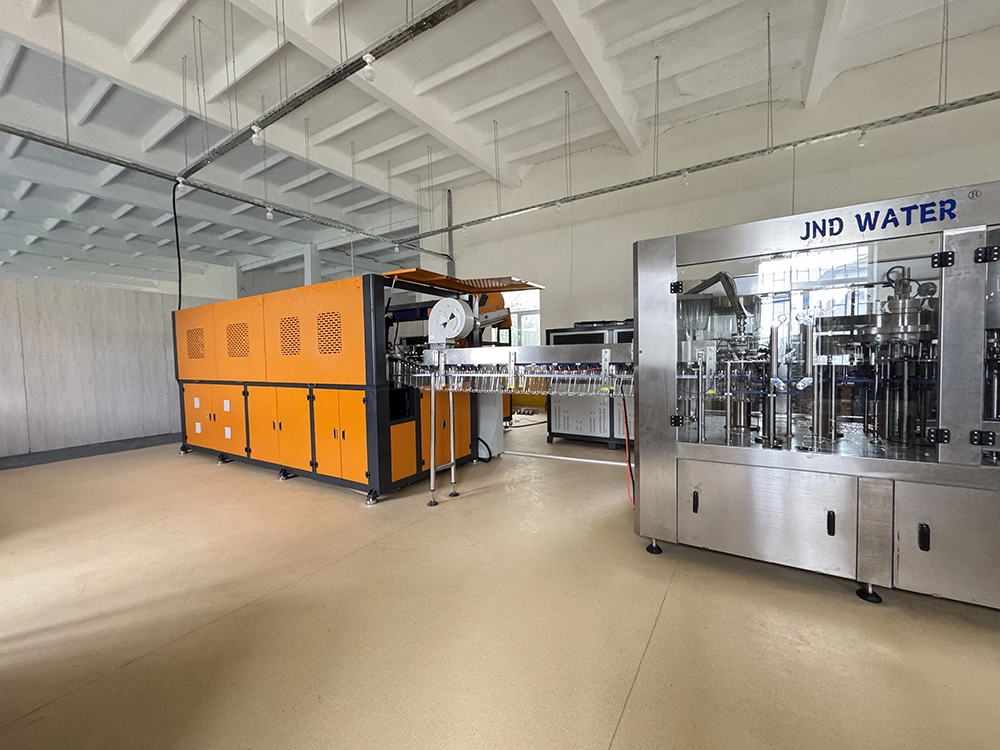
A condiment filling line is an automated system that doses, fills, caps, labels and packs sauces and dressings at a fixed capacity (commonly 2,000–8,000 bottles per hour, BPH). It serves food manufacturers bottling their own brand, contract packers running multiple recipes, and startups entering the condiment market with a single semi-auto line. The core challenge is not “moving liquid” — it is moving a product whose thickness, particles and sensitivity change by recipe, without dripping, foaming or contaminating.

Sauce Type Determines the Filling Technology

Before listing machines, pick the filler by product behavior. The wrong filler drips, jams or shears your sauce.

Sauce / condiment Flow behavior Recommended filler
Soy sauce, vinegar, cooking wine Thin, free-flowing Negative-pressure / gravity filler
Ketchup, salad dressing, oyster sauce Viscous, no particles Servo piston filler
Chili sauce, fruit jam with pulp Viscous + solid particles Piston filler, large-bore cylinder
Mayonnaise, peanut butter Very viscous, shear-sensitive Servo piston / rotary lobe, slow speed
  • Thin sauces (soy, vinegar) are filled by vacuum or gravity — cheap and fast, but only works when the product runs.
  • Viscous sauces (ketchup, dressing) need a piston that pushes a measured volume — accurate even when thick.
  • Sauces with particles (chili, jam) need a wider piston bore and a cut-off nozzle so chunks pass without jamming.
  • Shear-sensitive sauces (mayonnaise) need slow servo motion so the emulsion does not break.
_cuva

Complete Equipment List for a Condiment Filling Line

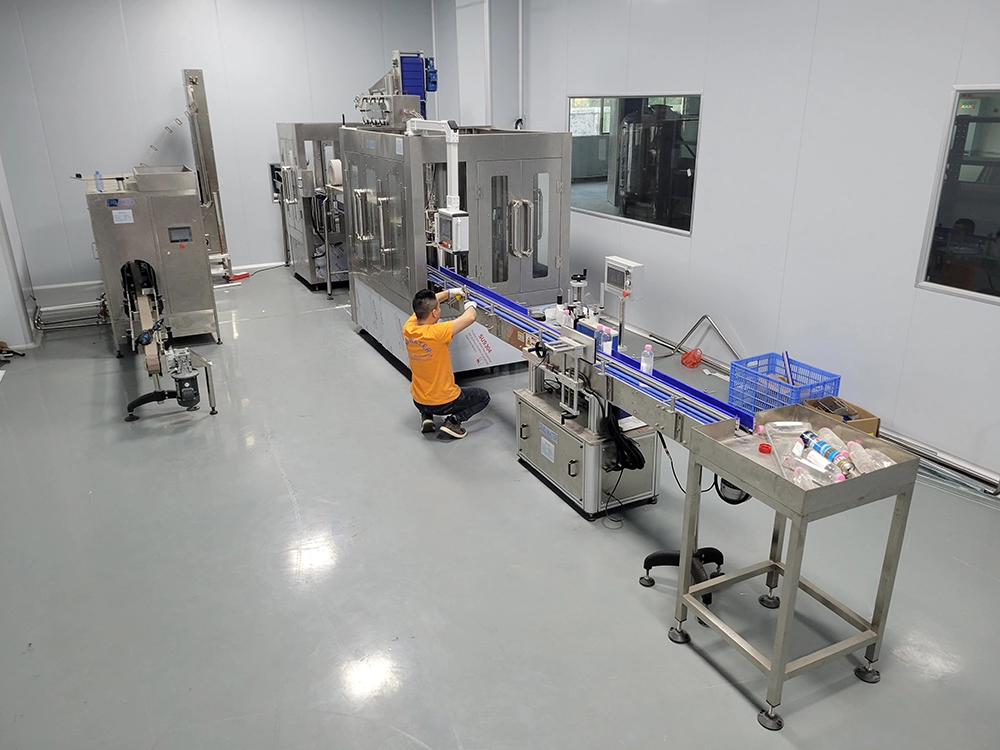
A standard automatic sauce line contains eight stations. Capacities scale together — a 4,000 BPH filler is paired with a 4,000 BPH capper and labeler.

# Equipment Role
1 Processing / blending tank Mix, heat and homogenize the recipe; often jacketed
2 Sterilizer / UHT Kills microbes for hot-fill shelf stability (optional for cold-fill)
3 活塞加注机 Core dosing station; servo-controlled volume
4 Capping machine Screw or press-on cap; torque-controlled
5 贴标机 Self-adhesive or sleeve label
6 Date coding (TTO / laser) Batch & expiry code
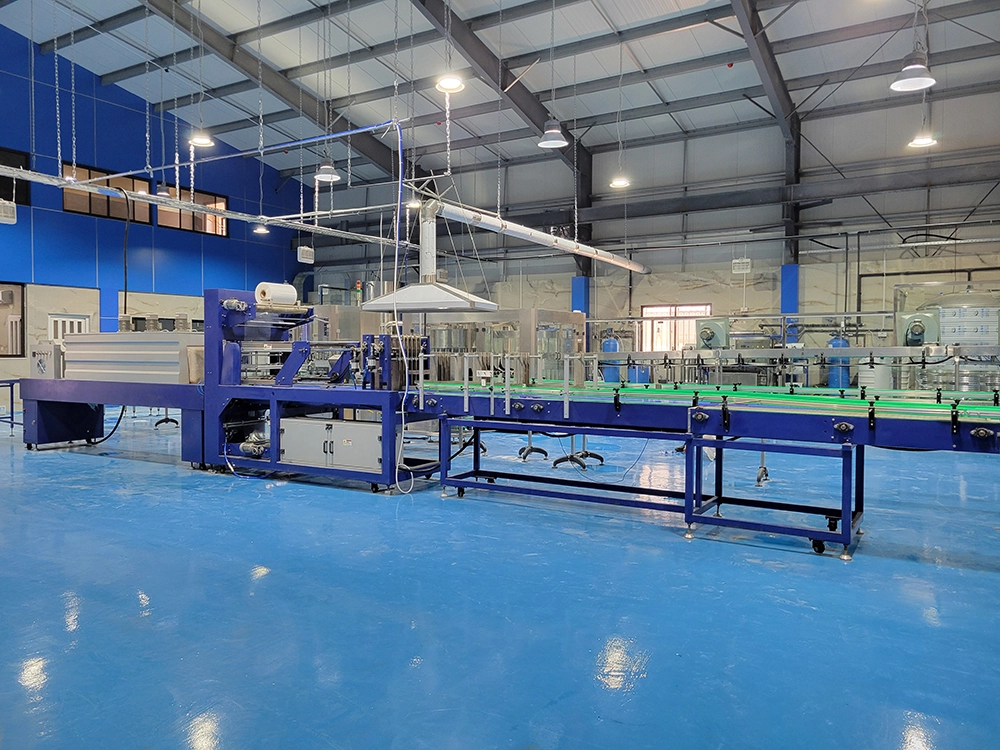
7 Shrink wrap / carton packer Multi-pack and case packing
8 Palletizer / depalletizer Stack cases for shipment

For a semi-auto 2,000 BPH line, stations 1–4 are manual-assisted; from 4,000 BPH up, stations 5–8 are usually automatic. See our edible oil filling machine for a near-identical piston configuration used on thick products.

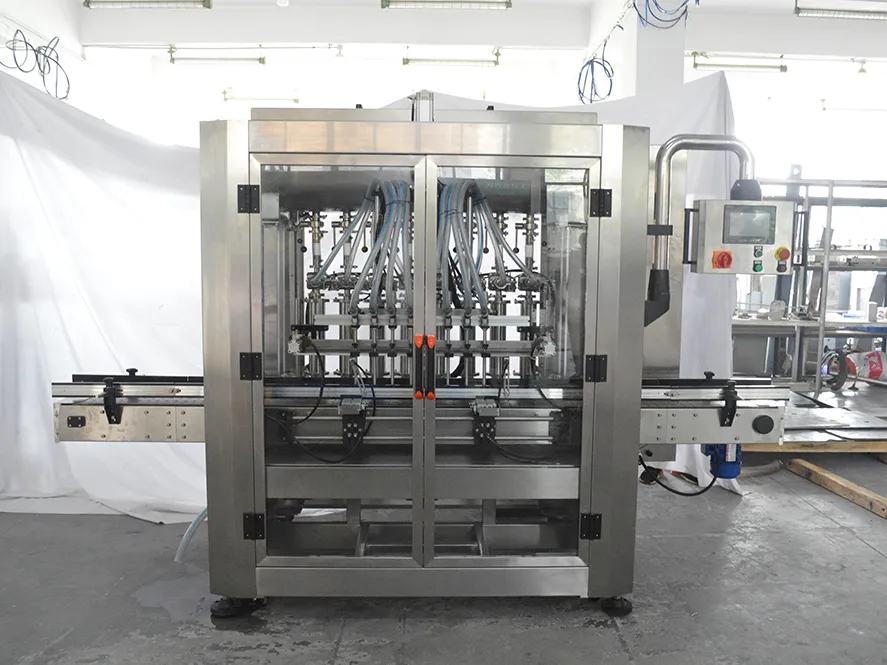
Piston filling machine

How a Sauce Bottling Line Works

  1. Blend the sauce in the processing tank (heat if the recipe needs it).
  2. Sterilize via UHT when running a hot-fill line (product exits above 85 °C).
  3. Fill bottles with the piston filler — no-drip nozzle cuts the stream cleanly.
  4. Cap immediately to lock in hygiene and headspace.
  5. 标签 the bottle (sleeve for contoured jars, self-adhesive for straight bottles).
  6. Code batch and expiry date.
  7. Pack & palletize into cases and onto pallets.

Run a CIP (clean-in-place) cycle between recipes or at shift end — this is non-negotiable for food lines and is built into JNDWATER systems.

5 Engineering Points That Make or Break a Sauce Line

  1. No-drip nozzles. Viscous sauces string and drip; a servo cut-off nozzle prevents product loss and dirty bottles.
  2. De-aeration / anti-foam. Aerated dressings foam in the cylinder; a de-gas hopper keeps fill weight accurate.
  3. 316L stainless + CIP/SIP. Food contact parts must be 316L, mirror-polished, and fully cleanable.
  4. Hot-fill vs cold-fill. Hot-fill (>85 °C) gives shelf life without preservatives; cold-fill needs preservatives or refrigeration. Your recipe decides.
  5. Particle integrity. Chili or jam particles need a large bore and gentle servo motion so chunks stay whole.

Sauce Filling Line Cost in USD (Indicative)

Prices below are indicative ranges for reference only; final cost depends on capacity, bottle shape, sterilization and options. Confirm with a JNDWATER quote.

Line capacity Automation Indicative USD
2,000 BPH Semi-auto $25,000 – $45,000
4,000 BPH 自动 $50,000 – $90,000
6,000–8,000 BPH Full-auto + CIP $100,000 – $180,000

Hidden costs to budget: shipping & insurance, on-site installation and training, spare change parts (nozzles, seals), bottle molds, and local electrical/air compliance. For a broader view of bottling economics, see how much a water bottling machine costs.

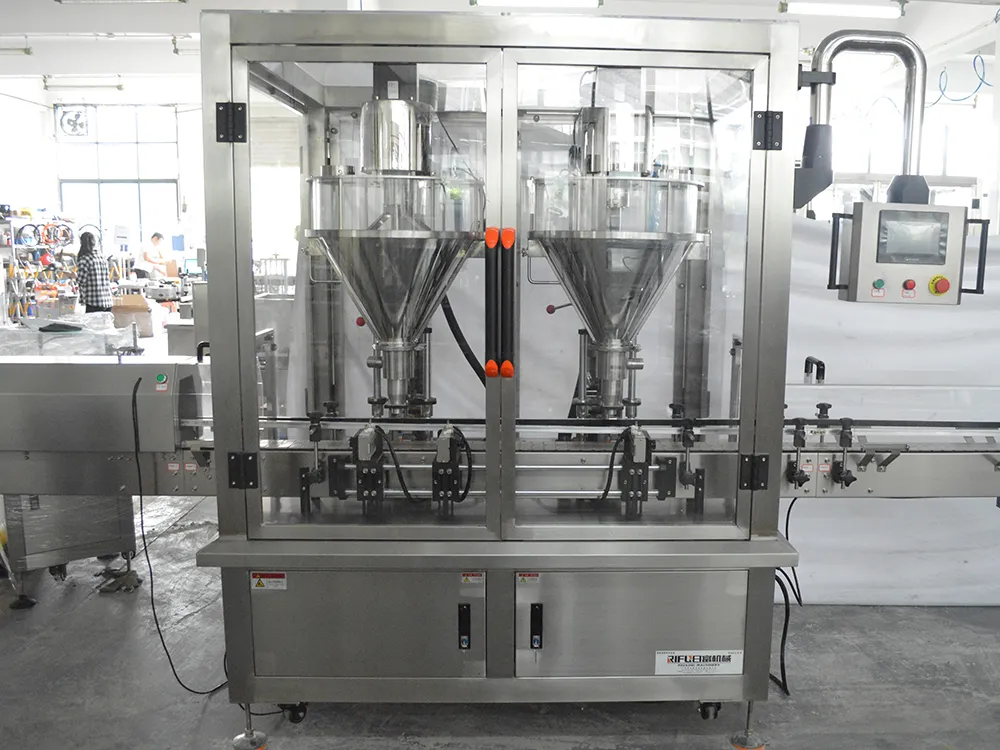
Powder filling machine

FAQ

Can one line fill both ketchup and soy sauce?

Yes, with a quick changeover. Ketchup uses the piston filler; thin soy sauce can switch to the negative-pressure mode or a smaller piston. Budget 30–60 minutes for a clean changeover plus CIP.

Piston or servo pump filler for mayonnaise?

Use a servo piston filler at low speed. Mayonnaise is shear-sensitive; slow, controlled motion keeps the emulsion stable. Avoid high-speed rotary pumps that whip it.

Hot fill or cold fill for sauce?

Hot-fill (above 85 °C) gives ambient shelf life without preservatives — common for ketchup and chili sauce. Cold-fill needs preservatives or refrigeration and is used for fresh dressings.

How do you fill sauce with chili particles without jamming?

Use a large-bore piston cylinder, a product hopper with a gentle agitator, and a cut-off nozzle sized for your largest particle. JNDWATER lines run chili crisp and fruit jam reliably this way.

What is the lead time and MOQ?

Typical lead time is 30–60 days after deposit; MOQ is one line. Spare parts ship from stock.

结论

A sauce filling line lives or dies on the details: the right filler for your viscosity, no-drip nozzles, 316L + CIP hygiene, and a hot/cold-fill decision matched to your recipe. JNDWATER builds piston-based condiment lines from 2,000 to 8,000 BPH with full CIP and changeover kits.

Get a Customized Quote

相关文章

你一直渴望问的装瓶秘密

从第一滴过滤到数百万瓶子从您的产品线中流出,我们为您解开了所需的行业洞察。无论是技术规格还是运营效率,这里都能找到明确的答案。

使用本文

相关文章

blowing machine-2
新闻

如何更换吹塑机的模具:逐步指南

Changing molds on a blow molding ma chine is routine maintenance that directly affects your production uptime and bottle quality. Whether you run a JNDWATER semi-automatic PET blower or a fully automatic rotary blow molding machine, the mold change procedure follows the same core principles. This guide walks you through the complete process — preparation, removal,…

阅读更多
filling machine water
新闻

Jndwater成功为香港客户安装紧凑型小瓶装管线,灵活布局克服空间限制

深圳市金富来饮水设备有限公司, a leading manufacturer of beverage filling and packaging machinery, has successfully completed the installation, commissioning, and training for a 2,000–3,000 BPH small bottle filling line for a Hong Kong-based beverage producer. The line has now officially entered production. The project highlights JNDWATER’s capability to deliver customized small…

阅读更多
film wrapping machine
新闻

软饮料加水管线常见故障及快速故障排除指南

灌装线由多种设备组成,包括灌装机、吹塑机、标签机和包装机。这些机器的任何一台故障都可能影响整条线路的运行。以下是最常见的设备故障和快速排查方法。一、填充机填充量不准确:主要......

阅读更多
opp labeling machine
新闻

碳酸饮料生产线使用哪种类型的标签机?分析OPP热熔胶标签机的优势。

碳酸饮料生产有特定的环境要求——装满后瓶子温度较低(通常低于4°C),运输过程中容易冷凝;生产线速度很快;碳酸饮料瓶需要承受4-5大气压的内部压力,使瓶子相对坚固。这些特性决定了标签设备的选择。OPP......

阅读更多