In the filling and production process of can packaging in the beverage, beer, and juice industries, can sealing machines are key equipment that determines the product’s airtightness and shelf life. Faced with the two main options of semi-automatic and fully automatic machines, this article will provide a detailed comparison of semi-automatic can sealing machine and automatic can sealing capping machines from three dimensions: working principle, functional characteristics, and application scope, to help you make the choice that best suits your production line.
Working principle
1.1 Working Principle of Semi-Automatic Can Sealing Machine
The core of the semi-automatic can sealer is the “double-roll sealing” technology, employing a semi-automatic mode where manual can loading and unloading is followed by automatic sealing.
Workflow: Manual can loading – Manual cap placement – Sealing start – Pressing and positioning – First roll sealing – Second roll sealing – Can ejection
1.2 Working Principle of Fully Automatic Can Sealing Machine
The automatic can sealing machine adopts a rotary multi-head sealing structure, achieving fully automatic continuous operation.
Workflow: Automatic can feeding – Automatic cap separation – Automatic sealing – Automatic can ejection
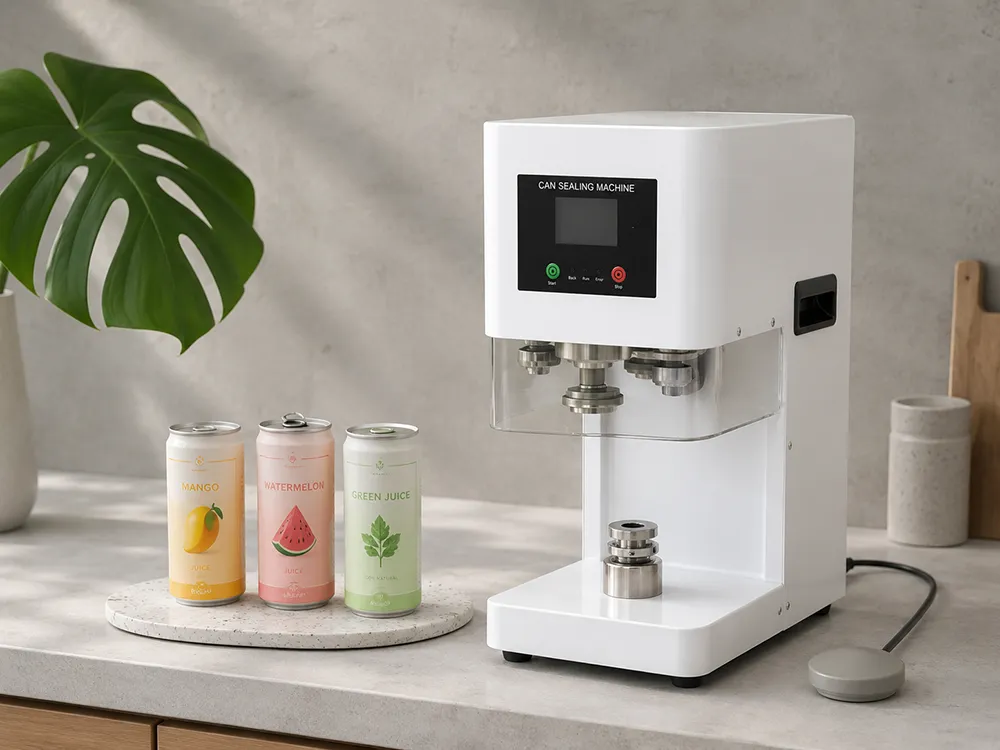
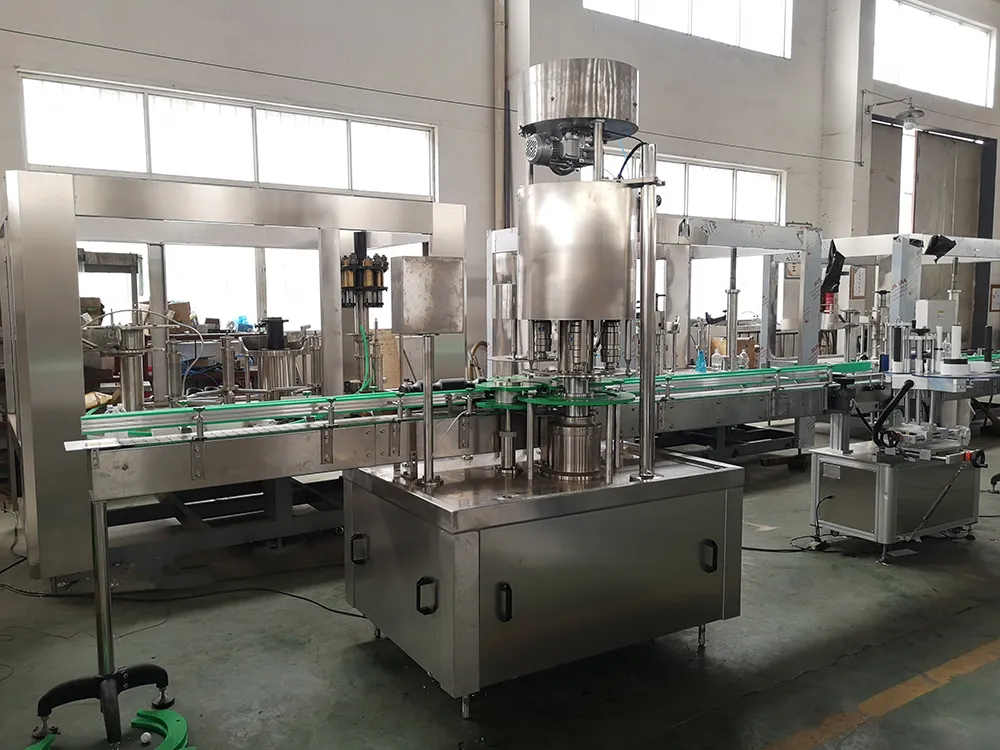
Feature Comparison
| Features | Semi automatic can sealing machine | Fully automatic can sealing machine |
| sealing method | Single head intermittent sealing | Multi head rotating continuous sealing |
| sealing speed | 10-30 cans/minute | 100-600 cans/minute |
| Sealing accuracy | Dependent on operational proficiency, ± 0.1mm | Height consistency, ± 0.05mm |
| Can type adaptability | Replace the mold for 5-10 minutes | Replace the mold for 20-40 minutes |
| operation method | Manually up and down the tank, foot pedal start | PLC control, automatic operation |
| Artificial demand | 1 person dedicated to operation | One person can monitor multiple lines |
| Land occupation space | 0.5-1 square meter | 3-10 square meters (including conveyor line) |
| Power requirements | 220V household power supply | 380V industrial power supply |
| Air source requirements | 0.6-0.8MPa | 0.6-0.8MPa |
| Connection ability | Single machine independent operation | Can be connected for filling, testing, and packaging |
| Flexibility in product exchange | High, suitable for multiple varieties | Generally, suitable for large quantities |
Scope of application
3.1 Applicable scenarios of semi-automatic can sealing machine
Beer House: Daily production of 500-3000 cans, with a wide variety of products. The semi-automatic sealing machine can quickly switch can types to meet the needs of small batches.
Juice Workshop: produces NFC juice, smoothies, milk tea and other products, with a daily output of 1000-5000 cans. Semi automatic equipment has low investment and is suitable for the early stages of entrepreneurship.
Restaurant/Bar: On site filling of freshly squeezed fruit juice or craft beer, with a daily production capacity of less than 500 cans. Semi automatic equipment occupies a small area and is easy to operate.
3.2 Applicable scenarios of fully automatic can sealing machine
Beverage factory: Large scale production with a daily output of over 100000 cans, such as carbonated beverages like cola and Sprite. The high speed and stability of fully automated equipment are essential.
Beer Group: Beer production line with an hourly output of tens of thousands of cans. The fully automatic sealing machine needs to operate in conjunction with the filling machine and labeling machine.
Functional beverage brands: energy drinks such as Red Bull and Magic Claw have extremely high requirements for sealing consistency and production efficiency.
OEM: Providing OEM services for multiple brands, requiring efficient and low-cost sealing solutions.