Complete Equipment List for a Bottled Water Production Line:
A standard bottled water production line requires six major systems working together from raw water to finished product.
Water Treatment System
Water treatment is the “foundation” of bottled water production, directly determining product quality. Regardless of whether the water source is tap water, groundwater, or spring water, it must be purified by this system before bottling.
Core equipment includes:
Raw Water Tank/Pump: Stores raw water and provides stable power for subsequent treatment.
Raw Water Tank/Pump: Stores raw water and provides stable power for subsequent treatment.
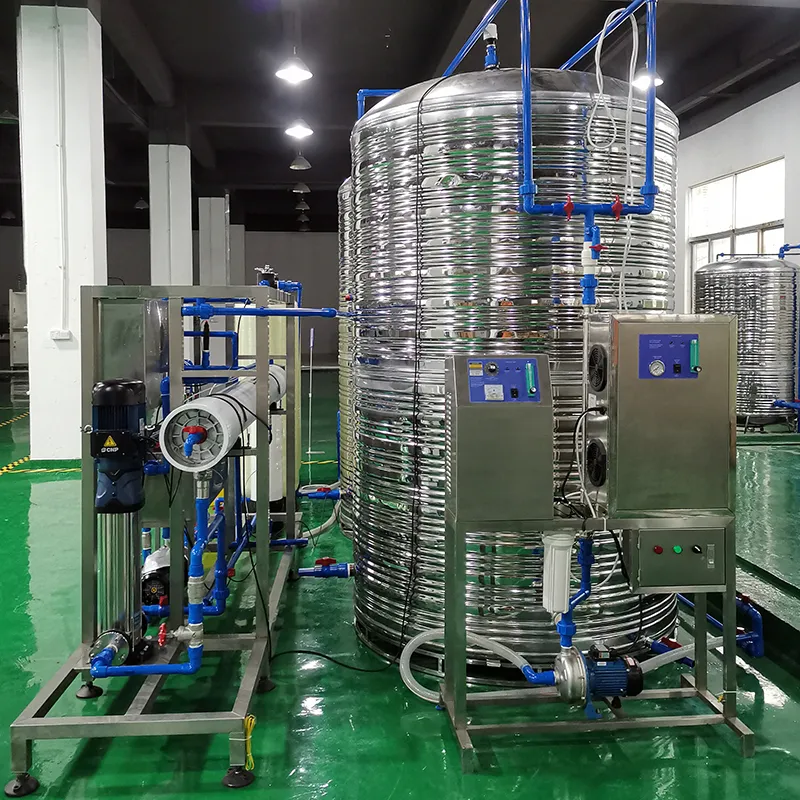
Raw Water Tank/Pump: Stores raw water and provides stable power for subsequent treatment.
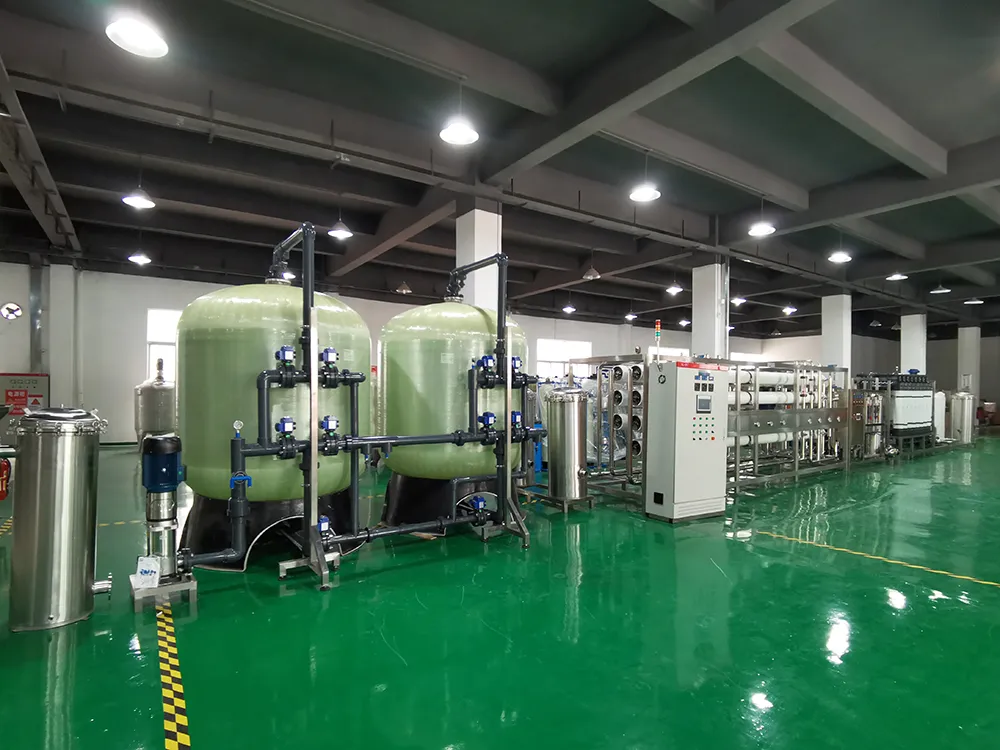
Multi-media Filter: Removes silt, suspended solids, and colloidal impurities from the water, typically containing quartz sand and anthracite filter media.
Activated Carbon Filter: Adsorbs residual chlorine, organic matter, and odors from tap water. If the raw water has a high chlorine content and the activated carbon is ineffective, it will directly damage the downstream RO membrane.
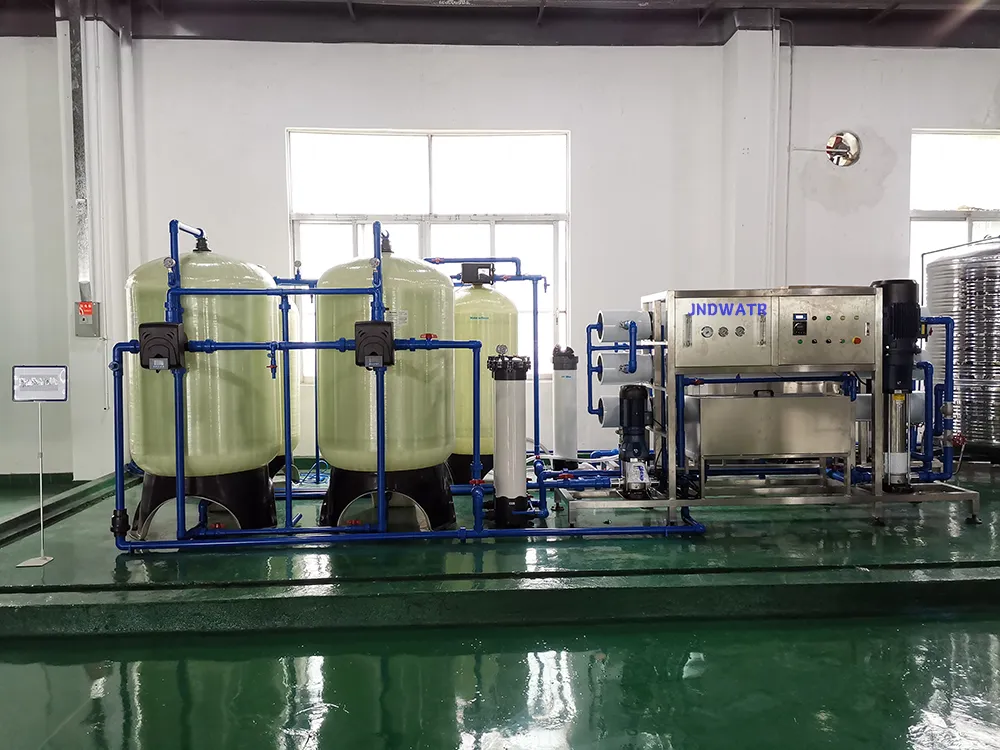
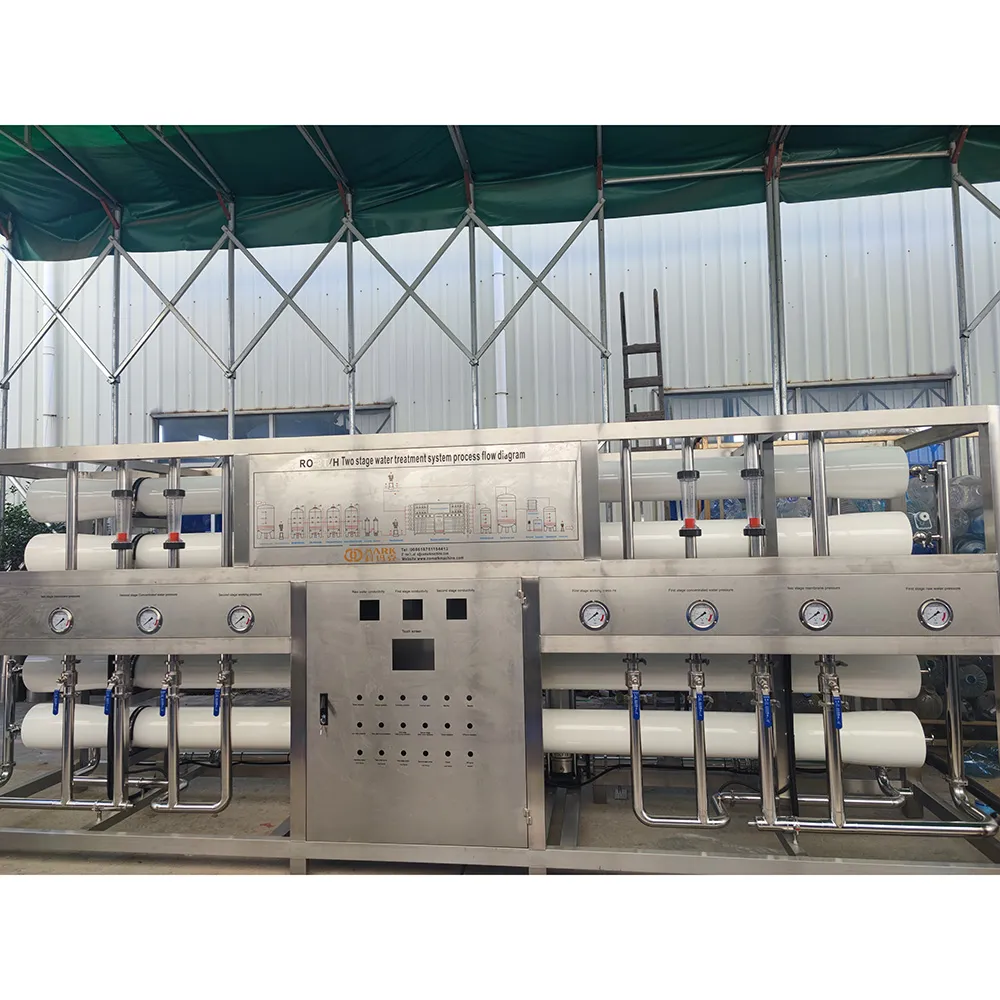
Precision Filter: Serving as the “last line of defense” before the RO membrane, it intercepts particles larger than 5 microns, protecting the valuable RO membrane elements.
Reverse Osmosis (RO) Unit: The core of the water treatment system. RO membranes remove 97%-99% of dissolved salts, heavy metals, bacteria, and viruses from water, producing high-quality purified water.
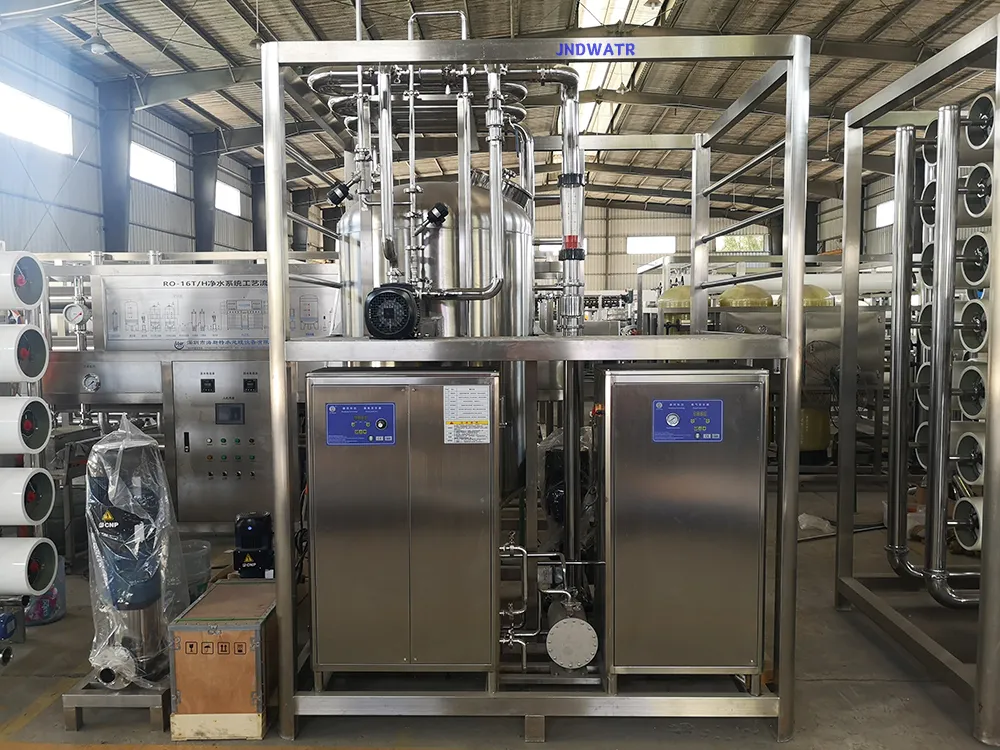
Ozone Mixing System: Sterilizes and preserves the finished water, ensuring that no microorganisms grow during storage and transportation after bottling.
Pure Water Storage Tank: Stores the treated finished water. It is typically made of stainless steel and equipped with a breather to prevent external contamination.
- Empty Bottle Handling System
Bottled water containers are reused, and the empty bottles must undergo rigorous cleaning before refilling. This step directly affects product hygiene and safety.
Cap Removal Machine:Automatically removes old caps from the recycled bottles, preparing them for subsequent cleaning.
External Bottle Washing Machine:** Uses rotating brushes and high-pressure spray to clean dust and stains from the exterior of the bottles.
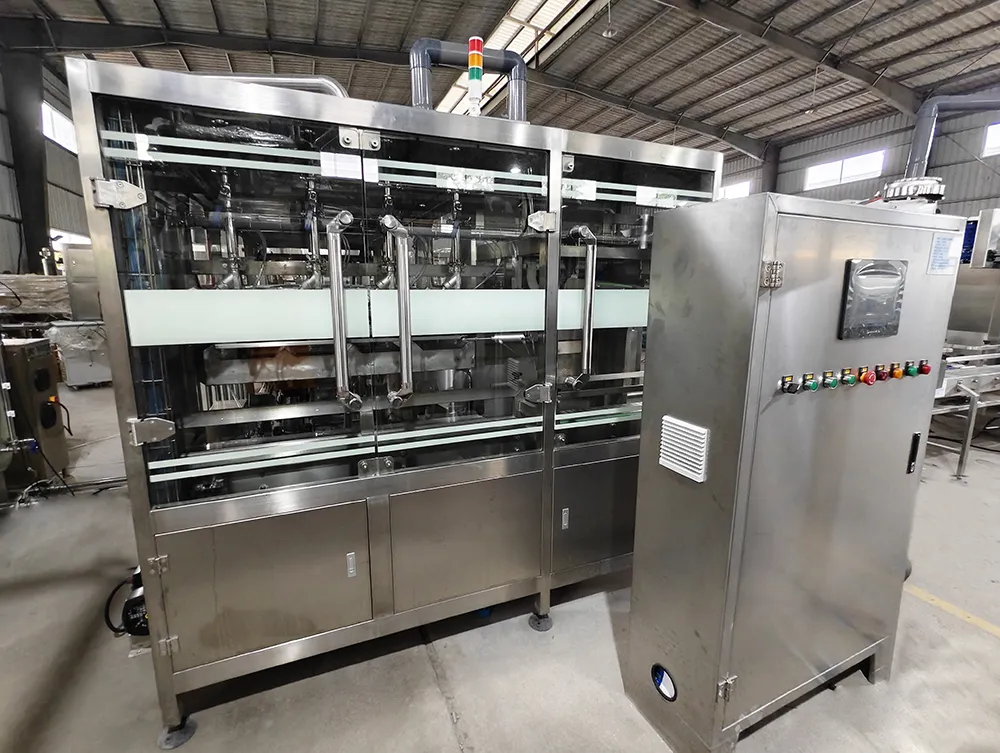
Internal Bottle Washing and Disinfection Machine: This is the core equipment in the cleaning process, typically employing a multi-stage rinsing process—alkaline washing to remove oil and organic matter, disinfectant sterilization, and pure water washing to remove residue. The entire process is automated, ensuring that every bottle is thoroughly cleaned.
Light Inspection Box: After cleaning and filling, operators use lights to inspect the bottles for foreign objects inside and damage to the bottle body. Standard production lines usually have two light inspection stages: before and after cleaning.


- Filling and Capping System
This is the most crucial and expensive part of the entire production line. Filling accuracy and hygiene standards directly determine product quality.
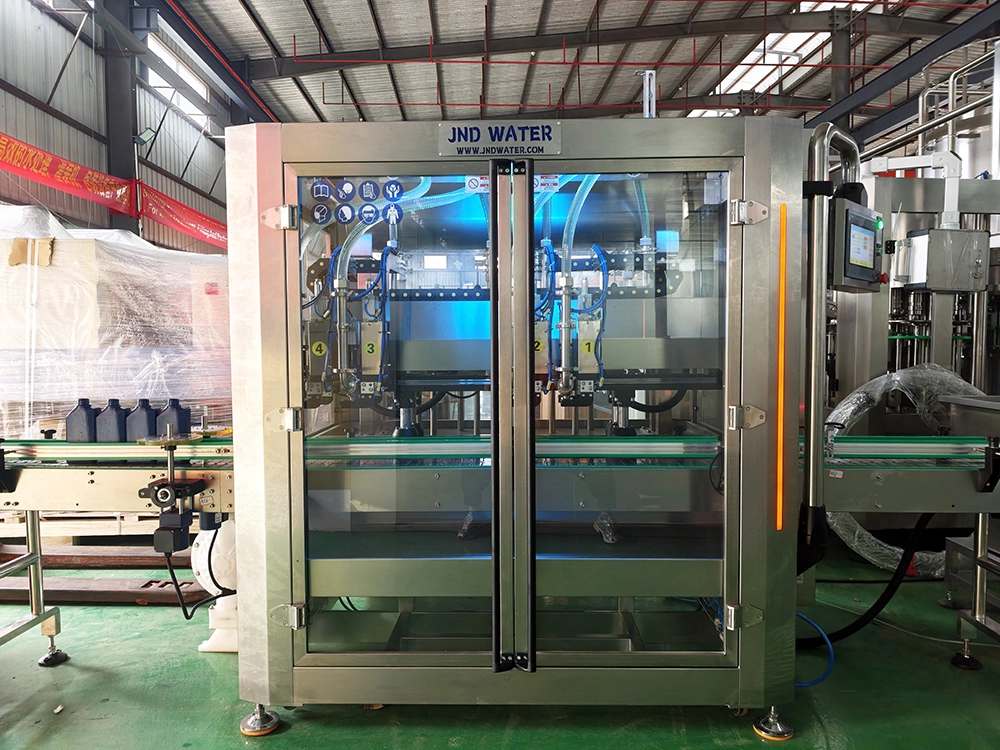
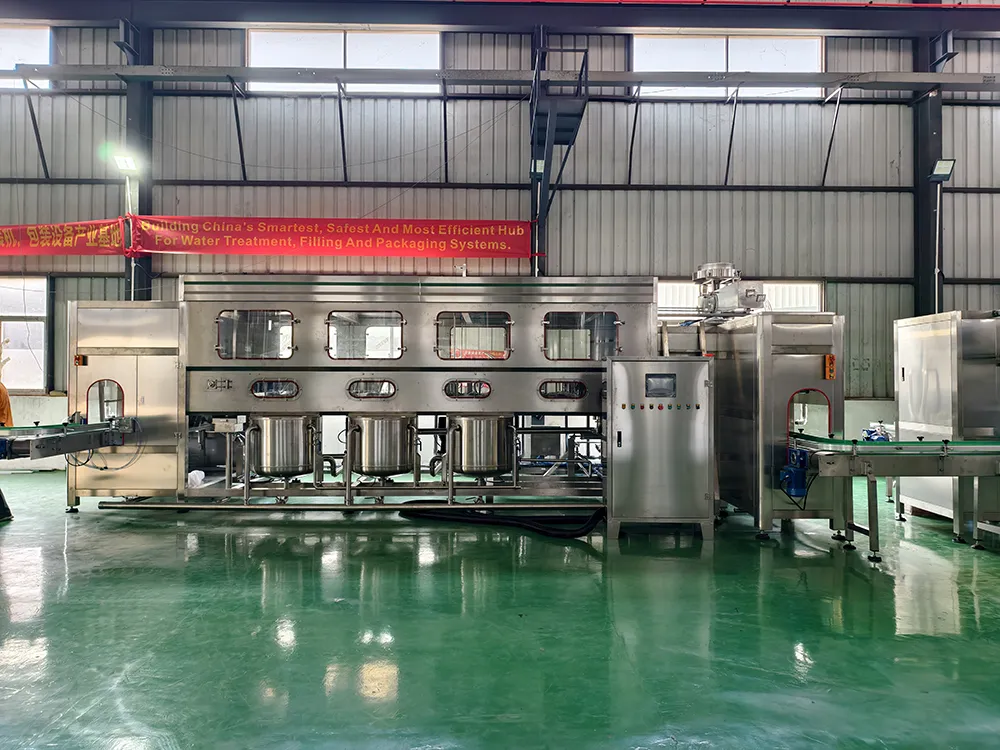
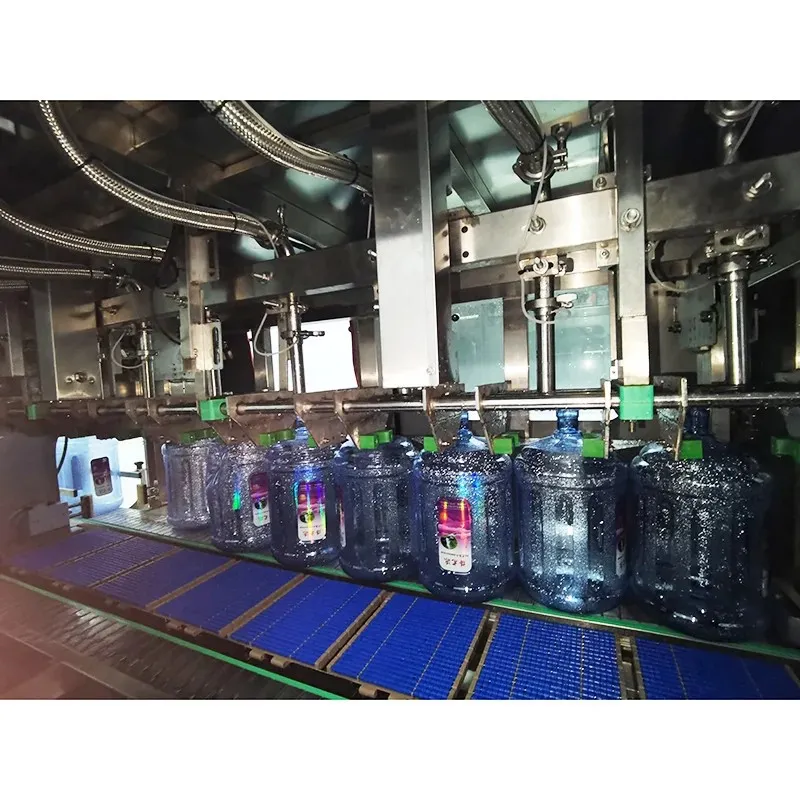
Fully Automatic Filling Machine: Quantitatively fills the treated water into the containers. Modern filling machines use non-contact quantitative filling technology, with filling accuracy controllable within ±1%.
Cap Sorting/Sterilization/Capping Machine: Automatically sorts bottle caps, sterilizes them, and then presses them firmly onto the container opening. The capping seal rate must reach 99.9% or higher; otherwise, leakage will occur during transportation.
- Packaging System
After filling and capping, the finished containers still need to be packaged before warehousing and sales.
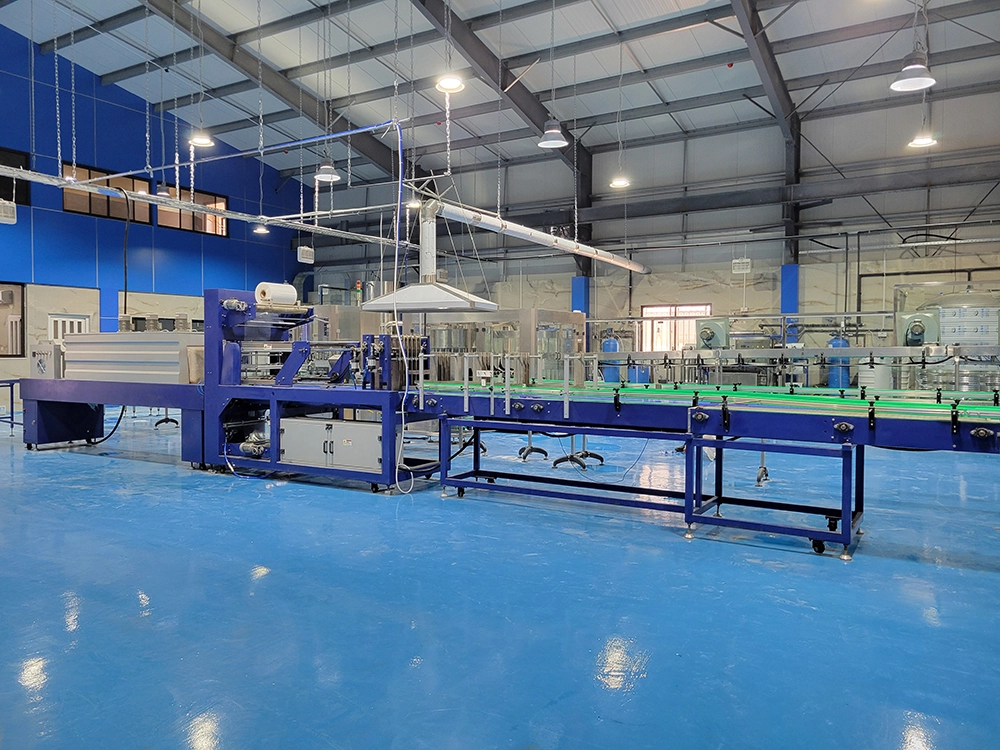
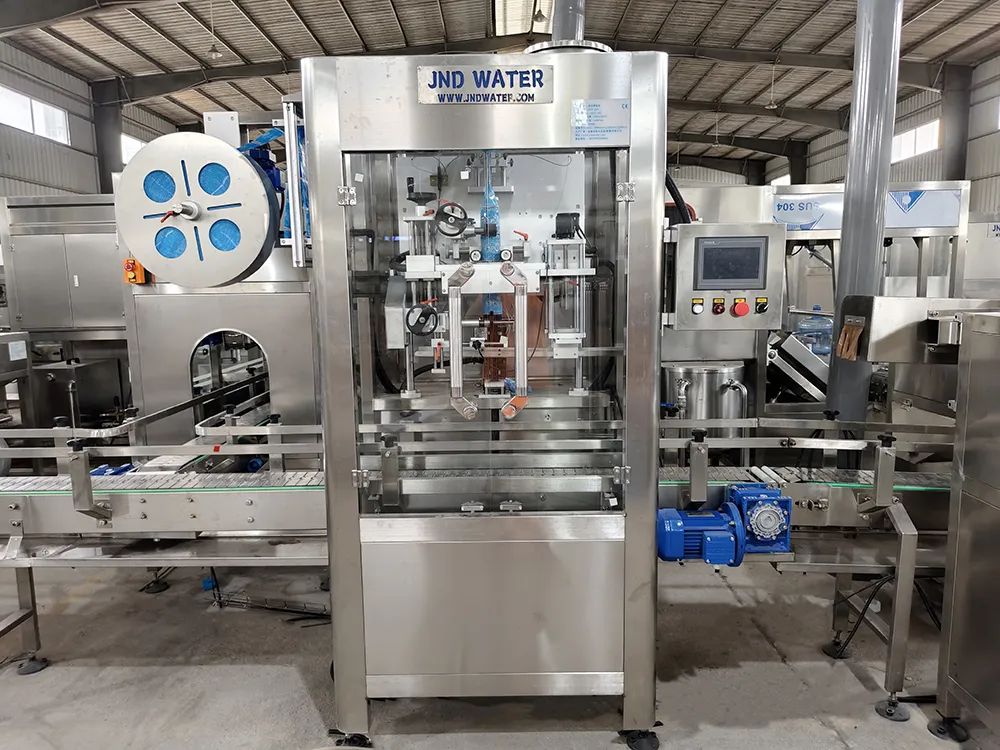
Automatic Sleeve Labeling Machine: Attaches heat-shrink labels to the container opening, serving both anti-counterfeiting and aesthetic purposes. Labeling is a unique packaging process for bottled water.
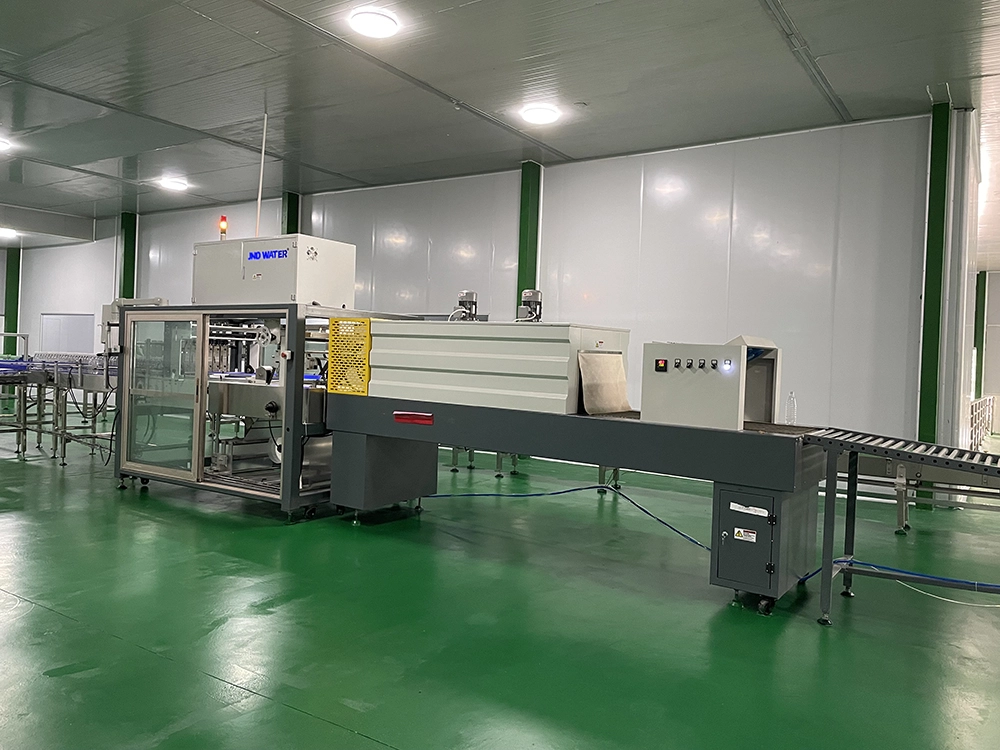
Steam Shrink Film Machine: Heats the attached labels, causing them to shrink tightly and adhere to the container opening.
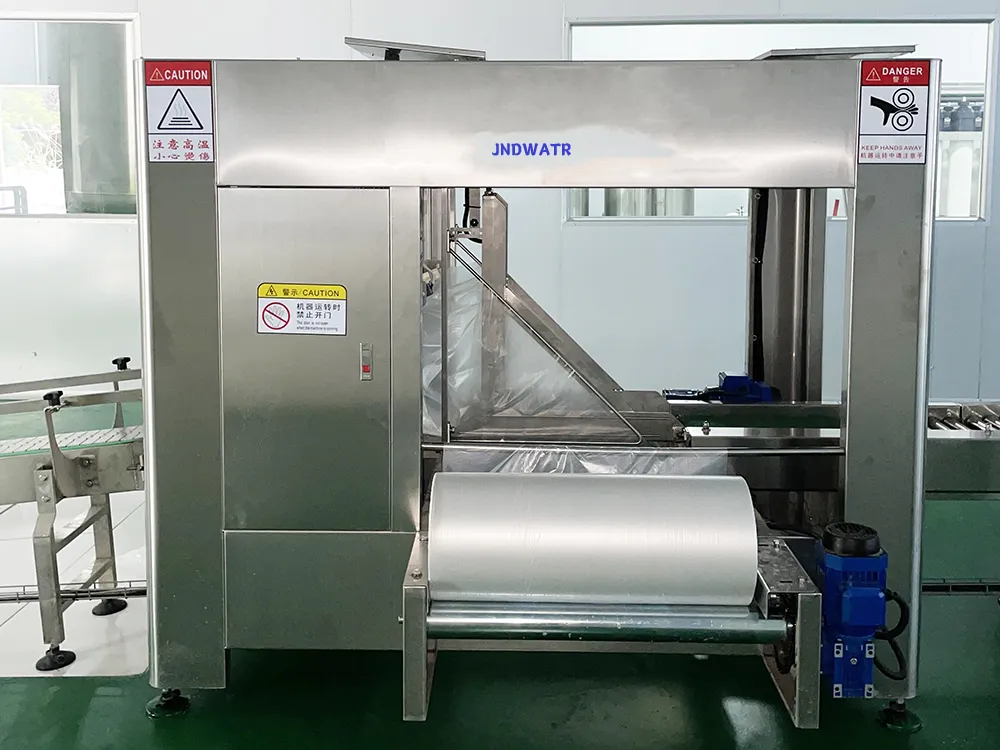
Automatic bagging machine: Covers the finished drums with plastic bags to prevent dust contamination during transportation.
Inkjet/laser coding machine: Prints production dates, batch numbers, and other information on bottle caps or drums, a crucial step in product traceability.
- Palletizing System
Finished drums need to be neatly stacked on pallets for easy storage and transportation.
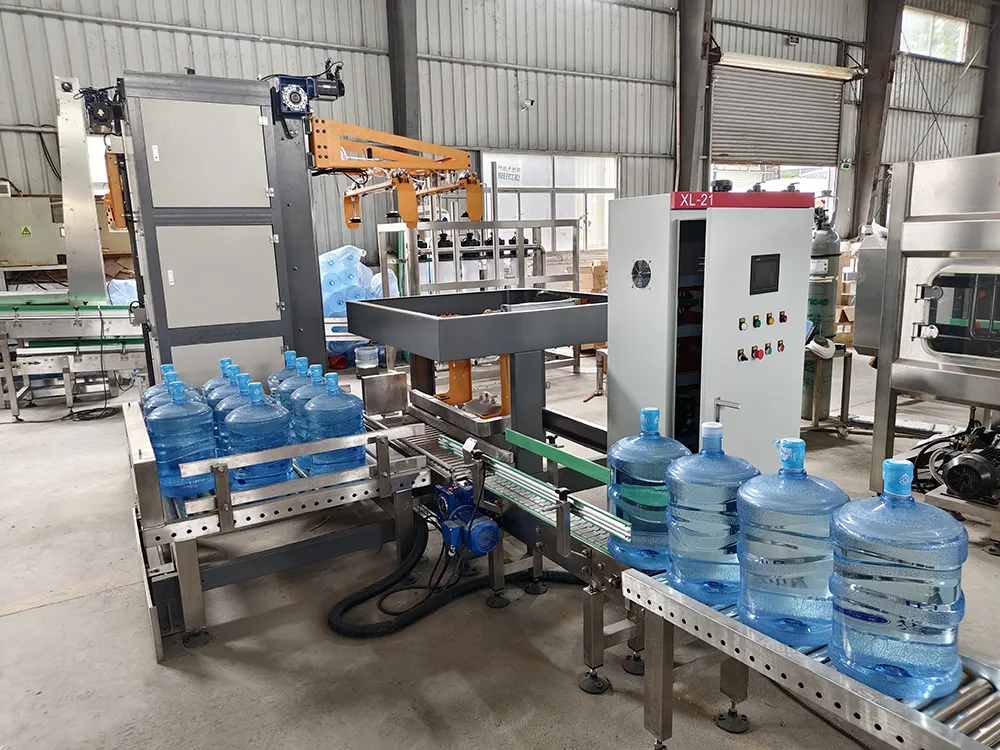
Finished Product Conveyor Belt: Transports filled drums from the filling workshop to the palletizing area.
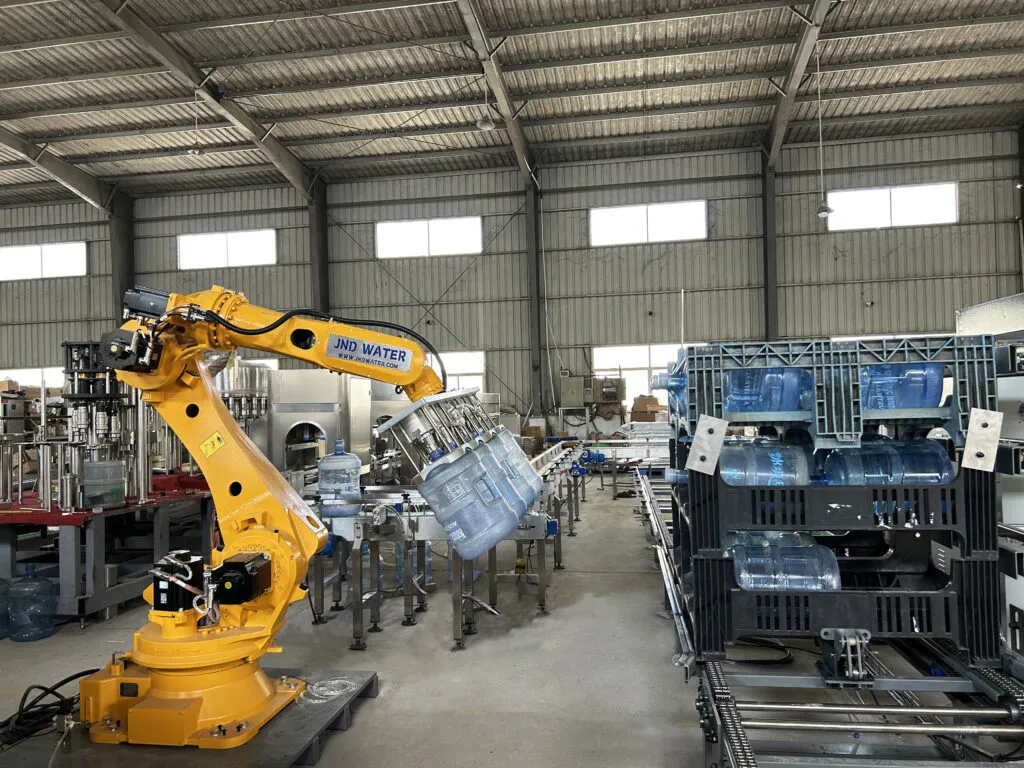
Automatic Palletizer: Automatically stacks finished drums on pallets according to a pre-set pattern. Large production lines are typically equipped with robotic palletizers, which are highly efficient and produce neat stacks.
- Auxiliary Systems
CIP Cleaning System: Performs online cleaning of equipment such as pipelines, tanks, and filling machines, completing the cleaning of the entire production line without disassembly. This is crucial for ensuring long-term stable production.
Compressed Air System: Provides power to pneumatic valves, cylinders, and other components.
Equipment Configuration and Investment Reference for Different Sizes
Investment in bottled water production lines mainly depends on production capacity and automation level.
Small Production Line (100-300 bottles/hour)
This configuration is suitable for township water plants, community distribution points, or start-ups.
Equipment Configuration: Primarily semi-automatic. Core equipment includes a small water treatment system (approximately 7,000-14,000 USD) and a semi-automatic washing, filling, and sealing machine (approximately 14,000-28,000 USD). Manual intervention is relatively high.
Investment Reference: Equipment investment is approximately 28,000-53,000 USD. Including factory renovation, licensing, and initial working capital, the total investment is approximately 60,000-116,000 USD.
Medium Production Line (300-800 bottles/hour)
This is currently the mainstream choice for regional water plants, capable of meeting the daily supply needs of county or city-level markets.
Equipment Configuration: Highly automated, equipped with a fully automatic filling machine (4-8 filling heads), automatic bottle loading and labeling system, and a single-stage RO water treatment system (3-5 tons/hour).
Investment Reference: Equipment investment is approximately 74,000-144,000 USD, with a total investment of approximately 130,000-253,000 USD. According to official bidding information, the maximum price for equipment procurement and installation for a 1200 barrels/hour production line is approximately 399,000 USD.
Large-scale Production Line (800-2000 barrels/hour and above)
Suitable for large-scale national or regional water companies requiring production capacities of tens of thousands of barrels per day.
Equipment Configuration: Fully automated high-speed production line, equipped with a dual-stage RO water treatment system (5-10 tons/hour), high-speed filling machines (8-16 filling heads), robotic palletizing system, and central PLC control system.
Investment Reference: Equipment investment is approximately 161,000-308,000 USD, with a total investment of approximately 249,000-478,000 USD.
Besides equipment, how much money do I need to prepare?
Equipment is only part of the investment. Setting up a water plant also requires budgeting for the following expenses:
Factory Building: A bottled water production line requires a factory building of 200-800 square meters, with a recommended ceiling height of at least 5 meters. The bottling workshop needs cleanroom renovation (Class 10,000 cleanroom standard), which is a significant investment.
Certificate Acquisition: A business license and a food production license (SC certification) are mandatory requirements. If you are extracting groundwater, you will also need a water extraction permit.
Bottle Procurement: Food-grade PC bottles cost approximately 30-50 yuan each. Initially, you will need to prepare 3,000-5,000 turnover bottles, which is a major one-time investment.
Raw Materials and Operating Funds: Sufficient working capital is needed for daily consumables such as bottle caps, labels, and packaging films, as well as personnel salaries, utilities, and marketing expenses.
Selection Recommendation: For the initial stage, a medium-sized production line with a capacity of 300-600 barrels/hour is recommended. This will meet initial market demand while allowing for growth potential. It is advisable to reserve 15-20% of capacity as a margin to avoid insufficient capacity immediately after production begins.
For detailed equipment configuration plans and accurate investment quotes, please feel free to contact the JNDWATER team. We will provide you with free solution design and investment analysis.