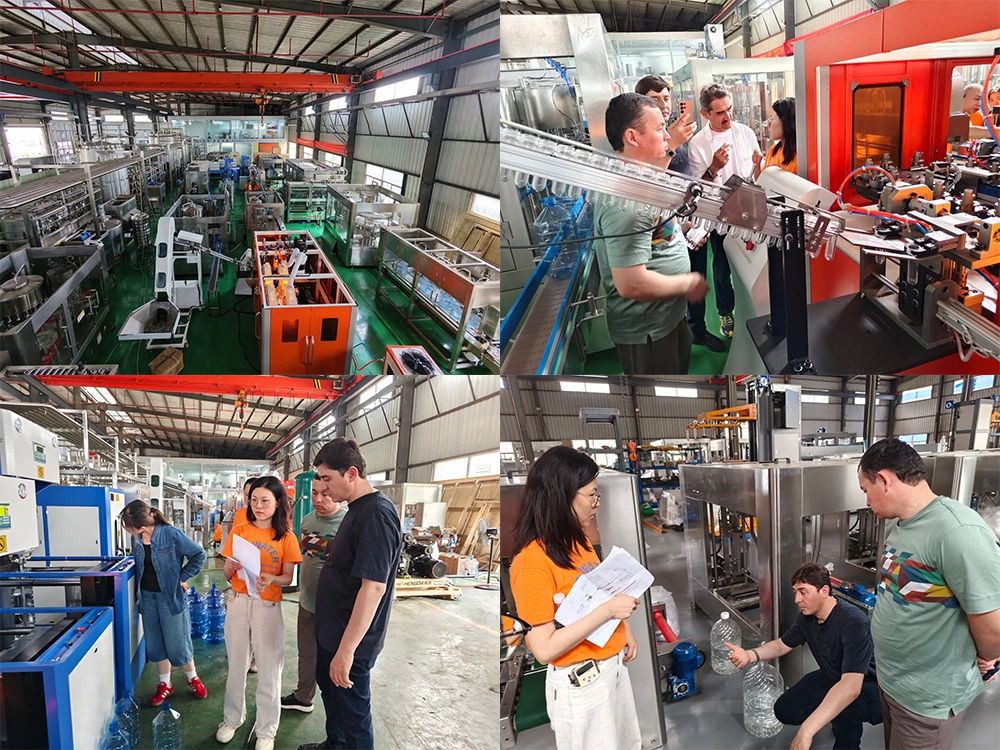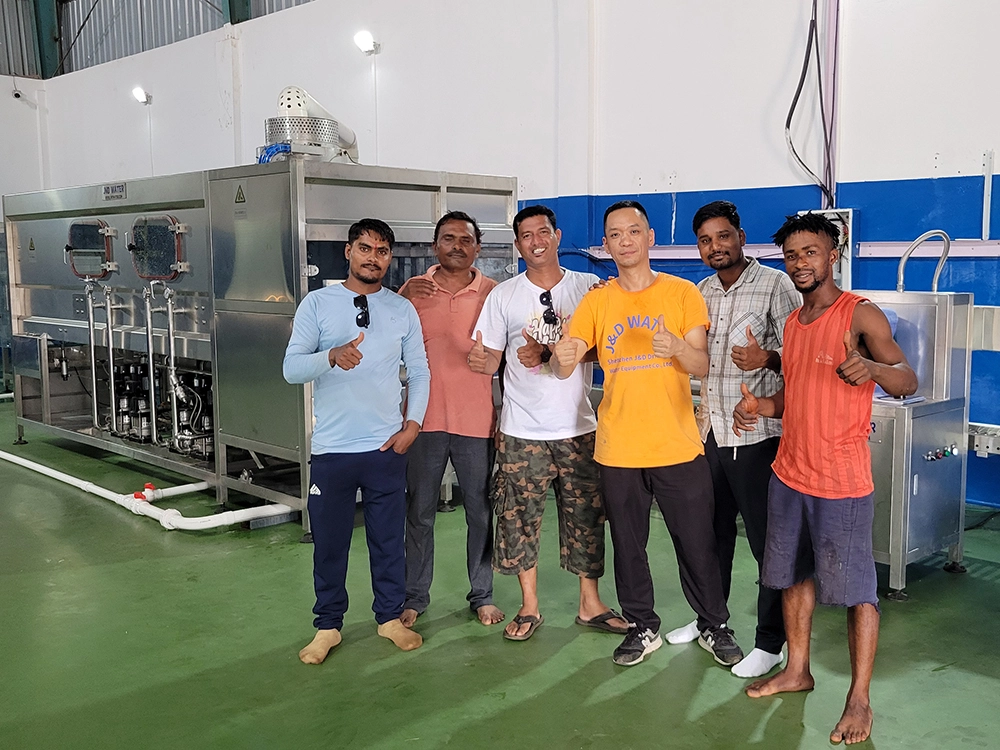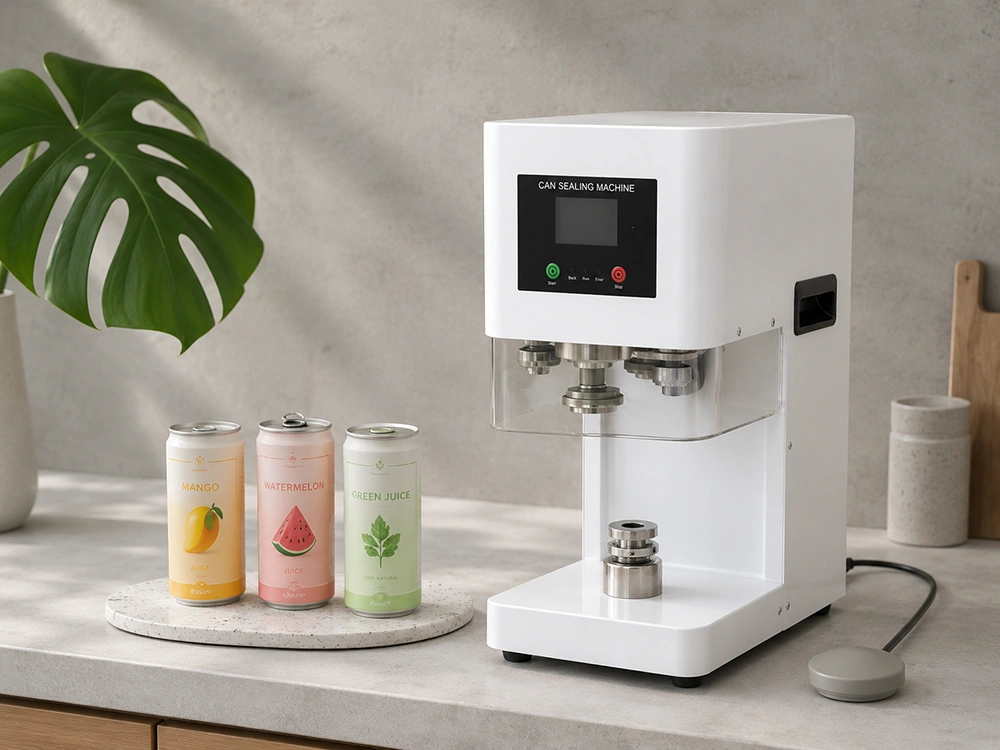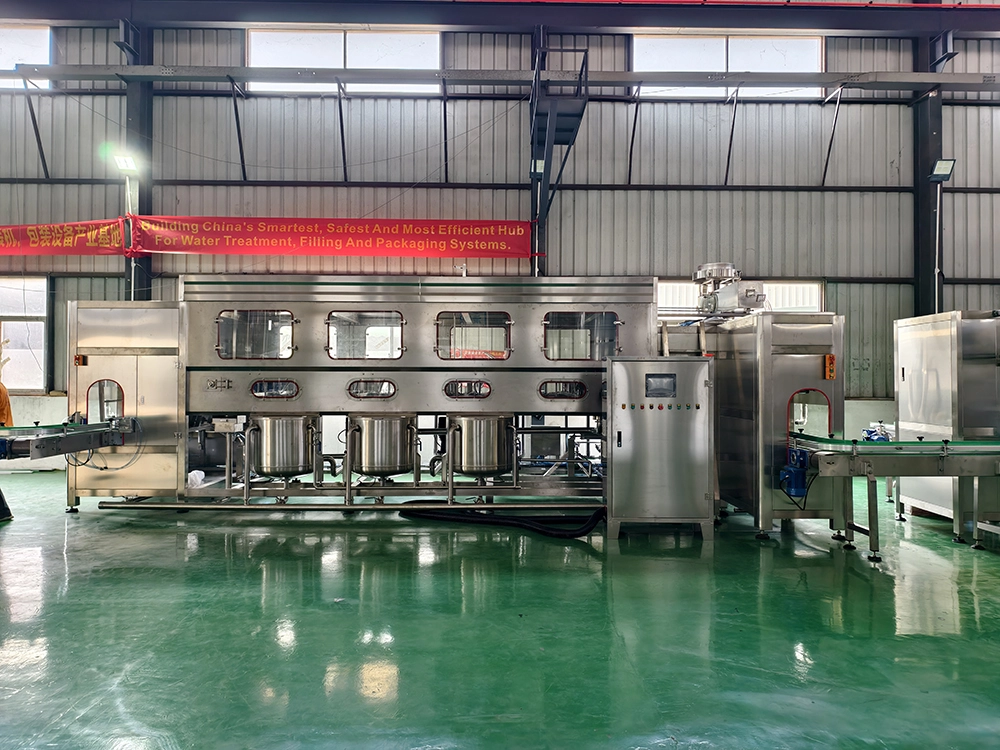
A complete aluminum can filling line is not simply a collection of machines, but a highly collaborative system engineering project. A weakness in any part, whether it’s unpalletizing, filling, or palletizing, will affect the overall efficiency of the line.
A standard aluminum can filling machine line process flow: Empty can unpalletizing → Empty can cleaning/purging → Filling → Sealing → Sterilization/warming → Liquid level detection → Drying → Coding → Packaging → Palletizing
II. From Empty Cans to Can Filling Machine
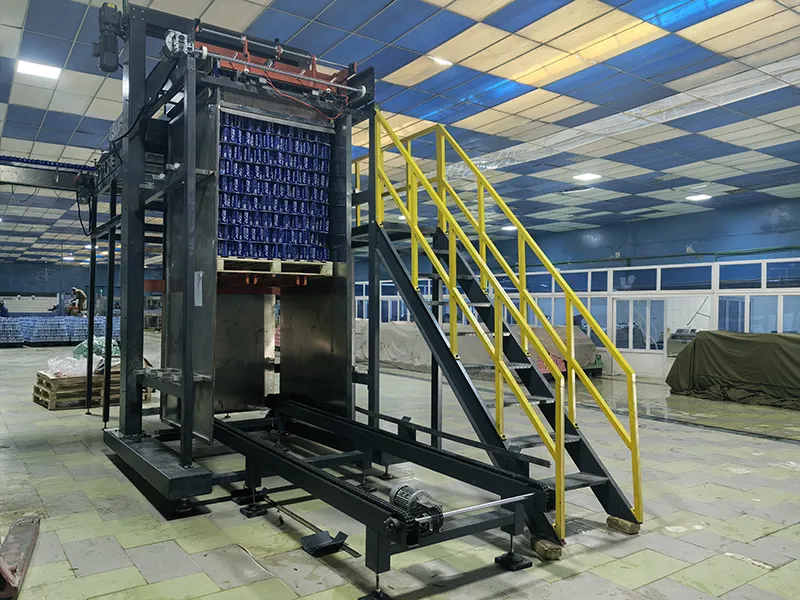
2.1 Empty Can Depalletizer
This is the starting point of the entire production line. Stacks of empty cans are fed into the depalletizer by forklifts. The equipment automatically unloads the cans layer by layer from the pallets and sends them into the conveyor system. The depalletizer is equipped with light curtain protection, variable frequency speed control conveyor rollers, and automatic pallet stacking functions to ensure a stable and continuous supply of empty cans.
2.2 Empty Can Washing/Can Cleaning Machine
Empty cans may become contaminated with dust during transportation and storage. Before entering the filling process, they need to pass through an empty can washing/drying machine, where sterile water is used to clean and blow out the inside of the cans to ensure cleanliness.
III. Filling and Sealing
3.1 can Filling Machine
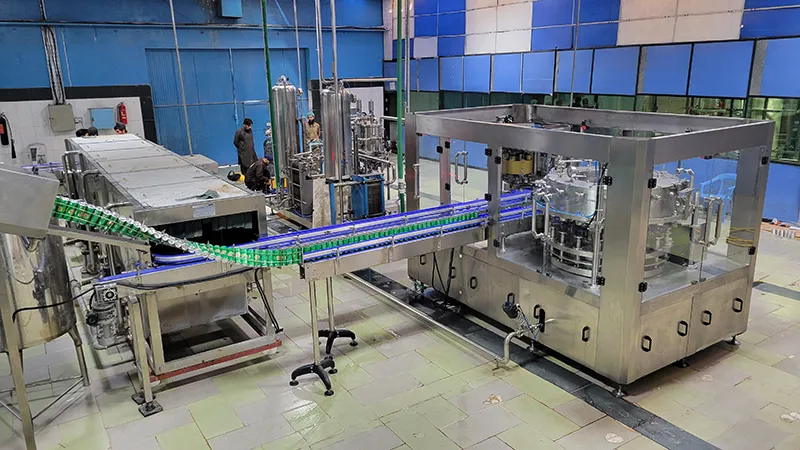
The filling and sealing process is the heart of the entire production line. Can production lines generally use integrated filling and sealing machines, with the sealing machine driving the filling machine synchronously to ensure stable liquid levels.
Technical Highlights:
- Isobaric Filling: Carbonated beverages require isobaric filling technology. Before filling, the can is pressurized to prevent CO₂ escape and foam formation.
- Carbon Dioxide Pre-Purge: Before filling, CO₂ replaces the air inside the can, reducing dissolved oxygen content.
- Filling Accuracy: Advanced equipment can achieve an accuracy of ±0.5%.
- Applicable Can Types: Diameter φ52.5-φ99mm, Height 39-160mm
3.2 Double Roll Sealing Technology
The sealing of cans uses a double roll sealing process. The first roller bends the edge of the can lid towards the can body, causing the lid hook and can hook to initially engage. The second roller flattens the weld seam, forming a dense, airtight seal. The sealing quality directly determines the product’s shelf life. High-speed lines are typically equipped with online edge-rolling monitoring systems and undergo regular edge-rolling dissection inspections.
IV. Sterilization, Testing, and Packaging
4.1 Sterilization/Can Warming
Sweet or low-acid beverages (such as juice and tea) require heat treatment in a sterilization tunnel or autoclave after bottling to ensure microbiological safety. Carbonated beverages and beer typically use a can warming machine to raise the can temperature to room temperature, preventing condensation from affecting subsequent labeling and packaging.
4.2 Testing Equipment
Pressure Testing Machine: Performs compression pressure testing on carbonated beverage cans to ensure the cans meet pressure resistance standards.
4.3 Drying Machine
After filling and sterilization, the can surface retains moisture. A drying machine uses high-pressure air to dry the surface, preparing it for subsequent coding and labeling.
4.4 Coding/Laser Marking Machine
Production date, batch number, and other information are printed/laser-engraved on the bottom or body of the can for product traceability.
4.5 Packaging Equipment
Heat Shrink Film Packaging Machine: Wraps multiple cans of product in film and heat-shrinks them, suitable for supermarket retail.
Carton Packaging Machine: Packs products into cartons, suitable for wholesale and long-distance transportation.
4.6 Palletizer Machine
At the end of the production line, robotic palletizers or high-level palletizers automatically stack finished boxes/bags onto pallets, facilitating warehousing and logistics.
V. Supporting Auxiliary Systems
In addition to the core equipment mentioned above, a complete can filling line requires the following supporting systems:
- CIP Cleaning System: Performs online cleaning of the filling machine, pipelines, and storage tanks without disassembling the equipment.
- Conveying System: Smoothly transfers empty and filled cans between different machines, ensuring pressureless transport to prevent can deformation.
- Central Control System: A PLC centrally controls the speed and interlocks of all equipment, enabling coordinated operation of the entire line.
- Syrup Preparation System: Sugary beverages require units for sugar dissolving, preparation, and sterilization.