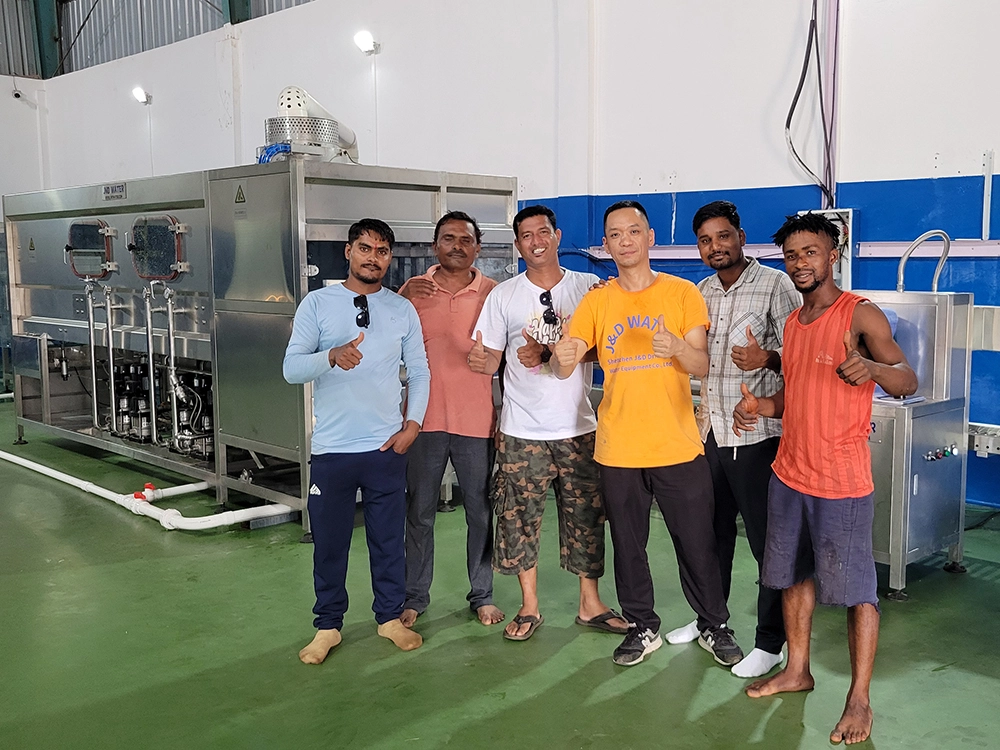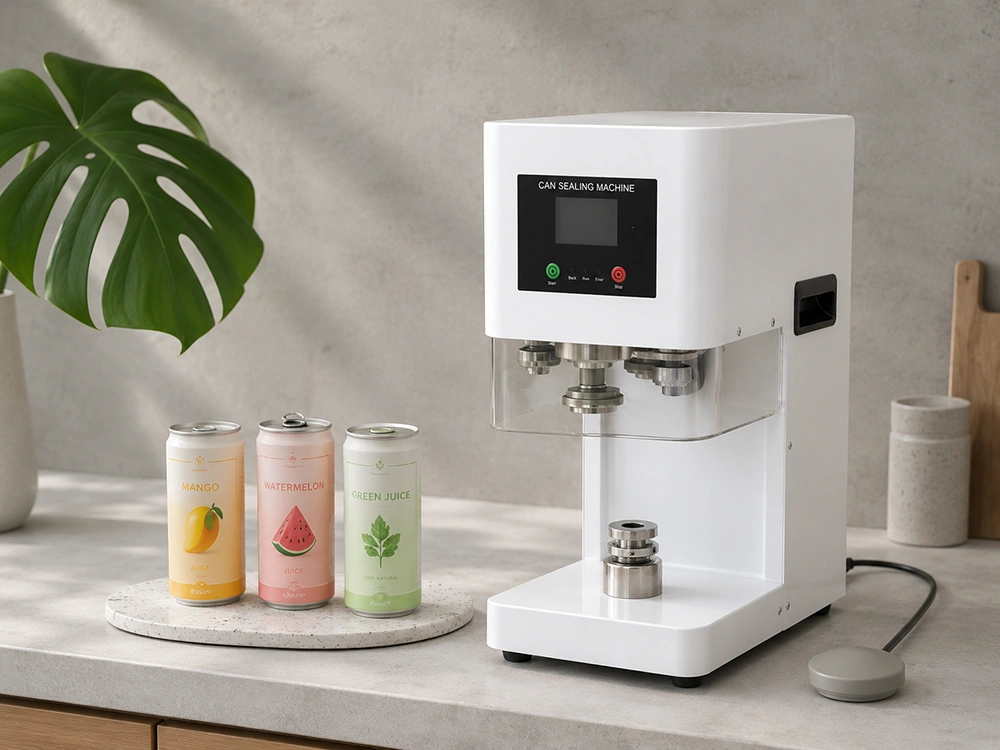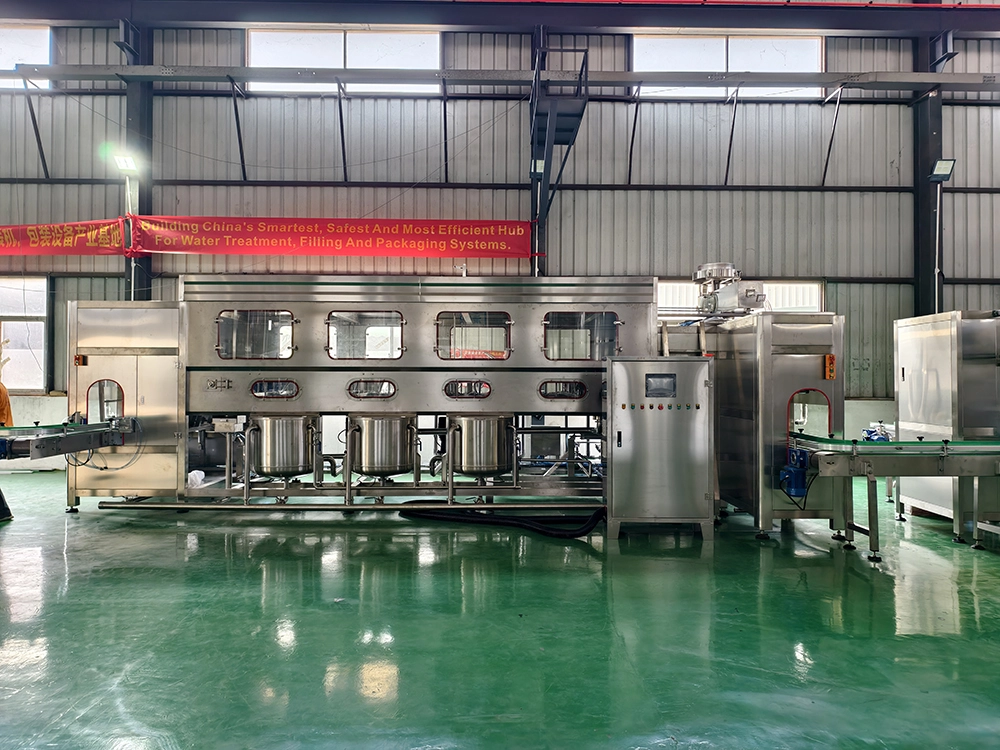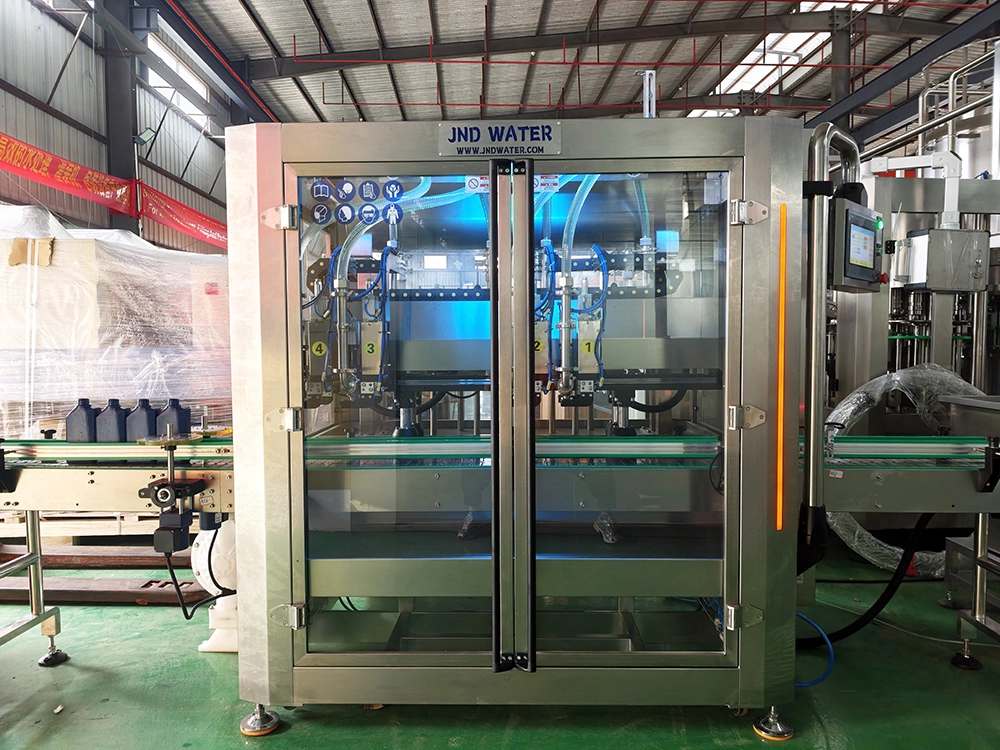
In June 2025, Jndwater’s (Shenzhen J&D Drinking Water Equipment Co., Ltd.) Shenzhen factory welcomed a special group of guests—a delegation of customers from Russian-speaking regions. The core task of this visit was to conduct pre-shipment acceptance testing on three bottling production lines they had ordered. The three lines were: one 883 model small bottle filling line (capacity 2000-3000 BPH), one 5L bottled water filling line, and one 5-gallon bottled water filling line.
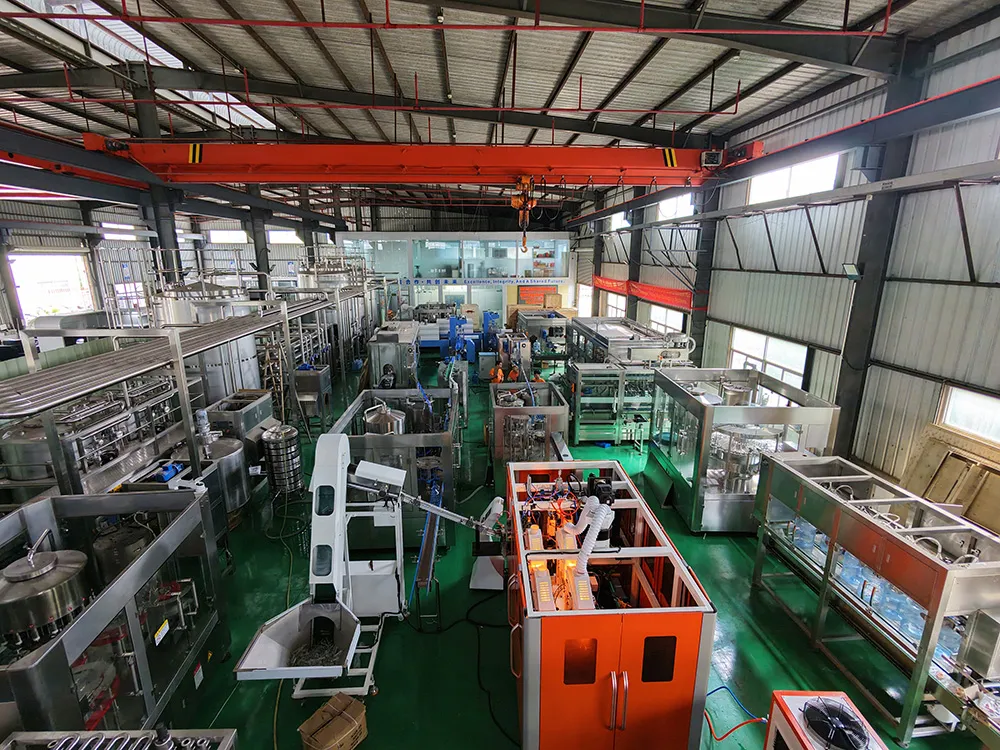
I. Model 883 Small Water Bottle Filling Line: 2000-3000 BPH Capacity, Designed for Small and Medium-Sized Water Plants
The Model 883 is a classic machine designed by JNDWATER specifically for bottled water plants. It features a three-in-one integrated structure, combining bottle washing, filling, and capping. This model is equipped with 8 filling heads and is suitable for 200ml-2000ml PET bottles, ideal for producing mineral water, purified water, and other products. The Model 883 line inspected by the customer has a designed capacity of 2000-3000 BPH (based on 500ml bottles), supports PLC + touchscreen control, and uses core electrical components from international brands such as Siemens and Mitsubishi.
To adapt to the market demands of Russian-speaking regions, the equipment was customized according to the customer’s requirements for voltage and operating interface language before leaving the factory, ensuring immediate operation after installation.
II. 5L Bottled Water Filling Line: Meeting Household Drinking Water Needs
In addition to the 883 small bottle line, the client also ordered a 5L bottled water filling line. The 5L size has stable demand in the European and Russian-speaking consumer markets and is commonly used in conjunction with household water dispensers. This line shares some downstream packaging equipment with the small bottle line, allowing for flexible switching according to production plans, helping the client cover a wider range of product sizes with less equipment investment.
Jndwater’s 5L filling line uses a unified control system integrated with the entire line, seamlessly connecting with the client’s existing water treatment system and palletizing equipment.
III. 5-Gallon Bottled Water Filling Line: Integrated Automated Cleaning and Filling
5-gallon (approximately 18.9 liters) bottled water is the mainstream drinking water size in Russian-speaking offices, schools, and homes. The 5-gallon filling line configured by Jndwater for this client integrates multiple processes including automatic cap removal, automatic bottle washing, filling, capping, and labeling. It utilizes PLC control and boasts a high degree of automation. The line’s bottle washing system employs a multi-step cleaning process to ensure the hygiene and safety of the recycled bottles.
IV. Customer Inspection Process: From Static Inspection to Full-Line Interoperability Testing
This customer inspection was conducted strictly according to the FAT standard process, with the JNDWATER technical team providing full accompaniment and explanation:
- Static Inspection: The customer first checked the appearance, materials (food-grade 304 stainless steel), welding process, electrical wiring, and nameplate parameters of the equipment on the three production lines one by one.
- Key Component Verification: The customer focused on checking the brand and model of core components such as filling valves, PLC control systems, motors, pumps, and pressure vessels.
- No-Load Operation Test: After confirming that the static inspection was correct, technicians started the three production lines for no-load operation to test the stability of the transmission system, pneumatic system, and conveying system.
- Material-Loaded Interoperability Testing: This is the core of the inspection. Each of the three lines underwent continuous material-loaded filling tests at 100% of its design capacity for more than one hour. Taking the 883 line as an example, the production line operated stably at over 2000 BPH, with a filling accuracy of ±0.1%, and a 100% pass rate for cap sealing inspection. 5. User Interface Demonstration: Engineers demonstrated the touchscreen operation and fault alarms to the customer, ensuring that the customer’s operators could quickly get started.
V. JNDWATER’s Service Capabilities for the Russian-Speaking Market
JNDWATER boasts 17 years of experience in the beverage bottling machinery industry, covering over 125 countries and regions. It has completed over 450 turnkey projects and delivered over 9,000 sets of equipment. For the Russian-speaking market, JNDWATER provides Russian technical documentation, a Russian user interface, and Russian remote technical support, effectively reducing the technical barriers and communication costs for customers.
VI. Acceptance Successful, Smooth Shipment
After comprehensive testing, all performance indicators of the three bottling lines met the contract requirements. The three production lines have been packaged and are about to be shipped to the customer’s factory in the Russian-speaking region. The JNDWATER engineering team will subsequently travel to the customer’s site to provide installation and commissioning guidance.