Most unplanned stops on a bottled water line trace back to a task that was scheduled and not done. This bottled water line maintenance schedule covers the bottled water filling machine, capping machine, labeling machine, blow molding machine and water treatment unit, set out by interval so it can be printed and kept at the line.
What Has to Be Done Every Shift?
Shift work is short and repetitive: rinse the filling valves with water at product temperature, wipe the photoelectric sensors, clear the cap chute, and check the infeed star wheel for a jammed bottle. The capping machine torque reading is confirmed against the value recorded at commissioning.
Twelve items take about 30 minutes per shift, or one hour a day on two shifts. The same 30 minutes holds 1,000 bottles of machine time at 2,000 bottles per hour.
Product temperature and rinse pressure are logged on the same sheet. A rinse nozzle that has lost pressure leaves residue at the bottle neck, and the neck is the surface the capping machine seals against.
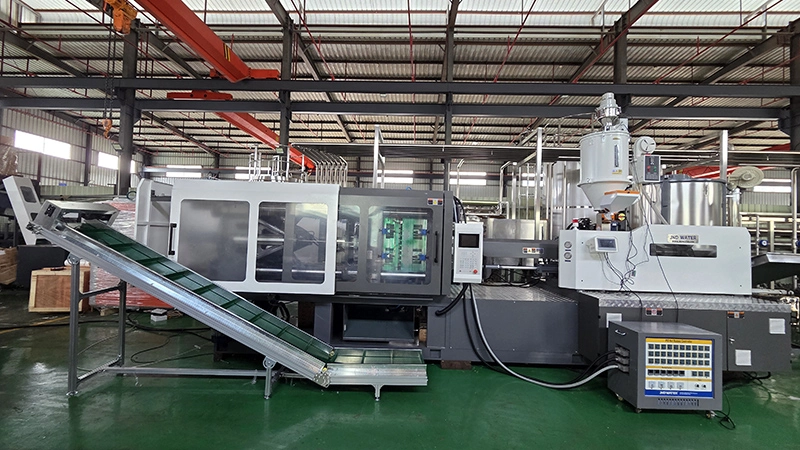
The blow molding machine carries its own shift list: preform heating lamps, cooling water temperature and high-pressure air at the blowing valve. All three go out of range before a bottle fails inspection.
What Moves to the Weekly and Monthly List?
Weekly tasks reach parts that are not visible from the control panel: gearbox oil level on the capping machine, belt tension on the conveyor, air-line filters and drain traps, and the condition of the rinse nozzles.
Label tension on the web and the edge of the cutting blade belong on the same weekly round, because a dull blade shows first as a torn label rather than a stopped machine.
Monthly tasks sit mostly in the water treatment unit: a 5-micron pre-filter change, a low-pressure flush of the reverse osmosis membranes, and a reading of UV lamp hours.
A lamp rated at 9,000 hours on a line running 416 hours a month reaches the end of that rating at 21.6 months. The same arithmetic applies to any hour-rated component on the line.
How Many Hours Does the Bottled Water Line Maintenance Schedule Take?
Add the intervals for a two-shift plant working 26 days a month: 30 minutes per shift, 90 minutes a week, 4 hours a month, 8 hours a quarter and 24 hours for the annual overhaul.
That totals 494 hours a year. At 2,000 bottles per hour those hours carry 988,000 bottles of capacity, so the schedule has to sit inside planned downtime rather than be added to production time.
Unplanned stops are counted separately. A line that stops twice a week for 20 minutes each time loses 1,333 bottles a week at 2,000 bottles per hour.
| Bottled water line maintenance schedule, two-shift plant | |||
| Interval | Tasks | Equipment | Time per interval |
|---|---|---|---|
| Every shift | Rinse filling valves, wipe sensors, clear cap chute, confirm torque reading, check star wheel | Filling machine, capping machine | 30 min |
| Weekly | Gearbox oil level, conveyor belt tension, air-line filters, drain traps, rinse nozzle condition | Capping machine, conveyor, compressor | 90 min |
| Monthly | 5-micron pre-filter change, low-pressure membrane flush, UV lamp hours | Water treatment unit | 4 h |
| Quarterly | Gripper insert change, chain lubrication, sensor alignment | Capping machine, labeling machine | 8 h |
| Yearly | Seal and bearing overhaul, electrical terminal torque check | Whole line | 24 h |
Which Parts Run Out First?
Wear items group into three: seals and gaskets in contact with product, mechanical grippers and guides, and filter cartridges.
A three-cartridge pre-filter housing changed every two weeks takes 78 cartridges a year. Filling valve seals changed twice a year take two sets per valve, and capping machine gripper inserts on a quarterly change take four sets per head.
| Wear part | Fitted on | Change interval | Pieces per year |
|---|---|---|---|
| Filling valve seal set | Filling machine | Twice a year | 2 per valve |
| Gripper insert | Capping machine | Quarterly | 4 per head |
| 5-micron pre-filter cartridge | Reverse osmosis unit | Every two weeks | 78, on a three-cartridge housing |
| UV lamp | Water treatment unit | 9,000 running hours | 1 every 21.6 months at 416 h a month |
What Happens When an Interval Is Stretched?
The product reports the delay before the machine does: fill level drifting on one head, caps that back off by hand, a label sitting off position, and a rising differential pressure across the pre-filter.
Each of these becomes stoppage time. One 30-minute stop on a 2,000 BPH line is 1,000 bottles, and three stops a week over a year come to 156,000 bottles. The fault list for water filling lines starts with the same symptoms.
Rejects counted per shift are the earliest record of wear. A reject rate moving from 0.2% to 0.5% on 16,000 bottles a shift is 48 bottles a shift, which is a seal question before it is a filling question.
How Does the Schedule Change on a Three-Shift Line?
Three shifts at 30 minutes each put 1.5 hours a day on the clock, or 547.5 hours a year before the weekly and monthly items are added. Running days rise from 312 to 365 on the same calendar.
Hour-rated parts fall due three times faster. The 9,000-hour UV lamp that lasts 21.6 months on two shifts is replaced every 12.5 months at 720 hours a month, and the pre-filter change moves from every two weeks to weekly.
Frequently Asked Questions
How often do filling valve seals need replacing?
Twice a year on a two-shift line, and sooner if fill level on a single head drifts outside tolerance. Each valve takes one seal set.
Does a single-shift plant follow the same bottled water line maintenance schedule?
Calendar intervals stay as they are, while hour-rated parts take longer to fall due. The same 9,000-hour lamp at 208 hours a month lasts 43.3 months.
Which parts should be held in the storeroom?
Filling valve seals, capping machine gripper inserts, pre-filter cartridges and one set of proximity sensors cover the failures that stop a line. Each of them is a part an operator can fit.
Can JNDWATER send a schedule for a line already in production?
Every delivered machine ships with a manual listing lubrication points, intervals and part numbers. JNDWATER can issue a plant-specific version of the schedule for a line in production.
Send the line speed, shift pattern and machine list to receive a maintenance schedule and a spare parts quotation for the equipment in place. The sales team replies with the intervals that match the delivered configuration, and the factory keeps the part numbers on file.