In Nigeria a 500 ml oil pouch sells for roughly half what a 750 ml PET bottle sells for, and it carries less product in more places. That single fact explains why sachets and stand-up pouches took the low-income oil market across Africa and South Asia, and why a cooking oil packaging machine is often the first machine a small refiner buys.
JNDWATER builds filling machines for oil, water and beverages, including pouch and sachet formats. This guide covers which pouch format fits which market, why the film matters more than the machine, where sachets leak, and what the equipment actually costs.
Which Pouch Format Fits Which Market
Four formats cover almost everything sold today, and they are not interchangeable.
| Format | Typical fill | Where it sells |
|---|---|---|
| Three-side seal sachet | 10 – 50 ml | Street food and foodservice portion packs; single-use cooking oil |
| Flat pouch | 100 ml – 1 L | Low-income retail in West Africa and South Asia; open markets and kiosks |
| Stand-up pouch | 250 ml – 1 L | Supermarket shelves where the pack has to stand and print well |
| Spouted pouch | 1 – 3 L | Home and light foodservice, replacing small bottles |
Choose the format from the shelf it will sit on, not from the machine you have seen. A spouted 2 L pouch needs a spout inserting and capping machine, which is a different line from the one that makes 20 ml sachets.
Behind the retail formats sits a second market with different rules. Foodservice and street-food buyers take 10 to 50 ml portion sachets by the thousand. Industrial customers such as bakeries and snack makers buy 200 litre drums instead. Portion sachets are the fastest growing pouch format in West Africa, and a multi-lane sachet machine is what makes them economic to produce.
Why Pouches Win on Cost
The advantage is material weight, and it is larger than most buyers expect.
- Pack weight. A 1 L pouch weighs 8–10 g. The same volume in a PET bottle weighs 25–35 g, and that is before the cap and label.
- Unit price on shelf. In Nigeria a 500 ml flexible pouch sells at roughly ₦30–60, against ₦80–150 for a 750 ml PET bottle.
- Freight and storage. Empty pouches arrive as flat printed rolls, so you store and ship almost no air. Rigid bottles ship as air.
Flexible packaging already accounts for about 34 % of the global edible oil packaging market, and the growth sits in the 1 to 5 litre band in emerging markets. If you are packing oil for a price-sensitive market, the pouch is not a niche format — it is the format.
The trade-off is durability. A pouch cannot be resealed once it is opened unless it has a spout or a zip, and one punctured pouch ruins the contents. Where oil is decanted into a smaller container at home that hardly matters. Where the pack is stored and reopened for weeks, a bottle still wins.
The Film Is the Hard Part
Oil is a harder product to pack than water, and the failure is usually chemical rather than mechanical.
- Oxidation. Oxygen transmission through the film turns oil rancid. Oil pouches are normally built on a barrier structure, typically PET/EVOH/PE at an oxygen transmission rate near 0.8 cc/m² per 24 hours, or PET/SiOx-PE/PE at about 1.2. Plain PE is not enough for a long shelf life.
- Light. In oils that carry photosensitizers such as chlorophyll, light-driven oxidation runs a thousand times faster than ordinary oxidation. That is why clear film is a poor choice for long shelf life even when the barrier is right.
- Oil attacking the seal. Oil migrates into low-density polyethylene. Over months it can soften the sealant layer and weaken the seal from the inside, which is why five-layer PE and nylon structures are common on oil pouches.
This is the part where a cheap film costs more than it saves. Your filling machine will happily seal a bad laminate; the failures show up on a shelf three months later.
Barrier choice is where most of the shelf life is decided, and the numbers separate the options more sharply than the price does. The figures below are typical published ranges at 23 °C and 50 % RH; ask your converter for test data on the exact structure you are quoted.
| Film structure | Total thickness | OTR (cc/m²·day) | WVTR (g/m²·day) | Fit for oil |
|---|---|---|---|---|
| PET/PE | 70–100 µm | 50–110 | 5–10 | Short shelf life only; the film is not the barrier |
| PET/VMPET/PE | 85–120 µm | 0.5–1.5 | 0.3–0.8 | Widely used; metallised layer also blocks light |
| PET/EVOH/PE | 90–130 µm | 0.5–2.0 | 3–7 | Clear barrier; needs a dry layer, weak on moisture |
| PET/AL/PE | 95–130 µm | below 0.1 | below 0.1 | Highest barrier; opaque, and hardest to recycle |
Two things decide the answer. If the pack has to show the oil, PET/EVOH/PE keeps it clear and still holds oxygen below 2 cc. If shelf life matters more than appearance, the foil structure in the last row is the only one that keeps transmission near zero, and it blocks the light that drives oxidation in chlorophyll-bearing oils.
The mistake to avoid is buying on OTR alone. A laminate only performs at its rated barrier while the layers stay bonded, and bond strength is a function of the converter’s process control rather than of the film datasheet. On an oil pouch the sealant layer also has to resist the product itself: oil migrates into low-density polyethylene, so the inner layer is usually a heavier PE or a nylon-reinforced structure.
Where Sachets Leak: Filling and Sealing
Almost every leaking pouch we are asked about failed at the seal, not at the filling head.
- Product in the seal area. A drop of oil between the sealing jaws stops the layers bonding. It is the single most common cause of leaks in oil pouches.
- Sealing window. Films with a thin sealant layer have a narrow temperature band. Run cold and the seal is weak; run hot and you cut through the film or get a burnt smell in the product.
- Dosing. A piston filling machine handles viscous oil better than a flow meter, because it moves a measured volume rather than counting it through a sensor that air bubbles confuse.
Practical fixes are boring and effective: a clean cut-off nozzle, a double seal with a cooled second jaw, and a film whose sealant layer is specified for oil rather than for water. Nitrogen flushing to push out headspace oxygen is optional, but it is what separates a six-month shelf life from a twelve-month one.
Headspace is the other half of the problem. Leave too much air in a flat pouch and the film balloons on the conveyor, which makes stacking and cartoning unreliable. Leave too little and the seal area stretches as the pouch settles. A correctly set fill volume looks slightly underfilled at the filling machine and settles flat on the pallet.
Machine Formats You Will Be Quoted
Three machine families cover the market, and the quotes are not comparable to each other.
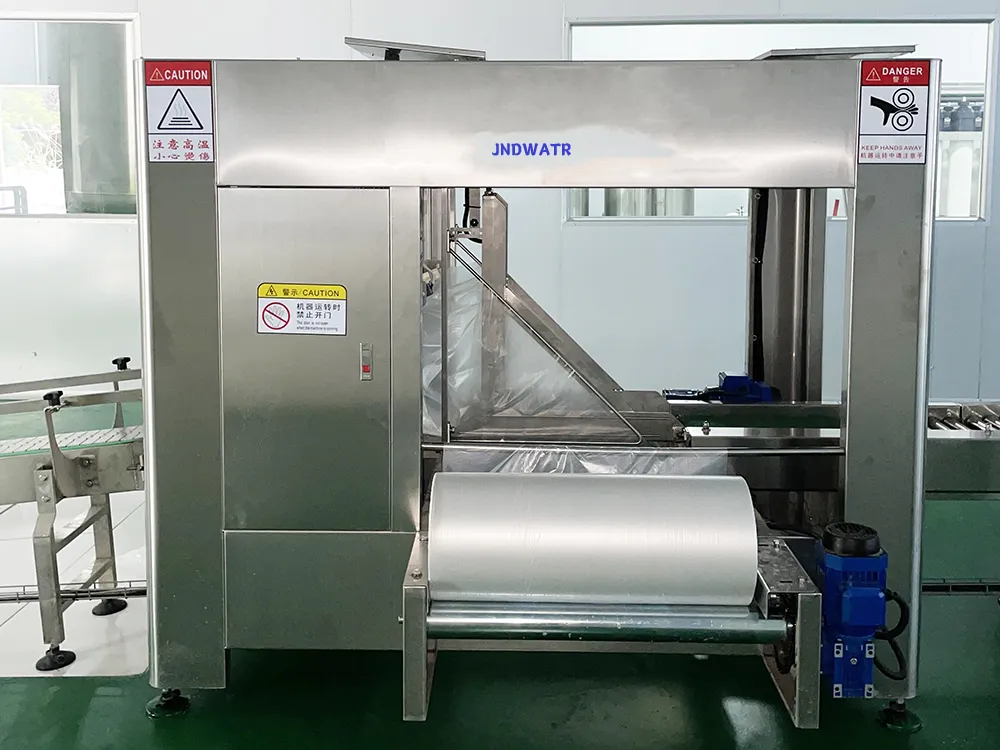
- Vertical form-fill-seal sachet machine. Film comes off a roll, the pouch is formed, filled and sealed in one continuous motion. Sold by lanes: multi-lane machines run several pouches per cycle. This is the standard machine for 10 ml to 200 ml oil sachets.
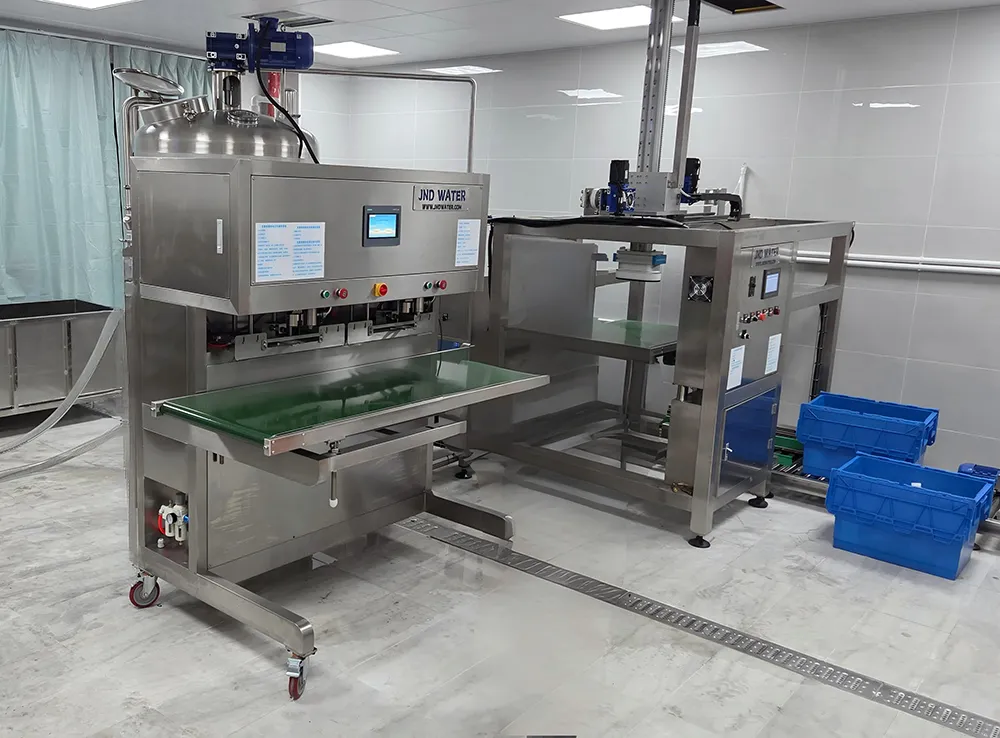
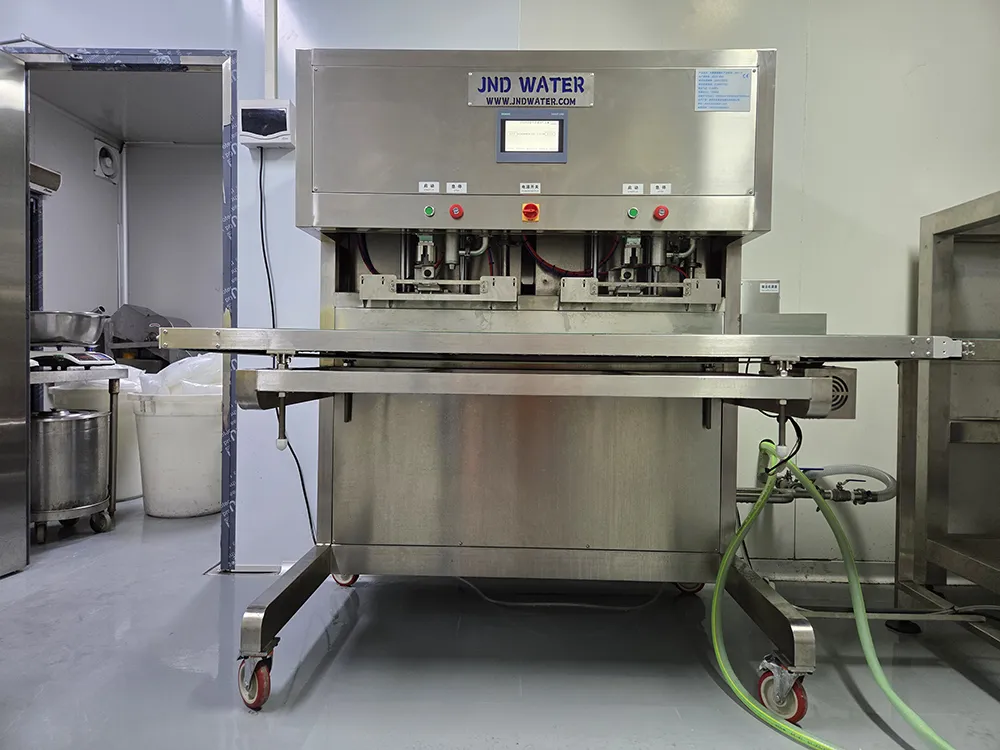
- Premade pouch filling machine. You buy printed stand-up pouches, and the machine opens, fills and seals them. Better print quality and a stronger pouch, higher cost per pack.
- Spouted pouch line. The filling machine is paired with a spout inserting and capping machine. This is where a capping machine enters a pouch project, and where the quote usually surprises people.
Ask how a machine behaves on your fill volume, not on its headline rating. A sachet packing machine quoted at 80 pouches per minute on a 20 ml fill will not hold that figure on a 500 ml fill, because fill time per pouch grows with volume while the sealing cycle barely changes.
Frequently Asked Questions
Can a sachet packing machine fill cooking oil as well as water?
Yes, with changes. Oil needs a piston dosing system rather than a simple gravity or flow-meter head, a film with an oil-resistant sealant layer, and higher sealing temperatures. A water sachet machine converted to oil usually leaks at the seal.
What film should I use for a cooking oil pouch?
A laminated structure with a barrier layer, commonly PET/EVOH/PE or a five-layer PE and nylon film. Ask your converter for the oxygen transmission rate and confirm the sealant layer is specified for oil, not just for water.
How long can a cooking oil pouch last on the shelf?
It depends on the barrier and the light exposure, not on the filling machine. With a proper barrier film and light protection, pouches are used for twelve-month shelf lives. Clear film with no barrier will fail much sooner.
Why do my oil sachets leak at the seal?
Oil in the seal area stops the layers bonding. Check the cut-off nozzle for drips, the sealing jaw temperature, and whether the pouch was cooled before it was stacked. A cooled second sealing jaw fixes most of it.
Is a stand-up pouch or a flat pouch better for cooking oil?
A flat pouch is cheaper and faster to make; a stand-up pouch needs a premade pouch filling machine and costs more per pack. Flat pouches dominate price-driven markets, stand-up pouches dominate supermarket shelves.
Tell Us Your Pack and Your Market
Send the pouch format, fill volume, film structure and the shelf life you need to hit. We will tell you which machine family fits, and whether a single-lane machine is enough for your volume instead of quoting you a line you will not fill.
Related equipment on this site: the stand pouch sachet filling machine for flat and stand-up formats, the fully automatic stand-up pouch filling machine for higher output, and the cooking oil filling machine if you also run bottles.