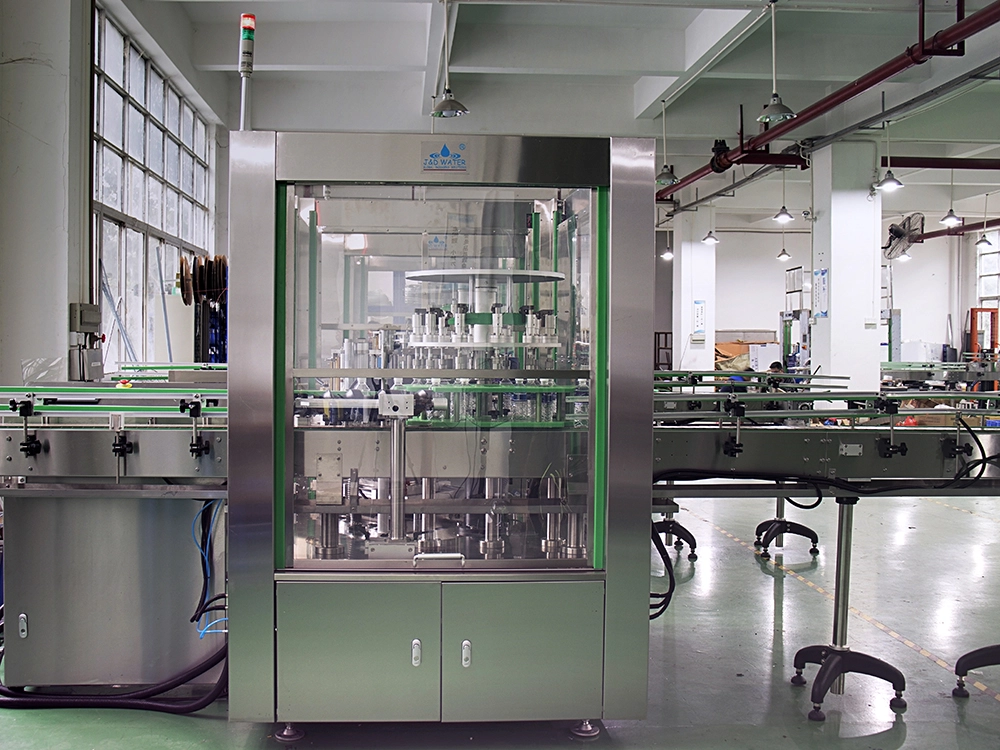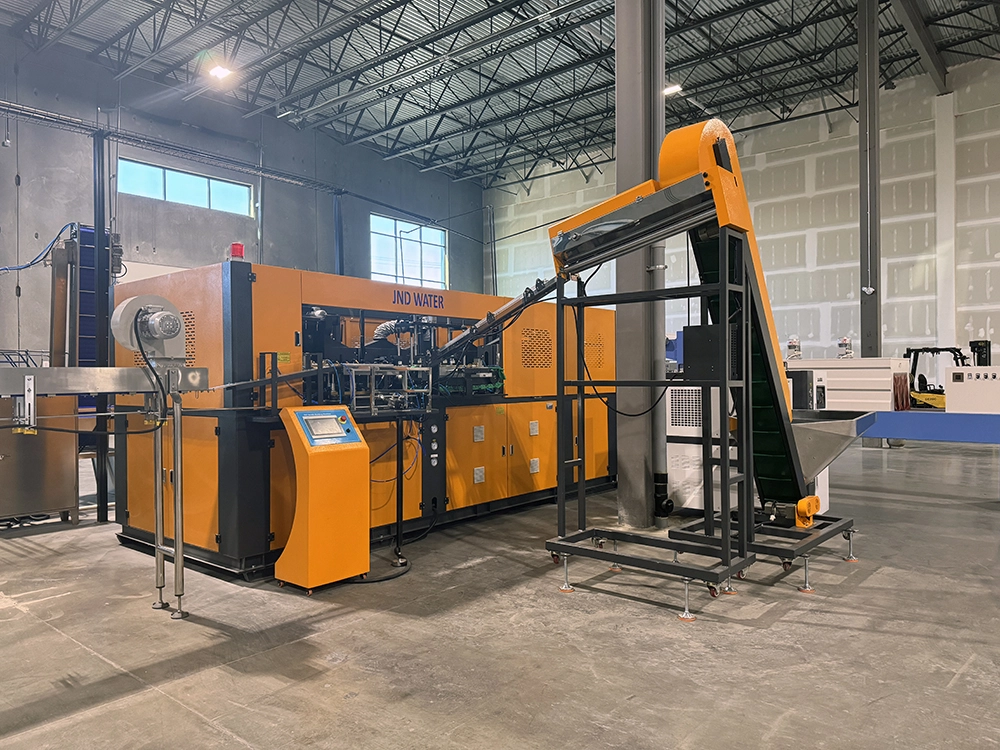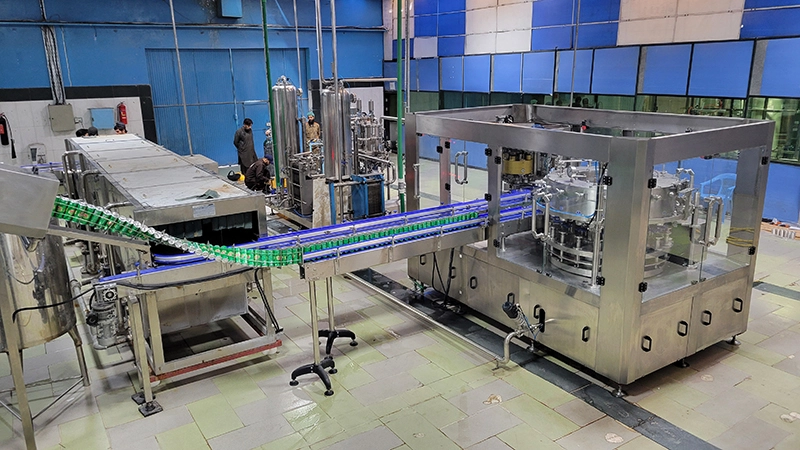
A filling line consists of multiple pieces of equipment, including filling machines, blow molding machines, labeling machines, and packaging machines. A malfunction in any one of these machines can affect the operation of the entire line. Below are the most common equipment malfunctions and quick troubleshooting methods.
I. Filling Machine
Inaccurate Filling Volume: The primary cause is aging sealing rings; replacement every 3-6 months is recommended. Secondly, check if the liquid level in the filling tank is stable and if the air pressure is between 0.4-0.6 MPa. For carbonated beverage lines, also check if the CO₂ back pressure is stable.
Dripping Filling Head: Stop the machine and check the valve core sealing rings; replace any with cracks or deformation. Confirm that the back suction procedure after filling is working properly. Filling head orifices worn more than 7.5 mm need repair or replacement.
Poor Sealing (Crooked Caps, Air Leaks): Verify the capping head torque with a torque tester every shift. Check if the bottle cap size is correct and if the cap delivery track is jammed. Hot-filled products should be cooled to below 60℃ before capping.
II. Blow Molding Machine
Uneven Bottle Wall Thickness
This is usually due to aging or damage to the heating lamps, requiring regular inspection and replacement. It could also be caused by improper stretching parameters or poor hot air circulation in the heating furnace.
Material Accumulation at Bottle Bottom or Deformation at Bottle Neck
Material Accumulation at Bottle Bottom: Indicates excessive blowing time or unstable air pressure.
Deformation at Bottle Neck: Indicates excessively high bottle neck temperature during heating; requires increased cooling at the bottle neck.
Prominent Parting Line or Difficult Demolding
Prominent Parting Line: Indicates insufficient parting pressure or a mold problem; requires increased parting pressure.
Difficult Demolding: Indicates insufficient venting time or a malfunctioning venting valve; requires adjustment of the venting time.
III. Labeling Machine
Inaccurate or Misaligned Labeling Position: The main cause is insensitive object or label photoelectric sensor. Cleaning or readjustment is required. It could also be due to loose label head fixing screws or incorrect label stop position settings.
Label Breakage or Backing Paper Tear: Excessive die-cutting damaging the backing paper is a common cause. Control the die-cutting depth. Wear on the label ejector plate can also lead to breakage.
Continuous Label Dispensing or Missing Labels: Continuous label dispensing indicates malfunctioning label detection photoelectric sensor sensitivity or unstable label tension. Missing labels are often due to abnormal object detection photoelectric sensor, requiring cleaning or replacement.
IV. Packaging Machine (Wrapping Machine)
Insecure Sealing or Inability to Cut: Improper sealing temperature or time settings; adjustments need to be made according to the film material (PVC/PE). A dull cutter can also cause inability to cut; replacement is required.
Uneven Shrinkage or Wrinkles: Uneven temperature within the heat shrink tunnel; multiple temperature measurements are needed to ensure uniformity. Excessive conveyor speed can also lead to insufficient shrinkage; speed should be reduced appropriately.
Film Jamming or Tear: Excessive film tension or worn film feed rollers. Sharp edges on the machine may also tear the film; this needs to be checked.
Preventative Maintenance Recommendations:
Per Shift: Clean critical parts of all equipment, check air pressure and seals.
Weekly: Replace worn seals, calibrate filling accuracy, clean sensors.
Monthly: Inspect sealing molds, cutters, electrical terminals, lubricate transmission components.
Quarterly: Replace O-rings and gaskets, inspect heating lamps and cutters.
Annual: Schedule a comprehensive overhaul.
When problems arise on a filling line, troubleshooting should start with key points such as seals, air pressure, sensors, and transmission components; most faults can be quickly located. JNDWATER (Shenzhen Jinfulai Drinking Water Equipment Co., Ltd.) has many years of experience in manufacturing filling equipment. Please feel free to contact us for technical support or spare parts supply.